
In our foundry operations, the transition to intermediate frequency induction furnaces for producing machine tool gray iron castings presented significant challenges, particularly regarding achieving consistent hardness and tensile strength. Over years of practical experience, we have systematically analyzed how chemical composition and melting processes affect the hardness of these critical components. Machine tool castings require high dimensional stability, wear resistance, and strength, which are heavily influenced by their microstructure and hardness. This article summarizes our findings on the impact of intermediate frequency electric furnace melting on hardness, focusing on compositional control, alloying strategies, and inoculation practices. By sharing these insights, we aim to provide a comprehensive guide for improving the quality of machine tool castings in similar industrial settings.
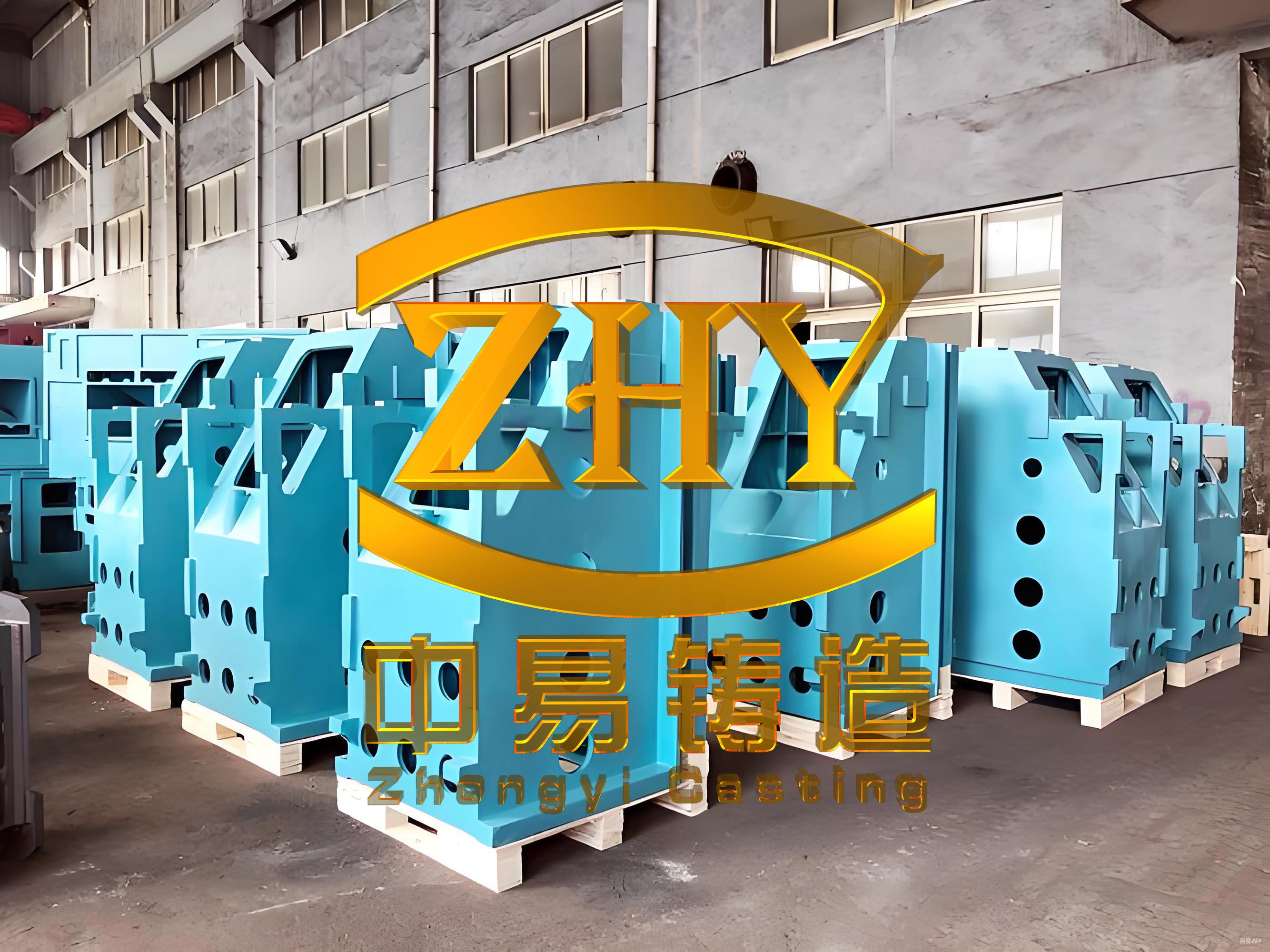
The use of intermediate frequency electric furnaces has become prevalent in modern foundries due to their efficiency and control over melting parameters. However, for machine tool castings, which often feature complex geometries, thick sections, and large tonnages, maintaining optimal hardness can be problematic. Initially, we encountered issues such as reduced hardness and inadequate tensile strength after switching to these furnaces. Through extensive experimentation and process optimization, we identified key factors, including carbon equivalent, alloying elements, and charge composition, that directly influence hardness. This document elaborates on these aspects, supported by data tables and mathematical models, to illustrate effective control measures. Emphasizing the importance of machine tool castings in industrial applications, we delve into practical solutions that have yielded reliable results in our production line.
Effect of Chemical Composition on Hardness
The hardness of machine tool gray iron castings is profoundly affected by their chemical composition, particularly the carbon equivalent (CE) and the presence of alloying elements. In our studies, we observed that CE serves as a critical indicator for predicting mechanical properties. The carbon equivalent is typically calculated using the formula: $$ CE = C + \frac{1}{3} Si $$ where C is the carbon content and Si is the silicon content, both in weight percent. A higher CE generally leads to the precipitation of coarse primary graphite, which reduces the effective load-bearing area of the casting. Additionally, it decreases the volume fraction of pearlite in the matrix while increasing ferrite, resulting in lower strength and hardness. For machine tool castings, we recommend maintaining CE between 3.5% and 3.95% to achieve fine, dispersed Type A graphite and a predominantly pearlitic matrix, ensuring sufficient hardness.
Alloying elements play a vital role in enhancing the hardness of machine tool castings by refining graphite and stabilizing the pearlite structure. Elements such as manganese (Mn), chromium (Cr), antimony (Sb), copper (Cu), and tin (Sn) are commonly used to promote pearlite formation and reduce ferrite content. Mn dissolves in the matrix and carbides, strengthening the base material and increasing the dispersion and stability of carbides. Cr stabilizes and refines pearlite but may promote carbide precipitation, raising hardness and internal stresses. Sb is a strong pearlite promoter but can cause segregation and cracking risks. Cu refines pearlite and enhances hardness without significant drawbacks, while Sn strongly increases pearlite but may lead to segregation at grain boundaries. Based on cost-effectiveness, we primarily utilize Mn and Cr for alloying machine tool castings, with Cu reserved for thicker sections. The control ranges for these elements are summarized in Table 1.
| Element | Control Range (%) |
|---|---|
| Mn | 0.3–1.4 |
| Cr | 0.1–0.6 |
| Sb | ≤ 0.06 |
| Cu | ≤ 0.8 |
Through iterative testing, we have established optimal chemical compositions for machine tool castings melted in intermediate frequency electric furnaces, as detailed in Table 2. These compositions ensure a balance between hardness, tensile strength, and machinability, which are essential for the performance of machine tool castings in heavy-duty applications. The relationship between hardness and composition can be modeled using empirical equations, such as: $$ H = k_1 \cdot CE + k_2 \cdot [Mn] + k_3 \cdot [Cr] + \cdots $$ where H represents hardness, and k coefficients are derived from regression analysis of production data. This approach allows us to predict and adjust hardness during the melting process, ensuring consistency across batches of machine tool castings.
| Element | HT250 (%) | HT300 (%) |
|---|---|---|
| CE | 3.5–3.95 | 3.5–3.95 |
| C | 2.8–3.2 | 2.8–3.2 |
| Si | 1.7–2.1 | 1.7–2.1 |
| Mn | 0.6–1.3 | 0.5–1.2 |
| S | ≤ 0.12 | ≤ 0.12 |
| P | ≤ 0.12 | ≤ 0.12 |
| Cr | ≤ 0.3 | 0.1–0.6 |
| Sb | – | ≤ 0.06 |
| Cu | ≤ 0.8 | 0.2–0.8 |
| Sn | ≤ 0.08 | ≤ 0.08 |
Control Measures to Enhance Hardness in Machine Tool Castings
To address hardness issues in machine tool castings, we implemented several control measures centered on charge ratio adjustments, alloying treatments, and inoculation practices. These strategies have proven effective in optimizing the microstructure and mechanical properties of castings produced via intermediate frequency electric furnaces.
Adjustment of Charge Ratio
Initially, we underestimated the impact of charge composition on hardness, leading to suboptimal results. By increasing the scrap steel proportion in the charge, we significantly improved hardness without compromising other properties. This approach, known as synthetic铸铁 production, involves using over 40% scrap steel, with the remainder comprising returns and iron scraps, followed by carbon adjustment and inoculation. The benefits include reduced production costs, lower phosphorus content, and avoidance of genetic effects from pig iron. Table 3 outlines the charge ratios we tested, and Figure 1 illustrates the correlation between charge composition and hardness for various machine tool castings. The hardness improvement can be quantified using the formula: $$ \Delta H = a \cdot \Delta S + b $$ where ΔH is the change in hardness, ΔS is the change in scrap steel percentage, and a and b are constants determined from experimental data. This linear relationship highlights the importance of charge ratio control in achieving desired hardness levels for machine tool castings.
| Charge Type | Scrap Steel (%) | Pig Iron (%) | Returns (%) | Iron Scraps (%) |
|---|---|---|---|---|
| Charge 1 | 20–40 | 20–40 | 30–60 | – |
| Charge 2 | 40–70 | 10–30 | 30–50 | – |
| Charge 3 | 40–70 | 0–10 | 20–40 | 10–30 |
The data from production trials, as shown in Table 4, demonstrate that Charge 2 and Charge 3 configurations yield higher hardness values, with microstructures featuring fine Type A graphite and over 98% pearlite. This makes them suitable for high-performance machine tool castings. The synthetic铸铁 process not only enhances hardness but also improves overall casting quality by minimizing impurities and segregation.
| Sample ID | Charge Type | Graphite Morphology | Graphite Grade | Pearlite Volume (%) | Hardness (HB) |
|---|---|---|---|---|---|
| 3-1 | Charge 1 | A | 5 | 80 | 149 |
| 5-1 | Charge 1 | A | 5 | 98 | 149 |
| 8-1 | Charge 3 | A | 5 | 98 | 170 |
| 10-1 | Charge 2 | A | 5 | 98 | 197 |
| 12-2 | Charge 2 | A | 5 | 98 | 170 |
Alloying Treatment for Hardness Improvement
Alloying is a crucial method to enhance the hardness of machine tool castings, especially for thick sections where hardness tends to decrease. We evaluated elements like Sb and Cu for their effects on microstructure and mechanical properties. Sb alloying, while effective in increasing hardness, often reduces tensile strength due to its tendency to cause segregation. In contrast, Cu provides a more balanced improvement, enhancing both hardness and strength. Table 5 compares the performance of Sb-alloyed machine tool castings, showing that although hardness increases, tensile strength may drop, limiting its application to specific cases. For instance, in heavy-section machine tool castings, Sb can be used cautiously to achieve target hardness.
| Casting Model | Casting Name and Grade | Graphite Morphology | Pearlite Volume (%) | Hardness (HB) | Tensile Strength (MPa) | Sb Content (%) |
|---|---|---|---|---|---|---|
| TK6920-35020 | Sliding Seat (HT250) | A | 80 | 149 | – | – |
| XK2415B-10C021 | Bed Middle Section (HT300) | A | 98 | 170 | 300 | ≤ 0.06 |
| TDV80-17020 | Worktable (HT300) | A | 98 | 179 | 255 | ≤ 0.06 |
Cu alloying, on the other hand, offers a superior alternative by refining pearlite and improving hardness without significant drawbacks. As shown in Table 6, Cu-alloyed machine tool castings exhibit enhanced hardness and tensile strength, making them suitable for a wider range of applications. The effect of Cu on hardness can be expressed as: $$ H_{Cu} = H_0 + c \cdot [Cu] $$ where H_{Cu} is the hardness with copper addition, H_0 is the base hardness, and c is a coefficient derived from empirical data. This linear model helps in fine-tuning the copper content for optimal results in machine tool castings.
| Casting Model | Casting Name and Grade | Graphite Morphology | Pearlite Volume (%) | Hardness (HB) | Tensile Strength (MPa) | Cu Content (%) |
|---|---|---|---|---|---|---|
| TK6920-35020 | Sliding Seat (HT250) | A | 80 | 149 | – | – |
| TK6916B-10031 | Column (HT250) | A | 98 | 170 | 365 | ≤ 0.8 |
| XK2125C-10021 | Left Column (HT250) | A | 98 | 187 | 350 | ≤ 0.8 |
Inoculation Treatment with Effective Inoculants
Inoculation is a key process for improving the mechanical properties of machine tool castings by controlling graphite formation and matrix structure. We selected SiCaBa inoculant for its long-lasting effects, with a typical composition of 65–75% Si, 1–3% Ca, and 2–6% Ba. This inoculant promotes the formation of fine Type A graphite, increases pearlite volume, reduces chilling tendency, and enhances hardness uniformity across casting sections. The inoculation process can be modeled using kinetic equations, such as: $$ I_e = I_0 \cdot e^{-k t} $$ where I_e is the effective inoculation intensity, I_0 is the initial intensity, k is a decay constant, and t is time. This emphasizes the need for timely inoculation to maximize benefits for machine tool castings.
Our experiments show that proper inoculation, combined with optimized charge ratios and alloying, results in microstructures with over 98% pearlite and hardness values exceeding 200 HB, as depicted in the metallographic images. This ensures that machine tool castings meet the rigorous demands of industrial applications, providing excellent wear resistance and dimensional stability.
Conclusion
In summary, the hardness of machine tool gray iron castings melted in intermediate frequency electric furnaces is highly dependent on chemical composition, charge ratio, alloying, and inoculation practices. Increasing the scrap steel proportion in the charge directly enhances hardness, making it a vital control measure. Multi-element alloying, particularly with Cu, effectively improves hardness while maintaining tensile strength. Additionally, using long-lasting inoculants like SiCaBa ensures consistent microstructure and hardness. These strategies, derived from our extensive production experience, provide a reliable framework for producing high-quality machine tool castings that meet industrial standards. Future work could focus on optimizing these parameters for specific casting geometries and expanding the application of synthetic铸铁 processes.