
In our extensive experience over many years utilizing intermediate frequency induction furnaces for the production of machine tool castings, we have encountered significant challenges related to achieving consistent hardness and tensile strength in gray iron components. The transition to environmentally friendly intermediate frequency furnaces, while beneficial in many aspects, initially led to issues such as偏低 hardness and failure to meet tensile strength standards, particularly for large, complex, and thick-walled machine tool castings. Through systematic exploration, experimentation, and总结, we have developed effective control measures to address these problems. This article summarizes our findings regarding the influence of chemical composition on hardness during the melting process and outlines practical strategies for enhancing the hardness of machine tool castings, emphasizing the critical role of charge composition, alloying, and inoculation.
The hardness of machine tool castings is fundamentally governed by their microstructure, which in turn is heavily influenced by chemical composition. Key factors include carbon equivalent (CE) and the presence of alloying elements. The CE, a comprehensive parameter reflecting the combined effect of carbon, silicon, and phosphorus, plays a pivotal role. As CE increases, the precipitation of coarse primary graphite rises, reducing the effective load-bearing area of the casting. Simultaneously, the volume fraction of pearlite in the matrix decreases while ferrite increases, leading to a decline in both strength and hardness. Therefore, controlling CE within an optimal range is essential for obtaining fine, dispersed Type A graphite and a predominantly pearlitic matrix, which are prerequisites for adequate hardness in machine tool castings. The relationship can be conceptually expressed as:
$$ \text{Hardness (HB)} \propto -\text{CE} $$
where a lower CE generally promotes higher hardness, provided other factors are constant. Based on our实践, we recommend a CE range of 3.5% to 3.95% for typical machine tool casting grades like HT250 and HT300. This range helps ensure the formation of desirable graphite morphology and matrix structure, crucial for the performance of machine tool castings.
Beyond CE, specific alloying elements are instrumental in enhancing hardness through microstructural refinement and stabilization. Elements such as manganese (Mn), chromium (Cr), antimony (Sb), copper (Cu), and tin (Sn) promote pearlite formation, refine graphite, and strengthen the matrix. Mn dissolves in both the matrix and carbides, enhancing基体 strength and increasing the dispersion and stability of carbides. Cr stabilizes and refines pearlite during eutectoid transformation but can also promote carbide precipitation, increasing hardness and internal stress. Sb is a strong pearlite promoter but tends to segregate locally, raising the risk of cracking. Cu promotes graphite化 during the eutectic stage, lowers the critical transformation temperature of austenite, and refines pearlite. Sn refines graphite and strongly increases pearlite volume but may segregate at eutectic cell boundaries. Given cost considerations, we primarily employ Mn and Cr as the main alloying elements for machine tool castings, with Cu added selectively for thicker sections. The control ranges for these alloying elements in our production are summarized in Table 1.
| Element | Control Range (wt%) |
|---|---|
| Mn | 0.3–1.4 |
| Cr | 0.1–0.6 |
| Sb | ≤0.06 |
| Cu | ≤0.8 |
Through continuous refinement, we have established the following chemical composition ranges suitable for intermediate frequency furnace melting of machine tool castings, as detailed in Table 2. These compositions平衡 graphite formation and pearlite stabilization to achieve target hardness levels for machine tool castings.
| Element (wt%) | HT250 | HT300 |
|---|---|---|
| CE | 3.5–3.95 | 3.5–3.95 |
| C | 2.8–3.2 | 2.8–3.2 |
| Si | 1.7–2.1 | 1.7–2.1 |
| Mn | 0.6–1.3 | 0.5–1.2 |
| S | ≤0.12 | ≤0.12 |
| P | ≤0.12 | ≤0.12 |
| Cr | ≤0.3 | 0.1–0.6 |
| Sb | – | ≤0.06 |
| Cu | ≤0.8 | 0.2–0.8 |
| Sn | ≤0.08 | ≤0.08 |
To improve the hardness of machine tool castings, we implemented several control measures focused on charge composition, alloying, and inoculation. The first and most impactful measure was altering the charge ratio in the furnace. Initially, we underestimated the importance of trace and harmful elements, and erroneously reduced scrap steel usage due to concerns about carbon pick-up affecting the furnace lining. This led to偏低 hardness. Recognizing that scrap steel content directly influences hardness, we adjusted the charge composition by increasing scrap steel proportion. Our production practice for a specific machine tool casting, the TK6920-35020 slide seat (HT250), evolved through three distinct stages of charge formulation, as shown in Table 3.
| Charge Formula | Scrap Steel (%) | Pig Iron (%) | Returns (%) | Iron Chips (%) |
|---|---|---|---|---|
| Formula 1 | 20–40 | 20–40 | 30–60 | – |
| Formula 2 | 40–70 | 10–30 | 30–50 | – |
| Formula 3 | 40–70 | 0–10 | 20–40 | 10–30 |
The metallographic structures and hardness values corresponding to these charge formulas are presented in Table 4. The data clearly indicate that reducing pig iron usage and increasing scrap steel content significantly enhances hardness. The relationship between charge ratio and hardness for various machine tool castings is illustrated in the following conceptual formula, where H represents hardness and Sscrap represents scrap steel percentage:
$$ H \approx k_1 \cdot S_{\text{scrap}} + k_2 $$
where \( k_1 \) and \( k_2 \) are constants dependent on other melting parameters. Over three years of practice, we finalized Charge Formulas 2 and 3, which employ over 40% scrap steel, essentially constituting a synthetic cast iron process. This approach not only ensures satisfactory hardness for machine tool castings but also offers advantages such as reduced production cost, lower phosphorus content minimizing shrinkage and leakage defects, and avoidance of pig iron遗传性 effects.
| Sample ID | Charge Formula | Graphite Morphology | Graphite Grade | Pearlite Volume (%) | Hardness (HB) | Notes |
|---|---|---|---|---|---|---|
| 3-1 | 1 | A | 5 | 80 | 149 | |
| 5-1 | 1 | A | 5 | 98 | 149 | |
| 8-1 | 3 | A | 5 | 98 | 156 | |
| 8-2 | 3 | A | 5 | 98 | 170 | |
| 9-1 | 3 | A | 5 | 98 | 163 | |
| 10-1 | 3 | A | 5 | 98 | 170 | |
| 10-2 | 3 | A | 5 | 98 | 170 | |
| 11-1 | 3 | A | 5 | 98 | 170 | |
| 12-2 | 3 | A | 5 | 98 | 197 | |
| 12-3 | 3 | A | 5 | 98 | 187 | |
| 12-4 | 3 | A | 5 | 98 | 197 | |
| 2-7 | 2 | A | 5 | 98 | 170 | |
| 7-3 | 2 | A | 5 | 98 | 170 | |
| 1-1 | 1 (with alloy) | A | 5 | 98 | 179 | w(Cu)≤0.8% |
| 1-2 | 1 (with alloy) | A | 5 | 98 | 170 | w(Sb)≤0.06% |
| 2-1 | 1 (with alloy) | A | 5 | 98 | 156 | |
| 5-1 | 1 (with alloy) | A | 5 | 98 | 187 | |
| 5-2 | 1 (with alloy) | A | 5 | 98 | 192 | |
| 5-3 | 1 (with alloy) | A | 5 | 98 | 197 | |
| 5-4 | 1 (with alloy) | A | 5 | 98 | 187 | |
| 6-1 | 1 (with alloy) | A | 5 | 98 | 187 | |
| 6-2 | 1 (with alloy) | A | 5 | 98 | 179 | |
| 8-1 | 1 (with alloy) | A | 5 | 98 | 207 | |
| 8-2 | 1 (with alloy) | A | 5 | 98 | 170 | |
| 10-1 | 1 (with alloy) | A | 5 | 98 | 170 | |
| 10-2 | 1 (with alloy) | A | 5 | 98 | 163 | |
| 11-1 | 1 (with alloy) | A | 5 | 98 | 207 |
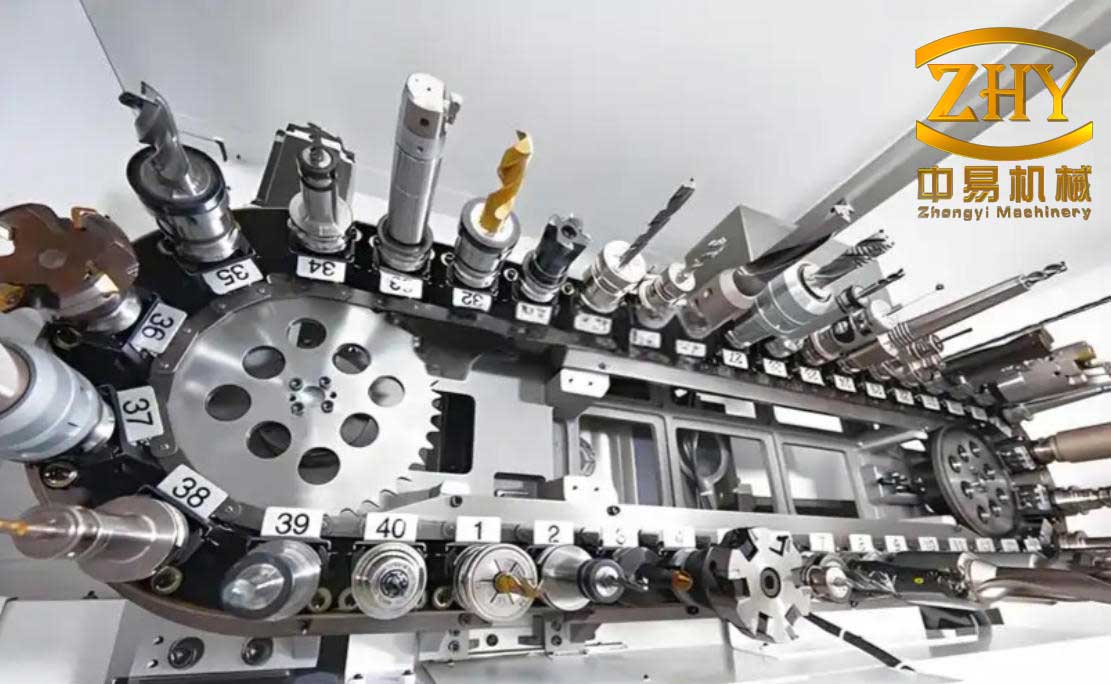
The image above illustrates a typical machine tool casting produced using our optimized melting practices, showcasing the complex geometry and厚壁 sections that require precise hardness control. This visual context underscores the importance of the discussed methodologies for ensuring quality in machine tool castings.
The second key measure is alloying treatment, employing multi-element and compound approaches to enhance hardness. Initially, we used antimony (Sb) for thick-section machine tool castings to boost hardness. However, while Sb effectively increases hardness, it often compromises tensile strength. Table 5 compares the性能 of machine tool castings with Sb alloying, demonstrating this trade-off.
| Casting Model | Part Name & Grade | Sample ID | Graphite Morphology | Graphite Grade | Pearlite Volume (%) | Hardness (HB) | Tensile Strength (MPa) | Sb Content (wt%) |
|---|---|---|---|---|---|---|---|---|
| TK6920-35020 | Slide Seat (HT250) | 3-1 | A | 5 | 80 | 149 | – | – |
| XK2415B-10C021 | Bed Middle (HT300) | 5-1 | A | 5 | 98 | 149 | – | – |
| TDV80-17020 | Table (HT300) | 7-3 | A | 5 | 98 | 170 | 300 | ≤0.06 |
| TDV80/2-17020 | Table (HT300) | 7-1 | A | 5 | 98 | 156 | – | – |
| XK2125C-10021 | Bed Middle (HT300) | 9-2 | A | 4 | 98 | 179 | 255 | ≤0.06 |
| XK2125C-10021 | Bed Middle (HT300) | 8-1 | A | 5 | 98 | 179 | 295 | ≤0.06 |
| TDV80-17020 | Table (HT300) | 5-1 | A | 4 | 98 | 170 | – | – |
| TDV80/2-17020 | Table (HT300) | 5-1 | A | 5 | 98 | 217 | 260 | ≤0.06 |
Given the need to maintain both hardness and tensile strength for machine tool castings, we shifted to using copper (Cu), a milder pearlite stabilizer. Cu enhances hardness while also improving tensile strength, unlike Sb. Table 6 presents data for Cu-alloyed machine tool castings, highlighting this balanced improvement.
| Casting Model | Part Name & Grade | Sample ID | Graphite Morphology | Graphite Grade | Pearlite Volume (%) | Hardness (HB) | Tensile Strength (MPa) | Cu Content (wt%) |
|---|---|---|---|---|---|---|---|---|
| TK6920-35020 | Slide Seat (HT250) | 3-1 | A | 5 | 80 | 149 | – | – |
| TK6916B-10031 | Column (HT250) | 5-1 | A | 5 | 98 | 149 | – | – |
| TK6920/1-11020B | Column (HT250) | 2-7 | A | 5 | 98 | 170 | 365 | ≤0.8 |
| TK6920/1-11020D | Column (HT250) | 5-1 | A | 5 | 98 | 170 | 280 | – |
| XK2125C-11HA020 | Left Column (HT250) | 5-2 | A | 5 | 98 | 170 | 275 | – |
| XK2130C-11B020 | Left Column (HT250) | 2-6 | A | 5 | 98 | 187 | – | ≤0.8 |
| φ30 mm Test Bar | – | 4-1 | A | 5 | 98 | 229 | 350 | – |
| 8 m Right Bed (HT300) | Bed (HT300) | 6-1 | A | 5 | 98 | 197 | – | – |
| XK2125C-11HA020 | Left Column (HT250) | 4-1 | A | 5 | 95 | 156 | – | ≤0.8 |
| XK2130C-11B020 | Left Column (HT250) | 6-1 | A | 5 | 98 | 187 | – | ≤0.8 |
| TK6920/1-11020B | Column (HT250) | 4-1 | A | 4 | 98 | 179 | 355 | ≤0.8 |
| TK6920/1-11020D | Column (HT250) | 5-1 | A | 5 | 98 | 187 | 320 | ≤0.8 |
The effectiveness of alloying can be summarized using a generalized formula for hardness contribution from alloying elements:
$$ \Delta H_{\text{alloy}} = \sum_{i} (a_i \cdot C_i) $$
where \( \Delta H_{\text{alloy}} \) is the hardness increment due to alloying, \( C_i \) is the concentration of alloying element i (e.g., Mn, Cr, Cu, Sb), and \( a_i \) is a coefficient representing its potency. For machine tool castings, we empirically find that \( a_{\text{Cu}} \) and \( a_{\text{Mn}} \) are positive and significant, while \( a_{\text{Sb}} \) is positive but may have a negative impact on tensile strength, necessitating careful use.
The third critical measure is inoculation treatment, which is essential for refining graphite, promoting pearlite, and improving the overall mechanical properties of machine tool castings. Inoculation serves multiple functions: controlling graphite and matrix structure to obtain fine Type A graphite and pearlite; preventing chill in thin sections by promoting graphitization; enhancing section uniformity and reducing wall thickness sensitivity; and improving machinability and tensile strength. After evaluating various inoculants, we selected a long-lasting inoculant—SiCaBa—with the composition: 65–75% Si, 1–3% Ca, and 2–6% Ba. This inoculant effectively enhances graphite morphology and pearlite volume, contributing to consistent hardness in machine tool castings. The inoculation effect can be modeled as an improvement in graphite nucleation, which in turn influences hardness. The relationship can be expressed as:
$$ H_{\text{final}} = H_{\text{base}} + \Delta H_{\text{inoc}} $$
where \( H_{\text{base}} \) is the hardness from base composition and melting, and \( \Delta H_{\text{inoc}} \) is the increment due to inoculation, typically ranging from 10 to 30 HB for properly inoculated machine tool castings.
By combining these measures—optimized charge composition with high scrap steel content, judicious alloying primarily with Mn, Cr, and Cu, and effective inoculation with SiCaBa—we successfully produce machine tool castings with fine, dispersed Type A graphite and over 98% pearlite volume. This microstructure ensures excellent hardness and tensile strength. The overall process can be encapsulated in a comprehensive formula for target hardness in machine tool castings:
$$ \text{HB}_{\text{target}} = f(\text{CE}, \sum (a_i C_i), I, M) $$
where CE is carbon equivalent, \( C_i \) are alloying element concentrations, I represents inoculation efficiency, and M accounts for melting parameters (e.g., superheating temperature, holding time). For our production, maintaining CE between 3.5% and 3.95%, employing Charge Formula 2 or 3, adding 0.1–0.6% Cr and 0.6–1.3% Mn (with Cu for thick sections), and inoculating with 0.2–0.4% SiCaBa typically yields hardness values of 170–210 HB for HT250 and HT300 machine tool castings.
In conclusion, our experience demonstrates that increasing scrap steel usage and altering charge ratios have a direct and substantial impact on the hardness of machine tool castings, serving as a fundamental direction for melting control. Multi-element and compound alloying treatments, particularly using Cu and Mn-Cr combinations, provide an effective pathway to enhance hardness while maintaining tensile strength. Finally, producing qualified base iron via intermediate frequency furnace melting and applying simple, long-lasting inoculants like SiCaBa is crucial for ensuring that machine tool castings achieve desirable tensile strength and hardness. These strategies, derived from years of practical application, offer reliable guidelines for manufacturers seeking to optimize the performance of gray iron machine tool castings in modern foundry operations.