
The pursuit of reliable and cost-effective materials for critical components like valves has long driven metallurgical innovation. While chromium-nickel and chromium-molybdenum steels have been the traditional choice for high-temperature and corrosive service since the 1930s, their high cost and complex processing present significant challenges. In this context, ductile iron has emerged as a formidable alternative, capitalizing on trends to substitute iron for steel. Its excellent combination of strength and toughness, superior vibration damping capacity, relatively simple production process, and lower cost have fueled its rapid development. The metallurgy of ductile iron involves the addition of nodularizing agents to molten iron to facilitate the formation of spheroidal graphite and inoculants to suppress carbide formation, promoting a matrix filled with fine, spherical graphite nodules. Despite these advantages, the Achilles’ heel of ductile iron castings remains the formation of shrinkage cavities and, more commonly, shrinkage porosity during solidification. This inherent tendency towards shrinkage in casting poses a major threat to the structural integrity and pressure tightness of components, especially thick-sectioned ones like valve bodies.
This investigation focuses on a large nickel-chromium alloyed ductile iron (QT-NiCr) valve body. The casting features a complex geometry with significant variations in wall thickness, most notably in the flange and port regions. The maximum diameter is 2475 mm with a height of 800 mm. The specified requirements mandate a homogeneous microstructure, high density, and the absolute absence of detrimental defects such as shrinkage cavities, cracks, slag inclusions, and gas pores. In industrial production using an alkaline phenolic resin sand process, inconsistent results were observed: some castings exhibited severe shrinkage in casting defects beneath the risers, while others from the same nominal工艺 appeared sound. This inconsistency underscores the critical influence of specific process parameters on the final soundness.
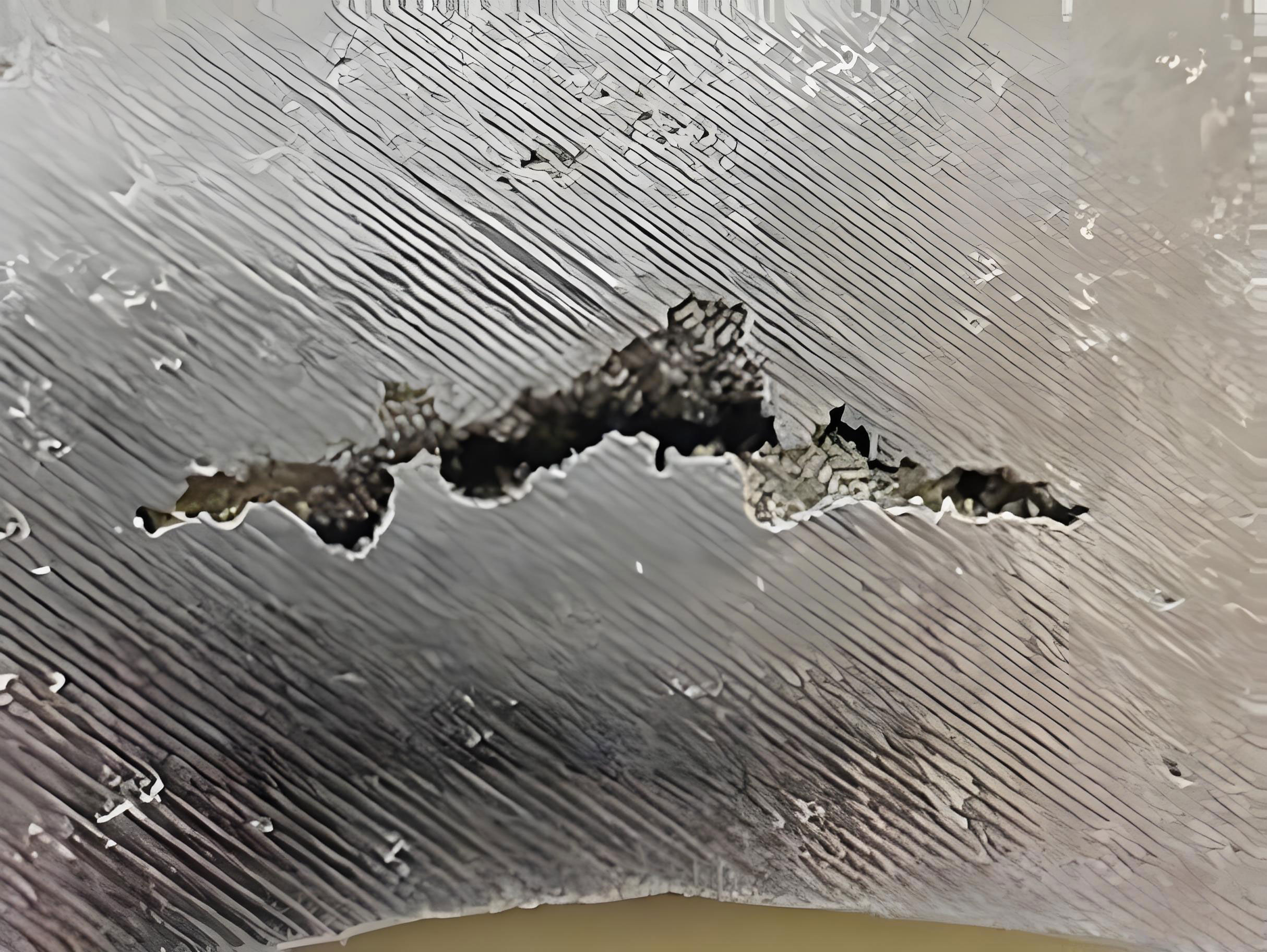
To deconstruct this problem, we employed numerical simulation technology. Software systems like Huazhu CAE/InteCAST allow for the quantitative prediction of shrinkage defects by simulating the coupled filling, solidification, and feeding processes. By virtually testing different scenarios, we can identify optimal parameters before physical trials, thereby mitigating technical risks and improving yield. In this study, we utilize this powerful tool to systematically analyze the influence of two key, often interacting, process parameters: pouring temperature and mold stiffness (a function of mold hardness and compaction) on the formation and severity of shrinkage in casting in the subject valve body.
1. Materials and Numerical Methodology
1.1 Casting Material and Investigated Parameters
The base material is a nickel-chromium ductile iron, QT-NiCr. Its chemical composition range is critical for determining its solidification behavior and feeding characteristics, and is detailed in Table 1.
| Element | C | Si | Mn | S | P | Ni | Cr |
|---|---|---|---|---|---|---|---|
| Content | 3.2-3.9 | 2.3-2.9 | <0.5 | <0.03 | <0.1 | 1.8-2.2 | 0.2-0.4 |
From the industrial experience and initial trials, pouring temperature and mold stiffness were identified as primary variables likely affecting the feeding efficiency and ultimately, the level of shrinkage in casting. The pouring temperature range was set from 1380°C to 1400°C, based on practical foundry limits for this alloy. Mold stiffness, representing the resistance of the sand mold to deformation under metallostatic pressure, was considered at two levels: a “stiff” mold (0.83 N·m⁻¹) representing well-compacted sand, and a “soft” mold (0.20 N·m⁻¹) representing less rigid molding. A full-factorial simulation matrix was designed, as shown in Table 2.
| Simulation ID | Pouring Temperature (°C) | Mold Stiffness (N·m⁻¹) |
|---|---|---|
| 1 | 1380 | 0.83 |
| 2 | 1380 | 0.20 |
| 3 | 1390 | 0.83 |
| 4 | 1390 | 0.20 |
| 5 | 1400 | 0.83 |
| 6 | 1400 | 0.20 |
1.2 Numerical Simulation Setup
The simulation was conducted using the Huazhu CAE system, leveraging its gravity feeding module for quantitative shrinkage prediction. The first step involved preprocessing the 3D CAD models of the casting, gating, and risering system. A uniform mesh was generated for the computational domain, with the details provided in Table 3.
| Mesh Type | Total Elements | Casting Elements | Max Edge (mm) | Min Edge (mm) | Total Pour Weight (kg) | Casting Weight (kg) | Yield (%) |
|---|---|---|---|---|---|---|---|
| Uniform | 5,059,908 | 297,251 | 12.0 | 12.0 | 3982.9 | 3502.3 | 87.93 |
Accurate thermophysical properties are paramount for a reliable simulation. The properties for QT-NiCr were inversely derived from its chemical composition and are listed in Table 4. Key parameters include latent heat, liquidus/solidus temperatures, and the critical solid fraction which marks the point where interdendritic feeding becomes severely restricted, a primary stage for the initiation of shrinkage in casting.
| Property | Density (g·cm⁻³) | Specific Heat (cal·g⁻¹·°C⁻¹) | Thermal Conductivity (cal·cm⁻¹·s⁻¹·°C⁻¹) | Latent Heat (cal·g⁻¹) | Liquidus (°C) | Solidus (°C) | Critical Solid Fraction |
|---|---|---|---|---|---|---|---|
| Value | 6.83096 | 0.191792 | 0.07467 | 60.0695 | 1190 | 1090 | 0.70 |
The fundamental equations governing the simulation are the conservation equations of mass, momentum, and energy. For predicting shrinkage in casting, the most relevant phenomenon is the volumetric contraction during the liquid-to-solid phase change and the subsequent interdendritic feeding. The total volumetric contraction (εtotal) can be approximated as the sum of liquid contraction, liquid-to-solid contraction (largest contributor), and solid contraction:
$$ \epsilon_{total} = \epsilon_{liquid} + \epsilon_{L\rightarrow S} + \epsilon_{solid} $$
Where typically for ductile iron, εL→S is around 4-5%. The ability of the remaining liquid to flow through the mushy zone to compensate for this contraction is governed by Darcy’s law, modified for a porous medium (the dendrite network):
$$ \vec{v} = -\frac{K}{\mu g} (\nabla P – \rho \vec{g}) $$
where $\vec{v}$ is the superficial velocity of the liquid, $K$ is the permeability of the mushy zone (a function of fraction solid, $f_s$), $\mu$ is the dynamic viscosity, $g$ is gravitational acceleration, $\nabla P$ is the pressure gradient, and $\rho$ is density. Shrinkage in casting forms when the pressure drop required for flow exceeds atmospheric pressure, leading to pore nucleation. Mold stiffness directly influences the boundary condition for this pressure calculation; a deforming mold can increase the effective volume of the casting cavity, temporarily reducing the demand for liquid feed metal and potentially alleviating suction pressures.
2. Results and Analysis
2.1 Solidification Sequence and Thermal Analysis
A pure solidification simulation, ignoring filling dynamics, was first conducted to understand the inherent thermal characteristics of the casting. The results clearly show a non-directional solidification pattern. The thinner cylindrical sections solidify first, acting as heat sinks. Solidification then progresses towards the thicker peripheral flange regions, with the thickest valve seat sections being the last to solidify. This creates isolated liquid pools or “hot spots” in the heaviest sections. These regions become vulnerable because once they are surrounded by a solid shell and a network of dendrites, external feed metal from the risers can no longer reach them to compensate for solidification contraction. This is the classic scenario for the formation of internal shrinkage in casting. The simulation visually confirmed that these thermal centers are the most probable locations for defect formation.
2.2 Prediction of Shrinkage Porosity Defects
The comprehensive simulations for all six parameter sets were executed. The software’s feeding module calculates the mass deficit due to shrinkage and distributes it as porosity based on the local pressure and thermal conditions. The summarized visual and quantitative results form the core of our analysis. A striking and immediate conclusion from the results is the overwhelming dominance of mold stiffness over pouring temperature within the studied range in controlling the severity of shrinkage in casting.
For simulations with high mold stiffness (0.83 N·m⁻¹), the predicted shrinkage in casting was minimal. Regardless of pouring temperature (1380°C, 1390°C, or 1400°C), the software predicted only three distinct, very small shrinkage pores located in the critical hot spots. Visually, these appear as tiny, isolated red spots on the simulation output. The total porosity volume, while small, did show a variation with temperature.
In stark contrast, for the low mold stiffness (0.20 N·m⁻¹) condition, the result was catastrophic in terms of casting soundness. The simulation predicted extensive, dispersed shrinkage in casting throughout the thick sections. Instead of a few isolated pores, the model showed numerous shrinkage cavities (129-137 individual pores) interconnected in a spongy network, with a total porosity volume two orders of magnitude larger than in the stiff mold case. The effect of pouring temperature here was subtle, slightly modulating the number and total volume of pores, but the defect level remained unacceptably high across all temperatures.
2.3 Quantitative Analysis of Parameter Influence
To precisely quantify the effects, the total predicted shrinkage pore volume for each simulation was extracted and analyzed. The data is best presented in a comparative table and subsequent analysis.
| Mold Stiffness (N·m⁻¹) | Pouring Temp. (°C) | Number of Shrinkage Pores | Total Shrinkage Volume (cm³) | Qualitative Severity |
|---|---|---|---|---|
| 0.83 (Stiff) | 1380 | 3 | 6.91 | Very Low |
| 1390 | 3 | 5.18 | Minimum | |
| 1400 | 3 | 7.11 | Very Low | |
| 0.20 (Soft) | 1380 | 132 | 238.46 | Very High |
| 1390 | 129 | 228.10 | Very High | |
| 1400 | 137 | 239.73 | Very High |
The mechanism behind this dramatic difference is rooted in mold wall movement. A soft, low-stiffness mold expands outward under the hydrostatic pressure of the molten metal. This expansion, often termed “mold wall movement,” effectively increases the volume of the mold cavity during the critical early stages of solidification. The casting geometry appears to “grow,” creating an internal void that must be filled by additional liquid metal. This artificial demand for feed metal exacerbates the natural solidification contraction, draining the risers prematurely and starving the last-solidifying hot spots. The result is severe, widespread shrinkage in casting. The relationship can be conceptualized by considering the effective volumetric contraction the feeding system must handle:
$$ \epsilon_{effective} = \epsilon_{L\rightarrow S} + \Delta V_{mold\_expansion} $$
Where $\Delta V_{mold\_expansion}$ is significant for a soft mold.
With a stiff, well-compacted mold, this expansion is negligible ($\Delta V_{mold\_expansion} \approx 0$). The feeding system only needs to compensate for the inherent alloy shrinkage. Consequently, the risers can effectively feed the thermal centers, leading to minimal shrinkage in casting.
Within the context of a stiff mold, the influence of pouring temperature becomes discernible. Although the number of pores remained constant at three, the total pore volume followed a parabolic trend with a minimum at 1390°C. This can be explained by two competing effects:
1. Higher Temperature (1400°C): Increases the total heat content, prolonging solidification time. While this can improve fluidity and feeding initially, it also leads to a wider mushy zone and potentially coarser dendrites, which may lower the permeability ($K$) in Darcy’s law later in solidification, hindering interdendritic feeding and slightly increasing shrinkage in casting.
2. Lower Temperature (1380°C): Reduces heat content, leading to faster solidification and a steeper thermal gradient. This promotes directional solidification but also increases the viscosity ($\mu$) of the residual liquid and reduces the time available for feeding, which can also trap shrinkage.
The optimum at 1390°C likely represents a balance where the solidification time and gradient, liquid fluidity, and dendritic structure allow for the most efficient natural and interdendritic feeding, minimizing the final volume of shrinkage in casting. This relationship for a fixed, stiff mold condition can be modeled as:
$$ V_{shrinkage}(T) = \alpha (T – T_{opt})^2 + V_{min} $$
where $V_{shrinkage}$ is the shrinkage volume, $T$ is pouring temperature, $T_{opt}$ is the optimal temperature (1390°C), $V_{min}$ is the minimum shrinkage volume (5.18 cm³), and $\alpha$ is a positive coefficient.
3. Conclusions
Based on the systematic numerical investigation into the formation of shrinkage in casting in a large ductile iron valve body, the following conclusions can be drawn:
1. The solidification pattern of the valve body is inherently prone to creating isolated thermal centers in its thickest sections, which are high-risk zones for the formation of shrinkage in casting if feeding is inadequate. This explains the inconsistent defect occurrence in initial production.
2. Mold stiffness (compactness) is the overwhelmingly dominant factor controlling the severity of shrinkage in casting for this geometry. A low-stiffness mold (0.20 N·m⁻¹) leads to mold wall movement, creating an excessive demand for feed metal and resulting in extensive, dispersed shrinkage porosity with volumes exceeding 228 cm³. A high-stiffness mold (0.83 N·m⁻¹) virtually eliminates this problem, reducing shrinkage volume by over 97%.
3. With an adequately stiff mold, pouring temperature has a secondary but measurable effect on the final soundness. Within the range of 1380°C to 1400°C, the total volume of shrinkage in casting follows a parabolic relationship, with a clear minimum at 1390°C. At this temperature, the process conditions appear to optimize feeding efficiency for the given alloy and geometry.
4. Therefore, the primary industrial recommendation to eliminate shrinkage in casting defects in such large, thick-sectioned ductile iron castings is to ensure high mold rigidity through proper sand compaction and mold hardening. Subsequently, fine-tuning the pouring temperature to an optimum value (1390°C in this specific case) can further minimize residual microporosity, enhancing the pressure tightness and mechanical reliability of the final valve body.