
The quest for efficient, economical, and environmentally sound production methods for steel castings is a continuous driver of innovation in the foundry industry. Traditional investment casting, while capable of producing high-precision parts, is often characterized by lengthy production cycles, high labor intensity, significant environmental footprint, and consequently, suboptimal economic returns, especially for components with moderate surface finish requirements (e.g., surface roughness Ra ≥ 6.3 μm). As an alternative, the shell mold casting process using coated sands presents a compelling solution, offering shorter process flows, reduced manual labor, easier cleaning, and the potential for sand reclamation. However, the application of conventional coated sands for steel castings is severely limited by the high pouring temperatures (typically 1560–1620°C), which can lead to sand sintering, burn-on, and veining, ultimately compromising casting quality and increasing cleaning costs.
Common mitigation strategies, such as applying refractory coatings to the shell or employing expensive specialty sands like ceramic (or “Baozhu”) sand, introduce their own set of complexities. Coating application is a process-critical step prone to defects if not perfectly controlled (e.g., gas holes from insufficient drying, inclusions from coating spallation), adds cost, extends lead time, and creates additional environmental concerns. Ceramic sand, primarily composed of Al2O3, offers excellent refractoriness and low thermal expansion but at a significantly higher material cost, limiting its widespread adoption.
To bridge this technological gap, our research and development efforts have culminated in a novel, specialized coated sand formulation engineered explicitly for shell mold casting of steel castings. This proprietary material, herein referred to as the Advanced Steel Casting Coated Sand (ASCCS), is designed to enable a streamlined, “spray-free and boxless” casting process—where shells can be poured without any refractory coating and without the need for embedding in backing sand—while delivering casting quality comparable to premium processes and at a substantially reduced cost.
1. Technical Development and Characteristics of the ASCCS
The development philosophy behind the ASCCS centered on enhancing the high-temperature performance, dimensional stability, and environmental profile of the shell mold. This was achieved through the meticulous selection of raw materials and the incorporation of patented additive packages.
1.1 Optimized Raw Material Selection
The base sand forms the skeletal structure of the shell. We evaluated various silica sands to establish a foundation with high purity, good grain shape, and low impurity content, which are critical for refractoriness, flowability, and strength development. The key parameters of candidate sands are summarized below.
| Sand Type | SiO2 Content (%) | Clay Content (%) | Moisture (%) | Fines Content (%) | Angularity Factor |
|---|---|---|---|---|---|
| Natural Washed Silica Sand | 85-93 | ≤ 0.8 | ≤ 0.5 | ≤ 3.0 | ≤ 1.3 |
| Natural Scrubbed Silica Sand | 90-93 | ≤ 0.2 | ≤ 0.2 | ≤ 0.7 | ≤ 1.3 |
| High-Silica Sand | ≥ 98 | ≤ 0.3 | ≤ 0.2 | ≤ 0.7 | ≤ 1.3 |
The selection criteria prioritize high SiO2 for refractoriness, low clay and fines for high permeability and strength, low moisture for low gas generation, and a low angularity factor for excellent flowability and shell uniformity. The specific choice is tailored to the casting geometry and required surface finish of the target steel castings.
1.2 Enhanced Coated Sand and Shell Properties
The formulated ASCCS exhibits superior performance metrics compared to traditional coated sands used for steel, as detailed in Table 2. The enhancements are critical for enabling the spray-free, boxless pouring process for high-temperature steel castings.
| Property | Traditional Coated Sand for Steel | ASCCS | Improvement |
|---|---|---|---|
| Hot Flexural Strength (MPa) | 3.36 | 3.94 | +17.3% |
| Room-Temperature Flexural Strength (MPa) | 9.43 | 9.67 | +2.5% |
| High-Temperature Durability (s) | 83 | 118 | +42.2% |
| High-Temperature Expansion (%) | 1.20 | 0.997 | -16.9% |
| Melting Point (°C) | 99 | 99 | Unchanged |
| Loss on Ignition (%) | 3.65 | 2.93 | -19.7% |
| Gas Evolution (mL/g) | 19.39 | 15.59 | -19.6% |
The significant increase in hot strength ($\sigma_{hot}$) and high-temperature durability ($t_{HT}$) ensures the shell maintains its integrity during the thermal shock of pouring molten steel. The reduced high-temperature expansion ($\epsilon_{HT}$) minimizes the risk of veining and geometric distortion in the final casting. Crucially, the lower loss on ignition (LOI) and gas evolution ($V_{gas}$) directly translate to a reduced propensity for casting defects such as gas holes, pinholes, and lustrous carbon defects. These property enhancements can be conceptualized as achieving a more robust thermal performance window, defined by the following relationship for shell stability during pouring:
$$ S_{shell}(t) = \sigma_{hot} – \alpha \cdot \epsilon_{HT} \cdot \Delta T(t) – \beta \cdot P_{gas}(V_{gas}, t) > S_{critical} $$
Where $S_{shell}(t)$ is the instantaneous shell strength margin, $\alpha$ and $\beta$ are material constants, $\Delta T(t)$ is the thermal gradient, and $P_{gas}$ is the internal gas pressure which is a function of the sand’s gas evolution $V_{gas}$ and time $t$. The ASCCS formulation pushes $S_{shell}(t)$ above the critical threshold $S_{critical}$ for a longer duration, enabling successful boxless pouring as shown in practice.
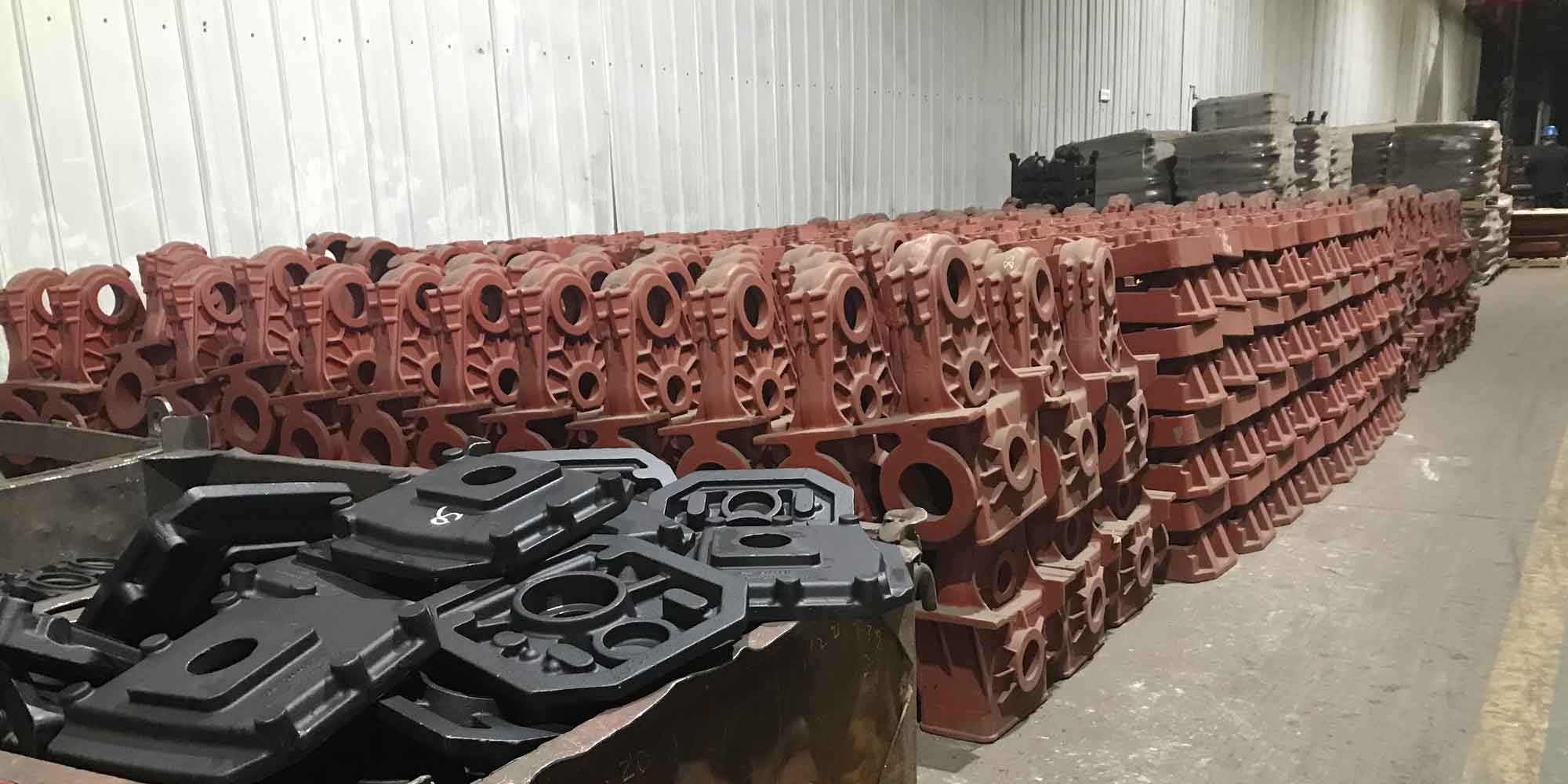
1.3 Superior Casting Surface Quality
A key breakthrough in the ASCCS formulation is the integration of a proprietary additive package. This additive fundamentally improves the interface dynamics between the decomposing sand binder and the solidifying steel, effectively preventing metal penetration. The impact is visually dramatic; severe burn-on and penetration in castings produced without the additive are completely eliminated when the optimized additive percentage (e.g., 4.5%) is used. The surface finish of steel castings produced with ASCCS shells without any coating achieves a quality level equivalent to those produced using premium ceramic sand, typically in the surface roughness range of 6.3 to 12.5 μm. This demonstrates that high-quality steel castings can be produced without the cost burden of specialty sands or the process complexity of coatings.
1.4 Environmental and Workplace Benefits
The ASCCS is engineered as a low-odor, environmentally friendly foundry material. Compliance with stringent industry standards for low-emission coated sands is verified. As seen in Table 3, the ASCCS not only reduces total gas evolution but significantly lowers the concentration of specific noxious compounds released during pouring, enhancing workplace air quality.
| Parameter | Standard Coated Sand | ASCCS | Reduction |
|---|---|---|---|
| Gas Evolution (mL/g) | 19.39 | 15.59 | 19.6% |
| Free Ammonia (×10-4%) | 1524 | 843 | 44.7% |
| Free Phenol (×10-4%) | 72.85 | 51.53 | 29.3% |
| Free Formaldehyde (×10-4%) | 469.66 | 328.76 | 30.0% |
The reduction in emissions ($E$) can be modeled as a function of the modified resin chemistry and additives:
$$ E_{ASCCS} = k_1 \cdot (LOI) + k_2 \cdot [Additive] + C $$
$$ \Delta E = E_{Standard} – E_{ASCCS} > 0 $$
Where $k_1$, $k_2$ are constants related to emission factors, and $C$ is a baseline constant. The negative $\Delta E$ confirms the environmental benefit.
2. Application Case Studies and Quantitative Analysis
The true measure of the ASCCS’s value is its performance in real-world production settings for various steel castings. The following case studies illustrate its transformative impact across three distinct scenarios: replacing investment casting, eliminating coating operations, and substituting ceramic sand.
2.1 Case A: Replacing Investment Casting for Carbon Steel Castings
A manufacturer of carbon steel components shifted from a traditional investment casting process to the ASCCS shell mold process. The process comparison reveals profound operational advantages.
| Metric | Original Investment Casting | ASCCS Shell Process | Change |
|---|---|---|---|
| Process Steps | 9 (Wax, Assembly, Shelling, etc.) | 4 (Mold Making, Assembly, Pouring, Knock-out) | -5 steps |
| Production Lead Time (days) | 7-10 | 1-2 | -71% to -90% |
| Personnel Required | 140 | 100 | -40 personnel (-28.6%) |
| Monthly Output (tons) | 400 | 1000 | +150% |
| Output per Person (tons/month) | ~3 | ~10 | +233% |
| Pouring Run-Off/Run-Through Rate | 15% | 0% | -100% |
| Rejection Rate | 15% | <5% | >66.7% reduction |
The economic benefits are substantial and calculated per ton of castings produced.
| Cost Category | Investment Casting (USD) | ASCCS Shell Process (USD) | Saving (USD) | Reduction |
|---|---|---|---|---|
| Labor Cost | 1,400 | 400 | 1,000 | 71.4% |
| Mold/Material Cost | 2,359 | 1,527 | 832 | 35.3% |
| Quality/Scrap Cost | 1,800 | 300 | 1,500 | 83.3% |
| Energy Cost | 312 | 240 | 72 | 23.1% |
| Total Cost | 5,871 | 2,467 | 3,404 | 58.0% |
The total cost savings ($C_{save}$) can be expressed as:
$$ C_{save} = \sum_{i=1}^{n} (C_{inv,i} – C_{ASCCS,i}) = 3,404 $$
For an annual production volume ($V$) of 12,000 tons (1,000 tons/month), the annual saving ($S_{annual}$) is:
$$ S_{annual} = V \cdot C_{save} = 12,000 \times 3,404 = 40.85 \text{ million USD} $$
This demonstrates a powerful economic driver for adopting shell casting with ASCCS for suitable steel castings.
2.2 Case B: Eliminating the Coating Process for Heat-Resistant Stainless Steel Castings
A foundry producing turbocharger housings (heat-resistant stainless steel) moved from a standard coated sand process requiring a refractory coating to the ASCCS spray-free process. Shell-making parameters remained identical, proving direct substitutability.
| Item | Standard Coated Sand Process | ASCCS Spray-Free Process |
|---|---|---|
| Shell Making | Shoot Time: 4s, Cure Temp: 235°C | Shoot Time: 4s, Cure Temp: 235°C |
| Post-Process | Coating Applied, Dried (60 min) | No Coating, No Drying |
| Pouring Method | Embedded in Flasks | Boxless (Naked) Pouring |
| Shell Weight per Set (kg) | 1.115 | 1.135 |
| Coating Consumption per Set (kg) | 0.100 | 0 |
Despite a marginal 1.8% increase in sand usage per shell, the elimination of coating material, the coating application labor, the drying energy and time, and the flask embedding operation yielded dramatic per-piece cost savings.
| Cost Component | Standard Process (USD/pc) | ASCCS Process (USD/pc) | Saving (USD/pc) | Reduction |
|---|---|---|---|---|
| Shell (Sand) Cost | 1.23 | 1.82 | -0.59 | -48.0% |
| Coating & Application Cost | 4.59 | 0.00 | 4.59 | 100% |
| Total Relevant Cost | 5.82 | 1.82 | 4.00 | 68.7% |
The surface quality of the resulting steel castings was equivalent between the two processes, proving the ASCCS successfully fulfills the role of the coating. For a monthly production of 10,000 pieces, the annual saving is:
$$ S_{annual, B} = 10,000 \times 12 \times 4.00 = 480,000 \text{ USD} $$
This highlights the ASCCS’s role in process simplification and cost reduction for existing shell mold operations for steel castings.
2.3 Case C: Substituting Ceramic Sand for Heat-Resistant Stainless Steel Castings
A manufacturer of exhaust manifolds (heat-resistant stainless steel, 5.6 kg casting weight) switched from a ceramic sand shell process (also spray-free and boxless) to the ASCCS process. The pouring parameters were kept constant.
| Parameter | Ceramic Sand Process | ASCCS Process | Notes |
|---|---|---|---|
| Pouring Method | Boxless | Boxless | Unchanged |
| Mold Weight per Set (kg) | 14.38 | 13.26 | ASCCS shell is 7.8% lighter |
| Cavities per Mold | 2 | 2 | Unchanged |
| Sand Price (USD/kg) | 6.00 | 1.60 | ASCCS is 73.3% cheaper |
| Mold Cost per Set (USD) | 86.28 | 21.22 | |
| Monthly Volume (sets) | 3,000 | 3,000 | Unchanged |
| Monthly Mold Material Cost (USD) | 258,840 | 63,660 |
The ASCCS achieves shell light-weighting while providing sufficient strength. Most importantly, it delivers equivalent casting surface quality. The cost saving per shell set ($S_{set}$) and annually ($S_{annual, C}$) are:
$$ S_{set} = (14.38 \times 6.00) – (13.26 \times 1.60) = 86.28 – 21.22 = 65.06 \text{ USD} $$
$$ S_{annual, C} = 3,000 \times 12 \times 65.06 = 2.34 \text{ million USD} $$
This represents a 75.4% reduction in mold material cost, demonstrating that the ASCCS can replace premium ceramic sands for many steel castings without compromising quality, while generating enormous cost savings.
3. Conclusion
The development and application of the Advanced Steel Casting Coated Sand (ASCCS) represents a significant advancement in the manufacturing of steel castings. Through optimized raw material selection and proprietary additive technology, this engineered sand achieves a combination of high hot strength, low thermal expansion, low gas evolution, and excellent environmental characteristics. The key outcomes validated through industrial case studies are:
- Process Transformation: The ASCCS enables a robust spray-free, boxless shell mold casting process, effectively replacing investment casting for a wide range of steel castings with moderate surface finish requirements. This shift drastically reduces production lead time, labor intensity, and process complexity.
- Cost Reduction and Efficiency: The technology delivers profound economic benefits by: (a) eliminating entire process steps (coating, drying, embedding) and associated costs, (b) reducing scrap rates through improved process stability, and (c) offering a dramatically lower-cost alternative to premium ceramic sands while achieving comparable casting quality. Demonstrated cost reductions range from 58% to over 75% in specific cost categories.
- Sustainability Enhancement: The low-odor, low-emission formulation of the ASCCS improves the working environment in foundries. Furthermore, by replacing the investment casting process, it eliminates associated waste streams (wax, wastewater from shell making), and as a coated sand, it remains compatible with sand reclamation systems, promoting a circular economy within the foundry.
In summary, the ASCCS provides a technically superior, economically compelling, and environmentally friendlier pathway for producing a broad class of steel castings. It allows foundries to leverage the inherent advantages of the shell molding process—speed, simplicity, and lower capital intensity—without being constrained by the traditional limitations of sand performance at high steel pouring temperatures. This innovation effectively expands the competitive domain of shell molding within the landscape of steel casting technologies.