
In my extensive experience within the foundry industry, the production of automotive brake drums has always presented significant challenges. These components are critical for safety, requiring exceptional thermal stability, wear resistance, and consistent mechanical properties. Historically, many manufacturers relied on standard grey cast iron grades like HT250. However, this often led to unpredictable hardness, poor machinability, and unacceptably high scrap rates. Driven by the need for improvement, my team and I embarked on a project to develop and implement a superior material: a chromium-copper alloyed grey cast iron. This shift not only resolved persistent quality issues but also unlocked substantial economic benefits. This article details our first-hand production practice, from theoretical foundations to practical execution, emphasizing the pivotal role of advanced grey cast iron.
Grey cast iron is fundamentally an iron-carbon-silicon alloy where the carbon precipitates as graphite flakes within a metallic matrix. This structure imparts excellent damping capacity, good machinability, and self-lubricating properties. For brake drums, the graphite flakes help dissipate heat generated during braking, while the matrix must be strong and wear-resistant. The general strength of grey cast iron can be related to its composition and cooling rate. A simplified relationship for tensile strength (TS) in MPa can be expressed as a function of carbon equivalent (CE) and section thickness: $$TS \approx K \cdot (100 – CE)^2$$ where CE is the carbon equivalent, often calculated as: $$CE = \%C + \frac{1}{3}(\%Si + \%P)$$ and K is a constant dependent on cooling rate and alloying elements. Our goal was to manipulate this equation through precise alloying to achieve higher and more reliable performance.
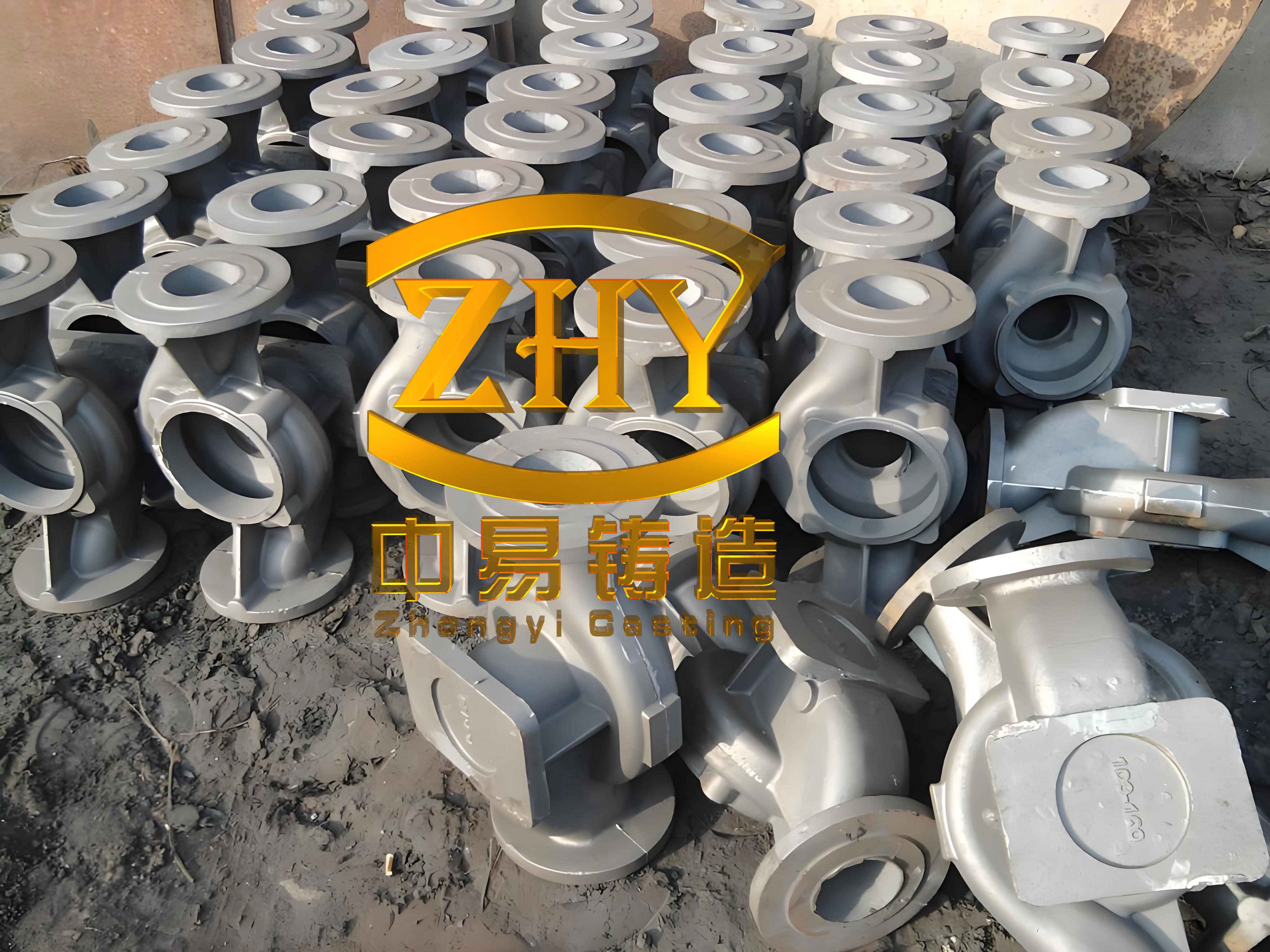
The cornerstone of our success was the meticulous design of the chemical composition for the grey cast iron. We transitioned from a standard HT250 to a Cr-Cu alloyed grey cast iron. The target composition range was established through iterative testing and is summarized in Table 1.
| Element | Target Range (wt.%) | Primary Function | Rationale for Selection |
|---|---|---|---|
| Carbon (C) | 3.2 – 3.6 | Graphite formation, fluidity | Ensures adequate graphite content for thermal conductivity and castability. Higher carbon equivalent improves machinability. |
| Silicon (Si) | 1.8 – 2.2 | Graphitizer, strengthens ferrite | Promotes graphite formation, counteracts chilling tendency. Slightly elevated level ensures good machinability and stable hardness. |
| Manganese (Mn) | 0.6 – 0.9 | Neutralizes sulfur, strengthens pearlite | Balances the detrimental effects of sulfur. Content is moderated to prevent excessive hardenability and white iron formation. |
| Phosphorus (P) | 0.15 – 0.25 | Forms hard phosphide eutectic | Controlled addition increases hardness and wear resistance via dispersed hard phases without causing significant brittleness. |
| Sulfur (S) | < 0.10 | Harmful impurity | Minimized to reduce hot tearing tendency and improve overall ductility of the grey cast iron. |
| Chromium (Cr) | 0.2 – 0.4 | Carbide stabilizer, refines structure | Key alloying element. Inhibits graphitization, stabilizes pearlite, and forms fine, dispersed carbides. This significantly enhances hardness, wear resistance, and thermal stability of the grey cast iron. |
| Copper (Cu) | 0.3 – 0.6 | Strengthens matrix, promotes pearlite | Improves strength and hardness without increasing chilling tendency. Enhances corrosion resistance and uniformity of properties. |
The interaction of these elements is complex. Chromium, a potent carbide former, increases the hardness and wear resistance but must be carefully balanced to avoid excessive chill. The combined effect of Cr and Cu can be modeled to predict the resulting hardness (HB). An empirical formula we found useful is: $$HB \approx 100 + 120 \cdot (\%C) + 15 \cdot (\%Si) + 30 \cdot (\%Mn) + 200 \cdot (\%Cr + 0.5 \cdot \%Cu)$$ This highlights the significant multiplier effect of chromium on the hardness of this specialized grey cast iron.
Our production was conducted in a medium-sized foundry. We employed a 5-ton hot-blast cupola furnace with a double-row tuyere setup. Charge materials were meticulously prepared: Guangxi pig iron (low in sulfur), internal returns, steel scrap (free from alloying contaminants), and the necessary ferroalloys for Cr and Cu addition. The charge composition ratio was approximately: 40% pig iron, 40% returns, and 20% steel scrap. The melting process involved careful monitoring. Elemental burning rates were characterized as follows: Si loss 10-15%, Mn loss 15-20%, while Cr and Cu showed minimal loss. The melt was superheated to above 1450°C for a short period for degassing and slag removal, a critical step for achieving high-quality grey cast iron.
Mold preparation used a green sand system with bentonite and coal dust. The gating system was designed with a specialized sprue box equipped with a stopper. This system allowed the mold cavity to be filled in a controlled, non-turbulent manner, minimizing slag entrainment and gas pickup—a common defect source in grey cast iron castings. Pouring temperature was tightly controlled at 1320 ± 20°C. To ensure perfect filling, an electronic indicator system with lights in the mold cavity signaled when to stop pouring, leaving the sprue box full to act as a feeder. This innovation drastically reduced shrinkage and porosity defects in our brake drum grey cast iron castings.
Post-casting, a stress relief annealing treatment was essential. The brake drums were loaded into a heavy oil-fired furnace. The thermal cycle, detailed in Figure 1 (implicitly described), involved heating to 500-550°C, holding for 2-3 hours, and then furnace cooling to below 300°C before air cooling. This low-temperature anneal effectively relieved internal stresses without altering the beneficial pearlitic matrix structure of the grey cast iron, ensuring dimensional stability during subsequent machining.
Quality control was paramount. Every ladle of grey cast iron was subjected to a wedge chill test. The desired white iron depth at the wedge tip was 3-5 mm, indicating a balanced graphitization potential. Additionally, standard keel blocks and cylindrical test bars (ø30mm) were poured from each heat for destructive mechanical testing. The results from our production batches are consolidated in Table 2.
| Material | Tensile Strength (MPa, min) | Hardness (HB) | Typical Microstructure | Machinability Index (Relative) |
|---|---|---|---|---|
| Historical HT250 Grey Cast Iron | 250 | 180-220 (unstable) | Flake graphite in coarse pearlite, occasional ferrite | 1.0 (Baseline) |
| New Cr-Cu Alloyed Grey Cast Iron | 280-320 | 200-230 (stable) | Fine, uniformly distributed Type A graphite in fine pearlite with dispersed carbides | 1.2 (Improved) |
The improvement is stark. The alloyed grey cast iron exhibited a more refined and uniform microstructure. The graphite flake size and distribution are critical for properties. We can quantify the graphite characteristics using a shape factor. The average flake length (L) and its relation to tensile strength can be approximated by: $$\sigma_u \propto \frac{1}{\sqrt{L}}$$ where a smaller L (finer flakes) leads to higher strength. Our alloyed grey cast iron consistently showed finer graphite, contributing to its superior performance.
The economic and quality impacts were transformative. Prior to adopting the Cr-Cu grey cast iron, the monthly production of 5000 brake drums using HT250 yielded an average scrap rate of 12-15%, primarily due to hardness deviations and machining cracks. After switching to the new grey cast iron formulation, we conducted a pilot run of 3000 pieces. The results were exceptional: only 15 pieces were scrapped, translating to a scrap rate of just 0.5%. Furthermore, the hardness qualification rate soared to 100%. This drastic reduction in waste, coupled with reduced machining tool wear due to better machinability, delivered remarkable cost savings. The return on investment for modifying the alloying practice was achieved in a very short period.
In conclusion, the strategic development and implementation of a chromium-copper alloyed grey cast iron for automotive brake drums represent a significant technological advancement in foundry practice. This material successfully addresses the core challenges of strength, hardness stability, wear resistance, and machinability that plagued conventional grey cast iron grades. The keys to success lie in the precise control of chemical composition—especially the synergistic effect of Cr and Cu—coupled with disciplined melting, pouring, and heat treatment processes. The production methodology we have detailed is robust, scalable, and highly suitable for small to medium-sized foundries seeking to upgrade their capabilities. The grey cast iron, in this enhanced form, proves to be an exceptionally reliable and economical engineering material for safety-critical automotive components like brake drums, ensuring performance and profitability.