
In the realm of precision lost wax casting, the pursuit of higher quality and reduced defect rates is a constant endeavor. As a researcher deeply involved in this field, I have focused on addressing one of the most persistent challenges: the presence of non-metallic inclusions, slag, and gases in molten steel, which severely compromise the integrity of cast components. Precision lost wax casting, while offering exceptional dimensional accuracy and surface finish, often suffers from high rejection rates due to such internal defects. This article, written from my first-person perspective as an investigator, delves into the development and application of a novel filtration technology specifically designed for precision lost wax casting of steel alloys. Through extensive experimentation and analysis, I aim to demonstrate how integrating a filtration system can purify molten steel, effectively remove harmful particles, and significantly enhance the overall quality and performance of castings, thereby advancing the capabilities of precision lost wax casting processes.
The core of this study revolves around the implementation of a filtration apparatus within the gating system of precision lost wax casting molds. Without altering the existing melting and casting protocols, a specially designed filter, referred to as the HQ-1 type, was integrated. This filter is constructed from a proprietary fibrous material with exceptional thermal stability. Key properties of this material include a density of approximately 2.25, a filament diameter of 0.35 mm, a pH value ranging from 6 to 8, an elongation rate of 1-1.2%, a softening temperature as high as 1750°C, and an operational temperature window of 1500-1600°C. The filter mesh features square openings of 1.5 mm x 1.5 mm, with a porosity or open area percentage between 50% and 60%. After treatment, its gas evolution is measured at 14-16 ml/g at 1000°C. The filament thickness is 0.45 mm, and its high-temperature endurance strength is notable, with a single filament at 1400°C capable of bearing a load for about 1.5 minutes. In practice for precision lost wax casting, this filter is strategically positioned and welded at the junction between the pouring cup and the sprue during the assembly of the wax pattern cluster. The entire assembly is then subjected to the standard shell-building process, typical in precision lost wax casting, using sodium silicate-based slurries and stuccos.
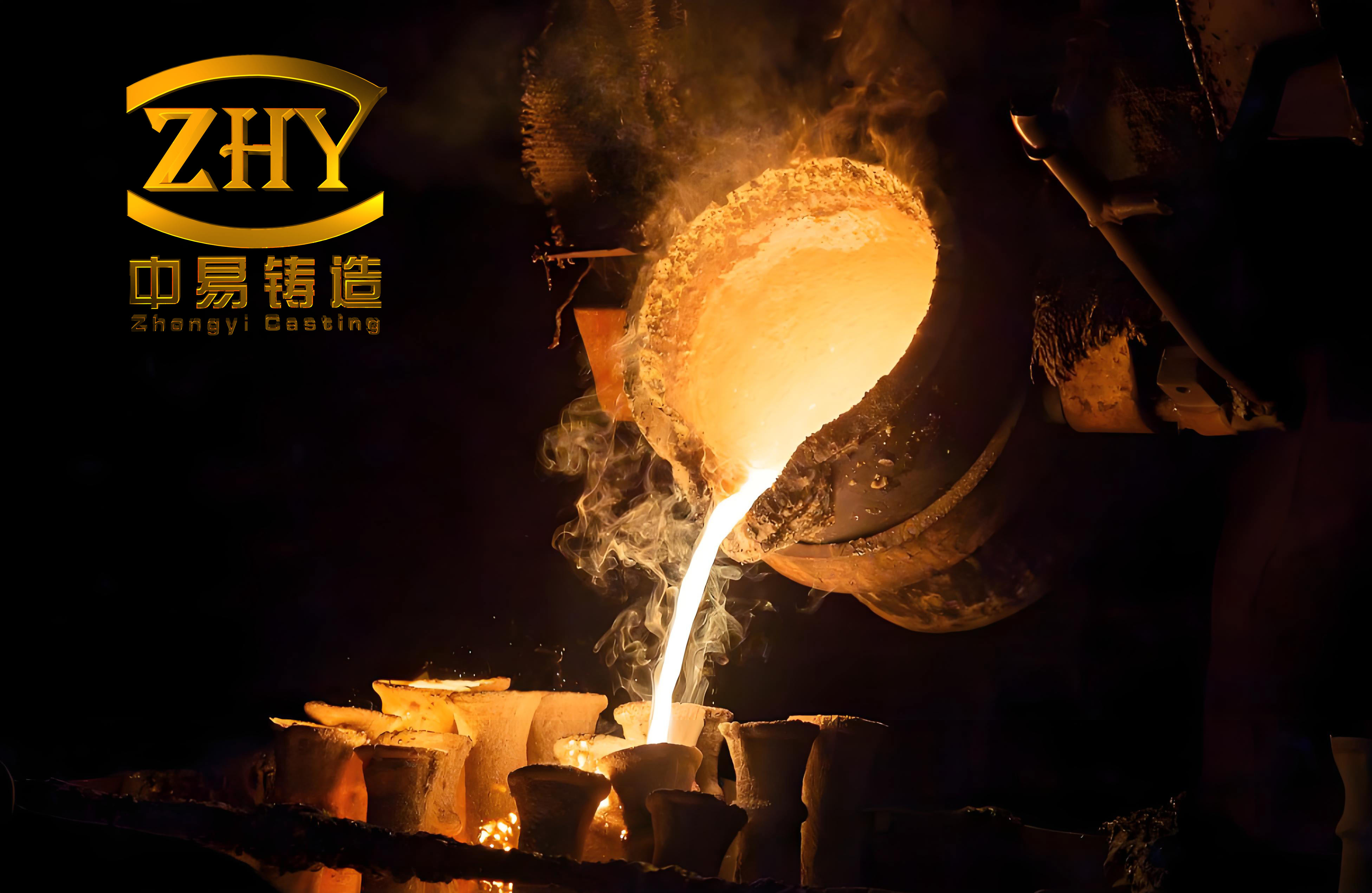
To comprehensively evaluate the efficacy of this filtration technology in precision lost wax casting, a series of rigorous tests were conducted. The first test assessed the high-temperature resistance of the HQ-1 filter. I immersed the filter mesh into molten steel within a medium-frequency induction furnace. The steel was stirred vigorously for 10 minutes while the temperature was raised from 1590°C to 1610°C. Remarkably, the filter remained intact without any rupture or distortion, maintaining clear grid patterns, which confirms its suitability for the harsh environment of precision lost wax casting pouring operations.
The second test focused on the filter’s ability to remove non-metallic inclusions. Using molten steel from a single heat and a single ladle, castings were produced under identical temperature conditions—some with the filter installed and some without. Visual and macroscopic inspection of sectioned gating systems revealed stark differences. In unfiltered casts, shrinkage porosity extended deeply from the pouring cup into the sprue. In contrast, filtered casts showed minimal penetration of such porosity. Furthermore, numerous inclusions of varying sizes were visibly trapped on and around the filter mesh in the filtered samples. Scanning Electron Microscope (SEM) examination of fracture surfaces near the filter in the pouring cup explicitly showed the presence of these captured inclusions, providing direct evidence of the filtration action in precision lost wax casting.
The third, and perhaps most critical, test series evaluated the influence of filtration on the microstructure and mechanical properties of the cast steel. For this, standard梅花试棒 (plum blossom test bars) were cast using both filtered and unfiltered steel under the same precision lost wax casting工艺 conditions. All castings underwent an identical post-casting heat treatment: annealing at 860 ± 10°C for 2 hours. Subsequently, they were machined into tensile test specimens with a diameter of 5 ± 0.1 mm. The mechanical properties were measured, and the data is summarized in the table below. The steel grade studied here is analogous to ZG45, a medium-carbon cast steel.
| Filtration Condition | Tensile Strength, $\sigma_b$ (kgf/mm²) | Yield Strength, $\sigma_{0.2}$ (kgf/mm²) | Elongation, $\delta$ (%) | Reduction of Area, $\psi$ (%) | Impact Energy, $a_k$ (kgf·m/cm²) |
|---|---|---|---|---|---|
| Unfiltered | 31.4 | 29.8 | 12.3 | 16.2 | 6.2 |
| Filtered | 31.2 | 27.3 | 13.5 | 18.5 | 5.9 |
Analysis of the fracture surfaces via SEM revealed that both filtered and unfiltered specimens primarily exhibited dimpled, ductile fracture morphologies. However, the filtered specimens showed notably smaller and fewer non-metallic inclusion particles at the interdendritic regions compared to the unfiltered ones. The pearlitic matrix microstructure and the overall chemical composition remained largely unchanged before and after filtration in the precision lost wax casting process.
To delve deeper into the mechanisms, the fluid dynamics during pouring in precision lost wax casting must be considered. Without a filter, the first stream of molten metal entering the pouring cup strikes the bottom of the sprue directly, causing splashing and generating intense turbulence. This turbulent flow readily entraps gases and carries suspended non-metallic inclusions into the mold cavity, where they become trapped as the metal solidifies. The filtration device fundamentally alters this flow regime. As molten steel passes through the filter mesh, it is divided into numerous smaller streams. This action promotes a transition from turbulent to more laminar flow, which can be partially described by the Reynolds number ($Re$):
$$Re = \frac{\rho v D}{\mu}$$
where $\rho$ is the fluid density, $v$ is the velocity, $D$ is the characteristic length (e.g., hydraulic diameter), and $\mu$ is the dynamic viscosity. A lower $Re$ indicates a more laminar flow. The filter reduces the effective $v$ and $D$ for the fluid packets, thereby lowering the local Reynolds number and suppressing turbulence. In laminar flow, the upward buoyant force on inclusions and gas bubbles can more effectively overcome the drag force, allowing them to float to the top of the gating system rather than being carried into the casting. The efficiency of particle capture by a filter can be conceptualized through a simplified filtration model. The probability of an inclusion being trapped depends on factors like particle size ($d_p$), filter pore size ($d_f$), and flow velocity. A capture efficiency $\eta$ might be approximated for sieving mechanisms when $d_p > d_f$, but for smaller particles, interception and adhesion play roles. The change in inclusion concentration $C$ along the flow path through a filter of thickness $L$ can be modeled as:
$$\frac{dC}{dx} = -\lambda C$$
where $\lambda$ is a filtration coefficient dependent on the filter geometry and flow conditions. Integrating gives $C_{out} = C_{in} e^{-\lambda L}$, showing exponential decay of inclusion content. While this is a simplification, it illustrates the purifying effect. Furthermore, the filter acts as a physical barrier, directly intercepting larger inclusions and slag particles. The reduction in thermal shock during mold filling is another benefit. By damping the incoming metal stream, the filter minimizes the sudden thermal impact on the ceramic shell, potentially reducing shell cracking and improving casting surface quality in precision lost wax casting.
The mechanical property data, while showing slight variations, are all within the acceptable standard range for the steel grade. The slight decrease in impact energy for the filtered sample (from 6.2 to 5.9 kgf·m/cm²) is noteworthy but not detrimental. I attribute the primary improvement to the removal of large, harmful inclusion clusters. Even though the average tensile strength remained nearly identical, the consistency and reliability of the properties are enhanced. The removal of stress-concentrating large inclusions leads to more homogeneous deformation and potentially better fatigue performance, which is crucial for components produced via precision lost wax casting. The slightly higher elongation and reduction of area values in filtered specimens suggest improved ductility, likely due to a cleaner matrix with fewer initiation sites for voids and cracks. The fundamental metallurgical phases (pearlite, ferrite) are unchanged because filtration is a physical purification process that does not alter the equilibrium phase diagram or the bulk chemical composition, which can be expressed for a binary Fe-C system near the eutectoid as:
$$C_{\gamma} \rightarrow \alpha + Fe_3C \quad \text{at } ~727^\circ C$$
where $C_{\gamma}$ is austenite, $\alpha$ is ferrite, and $Fe_3C$ is cementite. The nucleation and growth kinetics of these phases are influenced by local composition and cooling rate, but the global phase fractions remain governed by the lever rule applied to the Fe-Fe$_3$C diagram. Filtration ensures that this solidification and transformation occurs in a cleaner environment.
To further quantify the benefits in precision lost wax casting, consider the potential reduction in defect-related scrap. If the initial rejection rate due to inclusions, slag, and gas-related defects is $R_0$, and the filtration technology reduces the probability of such defects by a factor $F$ (where $0 < F < 1$), the new rejection rate $R_1$ can be estimated as:
$$R_1 = R_0 \times (1 – F)$$
The economic impact is significant, especially for high-value components made through precision lost wax casting. Additionally, the improved fluidity from cleaner metal can enhance the filling of thin sections and complex geometries inherent to precision lost wax casting designs. The filter’s ability to withstand the thermal and mechanical assault during pouring for 5-6 minutes, as verified, provides a sufficient safety margin for typical pouring sequences in precision lost wax casting foundries.
In conclusion, the integration of advanced filtration technology into the precision lost wax casting process for steel alloys presents a powerful and practical solution to a long-standing quality issue. My experimental work confirms that the HQ-1 type filter, with its exceptional high-temperature stability, effectively purifies molten steel by removing non-metallic inclusions, slag, and promoting degassing. This leads to cleaner metal, more favorable laminar flow during mold filling, and ultimately, castings with improved internal integrity and more consistent mechanical properties. While the tensile strength remains largely unaffected, the enhancement in ductility metrics and the significant reduction in macroscopic and microscopic defects underscore the value of this approach. The technology is implemented without major process overhaul, making it readily adaptable for existing precision lost wax casting production lines. Future work could explore optimizing filter pore size and geometry for specific alloy systems, modeling the multi-phase flow through the filter with computational fluid dynamics, and investigating the long-term performance of filtered castings under cyclic loading. The pursuit of excellence in precision lost wax casting continues, and molten metal filtration stands as a pivotal innovation in achieving higher yields, superior quality, and expanded application possibilities for this versatile casting methodology.