
In my extensive career working with shell castings, I have encountered numerous challenges, particularly when dealing with large and complex壳体零件. Shell castings, known for their precision and intricate details, are essential in various industrial applications, but producing them efficiently requires innovative approaches. Here, I share my firsthand experience integrating a vacuum吸砂 system and refining熔模铸造 processes to enhance the quality and productivity of shell castings. This article delves into the technical details, using tables and formulas to summarize key aspects, and emphasizes the importance of shell castings throughout.
One of the critical steps in shell castings production is the清理 of mold cavities after合箱 to remove浮砂, which can otherwise lead to defects like砂眼 or inclusions. To address this, I designed and implemented a vacuum-based吸砂 system that significantly improves operational reliability. The system utilizes a water-ring vacuum pump, model SZ-3, which offers high suction power and minimal maintenance. Below, I outline its specifications and performance calculations.
The vacuum pump operates with a vacuum range of 500 to 600 mmHg, and its technical parameters are summarized in Table 1. These values are crucial for determining the system’s efficiency in handling shell castings.
| Parameter | Value |
|---|---|
| Pump Model | SZ-3 Water-Ring Vacuum Pump |
| Motor Power | 10 kW |
| Speed | 1450 rpm |
| Water Consumption | 30 L/min |
| Vacuum Range | 500–600 mmHg |
| Main Pipe Inner Diameter | 150 mm |
| Hose Inner Diameter | 50 mm |
To ensure the system effectively removes sand from shell castings molds, I calculated the airflow velocities under different operating conditions. The exhaust volume of the vacuum pump varies with vacuum度; for instance, at 500 mmHg, it is 690 m³/h, and at 600 mmHg, it reduces to 570 m³/h. Converting these to SI units:
$$Q_{500} = \frac{690}{3600} \approx 0.1917 \, \text{m}^3/\text{s}$$
$$Q_{600} = \frac{570}{3600} \approx 0.1583 \, \text{m}^3/\text{s}$$
Considering a 10% loss due to system密封, the effective flow rates are:
$$Q_{\text{eff,500}} = 0.1917 \times 0.9 \approx 0.1725 \, \text{m}^3/\text{s}$$
$$Q_{\text{eff,600}} = 0.1583 \times 0.9 \approx 0.1425 \, \text{m}^3/\text{s}$$
The airflow velocity in the hose, with an inner diameter of 50 mm (cross-sectional area $A = \pi \times (0.025)^2 \approx 0.0019635 \, \text{m}^2$), is calculated using $v = Q / A$. For a single hose operation:
$$v_{500} = \frac{0.1725}{0.0019635} \approx 87.9 \, \text{m/s}$$
$$v_{600} = \frac{0.1425}{0.0019635} \approx 72.6 \, \text{m/s}$$
These velocities exceed the minimum required 15–20 m/s for transporting sand particles, ensuring no accumulation in pipes—a vital factor for reliable shell castings production. For dual-hose operation, the velocity decreases proportionally, but remains sufficient. I have summarized these results in Table 2 to provide a clear overview.
| Operating Condition | Effective Flow Rate (m³/s) | Hose Velocity (m/s) | Sand Transport Range (m/s) |
|---|---|---|---|
| Single Hose at 500 mmHg | 0.1725 | 87.9 | 15–20 |
| Single Hose at 600 mmHg | 0.1425 | 72.6 | 15–20 |
| Dual Hose at 500 mmHg | 0.08625 per hose | 43.9 | 15–20 |
| Dual Hose at 600 mmHg | 0.07125 per hose | 36.3 | 15–20 |
The system also incorporates a two-stage除尘 setup: a primary cyclone除尘器 and a secondary water-bath除尘器. The cyclone handles a风量 of 1000–1200 m³/h, while the water-bath罐 doubles as a water supply for the vacuum pump, with a volume of 0.5 m³. This integrated design enhances sustainability in shell castings workshops.
Key features of this vacuum system include its high suction power—five times greater than conventional methods—due to excellent气密性, and its compact structure that saves floor space. By mounting it on a支架 under crane tracks, I maximized the造型 area for shell castings. This directly improves合箱 efficiency and铸件 quality, reducing defects in final shell castings.
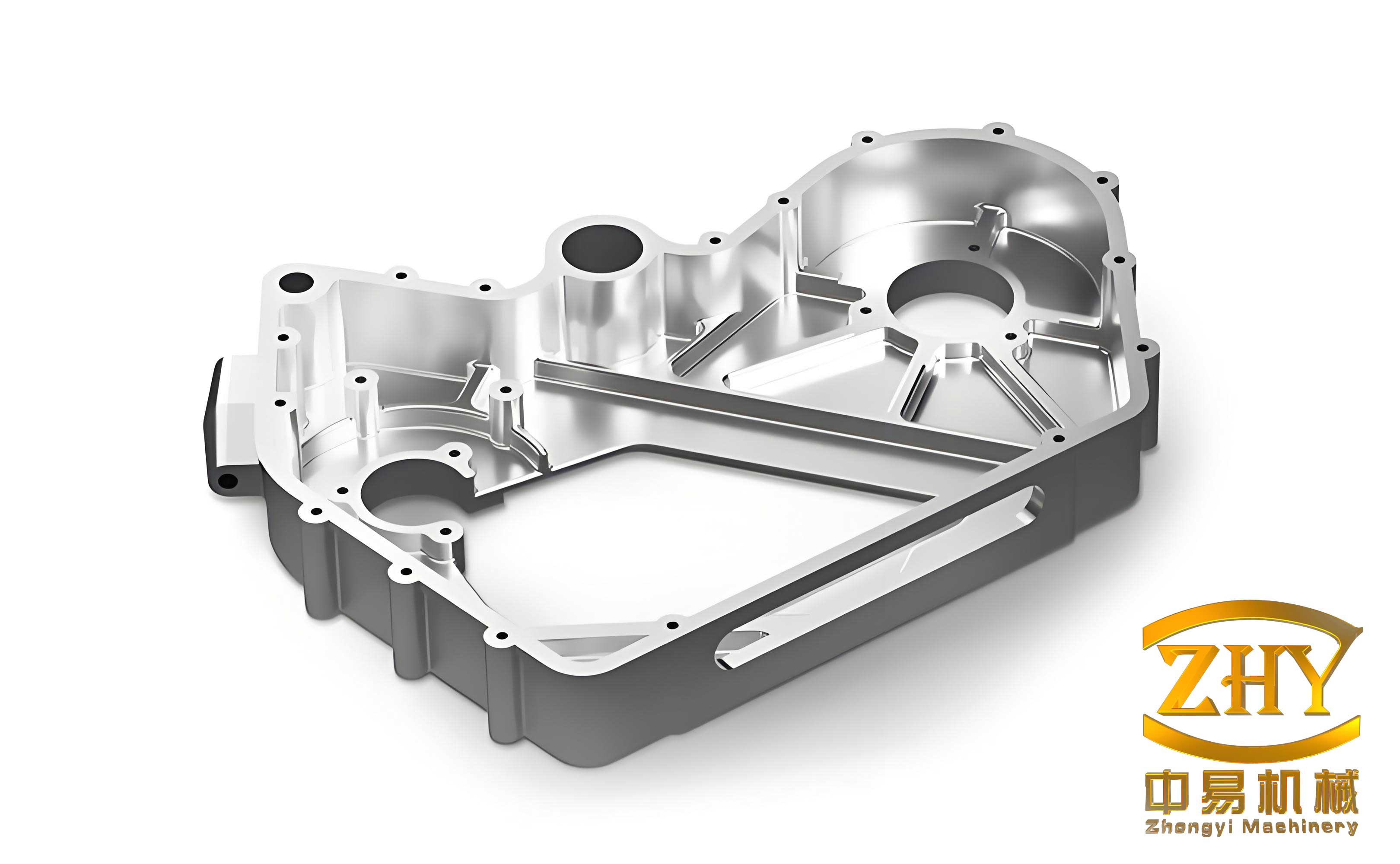
Transitioning to the熔模铸造 aspects, shell castings for large壳体零件, such as drill machine housings weighing 45 kg with dimensions 600 mm × 500 mm × 300 mm and wall thicknesses from 8 mm to 30 mm, present unique challenges. Traditional methods often lead to issues like缩松,涨砂,夹砂, and裂纹. Through experimentation, I developed a解体注蜡与蜡模组合工艺 that overcomes模具 limitations.
Instead of complex抽芯 structures, I use拼模钉 made from No. 20 iron wire to assemble wax模. The process involves positioning the two halves of the shell castings wax模 on a fixed芯轴, inserting preheated pins at 200–250°C into the seams, and smoothing with wax水. This ensures dimensional accuracy and allows the pins to melt out during失蜡, preventing interference with the shell castings. The assembly is efficient and reliable for producing intricate shell castings.
For浇冒口 and内冷铁 design in shell castings, I employ a top-gating system with integrated冷铁 to manage solidification. The calculations are based on empirical formulas derived from production experience. The inner浇口截面积 is determined by:
$$A_{\text{gate}} = (1.5 \times D_{\text{hot}}) – W_{\text{wall}}$$
where $D_{\text{hot}}$ is the热节圆直径 and $W_{\text{wall}}$ is the wall width at the gate entry. The冷铁 weight and diameter are calculated as:
$$W_{\text{chill}} = 0.15 \times W_{\text{section}}$$
$$D_{\text{chill}} = \frac{D_{\text{inscribed}}}{2.5}$$
Here, $W_{\text{section}}$ is the weight of the热节处, and $D_{\text{inscribed}}$ is the diameter of the inscribed circle.冷铁 are made from stainless or low-carbon steel, with丁字形 roots for secure attachment during撒砂, and are kept below 3% of the铸件 weight to avoid夹杂 defects in shell castings.
The制壳工艺 for shell castings uses water玻璃 as a粘结剂 and ammonium chloride as a硬化剂. The涂料配方 and硬化 parameters are critical for achieving strong, defect-free shells. I have optimized these as shown in Table 3 and Table 4, which detail the layers and processes for shell castings.
| Layer Type | Water Glass (g) | Quartz Powder (目) | Refractory Clay (目) | Surfactant (%) | Viscosity (s) | Coating Weight (g) |
|---|---|---|---|---|---|---|
| Surface Layer | 1000 | 270 (200目) | — | 0.1 | 25–30 | 50 |
| Reinforcement Layer | 1000 | 140 (100目) & 70 (200目) | — | — | 20–25 | 50 |
| Additional Layers* | 1000 | — | Added per layer | — | — | — |
*For layers beyond the fourth, 5% refractory clay and quartz powder are added to enhance strength for shell castings.
| Layer | Sand Grit (目) | Ammonium Chloride Concentration (%) | Hardening Time (min) | Drying Time (min) |
|---|---|---|---|---|
| Surface | 50–70 | 22–24 | 10–15 | 30–40 |
| Transition | 20–40 | 18–20 | 15–20 | 40–60 |
| Reinforcement 1 | 12–20 | 18–20 | 20–25 | 60–90 |
| Reinforcement 2–6 | 6–12 | 18–20 | 20–25 | 60–90 |
| Final Reinforcement | 6–12 | 18–20 | — | Natural drying |
During撒砂, I reinforce large flat areas with No. 12 or 14 iron wire to prevent deformation in shell castings. The焙烧 and浇注 processes are tailored to minimize热裂. Shells are fired without sand filling at 850–900°C for 2–3 hours, then packed with dry sand after removal from the furnace.浇注 temperature is controlled at 1560–1580°C, with a pouring speed of 5–7 seconds, ensuring the shell temperature remains above 600°C. This approach prevents缩孔,缩松,冷隔, and other defects, resulting in a成品率 of around 95% for shell castings.
In summary, my work with shell castings has demonstrated that integrating advanced vacuum systems and precision熔模铸造 techniques can drastically improve outcomes. The vacuum吸砂 system ensures clean mold cavities, while the optimized wax assembly, gating design, and shell-building processes enhance dimensional accuracy and structural integrity. Shell castings benefit from these innovations through higher efficiency, reduced defects, and better overall quality. I continue to explore further refinements, always with a focus on advancing the art and science of shell castings for industrial applications.
Through detailed calculations and systematic parameter tuning, I have established reliable protocols that can be adapted for various shell castings projects. The formulas and tables provided here serve as a foundation for others in the field, emphasizing the importance of data-driven approaches in manufacturing. Shell castings, with their complexity and demand for precision, remain a fascinating area of study, and I am committed to sharing insights to foster innovation in this domain. Whether dealing with vacuum清理 or intricate wax patterns, every step contributes to the success of shell castings, and I look forward to seeing these methods evolve in future applications.