
The relentless pursuit of performance, efficiency, and weight reduction in the aerospace industry places immense demands on manufacturing technologies. Among these, the production of high-integrity, complex, and thin-walled structural components remains a significant challenge. As a researcher deeply immersed in advanced manufacturing processes, I have focused on developing and refining casting techniques that meet these stringent requirements. This article presents a comprehensive analysis of a novel countergravity casting approach, the Adjustable Pressure Investment Casting (APIC) method, specifically designed to overcome the inherent limitations in producing premium aerospace castings, particularly those made from aluminum alloys. We will delve into its fundamental principles, operational mechanics, quantitative advantages, and broad application spectrum within aviation manufacturing.
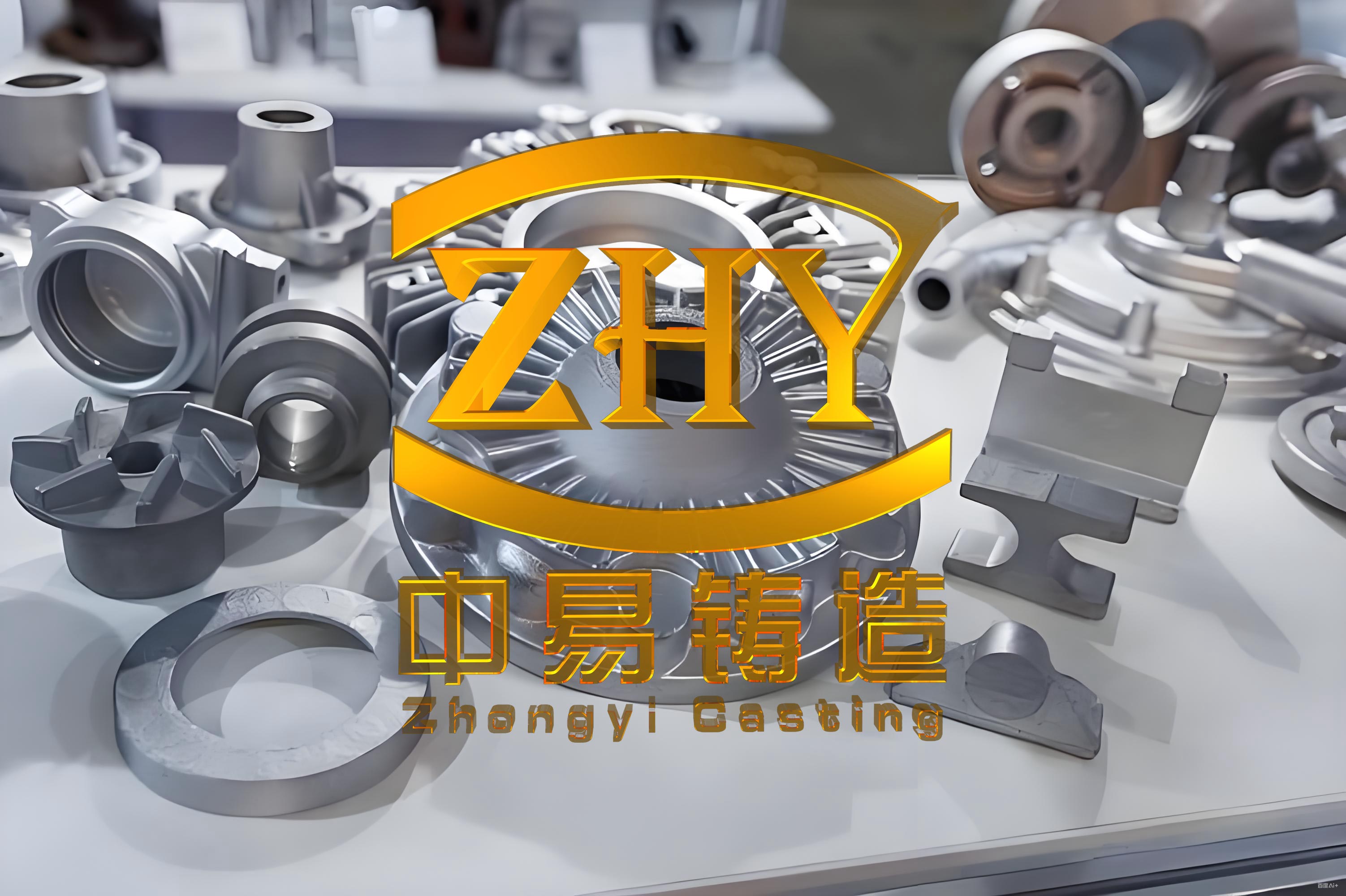
The investment casting of aluminum alloys is widely regarded as one of the most promising processes for fabricating structural components for airborne electronic equipment and other critical systems. This promise stems from its unique capability to produce parts with three defining characteristics: thin-walled sections, high geometrical complexity, and near-net-shape dimensions. However, these very advantages introduce formidable obstacles during the casting process itself. To achieve the desired surface finish, fine-grained refractory materials are essential, which unfortunately leads to molds with inherently poor gas permeability. Furthermore, the non-wetting interaction between molten aluminum and the mold material generates an additional capillary or Laplace pressure, particularly detrimental in thin sections, hindering complete filling. Compounding these issues is the necessity to pour into a preheated mold, which slows the solidification rate, promoting the formation of shrinkage porosity and coarse grain structures—both anathema to the mechanical properties required for aerospace castings.
Conventional pouring methods struggle with these combined challenges. Gravity pouring, despite sophisticated gating system design, often cannot avoid turbulent flow and metal splash, leading to oxide entrapment and defects. Advanced countergravity methods, such as low-pressure die casting or vacuum-assisted casting, offer better control but impose stringent demands on mold strength and permeability, limiting their applicability with delicate investment shells. This technological gap underscores the critical need for a more effective, versatile, and economically viable forming method—a need the APIC method aims to fulfill.
Fundamental Principle and Process Mechanics
The core innovation of the Adjustable Pressure Investment Casting method lies in its independent and precise control over the pressure environment during the distinct stages of mold filling and solidification. This decoupling allows for the optimization of fluid flow dynamics and solidification kinetics separately, a flexibility not afforded by traditional single-pressure-cycle processes. The schematic setup involves a pressure-tight chamber enclosing the investment mold, connected via a feed tube to a crucible holding the molten alloy. The entire system is charged with an inert gas or dried compressed air, the pressure of which is dynamically controlled.
The process sequence is as follows: Initially, the pressure in the mold cavity (P_c) can be set to a sub-atmospheric level. To initiate filling, the pressure in the crucible (P_1) is increased relative to P_c, forcing the metal upward through the feed tube into the mold cavity in a countergravity fashion. The key differentiator is that the driving pressure differential ΔP(t) = P_1(t) – P_c(t) is not constant but is a carefully controlled function of time. This programmable pressure profile governs the filling velocity V(t). A simplified dynamic model describing this relationship, accounting for system damping and potential oscillations, can be expressed as:
$$ V(t) = \frac{1}{\rho g} \cdot \frac{d\Delta P(t)}{dt} + A e^{-\alpha t} \sin(\omega t + \phi) $$
where:
- \( V(t) \) is the instantaneous mold-filling velocity,
- \( \rho \) is the density of the molten alloy,
- \( g \) is the acceleration due to gravity,
- \( \Delta P(t) \) is the time-dependent pressure differential,
- \( t \) is time,
- \( A \) is the amplitude of velocity oscillations,
- \( \alpha \) is a damping coefficient related to system and fluid resistance,
- \( \omega \) and \( \phi \) are the frequency and phase angle of any transient oscillations.
By tailoring the function \( \Delta P(t) \), one can control the average filling speed to be rapid yet laminar, minimizing turbulence. Simultaneously, process parameters are designed to maximize the damping factor \( \alpha \), thereby suppressing the oscillatory term \( A e^{-\alpha t} \sin(\omega t + \phi) \) to ensure a smooth, shock-free fill. This precise control is paramount for replicating intricate features and thin walls in complex aerospace castings without defect formation.
Upon complete filling, the pressure control strategy shifts to optimize solidification conditions. A pressure distribution system separately regulates the pressure in the upper chamber (P_2, acting on the top of the mold) and the lower chamber (P_1, acting on the melt in the crucible and feed tube). The objectives are twofold: to apply a high effective pressure on the solidifying casting to suppress porosity, while ensuring the net pressure on the fragile investment shell itself remains minimal to prevent cracking or distortion. This is achieved by maintaining a specific relationship between P_1 and P_2:
$$ \frac{dP_1}{dt} = \frac{dP_2}{dt} $$
$$ P_1 = P_2 + \Delta P_s $$
Here, \( \Delta P_s \) is a constant pressure offset maintained during solidification, which is the metallostatic pressure from the feeding system. This synchronization (\( dP_1/dt = dP_2/dt \)) means both pressures increase at the same rate, so the pressure difference across the mold wall (\( P_2 – P_c \), with P_c now equalized) stays low, protecting the mold. Meanwhile, the molten metal in the casting is subjected to the full pressure P_1 from below, facilitating efficient interdendritic feeding.
The required solidification pressure P_1 is determined by the need to prevent hydrogen pore formation. The critical pressure to keep hydrogen in solution can be derived from Sieverts’ law:
$$ P_1 > \left( \frac{C_0}{K_s f_s(t) + [1 – f_s(t)] K_l} \right)^2 $$
where:
- \( C_0 \) is the initial hydrogen content in the melt,
- \( K_s \) and \( K_l \) are the solubility coefficients of hydrogen in the solid and liquid alloy, respectively,
- \( f_s(t) \) is the solid fraction, a function of solidification time \( t \).
From this, the minimum required rate of pressure increase during solidification—the “pressure ramping speed”—can be found by differentiating the inequality:
$$ \frac{dP_1}{dt} > – \frac{2 (K_s – K_l) C_0^2}{\left( K_s f_s(t) + [1 – f_s(t)] K_l \right)^3 } \cdot \frac{df_s(t)}{dt} $$
This equation reveals that the necessary ramping speed depends primarily on the initial hydrogen content \( C_0 \) and the casting’s solidification rate \( df_s/dt \). Higher hydrogen levels and faster solidification demand a more rapid pressure increase to effectively suppress porosity. This relationship is quantitatively illustrated in the table below, which summarizes experimental data for an Al-4.5%Cu alloy, a common basis for high-strength aerospace castings.
| Initial Hydrogen Content, C0 (cm³/100g) | Pressure Ramping Speed, dP1/dt (kPa/s) | Resulting Porosity Volume Fraction (%) | Porosity Reduction vs. 0.2 kPa/s Baseline |
|---|---|---|---|
| 0.187 (Low) | 0.2 | 1.70 | Baseline |
| 0.8 | 0.95 | 44% decrease | |
| 1.6 | 0.70 | 59% decrease | |
| 3.2 | 0.50 | 71% decrease | |
| 0.365 (High) | 0.2 | 4.20 | Baseline |
| 0.8 | 2.10 | 50% decrease | |
| 1.6 | 1.80 | 57% decrease | |
| 3.2 | 1.40 | 67% decrease |
The data clearly shows that increasing the pressure ramping speed dramatically reduces porosity for any given hydrogen level. Furthermore, it underscores a critical, synergistic point: while APIC can compensate for higher gas content, achieving the lowest possible porosity—essential for fatigue-critical aerospace castings—mandates both an optimized pressure cycle and thorough melt degassing prior to casting. The process enhances the benefits of good melt hygiene but does not eliminate its necessity.
Technical Superiority and Quantitative Advantages
The APIC method’s distinct separation of filling and solidification pressure control confers several measurable advantages over conventional casting techniques, making it exceptionally suitable for demanding aerospace castings.
1. Superior Mold-Filling Capability: The initial negative or low pressure in the mold cavity eliminates the back-pressure from entrapped air, significantly reducing the actual pressure required to lift the metal. This allows for very gentle yet complete filling. Quantitative comparisons of fluidity, measured as the filled area of a thin-section spiral test, demonstrate APIC’s superiority. In experiments conducted under identical pouring temperatures, APIC showed a 29% higher filling capacity compared to traditional gravity investment casting and a 9% higher capacity compared to standard differential pressure casting. This exceptional fluidity enables the production of castings with extreme thin-walled sections and intricate internal passages that are otherwise unattainable.
2. Reduced Demand on Mold Properties: Because the net pressure on the mold shell during both filling (due to initial vacuum) and solidification (due to synchronized pressure increase) is kept low, the APIC process does not require the extremely high strength and permeability needed for other countergravity processes. This greatly expands the range of usable mold materials, including conventional ceramic investment shells, resin-bonded sand molds, and plaster molds, thereby improving process flexibility and reducing cost.
3. Enhanced Solidification Structure and Mechanical Properties: The controlled increase of pressure during solidification does more than just suppress porosity. The rising pressure also increases the intimacy of contact between the casting and the mold wall, effectively improving the heat transfer coefficient (HTC). This results in an increased effective cooling rate. The combination of pressure-assisted feeding and faster cooling yields a finer, denser microstructure. The improvement in mechanical properties, particularly ductility and fatigue life, is significant. For example, studies on a common cast aluminum alloy (like A356) show the following comparative enhancements:
| Casting Method | Ultimate Tensile Strength (MPa) | Yield Strength (MPa) | Elongation (%) | Typical Porosity Level |
|---|---|---|---|---|
| Gravity Sand Casting | 230 – 260 | 180 – 200 | 2 – 4 | High |
| Conventional Investment Casting | 250 – 280 | 190 – 210 | 3 – 6 | Medium |
| Low-Pressure Die Casting | 270 – 300 | 210 – 230 | 5 – 8 | Low-Medium |
| Adjustable Pressure Investment Casting (APIC) | 290 – 320 | 220 – 240 | 8 – 12 | Very Low |
The marked increase in elongation is a direct result of reduced porosity and refined microstructure, directly translating to improved damage tolerance for aerospace castings.
4. Versatility in Application: Beyond conventional alloys, the APIC process is ideally suited for the fabrication of metal matrix composite (MMC) components. The pressure-assisted infiltration and controlled solidification are perfect for ensuring uniform reinforcement distribution and excellent matrix-to-reinforcement bonding in complex-shaped MMC aerospace castings.
Applications in Aerospace Manufacturing
The combination of design flexibility, high integrity, and excellent mechanical properties makes APIC a transformative technology for a wide array of aviation components. Its adaptability to various mold types (investment, plaster, sand) and suitability for aluminum alloys—the workhorse of aerospace structures—further broadens its impact. Key application areas include:
- Engine Components: Complex, thin-walled, and leak-tight components such as intermediate and compressor casings, turbine housings (volutes), accessory gearboxes, and various pump bodies.
- Airframe and Structural Components: Lightweight, high-strength brackets, fittings, and complex structural frames for fuselage and wing assemblies, where weight savings are critical.
- Avionics and Electronic Enclosures: Hermetic, lightweight, and EM-shielded housings for flight computers, navigation systems, radar units, and communication equipment. The process excels at producing the intricate cooling fins and internal partitions often required.
- Radar and Sensor Components: Precise, thin-walled waveguide structures and other microwave components for radar systems, where dimensional accuracy and internal surface quality are paramount.
The following table provides a non-exhaustive summary of specific components and the associated benefits realized through the APIC process:
| Component Category | Specific Example | Key Challenges | APIC Benefits |
|---|---|---|---|
| Engine Casing | Compressor Inlet Casing | Large, thin-walled, complex geometry requiring pressure tightness. | Complete filling of thin sections; high metallurgical integrity for leak-proof performance; reduced machining allowance. |
| Airframe Structure | Missile Launch Rail Support | High stiffness-to-weight ratio; complex internal webbing; high fatigue resistance. | Superior mechanical properties (strength & elongation); ability to cast intricate internal structures; fine grain size. |
| Avionics Housing | Integrated Flight Control Computer Case | EMI shielding requirements; numerous mounting bosses and internal partitions; need for hermeticity. | Excellent soundness for sealing; dimensional accuracy for direct assembly; reduced part count through integration. |
| Radar Component | Dual-Band Waveguide Assembly | Extremely smooth internal surfaces; precise dimensional tolerances; complex internal channel geometry. | Laminar fill prevents surface turbulence defects; high shape replication fidelity; minimal internal flash. |
Conclusion and Future Perspective
The Adjustable Pressure Investment Casting method represents a significant leap forward in the manufacturing of high-performance, complex aerospace castings. By intelligently decoupling and controlling the pressure parameters during the filling and solidification stages, it directly addresses the core limitations of aluminum investment casting. The process delivers quantifiable improvements in fluidity, casting soundness, mechanical properties, and geometric fidelity, all while being forgiving on mold material properties.
From my perspective, the future development of APIC lies in further digitization and optimization. The integration of real-time process monitoring (e.g., pressure, temperature) with predictive simulation models will enable closed-loop, adaptive pressure control cycles tailored to each specific part geometry and alloy. This will push the boundaries of achievable complexity and consistency. Furthermore, its application is poised to expand into the casting of other lightweight alloys, such as magnesium and high-temperature aluminum alloys, and play a crucial role in the emerging field of hybrid and functionally graded aerospace castings. As the aerospace industry continues to demand lighter, stronger, and more integrated components, versatile and capable processes like APIC will be indispensable in turning these design ambitions into reliable, flying reality.