
In my extensive experience within the foundry industry, the production of large, high-integrity machine tool castings presents a unique set of challenges. These components, such as T-slot tables and platforms, are fundamental to the precision and stability of machine tools. Their successful manufacture demands a meticulous integration of gating and risering design, molding technology, and process control. The primary goal is always to achieve dimensional accuracy, superior surface finish, and internal soundness, free from shrinkage porosity, distortion, or gas defects. Throughout this discussion, I will detail the methodologies and rationale behind the processes I have employed, consistently focusing on the critical aspects of producing reliable machine tool castings.
The foundational step in crafting a robust machine tool casting lies in the design of the feeding system. For a large planar casting, controlling solidification to promote directional feeding towards the risers is paramount. In one typical application, we set four blind risers at one end of the casting. The dimensions were precisely calculated to provide adequate feed metal during the liquid and mushy zone contraction phases of the ductile iron. The riser volume is a key parameter, often derived from the modulus method. The modulus (M) of a casting section is given by its volume-to-cooling surface area ratio: $$ M_{casting} = \frac{V_{casting}}{A_{casting}} $$. A riser must have a larger modulus to remain liquid longer. For a rectangular riser, its modulus can be approximated as: $$ M_{riser} \approx \frac{l \times w \times h}{2(lw + lh + wh)} $$ for a standalone riser, though the connection (riser neck) modifies this. In our case, risers of 80 mm x 80 mm x 120 mm (height) were used. The neck, with a height of 10 mm and width of 60 mm, acts as a choker to control the feed path and facilitate easy removal.
| Component | Dimensions / Specification | Primary Function |
|---|---|---|
| Blind Riser (x4) | 80 mm (L) x 80 mm (W) x 120 mm (H) | Provide feed metal for liquid and solidification shrinkage. |
| Riser Neck | 10 mm (H) x 60 mm (W) | Control feed flow and allow for easy knockout. |
| Sprue | φ60 mm | Deliver molten metal from pouring basin to running system. |
| Runner (also serving as Ingate) | 45 mm x 40/35 mm (tapered) | Distribute metal evenly and act as the entry point into the mold cavity via the riser. |
| Vent (x4 at opposite end) | φ20 mm | Allow air and gases to escape, preventing back-pressure and blows. |
A semi-pressurized gating system was implemented, featuring a sprue of φ60 mm and a runner with cross-sectional dimensions of 45 mm by 40/35 mm (tapered). Crucially, this runner also functioned as the ingate, with metal flowing upward through the riser and into the cavity. This design, known as a riser-gate or horn gate, helps keep the riser hot and promotes favorable temperature gradients. Four φ20 mm vent risers at the opposite end of the machine tool casting are essential. They are designed to seal off during the expansion phase of ductile iron solidification, trapping the graphite expansion pressure within the mold. This internal pressure is harnessed to compensate for micro-shrinkage, significantly enhancing the density and soundness of the final machine tool casting. The pressure (P) generated from graphite expansion can be related to the confined volume and the expansion coefficient, conceptually framed as an increase in internal pressure aiding feeding: $$ \Delta P \propto \beta_{graphite} \cdot \Delta V $$ where $\beta_{graphite}$ is related to the volumetric expansion due to graphite precipitation.
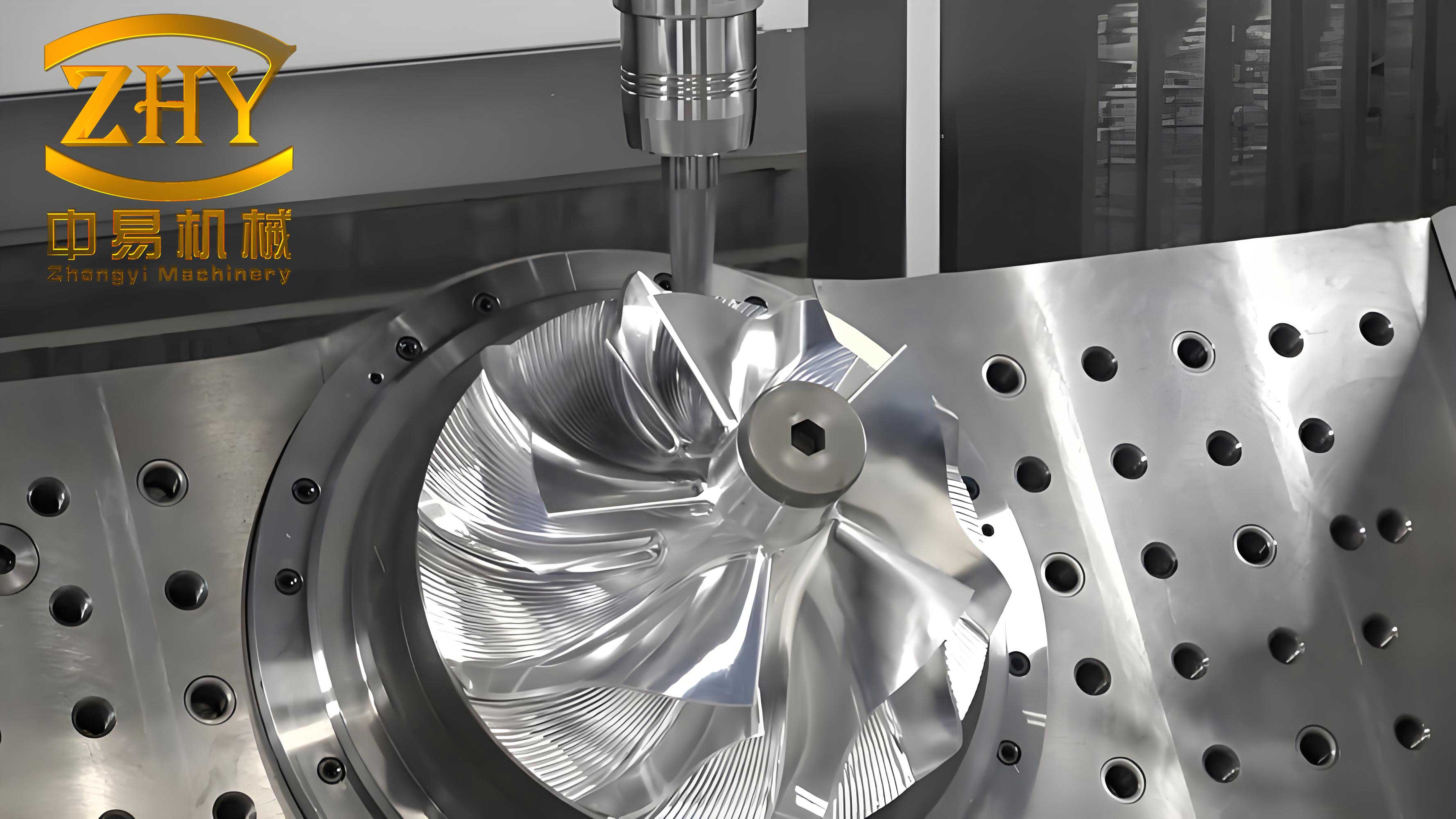
Other critical process measures are indispensable. The substantial expansion force of ductile iron necessitates robust mold rigidity. Any mold wall movement can dissipate the valuable graphite expansion pressure, crippling its self-feeding capability. We invariably employ flask clamping or weighted tops to ensure the mold remains a reinforced, sealed volume. This containment is vital for the expansion to be fully utilized within the machine tool casting. Pouring is another pivotal operation. The temperature must be carefully balanced. Too high a temperature increases total liquid contraction, demanding more feed metal than small risers can supply. Conversely, too low a temperature risks mistruns, cold shuts, and slag entrapment. For our machine tool castings, we strictly control pouring temperature between 1,350 and 1,380 °C. Furthermore, we adopt a fast-pour strategy, completing the pour within 30 to 35 seconds. This minimizes temperature loss and thermal gradients before the onset of solidification. The fill time (t) can be estimated using the Bernoulli and continuity equations for a gating system: $$ t \approx \frac{V_{casting}}{A_{choke} \cdot v_{choke}} $$ where $A_{choke}$ is the choke area and $v_{choke}$ is the theoretical velocity at the choke.
To further enhance the filling dynamics for a large plane, we tilt the mold by raising one side of the flask by 300 mm. This increases the effective metallostatic head, accelerating the upward rise velocity of the metal front. This practice not only ensures a swift fill but also establishes a more favorable thermal gradient from the bottom (higher) to the top (lower), aiding directional solidification towards the risers at the higher end. Preventing distortion in a large, planar machine tool casting is equally critical. We use high-rigidity, reinforced flasks to resist any bending forces during casting and cooling. Moreover, we enforce a minimum mold shakeout or knockout time exceeding 10 hours. This allows the machine tool casting to cool sufficiently within the supportive mold, preventing warpage or distortion that can occur if it is handled while still at a high, non-uniform temperature.
A significant advancement in producing these complex shapes has been the adoption of the Vacuum (“V”) Molding process. This method is particularly well-suited for large machine tool castings requiring excellent surface finish and dimensional stability. The core principle involves using a thin plastic film heated and drawn over a pattern by vacuum, followed by filling the flask with dry, unbonded sand. A second film seals the top, and vacuum applied to the flask hardens the mold by creating a pressure differential. The pattern can then be easily withdrawn with minimal draft. The entire process eliminates binders and associated moisture, leading to several benefits for machine tool castings.
| Parameter | V-Process | Conventional Green Sand |
|---|---|---|
| Sand Type | Dry Silica Sand (70-140 mesh) | Clay-bonded Sand with moisture |
| Binder | None (Vacuum pressure holds shape) | Bentonite clay, water, additives |
| Mold Hardness | Very High (90-95 scale) | Moderate to High |
| Draft Requirement | Minimal to None | Significant |
| Sand Reclamation Rate | >95% | ~90% with treatment |
| Typical Surface Finish | Excellent, smooth | Good |
The sequence involves key equipment: vacuum pumps, a film heater, a vibrating table for sand compaction, and specialized flasks with built-in filters. The film, typically Ethylene-Vinyl Acetate (EVA) for its superior elongation (600-800%), is crucial. After heating, it is draped over the pattern, and vacuum from beneath draws it tightly to every contour. The sand is then filled and vibrated. The top film is applied, and the flask vacuum is activated, creating the hardening differential pressure (ΔP). The pattern vacuum is released, and the mold is stripped. The mold remains under vacuum for pouring, cooling, and solidification. The pressure differential is the fundamental force, given by: $$ \Delta P = P_{atm} – P_{vacuum} $$ where $P_{vacuum}$ is typically 300-500 mbar below atmospheric. This ΔP, acting over the sand grain contact areas, provides the mold strength equivalent to a binder.
Gating design for V-process machine tool castings favors open, bottom-gating systems to maintain a calm fill and avoid film erosion. The slow cooling characteristic of dry sand molds enhances feeding efficiency, often allowing for smaller risers and higher yield, frequently exceeding 92% for a well-designed machine tool casting. However, specific defects require vigilant control. Mechanical penetration (metal penetration) can occur if the sand is too coarse, vacuum is too low, or pouring temperature is excessive. The threshold for penetration can be related to the pressure head and pore size, often countered by using finer sand (higher mesh number) and appropriate coatings. The governing relation for the critical pressure for penetration involves surface tension and contact angle: $$ P_{critical} \approx \frac{2\gamma_{lv} \cos\theta}{r_{pore}} $$ where $\gamma_{lv}$ is the liquid-vapor surface tension, $\theta$ is the contact angle, and $r_{pore}$ is the effective pore radius in the sand mold face.
Sand collapse is a risk if the film seal is compromised or vacuum is lost during pouring. Ensuring robust film overlap and secure vacuum lines is essential. Fins and increased section thickness can arise if the pattern lacks adequate clearance or the film does not form a sharp corner; pattern engineering must account for film stretch. Perhaps the most insidious defect in V-process machine tool castings is gas porosity. While the sand is dry, gas can originate from multiple sources: moisture in sand (>1%), humid air, damp ladles or pouring cups, slag in the melt, or insufficient drying of the refractory coating sprayed on the film. The total gas volume (V_g) available to form pores is the sum from all sources: $$ V_g = V_{sand-moisture} + V_{coating-binders} + V_{air-humidity} + V_{slag-decomposition} $$. Therefore, strict control over sand moisture, coating drying, metal treatment, and atmospheric conditions is non-negotiable for sound machine tool castings.
The choice of sand is critical. Fine, dry silica sand with high SiO2 content (>95%) and low moisture (<1%) is standard. The sand’s thermal properties influence the solidification rate of the machine tool casting. The heat transfer in the mold can be modeled using Fourier’s law in one dimension for simplicity: $$ q = -k \frac{dT}{dx} $$ where $q$ is the heat flux, $k$ is the effective thermal conductivity of the sand mold, and $\frac{dT}{dx}$ is the temperature gradient. The low conductivity of unbonded sand contributes to the slow cooling.
| Defect Type | Probable Causes | Corrective Actions |
|---|---|---|
| Mechanical Penetration | High pouring temperature, low vacuum, coarse sand, inadequate coating. | Use finer sand (e.g., 100-140 mesh), ensure sufficient vacuum (≥500 mbar below atm), apply proper coating, lower pouring temp. |
| Sand Collapse / Mold Loss | Vacuum leak, broken film seal, turbulent metal flow eroding film. | Inspect film seams and hoses, use open/quiet gating, maintain constant vacuum during pour. |
| Fins & Increased Thickness | Insufficient pattern draft, film bridging over deep draws. | Incorporate minimal draft (0.5-1°), use EVA film for better conformity, add pattern relief or splits. |
| Gas Porosity (Blowholes) | Moisture in sand/air, damp coatings/tools, slag, oxidized metal. | Dry sand to <0.5%, pre-dry all tools and coatings, effective slag removal, use clean, dry charge materials. |
In conclusion, the successful production of premium machine tool castings hinges on a holistic approach. It combines traditional metallurgical principles of feeding and solidification control with advanced molding technologies like the V-process. The interplay between riser design, gating configuration, pouring parameters, and mold rigidity must be meticulously orchestrated. For ductile iron machine tool castings, leveraging the graphite expansion pressure through a sealed, rigid mold cavity is a game-changer for achieving dense, shrinkage-free components. The V-process, with its superior surface finish, dimensional accuracy, and environmental benefits, offers a compelling solution, especially for large, flat geometries common in machine tool castings. However, it demands strict discipline in process control to avoid its characteristic defects. By integrating these proven techniques—calculated risering, controlled fast pouring, mold clamping, tilted pouring, and vacuum-sealed molding—we can consistently achieve machine tool castings that meet the stringent demands of precision, durability, and performance in industrial applications. The yield improvement and quality consistency further underscore the effectiveness of this integrated methodology for manufacturing critical machine tool castings.