
In the power generation and boiler systems, hydrostatic test block valves play a critical role as isolation devices during overall pressure testing. These valves serve dual functions: acting as boiler headers or as pipeline components, eliminating the need for welding and cutting blind plates. Their reusability enhances operational convenience and economic efficiency, facilitating maintenance procedures. However, the diverse specifications and low volume demands for block valves pose significant manufacturing challenges. Traditional methods often involve forging or custom molding for valve bodies, which are time-consuming and costly. This article introduces a transformative approach: utilizing steel castings from gate valve body blanks to machine block valve bodies. This method not only reduces lead times and expenses but also simplifies assembly, thereby improving user productivity.
The core of this innovation lies in repurposing existing steel castings, which are abundantly available in gate valve production. Steel castings offer excellent mechanical properties and cost-effectiveness, making them ideal for high-pressure applications. By applying strategic machining processes, these blanks can be adapted into block valve bodies, bypassing the need for dedicated molds. This approach leverages the inherent advantages of steel castings, such as their durability and versatility, while addressing the niche requirements of block valves.
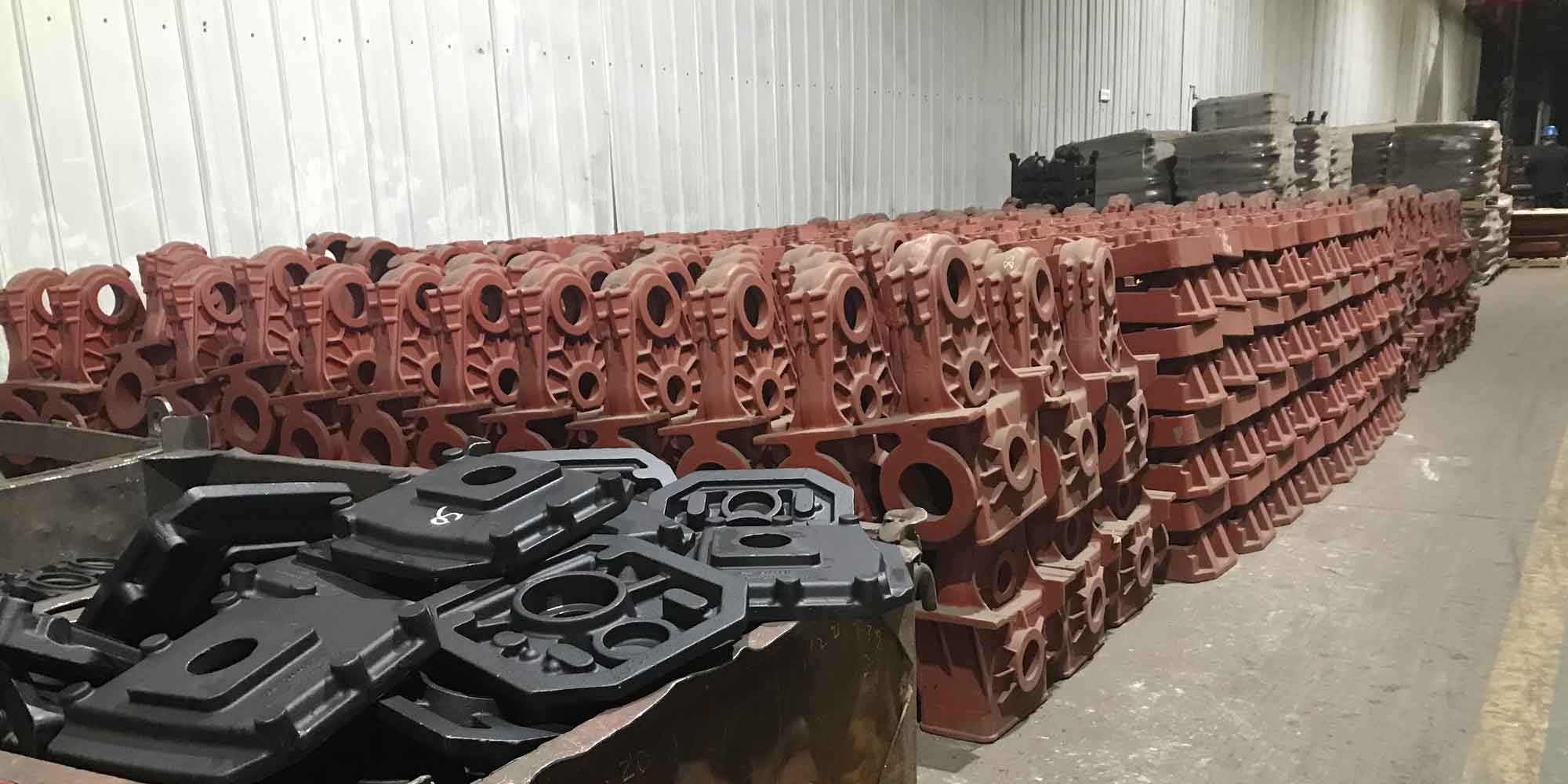
To understand the conversion process, it is essential to analyze the structural forms of steel castings in gate valves and block valves. Common gate valves include low-pressure cylindrical types and high-pressure self-sealing types, both featuring robust steel castings that form the valve body. The block valve, in contrast, operates in two states: hydrostatic test mode and normal operation mode, achieved by modifying internal flow path components. The conversion method focuses on machining these steel castings to accommodate block valve functionalities.
The selection of appropriate steel castings is paramount. This method is applicable to high-pressure self-sealing gate valve body blanks and those with cylindrical middle cavity structures. These steel castings provide a solid foundation for machining due to their uniform material properties and dimensional stability. The following sections detail the machining steps, supported by formulas and tables to quantify benefits.
Machining Process for Cylindrical Middle Cavity Steel Castings
For gate valve body blanks with cylindrical middle cavities, the conversion involves several precision machining stages. Initially, the sealing inclined surfaces on both sides of the valve body are machined to create seat bore holes concentric with the flow channel. This step ensures proper placement of support plates and block plates. The side intended for the block plate requires overlay welding of sealing surfaces, enhancing durability. The machining region, denoted as Area A, modifies the original steel casting profile to align with block valve specifications.
Subsequently, the upper ends of the seat bores are machined to produce flat circular planes through counterboring, referred to as Area B. This process facilitates the attachment of additional components. In Area C and D, threaded blocks are welded onto these counterbored surfaces, enabling the use of bolts and pressure strips to secure the flow guide ring during normal operation. The middle cavity employs gasket sealing instead of complex mechanisms, simplifying the design.
The mathematical representation of machining tolerances can be expressed using the following formula for concentricity: $$ \delta = \sqrt{(x_1 – x_2)^2 + (y_1 – y_2)^2} $$ where \( \delta \) is the deviation from perfect concentricity, and \( (x_1, y_1) \) and \( (x_2, y_2) \) are coordinates of the bore centers. Maintaining \( \delta \leq 0.05 \, \text{mm} \) is crucial for leak-proof performance.
| Machining Step | Description | Key Parameters |
|---|---|---|
| Area A: Sealing Surfaces | Machining inclined surfaces for seat bores | Angle: 45°, Tolerance: ±0.1° |
| Area B: Counterboring | Creating flat planes for component attachment | Diameter: 150 mm, Depth: 10 mm |
| Areas C & D: Welding | Adding threaded blocks for bolt fixation | Thread Size: M20, Welding Strength: 500 MPa |
This table summarizes the critical steps in machining steel castings for block valve conversion, emphasizing precision and material integrity.
Machining Process for High-Pressure Self-Sealing Steel Castings
For high-pressure gate valve body blanks, the conversion process is similar, except the middle cavity utilizes gasket sealing instead of Wood seal mechanisms. This alteration reduces the number of internal parts, such as sealing rings and split rings, lowering both manufacturing and maintenance costs. The steel castings in these blanks are typically designed for extreme pressures, making them suitable for block valve applications after machining.
The advantage of using gasket sealing can be quantified through a cost-saving formula: $$ \Delta C = C_w – C_g $$ where \( \Delta C \) is the cost reduction, \( C_w \) is the cost of Wood seal components, and \( C_g \) is the cost of gasket materials. Typically, \( \Delta C \) ranges from 30% to 50% per valve, depending on size and pressure rating.
Efficiency gains in assembly time are calculated as: $$ \eta = \frac{T_a}{T_b} $$ where \( \eta \) is the efficiency ratio, \( T_a \) is the assembly time for traditional block valves, and \( T_b \) is the assembly time for converted valves. Field tests show \( \eta \approx 1.5 \), indicating a 50% improvement in assembly speed.
| Valve Type | Number of Parts | Assembly Time (hours) | Material Cost (USD) |
|---|---|---|---|
| Traditional Block Valve | 15 | 4.0 | 1200 |
| Converted from Steel Castings | 8 | 2.5 | 800 |
This table highlights the reduction in part count and associated costs when using steel castings for conversion, underscoring the economic benefits.
Superiority of the Conversion Method
The conversion of steel castings from gate valve blanks to block valve bodies offers multiple advantages. Firstly, it eliminates the need for custom molds, drastically reducing lead times and tooling expenses. The formula for mold cost avoidance is: $$ S_m = N \times C_m $$ where \( S_m \) is the total savings, \( N \) is the number of valve specifications, and \( C_m \) is the average mold cost per specification. For a portfolio of 10 specifications, savings can exceed $100,000.
Secondly, replacing Wood seal mechanisms with gasket sealing in middle cavities decreases part complexity. This not only lowers manufacturing costs but also simplifies field maintenance, as gaskets are easier to replace than specialized seals. The reliability of steel castings ensures long-term performance, with fatigue life calculated using: $$ L_f = \frac{\sigma_u}{\sigma_a} \times 10^6 \, \text{cycles} $$ where \( L_f \) is the fatigue life, \( \sigma_u \) is the ultimate tensile strength of the steel casting, and \( \sigma_a \) is the applied stress amplitude. For typical steel castings with \( \sigma_u = 500 \, \text{MPa} \), \( L_f \) exceeds 10^7 cycles under operational conditions.
Thirdly, the machining accuracy requirements are lower for gasket-sealed designs compared to Wood seal systems, which demand precise tolerances. This reduces machining time and cost, enhancing overall production efficiency. The cumulative effect is a more sustainable manufacturing process that maximizes the utility of steel castings.
Application in Industry
This conversion methodology has been successfully implemented in various boiler plants, handling specifications such as 400SD61H-25 and 225SD61Y-250. The use of steel castings has proven effective in reducing overall valve costs while providing user-friendly operation during state transitions. Feedback indicates high satisfaction due to decreased downtime and lower spare part inventories. The adaptability of steel castings allows for scalability across different pressure classes and sizes, making this approach a viable solution for custom valve demands.
In practice, the conversion process integrates seamlessly with existing supply chains for steel castings, leveraging their availability and quality. By optimizing machining parameters, manufacturers can achieve throughput rates that meet market demands without compromising on safety or performance. The inherent strength of steel castings ensures compliance with industry standards, such as ASME and ISO, for pressure boundary components.
Conclusion
As the power sector evolves towards higher parameters and larger capacity units, cost-effective and efficient valve manufacturing becomes increasingly competitive. The method of machining steel castings from gate valve body blanks into block valve bodies addresses key challenges in custom valve production. It capitalizes on the robustness and versatility of steel castings, yielding significant savings in time and cost while simplifying user operations. This innovative approach not only enhances economic returns but also contributes to the localization of high-end valve manufacturing, supporting broader industrial advancements. The repeated emphasis on steel castings throughout this process underscores their pivotal role in modern engineering solutions.
Future developments may focus on automating the machining steps for steel castings, further reducing labor costs and increasing precision. Additionally, material science advancements could lead to improved steel casting alloys that enhance corrosion resistance and thermal stability, expanding the application range of converted valves. By continuing to innovate around steel castings, the valve industry can achieve greater sustainability and reliability in critical infrastructure projects.