
As a leading innovator in engine component manufacturing, we have dedicated extensive research to advancing piston technology for high-performance internal combustion engines. Pistons are critical components that convert combustion pressure into mechanical work through the crank-rod mechanism. With the rapid development of technologies like high-pressure common rail, turbocharging, and direct injection, along with the implementation of stringent emission standards such as China’s National VI, engine cylinders now face extreme conditions with burst pressures exceeding 22 MPa and gas temperatures over 400°C. These harsh environments demand superior performance from key components, particularly pistons, which play a vital role in engine efficiency and emissions control. Traditional aluminum alloys often fall short in stiffness and high-temperature performance, leading to the adoption of higher-strength steels and welded structures. However, steel pistons, while effective, come with high material costs and machining difficulties, driving up production expenses and limiting processing speeds. In response, we have developed a novel split-type friction welded piston using ductile iron castings, which offers a cost-effective alternative with excellent mechanical properties and machinability. This approach leverages the advantages of ductile iron castings, a material known for its robustness and versatility in engineering applications.
Ductile iron castings have gained widespread use in industry due to their combination of strength, ductility, and cost-efficiency. By undergoing spheroidal graphite treatment, ductile iron achieves mechanical properties close to those of steel, making it suitable for replacing many cast and forged steel components. In the current internal combustion engine market, some companies have begun researching and producing ductile iron pistons, but they primarily rely on integral casting methods, such as investment casting. For instance, Japanese manufacturers like Komatsu and Hino have developed ductile iron pistons for engines with bore diameters ranging from 125 mm to 170 mm. However, integral casting presents significant challenges, including high工艺难度 and costs, especially as engine performance demands reduce piston height and weight. To address these issues, we propose a split-type manufacturing method using ductile iron castings. This involves machining the piston head and skirt separately from ductile iron profiles, followed by solid-state welding, such as friction welding, to form a complete piston. This method not only reduces material costs but also enhances machinability, as ductile iron castings exhibit excellent chip-breaking and cutting properties. The use of ductile iron castings in this context allows for significant savings in both raw material and machining expenses, making it an ideal solution for next-generation high-performance pistons.
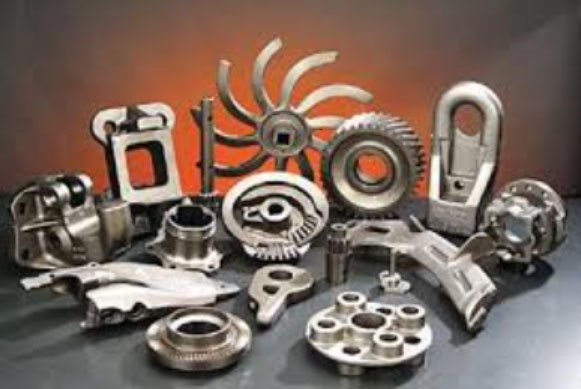
In selecting the material for this innovative piston, we prioritized QT600-7 ductile iron castings due to their balanced properties and suitability for solid-state welding. The chemical composition is carefully controlled to ensure optimal performance, with low sulfur and phosphorus contents to enhance weldability. The preferred chemical composition is summarized in Table 1. This composition supports the production of ductile iron castings with minimal defects, fine grains, and high mechanical properties, achieved through methods like water-cooled metal mold centrifugal casting. The manufacturing process involves melting in medium-frequency induction furnaces, followed by multiple inoculation and spheroidization treatments to increase graphite nodule count. Inoculants such as 75SiFe or strontium silicon are used, along with spheroidizing agents like FeSiMg6RE2. After centrifugal casting and air cooling to room temperature, the ductile iron castings are formed into profiles for further machining. For the piston head, we use ductile iron pipe profiles, pre-machining half of the cooling oil passage and leaving a machining allowance of 3-5 mm on other surfaces. The piston skirt is machined from ductile iron bar stock, with the other half of the cooling oil passage pre-machined and the inner cavity finished to drawing specifications, also with a 3-5 mm allowance. Microstructural analysis using optical microscopy (e.g., Leica DM2500M) reveals a spheroidization rate greater than 95%, graphite nodule diameter less than 0.06 mm (size 6-8), and ferrite content exceeding 90%, as shown in the micrographs. The hardness ranges from 150 to 200 HBW, with as-cast strength ≥600 MPa and elongation greater than 7%.
| Element | Content |
|---|---|
| C | 3.0-3.9 |
| Si | 2.4-3.0 |
| Cu | 0.5-1.0 |
| Ni | 0.5-1.0 |
| Nb | 0.01-0.05 |
| Mn | <0.4 |
| S | <0.02 |
| P | <0.02 |
| Mg residual | 0.03-0.06 |
| Ce | 0.02-0.04 |
| Fe | Balance |
The welding method chosen for joining the piston head and skirt is friction welding, a solid-state process that avoids the challenges associated with fusion welding of ductile iron castings. Friction welding involves rotating the components under axial pressure, causing atomic diffusion and formation of a shared crystalline structure without reaching melting temperatures. This method offers several advantages over fusion welding: it eliminates defects related to melting and solidification, such as porosity and embrittlement; it induces beneficial metallurgical effects like grain refinement and densification; and it produces a narrow heat-affected zone with minimal microstructural coarsening. By optimizing friction welding parameters, we achieve high-quality joints with strength comparable to or exceeding that of the base material. This approach simplifies the manufacturing process for ductile iron castings pistons and enhances their reliability. Compared to steel pistons made from materials like 38MnVS6Ti non-quenched and tempered steel or 42CrMo4 quenched and tempered steel, ductile iron castings offer superior machinability and lower material costs. For example, the断屑性能 and切削性能 of ferritic ductile iron significantly reduce tool wear and machining time. Table 2 provides a detailed comparison of properties and costs between 38MnVS6Ti steel and QT600-7 ductile iron castings, highlighting the latter’s advantages in hardness, mechanical properties, machinability, and price.
| Property | 38MnVS6Ti Steel | QT600-7 Ductile Iron Castings |
|---|---|---|
| Brinell Hardness (HBW) | 250-300 | 150-200 |
| Yield Strength (MPa) | ≥520 | ≥400 |
| Tensile Strength (MPa) | ≥850 | ≥600 |
| Elongation (%) | ≥10 | ≥7 |
| Machinability | Poor | Excellent |
| Material Price (USD/kg) | Approx. 2.5 | Approx. 1.2 |
After friction welding, the QT600-7 ductile iron castings piston undergoes heat treatment to relieve stresses and enhance mechanical properties. Initially, stress relief annealing at 400-500°C is performed, which allows for subsequent precision machining. However, for high-strength National VI pistons, the as-welded strength may be insufficient, necessitating further heat treatment such as quenching and tempering or austempering. Austempering, in particular, is preferred as it produces a uniform microstructure with high strength and toughness. The austempering process involves austenitizing in a high-temperature salt bath (e.g., 60% BaCl + 40% NaCl) at 890°C for 60 minutes, followed by rapid quenching into a low-temperature salt bath (e.g., 50% NaNO2 + 50% KNO3) at 450°C for 25 minutes. Alternatively, quenching and tempering can be applied: oil quenching at 920°C for 60 minutes, followed by tempering at 450°C for 3 hours. These treatments eliminate hardness disparities between the weld zone and base material, ensuring consistent machinability and reducing tool wear during finishing operations. The microstructures after heat treatment, as observed under microscopy, show refined phases that contribute to improved performance. For instance, the austempered structure exhibits bainitic transformation, while the quenched and tempered structure reveals tempered martensite. The relationship between heat treatment parameters and mechanical properties can be expressed using empirical formulas, such as the effect of temperature on hardness: $$ H = H_0 + k \cdot \Delta T $$ where \( H \) is the final hardness, \( H_0 \) is the initial hardness, \( k \) is a material constant, and \( \Delta T \) is the temperature change during treatment. This highlights the tunability of ductile iron castings for specific applications.
The benefits of using heat-treated ductile iron castings pistons are evident when compared to steel alternatives. After austempering or quenching and tempering, the QT600-7 ductile iron achieves a hardness of 250-300 HBW, yield strength ≥550 MPa, tensile strength ≥850 MPa, and elongation ≥8%, matching or exceeding the properties of 38MnVS6Ti steel pistons. Moreover, the excellent machinability of ductile iron castings reduces production costs further. Table 3 compares the performance and cost of 38MnVS6Ti steel pistons with austempered and quenched-and-tempered QT600-7 ductile iron castings pistons. Additionally, the lower density of ductile iron castings (approximately 7.1 g/cm³ compared to 7.85 g/cm³ for steel) contributes to weight reduction in engines, while its lower thermal conductivity helps retain heat, improving thermal efficiency. These factors make ductile iron castings an ideal material for next-generation high-performance, low-cost National VI pistons.
| Property | 38MnVS6Ti Steel Piston | Austempered Ductile Iron Castings Piston | Quenched and Tempered Ductile Iron Castings Piston |
|---|---|---|---|
| Brinell Hardness (HBW) | 250-300 | 250-300 | 250-300 |
| Yield Strength (MPa) | ≥520 | ≥550 | ≥550 |
| Tensile Strength (MPa) | ≥850 | ≥850 | ≥800 |
| Elongation (%) | ≥10 | ≥8 | ≥10 |
| Machinability | Poor | Excellent | Excellent |
| Material Price (USD/kg) | Approx. 2.5 | Approx. 1.5 | Approx. 1.3 |
In conclusion, the split-type friction welded piston using ductile iron castings represents a significant advancement in engine component technology. By employing QT600-7 ductile iron profiles for the head and skirt, followed by inertial friction welding and precision machining, we achieve a product that substantially reduces material and machining costs. The inherent properties of ductile iron castings, such as good断屑性能 and切削性能, facilitate efficient production. Post-weld heat treatments, including austempering or quenching and tempering, further enhance strength and eliminate hardness variations, ensuring consistent performance and reduced tool wear. Although these treatments add minor costs, they result in mechanical properties that meet or exceed those of steel pistons, with the added benefits of lower weight and improved thermal efficiency. The widespread adoption of ductile iron castings in this application underscores their potential to revolutionize high-performance piston manufacturing, offering a sustainable and economical solution for modern internal combustion engines. As we continue to refine this process, the integration of ductile iron castings will play a pivotal role in meeting evolving industry demands for efficiency and cost-effectiveness.
To further illustrate the advantages, consider the economic impact: the use of ductile iron castings can lead to a cost reduction of up to 40% compared to steel, based on material and machining savings. The friction welding process itself can be optimized using parameters derived from experimental data, such as the relationship between rotational speed \( \omega \), pressure \( P \), and weld strength \( S \): $$ S = f(\omega, P, t) $$ where \( t \) is the welding time. Empirical studies show that for ductile iron castings, optimal parameters include a rotational speed of 1500-2000 rpm and an axial pressure of 50-100 MPa, resulting in joint efficiencies over 95%. Additionally, the microstructural evolution during heat treatment can be modeled using phase transformation kinetics, such as the Johnson-Mehl-Avrami equation for austempering: $$ X = 1 – \exp(-k t^n) $$ where \( X \) is the transformed fraction, \( k \) is a rate constant, and \( n \) is the Avrami exponent. These scientific approaches ensure the reliability and performance of ductile iron castings in demanding applications.
In summary, the innovative use of ductile iron castings in split-type pistons addresses key challenges in the automotive industry, including cost, performance, and sustainability. By leveraging the unique properties of ductile iron castings, we have developed a solution that not only meets but exceeds the requirements of high-performance engines. As research progresses, we anticipate further improvements in ductile iron castings technology, such as enhanced alloy designs and advanced welding techniques, which will continue to drive innovation in this field. The success of this project highlights the importance of material science in engine development and the enduring value of ductile iron castings as a versatile engineering material.