
In modern manufacturing, the quality assurance of shell castings is paramount to ensure the reliability and performance of final products. As an engineer specializing in casting inspection, I have developed a comprehensive framework for evaluating both rough and finished shell castings. This article delves into the detailed procedures, standards, and methodologies involved in inspecting shell castings, emphasizing material properties, dimensional accuracy, surface quality, and internal integrity. The term “shell castings” will be frequently referenced throughout, as these components are critical in industries such as automotive, aerospace, and machinery, where precision and durability are essential. The inspection process not only verifies compliance with specifications but also identifies potential defects early, reducing waste and enhancing efficiency. Below, I outline the key aspects of shell castings inspection, supported by tables and formulas to summarize critical data and relationships.
The inspection of shell castings begins with the rough casting stage, where the material and structural properties are assessed before any machining. This phase is crucial because defects in rough shell castings can propagate through subsequent processes, leading to failures. We start by evaluating the chemical composition and mechanical performance of the aluminum alloy used, typically ADC12, which aligns with standards like JIS H 5302. For shell castings, material consistency is vital; thus, we refer to international benchmarks for comparison. Table 1 provides a cross-reference of materials across different countries, highlighting equivalents to ADC12 for shell castings applications. This ensures global compatibility and quality consistency.
| Country/Standard | Material Designation | Key Composition | Application in Shell Castings |
|---|---|---|---|
| Japan (JIS) | ADC12 | Si 9.6-12.0%, Cu 1.5-3.5%, Fe ≤1.3% | Common for high-pressure die casting of shell castings |
| USA (ASTM) | A380 | Si 7.5-9.5%, Cu 3.0-4.0%, Fe ≤1.3% | Similar to ADC12, used in shell castings for automotive parts |
| Europe (EN) | EN AC-46000 | Si 9.0-11.0%, Cu 1.0-3.0%, Fe ≤1.0% | Applicable for precision shell castings in machinery |
| China (GB) | YL113 | Si 9.6-12.0%, Cu 1.5-3.5%, Fe ≤1.2% | Equivalent to ADC12 for shell castings production |
Chemical analysis is performed using spectroscopic methods, ensuring that elements like silicon, copper, and iron fall within specified ranges. For shell castings, the hardness is another critical parameter, measured as per GB/T 231.1, with a minimum requirement of 80 HBW (Brinell hardness). This can be expressed using a formula for hardness conversion if needed: $$ HBW = \frac{2F}{\pi D (D – \sqrt{D^2 – d^2})} $$ where \( F \) is the applied force, \( D \) is the ball diameter, and \( d \) is the indentation diameter. Mechanical properties, such as yield strength and tensile strength, are derived from samples taken from specific regions of the shell castings. The average values must meet: yield strength \( R_{p0.2} \geq 140 \, \text{MPa} \), tensile strength \( R_m \geq 240 \, \text{MPa} \), and elongation \( A > 1\% \). These properties ensure that shell castings can withstand operational stresses without deformation or fracture. The sampling location is strategic, often near high-stress areas, to represent the bulk material behavior.
Next, the appearance of shell castings is scrutinized to detect surface flaws that could affect functionality or aesthetics. This involves comparing the casting against the 3D model to ensure all features, such as ribs, bosses, and holes, are accurately formed. Dimensional verification is done via 3D scanning, assessing contour tolerances based on the digital model. Unspecified radii and draft angles have default tolerances: for radii, it’s based on the 3D model in millimeters, and for draft angles, it’s ±0.5° from the model, with a maximum of 0.5° for bolt head mating surfaces. Additional allowances include a maximum height increase of 1.5 mm for trimmed ribs and a maximum flash height of 0.5 mm for gates and parting lines on the inner side of shell castings. Surface defects, such as porosity, cracks, or cold shuts, are evaluated against standardized criteria. Table 2 summarizes the surface quality requirements for shell castings, categorizing defects by severity and acceptable limits.
| Defect Type | Description | Acceptable Limit (for Shell Castings) | Inspection Method |
|---|---|---|---|
| Porosity | Small air pockets on surface | ≤ 0.5 mm diameter, max 3 per 100 cm² | Visual inspection with magnification |
| Cracks | Fractures or fissures | Not allowed on critical areas of shell castings | Dye penetrant testing |
| Cold Shuts | Incomplete fusion lines | Depth ≤ 0.2 mm, length ≤ 5 mm | Tactile and visual check |
| Flash | Excess material at edges | Height ≤ 0.5 mm per Table 3 | Calipers or optical scanners |
Flash residue is particularly important in shell castings, as it can interfere with assembly or cause stress concentrations. The allowable flash limits are divided into four grades (A to D), with specific applications for A, B, and C grades, while D applies to unspecified areas. Table 3 outlines these limits, ensuring consistency in post-casting trimming. For shell castings, control of flash is essential to maintain dimensional accuracy and reduce secondary processing.
| Grade | Flash Height (mm) | Flash Length (mm) | Applicable Areas in Shell Castings |
|---|---|---|---|
| A | ≤ 0.1 | ≤ 2.0 | Critical sealing surfaces of shell castings |
| B | ≤ 0.3 | ≤ 5.0 | Non-critical external faces of shell castings |
| C | ≤ 0.5 | ≤ 10.0 | Internal non-functional areas of shell castings |
| D | ≤ 1.0 | ≤ 15.0 | Unspecified regions, based on design tolerance |
Clamping and positioning requirements are also vital for shell castings during machining. The rough locating surfaces must have a flatness tolerance to ensure stable fixturing. Any casting defects or flash on these surfaces are unacceptable, as they can lead to misalignment and inaccuracies in finished shell castings. The flatness can be quantified using the formula: $$ \text{Flatness} = \max|z_i – \bar{z}| $$ where \( z_i \) are height measurements and \( \bar{z} \) is the mean height. This ensures that shell castings are properly aligned for subsequent operations.
For die-cast shell castings, additional elements like ejector pins, gates, and parting lines must be reviewed. Ejector pin bosses should conform to dimensional tolerances based on the 3D model, with pins allowed to be recessed up to 0.8 mm on non-machined surfaces and protruded up to 0.5 mm on machined surfaces. The gate and parting line designs require customer approval, as they impact the flow of molten metal and the quality of shell castings. The gate and parting line heights must adhere to technical specifications to minimize stress and defects. This is often analyzed using fluid dynamics simulations, where parameters like pressure and velocity are optimized. For instance, the gate velocity \( v_g \) can be approximated by: $$ v_g = \frac{Q}{A_g} $$ where \( Q \) is the volumetric flow rate and \( A_g \) is the gate area. Proper design reduces turbulence and porosity in shell castings.
Non-machined functional areas, such as bolt clearance holes, oil grooves in bearing bores, and drainage slots, must be cast accurately. Bolt holes require a smooth face with a maximum draft angle of 0.5°, and clearance dimensions should match drawing specifications. Oil grooves and disassembly slots need to be fully formed to ensure proper lubrication and serviceability of shell castings. Drainage slots, critical for fluid management, must be cast without obstructions. These features are verified through visual inspection and coordinate measurements.
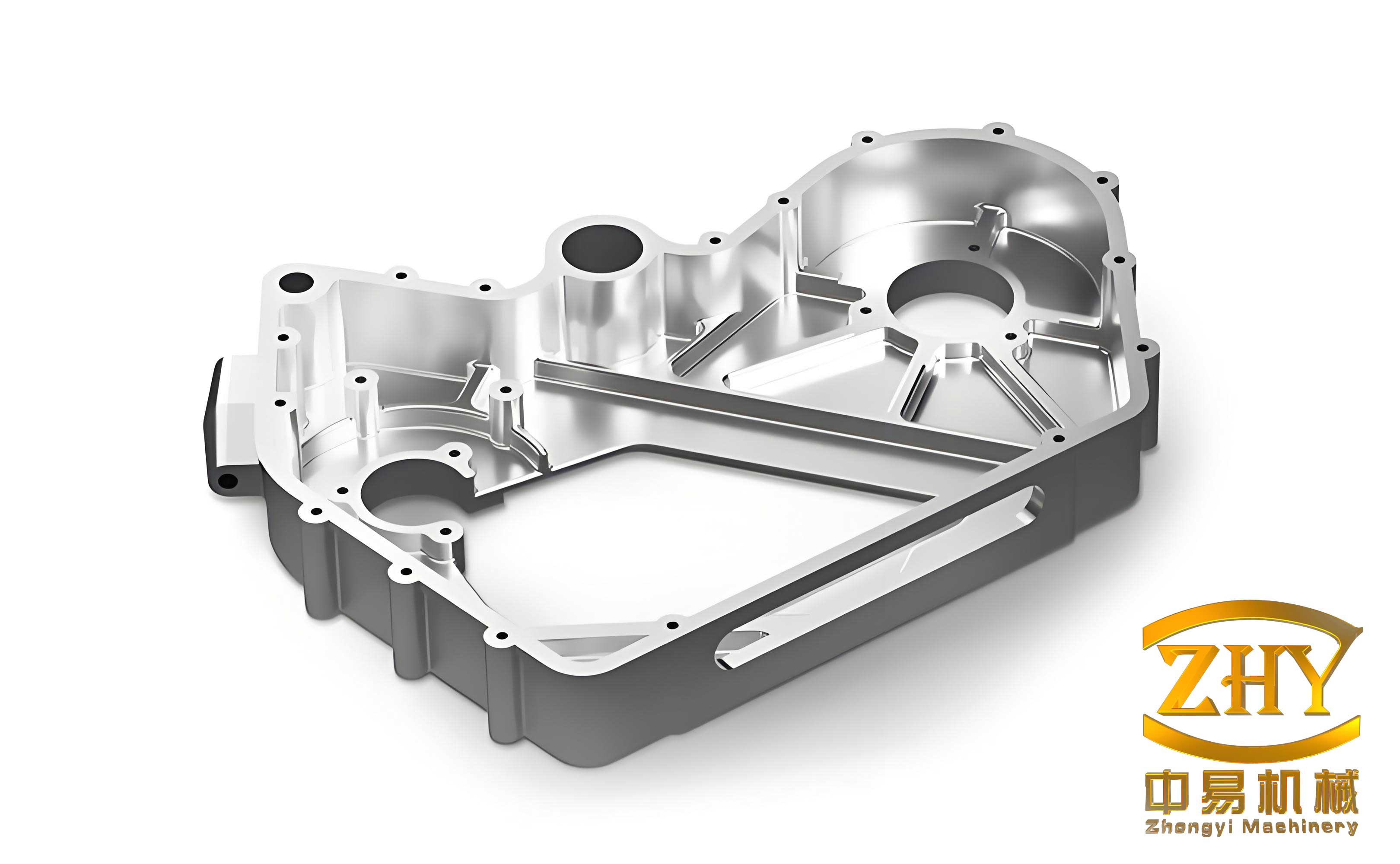
Internal quality assessment of shell castings involves X-ray inspection to detect subsurface defects like gas pores and shrinkage cavities. Areas identified as problematic in mold flow analysis are prioritized. For shell castings, X-ray imaging reveals hidden flaws that could compromise structural integrity. The intensity of X-rays transmitted through the casting can be modeled by: $$ I = I_0 e^{-\mu x} $$ where \( I_0 \) is the initial intensity, \( \mu \) is the linear attenuation coefficient, and \( x \) is the thickness of the shell castings. Regions with defects show variations in intensity, indicating porosity or voids. Results are documented with screenshots, and any suspect areas are sectioned for confirmation. This non-destructive testing is essential for high-integrity shell castings used in safety-critical applications.
Wall thickness verification is another key step for die-cast shell castings. The thickness must meet drawing tolerances, typically +0.5/-0.3 mm relative to the 3D model. Sectioning at designated locations provides direct measurement, with each section photographed and described. If X-ray results indicate porosity, additional sections are cut to assess the extent. The wall thickness variation can be analyzed statistically using the standard deviation: $$ \sigma = \sqrt{\frac{1}{N} \sum_{i=1}^{N} (t_i – \bar{t})^2} $$ where \( t_i \) are thickness measurements and \( \bar{t} \) is the mean thickness. Consistent wall thickness in shell castings ensures uniform strength and cooling during solidification.
Moving to finished shell castings, the inspection encompasses all machined dimensions, employing various techniques depending on the precision required. Coordinate measuring machines (CMM) are used for geometric tolerances, such as flatness, parallelism, and position. For shell castings, CMM data is analyzed to ensure compliance with design specifications. The measurement uncertainty can be expressed as: $$ U = k \cdot \sqrt{u_{\text{cal}}^2 + u_{\text{env}}^2 + u_{\text{rep}}^2} $$ where \( k \) is the coverage factor, and \( u_{\text{cal}}, u_{\text{env}}, u_{\text{rep}} \) are uncertainties from calibration, environment, and repeatability. This rigorous approach guarantees the accuracy of machined shell castings.
In-process inspection often involves online Statistical Process Control (SPC) stations for measuring bore diameters. For shell castings, different tools are selected based on accuracy needs: vernier calipers for low-precision holes, inside micrometers or dial bore gauges for medium precision, and electronic gauges for high-precision applications. The process capability indices, such as \( C_p \) and \( C_{pk} \), are calculated to monitor consistency: $$ C_p = \frac{USL – LSL}{6\sigma} \quad \text{and} \quad C_{pk} = \min\left( \frac{USL – \mu}{3\sigma}, \frac{\mu – LSL}{3\sigma} \right) $$ where \( USL \) and \( LSL \) are the upper and lower specification limits, \( \mu \) is the process mean, and \( \sigma \) is the standard deviation. For shell castings, maintaining \( C_{pk} \geq 1.33 \) indicates a capable process, reducing scrap and rework.
Specialized gauges, like plug gauges and fixture-based检具, are employed for快速 inspection of multiple features in shell castings. These tools check hole positions and sizes simultaneously, ensuring assembly compatibility. The design of such gauges considers the cumulative tolerance stack-up, which can be modeled as: $$ T_{\text{total}} = \sqrt{\sum_{i=1}^{n} T_i^2} $$ where \( T_i \) are individual tolerances. This ensures that shell castings fit seamlessly into larger systems.
Throughout the inspection process, documentation is crucial. Reports include material certificates, 3D scan data, X-ray images, and measurement records. For shell castings, traceability links each casting to its production batch, enabling root cause analysis if defects arise. Advanced techniques like computed tomography (CT) scanning are also emerging for comprehensive internal analysis of complex shell castings, providing 3D models of defects without destruction.
In conclusion, the inspection of shell castings is a multifaceted discipline that integrates material science, metrology, and quality control. From rough casting evaluation to final machining verification, each step ensures that shell castings meet stringent standards for performance and reliability. By employing tables to summarize criteria and formulas to quantify relationships, we can systematically assess and improve the quality of shell castings. As technology advances, methods like artificial intelligence and machine learning are being integrated to automate defect detection in shell castings, further enhancing efficiency. Ultimately, a robust inspection framework is indispensable for producing high-quality shell castings that drive innovation across manufacturing sectors.