
In the field of turbocharger manufacturing, the nozzle ring plays a critical role in directing high-temperature, high-pressure exhaust gases to convert thermal energy into mechanical work. Traditional welded nozzle rings suffer from numerous machining steps, significant deformation, and low overall strength. To address these limitations, we adopted an integral lost wax investment casting approach for producing large nozzle rings, which offers superior precision, enhanced strength, minimal distortion, and reduced machining allowances. This article details our first-hand experience in developing and implementing this advanced lost wax investment casting process for a nozzle ring with an overall dimension of 656 mm in diameter and 112 mm in height, utilizing G-X40CrNiSi22.9 heat-resistant stainless steel.
The integral lost wax investment casting process begins with the fabrication of wax patterns, which consist of three main components: an outer ring, 24 uniformly distributed nozzle blades, and an inner ring. The outer ring wax pattern is produced by gravity pouring of medium-temperature wax into a mold. For the nozzle blades, which feature an airfoil cross-section, wax patterns are injection-molded using standard wax injection machines. However, the inner ring wax pattern posed a challenge due to its large size (600 mm) and complex geometry, including mounting lugs. Standard wax injection machines have a limited workspace with guide column spacings of 580 mm, making them unsuitable for direct use. To overcome this, we devised a temporary fixture that allowed the wax injection gun to be mounted externally, enabling vertical injection into the inner ring mold. This adaptation expanded the machine’s capability without additional investment, ensuring precise wax pattern formation. The complete wax assembly, including a 140 mm high riser with a maximum outer diameter of 230 mm and an 80 mm diameter sprue, was welded together to form a ring-shaped gate for feeding metal during casting. The following table summarizes the wax pattern components and their production methods:
| Component | Production Method | Key Parameters |
|---|---|---|
| Outer Ring | Gravity Pouring | Medium-temperature wax, rectangular cross-section |
| Nozzle Blades (24 pieces) | Injection Molding | Airfoil cross-section, standard wax injection machine |
| Inner Ring | Modified Injection Molding | L-shaped cross-section, temporary fixture for wax gun |
Shell molding is a crucial step in the lost wax investment casting process, as it determines the mold’s ability to withstand high temperatures and mechanical stresses. We employed a multi-layer shell building technique with 10 layers in total. The primary layer used a slurry of alumina powder and alumina sand to ensure high refractoriness. The intermediate layers consisted of alumina powder slurry with quartz sand, while the backup layers utilized quartz powder slurry with quartz sand. After applying the intermediate layers, we reinforced the shell by wrapping it with fine steel wires of less than 1 mm in diameter, similar to adding rebar in concrete, to enhance its strength and prevent cracking during subsequent handling and casting. This reinforcement was critical given the large size of the mold and the centrifugal casting method employed. The shell was then subjected to a two-stage firing process: first at 550°C for 1 hour to remove residual wax and binders, followed by 850°C for 2 hours to sinter the shell and achieve the necessary mechanical properties. The table below outlines the shell building sequence:
| Layer Number | Material Composition | Purpose |
|---|---|---|
| 1-2 | Alumina powder slurry + Alumina sand | Face coat for high temperature resistance |
| 3-5 | Alumina powder slurry + Quartz sand | Intermediate layers for transition |
| 6-10 | Quartz powder slurry + Quartz sand | Backup layers with steel wire reinforcement |
Melting and pouring are pivotal in achieving a defect-free casting. We used a 150 kg medium-frequency induction furnace with a magnesia-based basic lining to melt the G-X40CrNiSi22.9 alloy. The charge materials were carefully weighed according to a predefined recipe to maintain chemical composition within specified limits. The molten metal was heated to a pouring temperature of at least 1580°C to ensure adequate fluidity. Given the thin sections of the nozzle blade trailing edges, gravity pouring was insufficient, often leading to misruns and incomplete filling. Therefore, we opted for centrifugal casting at a rotational speed of 2 revolutions per second (approximately 120 RPM). The centrifugal force enhances metal flow and feeding, as described by the formula for centrifugal pressure: $$ P = \rho \omega^2 r $$ where \( P \) is the pressure, \( \rho \) is the density of the molten metal, \( \omega \) is the angular velocity, and \( r \) is the radius. This method ensured complete filling and sound casting, with a total pour weight of 150 kg yielding a casting weight of 63 kg. Single test bars were cast alongside for mechanical property evaluation.
The challenges encountered in this lost wax investment casting process were primarily related to wax pattern production and shell strength. The inner ring wax pattern模具尺寸超出标准注蜡机工作范围, necessitating an innovative approach to wax injection. By using a temporary fixture to position the wax gun vertically above the mold, we effectively decoupled the clamping and injection functions, allowing for successful wax pattern formation. This method can be expressed in terms of modifying the injection parameters to accommodate the altered setup. For instance, the injection pressure \( P_{inj} \) and time \( t_{inj} \) were optimized based on the wax flow characteristics: $$ P_{inj} = k \cdot \frac{\mu L}{A} $$ where \( k \) is a constant, \( \mu \) is the wax viscosity, \( L \) is the flow length, and \( A \) is the cross-sectional area. Additionally, the large shell size and centrifugal forces posed risks of mold deformation and failure. The steel wire reinforcement increased the shell’s tensile strength, which can be modeled using the formula for composite strength: $$ \sigma_c = V_f \sigma_f + V_m \sigma_m $$ where \( \sigma_c \) is the composite strength, \( V_f \) and \( V_m \) are the volume fractions of the wire and shell material, and \( \sigma_f \) and \( \sigma_m \) are their respective strengths.
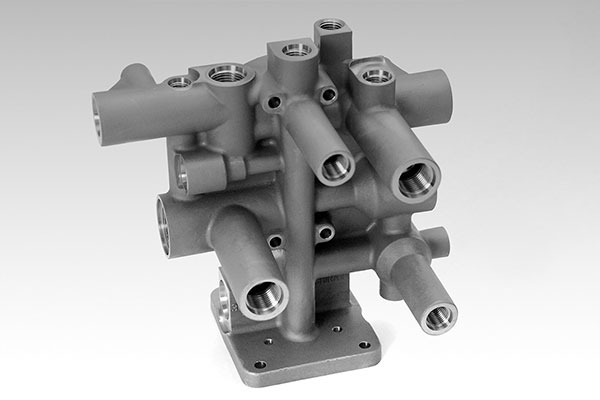
After implementing these measures, the cast nozzle rings underwent rigorous testing, including chemical analysis, mechanical property checks, visual inspection, and dimensional measurement. The results confirmed that the components met all design specifications, outperforming welded counterparts in terms of integrity and performance. The table below compares key properties of the cast versus welded nozzle rings:
| Property | Integral Lost Wax Investment Casting | Welded Nozzle Ring |
|---|---|---|
| Tensile Strength (MPa) | ≥ 600 | ≥ 500 |
| Distortion (mm) | < 0.5 | 1-2 |
| Machining Allowance (mm) | 1-2 | 3-5 |
| Overall Strength | High | Moderate |
In summary, the successful production of large nozzle rings via lost wax investment casting demonstrates the viability of this method for complex, large-scale components. The adaptations in wax pattern fabrication and shell reinforcement were critical to overcoming equipment limitations and ensuring mold integrity. This approach not only reduces production costs by utilizing existing machinery but also enhances product quality. The experience gained from this project provides valuable insights for similar lost wax investment casting applications, particularly for large disc-shaped parts that exceed standard machine dimensions. Future work could focus on optimizing process parameters further, such as investigating the effects of varying centrifugal speeds on filling behavior using computational fluid dynamics simulations. The general formula for centrifugal force \( F = m \omega^2 r \) can be leveraged to fine-tune rotational parameters for different geometries, ensuring consistent results across various lost wax investment casting projects.
Throughout this endeavor, the lost wax investment casting process proved to be highly adaptable and reliable. By addressing specific challenges with innovative solutions, we achieved a robust manufacturing route that minimizes defects and maximizes efficiency. The integration of temporary fixtures for wax injection and steel wire reinforcement in shell building are transferable techniques that can benefit other large-scale lost wax investment casting operations. As demand for high-performance turbocharger components grows, such advanced casting methods will play an increasingly vital role in meeting industry standards and driving technological progress.