
In recent years, the rapid advancement of technology has led to the widespread adoption of industrial robots across various sectors. Within the realm of machine tool castings processing, the integration of industrial robots with CNC (Computer Numerical Control) machine tools has garnered significant attention. As a researcher and practitioner in this field, I have observed that traditional CNC machining of machine tool castings often relies on manual operations, which suffer from low production efficiency, limited precision, and high labor intensity. To address these issues, the incorporation of industrial robots presents an effective solution. Industrial robots offer high flexibility, accuracy, and efficiency, enabling them to perform complex machining tasks and adapt to different product requirements through programming. Therefore, integrating industrial robots with CNC machine tools can automate production, enhance efficiency, and improve product quality. In this paper, we delve into the integrated application of industrial robots in machine tool castings processing, providing theoretical and practical guidance to propel industrial development.
The fundamental principles of industrial robots are crucial for understanding their integration. An industrial robot typically consists of four core components: the control system, mechanical structure, sensor system, and control algorithms. The control system executes pre-programmed instructions to manage the robot’s movements and operations, often via human-machine interfaces or computer software. It incorporates sensors to perceive the environment and provide feedback. The mechanical structure, comprising joints, links, and connectors, allows the robot to operate in three-dimensional space. With multiple motor-driven joints, the robotic arm achieves flexible motion, and its design determines the work envelope and load capacity. The sensor system includes vision sensors, force sensors, and position sensors. Vision sensors enable environment perception and object recognition; force sensors measure applied forces for adjustment; and position sensors aid in determining the robot’s pose. Control algorithms, such as PID control, motion planning, and path planning, compute actions based on input commands and sensor feedback. For instance, the PID control algorithm can be expressed as:
$$u(t) = K_p e(t) + K_i \int_0^t e(\tau) d\tau + K_d \frac{de(t)}{dt}$$
where \( u(t) \) is the control output, \( e(t) \) is the error signal, and \( K_p \), \( K_i \), and \( K_d \) are proportional, integral, and derivative gains, respectively. These principles underpin the robot’s ability to handle machine tool castings with precision.
In the context of machine tool castings processing, several challenges persist. The industry produces a wide variety of machine tool castings, but with minimal differentiation, necessitating multiple clamping and positioning operations to ensure consistency. This increases process complexity and cost. Additionally, orders are typically small-batch and frequent with tight deadlines, demanding efficient production scheduling and material management. Furthermore, while CNC machining offers high performance, its programming and operation are complex, requiring skilled technicians. These issues highlight the need for automation solutions. The integration of industrial robots can mitigate these challenges by streamlining processes, reducing human intervention, and enhancing adaptability. For example, in handling machine tool castings, robots can automate repetitive tasks like loading and unloading, thereby improving throughput and consistency.
To optimize manufacturing, industrial robots are integrated in three primary ways. First, integrated single-workstation production involves combining a robot with a standalone workstation to automate simple, repetitive tasks such as assembly or packaging. This boosts efficiency and reduces labor costs while maintaining quality. Second, integrating multiple CNC machine tools with industrial robots forms automated production lines. Here, robots collaborate with machines to perform complex machining on machine tool castings, leveraging high precision and flexibility to meet diverse specifications. Third, integrating multiple robots and devices into automated,信息化 smart production lines represents the future direction. Through interconnected systems and real-time data monitoring, these lines achieve intelligent control and adaptive adjustment. The following table compares these integration modes:
| Integration Mode | Key Features | Benefits for Machine Tool Castings Processing |
|---|---|---|
| Single-Workstation | Robot paired with one workstation; handles basic tasks | Reduces manual labor, improves consistency in simple operations |
| Multi-Machine Line | Robots coordinate with multiple CNC machines; enables complex machining | Enhances precision and flexibility for varied castings |
| Smart Production Line | Multiple robots and devices linked via IoT; real-time data analytics | Optimizes overall efficiency, enables predictive maintenance |
In practice, the integrated application of industrial robots in machine tool castings processing involves several key aspects. Smart production integration design is based on specific工艺 requirements such as workpiece identification, milling of assembly surfaces, drilling, tapping, cleaning, and automatic unloading. For instance, vision systems and image processing allow robots to quickly identify machine tool castings, ensuring accurate detection of dimensions, shapes, and positions. Milling operations can be automated to achieve precise assembly fits, while drilling and tapping are performed with controlled trajectories. Cleaning processes remove contaminants, and automatic unloading facilitates seamless material flow. The design依据 can be summarized in a table based on typical machining requirements for machine tool castings:
| Process Step | Description | Cycle Time (s/unit) | Equipment Type | Key Requirements |
|---|---|---|---|---|
| Workpiece Identification | Visual scanning and recognition of castings | 30 | Vision Sensor System | Accuracy within ±0.1 mm |
| Milling Assembly Surface | Machining reference planes and steps | 900 | CNC Machining Center | Surface finish Ra ≤ 1.6 µm |
| Drilling and Tapping | Creating holes and threads | 1950 | CNC Machining Center | Thread tolerance within IT7 |
| Cleaning | Removing debris and oils | 220 | Cleaning Unit | Particle size < 0.1 mm |
| Automatic Unloading | Transferring finished castings | 60 | Robotic Gripper | Safe handling without damage |
The overall layout of a smart production line typically includes multiple CNC machining systems, industrial robots like the GSK-RB35 model, a seventh-axis移动 system for robot mobility,上下料仓, secondary positioning and recognition systems, flipping devices, cleaning systems, and a manufacturing execution system (MES). This configuration enables efficient and flexible production. For example, three CNC machines can work in tandem with a robot to process machine tool castings simultaneously, reducing idle time. The robot’s seventh axis expands its reach, while料仓 automate material supply. Secondary positioning ensures accuracy after initial clamping, and the MES monitors整个过程 for optimization. Such a layout supports mixed-model production, allowing quick changeovers for different machine tool castings. The production efficiency \( E \) can be modeled as:
$$E = \frac{N}{T_{\text{total}}}$$
where \( N \) is the number of machine tool castings produced and \( T_{\text{total}} \) is the total time, including machining and handling times. Integration reduces \( T_{\text{total}} \) by minimizing non-value-added activities.
Integrated CNC machine systems and tooling fixtures play a vital role. Five-face machining centers, combining horizontal and vertical CNC machines, offer versatility for machining complex machine tool castings. The horizontal component provides stability for large parts, while the vertical one ensures precision for smaller features. Tooling fixtures with pins and基准定位面 secure castings during processing, and吹气装置 clean surfaces to prevent defects. The stiffness of the fixture system can be analyzed using the formula:
$$K = \frac{F}{\delta}$$
where \( K \) is the stiffness, \( F \) is the applied force, and \( \delta \) is the deformation. High stiffness minimizes vibration, crucial for maintaining accuracy in machine tool castings machining. Additionally, adaptive fixtures can adjust to varying casting geometries, enhancing flexibility.
Secondary positioning and recognition systems further enhance precision. Fixtures equipped with pins and reference surfaces ensure repeatable positioning when loadings machine tool castings into机床. Blow-off devices remove contaminants, and non-contact scanning reads workpiece information. This data is sent to a central control system, such as a GSK MES, for real-time adjustment and monitoring. The recognition accuracy \( A \) can be expressed as:
$$A = 1 – \frac{|P_{\text{actual}} – P_{\text{measured}}|}{P_{\text{actual}}}$$
where \( P_{\text{actual}} \) and \( P_{\text{measured}} \) are the actual and measured positions, respectively. Achieving high \( A \) is essential for quality control in machine tool castings processing. The integration of these systems enables automated error correction and traceability.
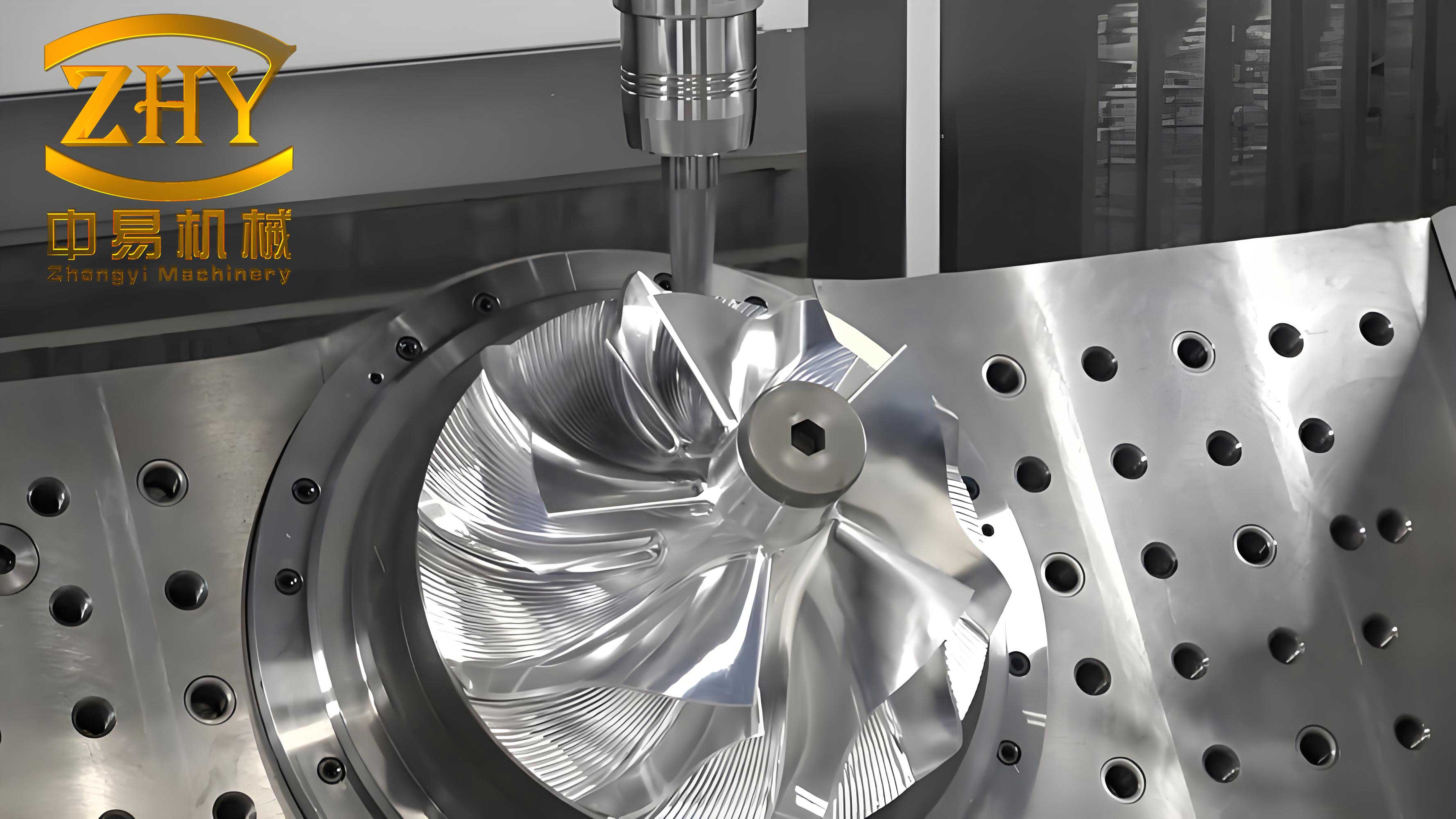
The implementation of such integrated systems yields significant benefits. Industrial robots improve生产效率 by automating repetitive tasks, reduce human error to enhance精度, and lower labor costs. For machine tool castings, this translates to higher throughput and better consistency. Moreover, the flexibility of robots allows for quick reconfiguration to handle different casting designs, supporting the industry’s trend toward customization. However, challenges remain, such as the initial investment cost and the need for skilled personnel for maintenance and programming. Future research should focus on advancing robot intelligence, such as through machine learning algorithms for adaptive control. The potential cost-benefit ratio \( R \) can be estimated as:
$$R = \frac{B_{\text{cumulative}}}{C_{\text{initial}}}$$
where \( B_{\text{cumulative}} \) is the cumulative benefit from increased efficiency and quality, and \( C_{\text{initial}} \) is the initial integration cost. Over time, \( R \) tends to increase as automation pays off.
In conclusion, the integration of industrial robots in machine tool castings processing offers a transformative path toward smarter manufacturing. By leveraging robots’ capabilities in control, sensing, and adaptability, we can address existing challenges and unlock new efficiencies. This paper has explored the principles, methods, and applications, emphasizing the importance of holistic design from workstation to smart line. As technology evolves, further innovations in vision systems, force control, and data integration will continue to drive the adoption of robots in this field, ultimately strengthening the competitiveness of industries reliant on machine tool castings. The journey toward fully automated, intelligent factories is well underway, and industrial robots are at its core.