
The evolution of manufacturing demands, particularly for complex, high-precision components in sectors like aerospace and turbomachinery, has driven significant advancements in foundry processes. Among these, investment casting stands out for its ability to produce intricate net-shape or near-net-shape parts with excellent surface finish and dimensional accuracy. Traditionally, this process relies on wax or polymer patterns that are assembled, coated with ceramic slurry to build a shell, de-waxed, and then fired to create a monolithic mold ready for metal pouring. While effective, the tooling for producing these wax patterns—often involving metal injection molds—is expensive and time-consuming, making it less suitable for low-volume production or prototype investment casting.
The convergence of additive manufacturing (AM) with established foundry techniques presents a paradigm shift. By utilizing AM to directly fabricate the sacrificial pattern, the lengthy and costly tooling phase is eliminated. This synergy is especially powerful for prototype investment casting, where design validation and functional testing are paramount. Fused Deposition Modeling (FDM), using materials like Polylactic Acid (PLA), offers a cost-effective and rapid method for producing these patterns. However, introducing a new pattern material and a direct-to-shell building approach necessitates a reevaluation of the entire casting process to ensure final part quality. Critical factors such as filling behavior, thermal gradients, and defect formation must be carefully controlled. This is where numerical simulation becomes an indispensable tool, allowing for virtual prototyping and optimization before any physical metal is poured.
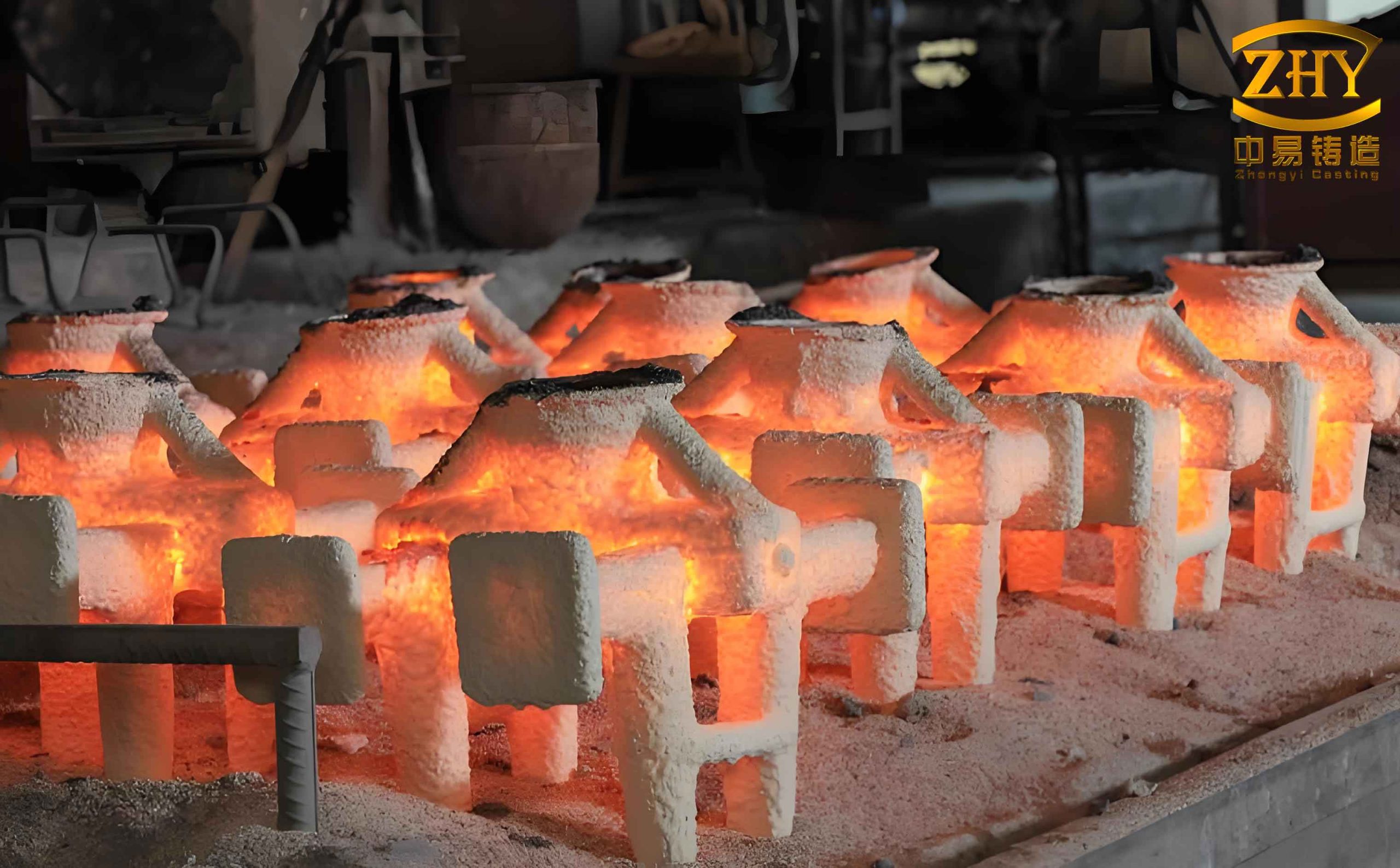
This work details an integrated methodology for the prototype investment casting of an aluminum alloy impeller. The approach systematically combines numerical simulation for process design with additive manufacturing for pattern fabrication, followed by experimental validation. The impeller, characterized by its curved blades and thin sections, presents typical challenges such as mist runs, gas entrapment, and shrinkage porosity. The core objective was to develop a robust process chain that mitigates these risks, demonstrating the feasibility and advantages of AM-pattern-based prototype investment casting for complex geometries.
Numerical Simulation: The Virtual Foundry
Numerical simulation acts as a virtual foundry, providing insights into phenomena that are difficult or impossible to observe during actual casting. For prototype investment casting, it is crucial for predicting and eliminating potential defects early in the design cycle, saving significant time and material costs associated with trial-and-error physical prototyping.
Mathematical Foundation of the Simulation
The casting process involves complex, transient interactions of fluid flow, heat transfer, and solidification. The simulation solves the governing equations of these physical phenomena. The flow of the molten metal is described by the incompressible Navier-Stokes equations, coupled with the volume of fluid (VOF) method to track the melt-air interface:
Continuity Equation:
$$\nabla \cdot \mathbf{v} = 0$$
Momentum Equation (Navier-Stokes):
$$\rho \left( \frac{\partial \mathbf{v}}{\partial t} + \mathbf{v} \cdot \nabla \mathbf{v} \right) = -\nabla p + \mu \nabla^2 \mathbf{v} + \rho \mathbf{g} + \mathbf{F}_{b}$$
where $\mathbf{v}$ is the velocity vector, $p$ is pressure, $\rho$ is density, $\mu$ is dynamic viscosity, $\mathbf{g}$ is gravitational acceleration, and $\mathbf{F}_{b}$ represents body forces (e.g., buoyancy in the mushy zone).
The energy equation, accounting for latent heat release during solidification, is solved simultaneously:
Energy Equation:
$$\rho c_p \frac{\partial T}{\partial t} + \rho c_p \mathbf{v} \cdot \nabla T = \nabla \cdot (k \nabla T) + \dot{q}_{latent}$$
where $T$ is temperature, $c_p$ is specific heat, $k$ is thermal conductivity, and $\dot{q}_{latent}$ is the latent heat source term, often modeled using an enthalpy-porosity technique.
A critical output for predicting shrinkage defects is the thermal gradient ($G$) and cooling rate ($\dot{T}$). The Niyama criterion, a widely used porosity predictor, is derived from these values:
$$N_y = \frac{G}{\sqrt{\dot{T}}}$$
Regions where $N_y$ falls below a critical threshold are likely to contain microporosity. Software like AnyCasting often uses a related metric, the “combined defect” criterion, which is inversely proportional to $N_y$:
$$\text{Combined Defect Index} \propto \frac{\sqrt{\dot{T}}}{G} = \frac{1}{N_y}$$
High values of this index indicate potential sites for shrinkage porosity.
Gating System Design and Simulation Setup
For the impeller, three distinct gating system designs were conceived to study their impact on filling and solidification:
- Top-Gating: Metal enters from the top of the impeller cavity.
- Side-Gating: Metal enters tangentially from the side, near the blade hub.
- Bottom-Gating: Metal enters from the bottom center, flowing upward into the blades.
The 3D CAD models of these systems were discretized into a finite-difference mesh (~1 million cells). The material properties of ZL104 aluminum alloy and the plaster mold were assigned. The critical initial and boundary conditions are summarized below:
| Parameter | Value | Description |
|---|---|---|
| $T_{pour}$ | 750 °C | Alloy Pouring Temperature |
| $T_{mold}$ | 650 °C | Plaster Mold Pre-heat Temperature |
| $v_{pour}$ | 25 cm/s | Initial Pouring Velocity at Sprue Base |
| Heat Transfer Coefficient (Metal-Mold) | ~500 W/m²·K | Approximate interface condition |
| Simulation Solver | Finite Difference Method | With VOF for fluid front tracking |
Simulation Results and Analysis
The simulation results for the three gating systems revealed starkly different behaviors, crucial for selecting the optimal approach for prototype investment casting.
Top-Gating System: The simulation showed a turbulent fill. The molten metal fell freely, impacting the bottom of the mold cavity with high velocity, leading to splashing and severe oxide entrainment. The temperature field indicated a reverse thermal gradient, with the top (last to fill) being hotter than the bottom. The combined defect index and shrinkage porosity predictions were highest at the bottom of the blades and hub, confirming the high risk of shrinkage defects due to poor feeding. This design was deemed unsuitable.
Side-Gating System: This design provided a smoother fill than top-gating. However, the metal stream entered horizontally, creating a swirling motion that sometimes trapped air in the upper regions of the blade passages. The solidification pattern was more favorable but not optimal. Predicted porosity was primarily located at the junctions between the gate and the impeller hub and at the blade roots. While an improvement, potential for gas porosity remained a concern.
Bottom-Gating System: This design demonstrated the most favorable characteristics for prototype investment casting. The metal filled the cavity from the bottom up in a laminar, predictable manner. Air was naturally displaced upward and out through the top vents and risers. Most importantly, the thermal gradient was aligned with the direction of fill—the first metal to enter (at the blade tips) began cooling first, while the hotter metal in the risers and gates fed the solidifying sections. The simulation’s combined defect index map showed negligible defects in the impeller blades themselves. Minor porosity was predicted only in the upper sections of the feed gates, which are part of the sacrificial gating system and not the final part.
| Gating Design | Filling Behavior | Thermal Gradient | Major Defect Prediction (Location) | Suitability for Prototype Investment Casting |
|---|---|---|---|---|
| Top-Gating | Turbulent, free-fall impact | Reverse (Hot top, cold bottom) | Severe Shrinkage (Blade bottoms, hub) | Poor |
| Side-Gating | Smooth but with swirling | Moderately directional | Gas Entrapment & Shrinkage (Blade roots, gate junctions) | Moderate |
| Bottom-Gating | Laminar, bottom-up fill | Favorable directional solidification | Negligible in part; minor in gates | Excellent |
Based on this comprehensive virtual analysis, the bottom-gating system was conclusively selected for the physical prototype investment casting trials. The simulation provided a high degree of confidence that this design would yield a sound casting, minimizing the risk of failed prototypes.
Additive Manufacturing of the Sacrificial Pattern
The selected bottom-gate design was exported as an STL file and fabricated using FDM technology. This step is the cornerstone of rapid prototype investment casting, replacing weeks of mold tooling lead time with hours of 3D printing.
Material Selection – PLA: Polylactic Acid was chosen for several reasons relevant to prototype investment casting:
- Low Ash Content: Upon thermal decomposition, PLA leaves minimal residue, which is critical to prevent ceramic shell cracking or mold contamination.
- Good Printability: It is easy to print with high dimensional accuracy and surface quality, capturing the fine details of the impeller blades.
- Controlled Decomposition: PLA softens and decomposes at a lower temperature (~200-300°C) compared to investment casting waxes, allowing for a gentler, low-pressure dewaxing process suitable for fragile plaster molds.
The print parameters were optimized to minimize stair-stepping on curved surfaces and to ensure adequate strength for handling during shell building. A key formula in assessing the pattern’s thermal behavior during dewaxing is the heat penetration rate, which influences internal pressure build-up:
$$ \dot{Q} = \frac{k_{plaster} \cdot A \cdot (T_{oven} – T_{pattern})}{d} $$
where $\dot{Q}$ is the heat transfer rate into the pattern, $k_{plaster}$ is the thermal conductivity of the shell, $A$ is the surface area, and $d$ is the shell thickness. A slower, controlled ramp in furnace temperature is essential to allow the PLA to melt and drain without generating excessive pressure that could fracture the shell.
Shell Building and Burnout Process
The AM PLA pattern assembly was used to build the ceramic shell. A gypsum-bonded, silica flour-based investment was selected for its excellent replication of fine detail, low thermal conductivity (promoting directional solidification), and suitability for non-ferrous alloys like aluminum.
The slurry was carefully poured around the pattern in a flask, ensuring no air bubbles were trapped in the intricate blade passages. After the initial set, the mold was placed in a furnace for the burnout cycle. The cycle was carefully programmed:
- Ramp to 120°C and hold: Allows any free water to evaporate slowly.
- Ramp to 350-400°C and hold: Critical phase where the PLA pattern melts, sinters, vaporizes, and is completely removed from the mold cavity.
- Ramp to 750°C and hold: This serves two purposes: (a) to calcine the plaster mold, driving off all crystalline water and achieving final strength, and (b) to preheat the mold close to the alloy pouring temperature, preventing premature chilling of the metal. The preheat temperature of 650°C used in the simulation was validated here.
The successful burnout resulted in a clean, preheated ceramic mold ready for pouring, demonstrating the compatibility of FDM-PLA patterns with standard investment casting shell materials for prototype investment casting.
Metal Pouring, Solidification, and Final Results
ZL104 aluminum alloy was melted and superheated to approximately 750°C. The metal was then poured into the preheated (650°C) mold using the bottom-gating system, exactly as simulated. The high mold preheat temperature was crucial to ensure fluidity filled the thin blade sections and to maintain the favorable thermal gradient predicted by the software.
After solidification and cooling, the plaster mold was broken away. The casting, including its gating system, was retrieved. Visual inspection immediately confirmed the simulation predictions: the impeller blades were fully formed with no visible mist runs or cold shuts. The surfaces were smooth, replicating the finish of the 3D printed pattern. The gates and risers, as predicted, contained the only shrinkage defects, which were removed during cut-off and finishing.
A final, cleaned impeller casting was obtained. Its dimensional accuracy was measured against the original CAD model and found to be within acceptable tolerances for a prototype, validating the dimensional stability of the process chain from digital model to AM pattern to final metal part.
Discussion: The Synergy of Simulation and AM in Prototype Investment Casting
This project successfully demonstrated a closed-loop, digitally-driven workflow for prototype investment casting. The integration of numerical simulation and additive manufacturing creates a powerful synergy that addresses the core challenges of prototyping complex cast components.
| Aspect | Role of Numerical Simulation | Role of Additive Manufacturing (FDM) | Combined Benefit |
|---|---|---|---|
| Lead Time | Reduces physical trial cycles | Eliminates tooling fabrication | Reduction from months to weeks/days |
| Cost | Prevents costly scrap metal pours | Low-cost pattern material (PLA) | Drastic reduction in prototype cost |
| Risk Mitigation | Predicts and eliminates defects (shrinkage, turbulence) virtually | Allows for rapid design iterations of the gating system itself | High first-time-right success rate for prototypes |
| Design Freedom | Can evaluate performance of highly complex, organic geometries | Can fabricate patterns of any geometry without regard for mold draft or complexity | Enables casting of previously “un-castable” prototype designs |
| Process Knowledge | Provides deep insight into fill dynamics and solidification science | Validates simulation predictions with physical outcomes | Creates a knowledge base for scaling to production |
The empirical results from the physical cast impeller strongly correlated with the simulation forecasts. The absence of defects in the casting body and their confinement to the sacrificial gating validated the accuracy of the AnyCasting software’s defect prediction criteria (like the combined defect index) for this specific prototype investment casting scenario. Furthermore, the study confirmed that PLA is a viable and effective pattern material for non-ferrous alloy casting when paired with an appropriate burnout cycle and plaster investment.
Conclusion and Future Outlook
This research established a robust and efficient framework for the prototype investment casting of complex parts, as exemplified by the aluminum impeller. The core conclusion is that numerical simulation software is a reliable tool for optimizing the casting process when using AM patterns, accurately predicting fluid flow and thermal behavior to prevent defects. Simultaneously, FDM-based additive manufacturing provides a fast, flexible, and cost-effective means of producing the required sacrificial patterns, seamlessly integrating with traditional investment casting materials and practices.
The successful production of a high-quality impeller casting validates this integrated digital-physical approach. It solves the longstanding problem of cumbersome and expensive mold tooling for prototype castings, opening the door for more aggressive use of casting in the early design and testing phases of complex components. Future work could explore the use of higher-resolution AM technologies (like SLA or material jetting) for even better surface finish, the simulation and optimization of the PLA burnout process to prevent mold cracking, and the extension of this methodology to higher-temperature alloys, further solidifying the role of prototype investment casting in the agile manufacturing landscape.