
The relentless drive towards innovation and high-efficiency in modern manufacturing has positioned the hybrid additive manufacturing (AM) and investment casting process at the forefront of advanced production techniques. This synergy leverages the unparalleled geometric freedom of 3D printing with the established capability of the investment casting process to produce high-integrity, complex metal components. At the heart of this hybrid workflow lies the wax pattern, a critical intermediary whose quality and dimensional fidelity directly dictate the final cast part’s characteristics. However, conventional approaches often treat the design of the wax pattern and its corresponding mold as sequential, isolated tasks. This disconnect fails to address intrinsic interactions, such as pattern shrinkage and mold elastic deformation, leading to compromised casting accuracy and yield. This article, therefore, presents a comprehensive, first-person perspective on developing a multi-dimensional co-design framework. This framework integrates geometric dimensions, material properties, and process parameters for both wax patterns and molds, moving beyond traditional serial design to achieve parameter-linked optimization for the enhanced investment casting process.
Performance Requirement Analysis in the Hybrid Process
The AM-enhanced investment casting process is a sophisticated sequence that merges digital fabrication with traditional foundry techniques. Its core principle involves creating a precise sacrificial pattern via 3D printing, which is then used to form a ceramic shell mold for metal pouring. The process flow is intricately linked:
- Wax Pattern Fabrication: A liquid photopolymer or similar AM-compatible material is selectively cured layer-by-layer based on a 3D CAD model to build a wax pattern identical to the desired final part.
- Pattern Assembly: Multiple wax patterns are attached to a central wax gating system to form a “tree,” enabling batch processing.
- Shell Building: The pattern assembly is repeatedly dipped into ceramic slurries (e.g., silica, zircon) and stuccoed to build a multi-layered, robust refractory shell.
- De-waxing: The shell is heated, typically in an autoclave or furnace, to melt out and remove the wax pattern, leaving a precise cavity.
- Shell Firing: The empty shell is fired at high temperature to burn out any residual organics and develop final strength.
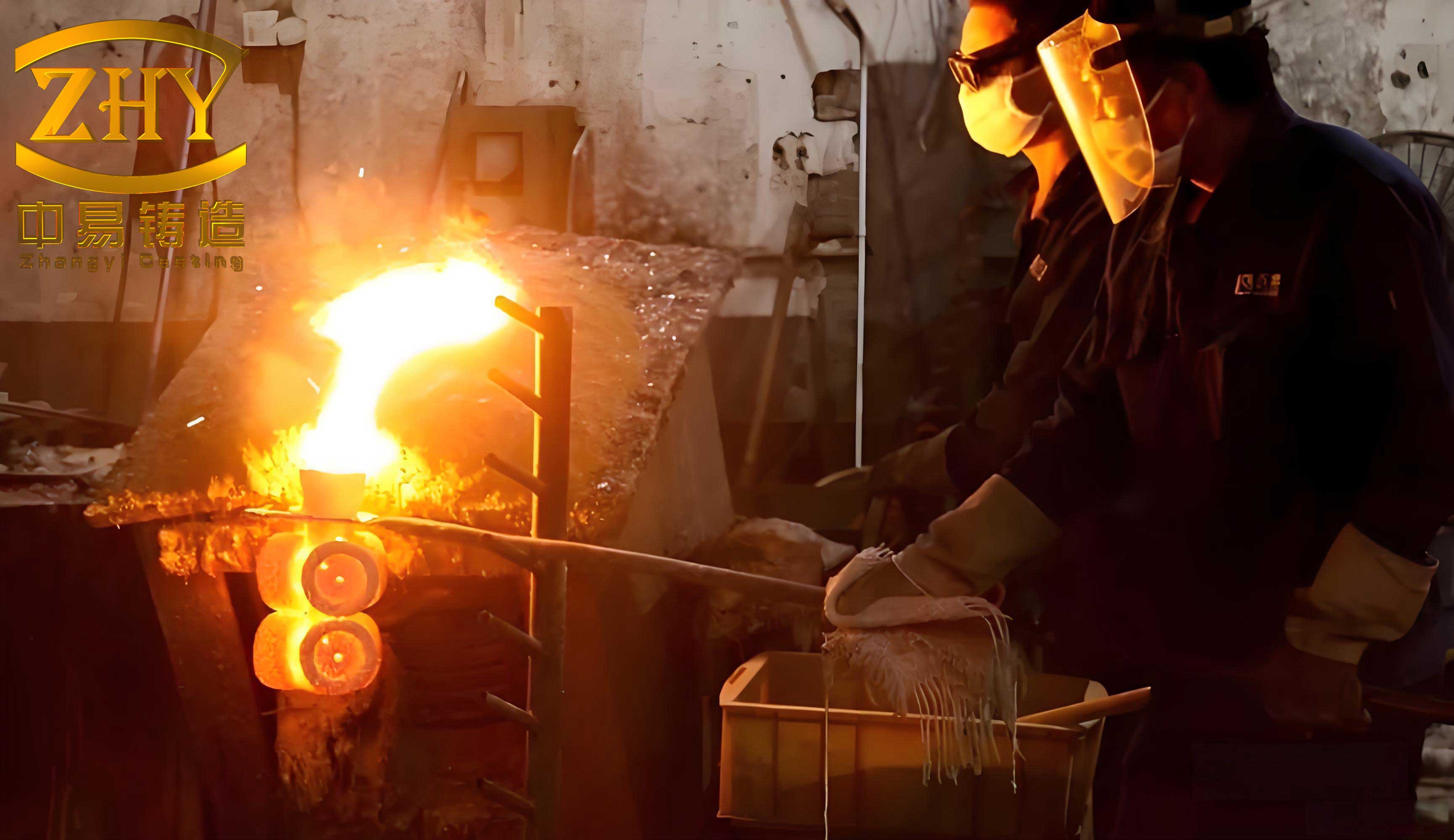
- Metal Pouring: Molten metal is poured into the preheated shell cavity.
- Knock-out & Finishing: After solidification, the ceramic shell is removed, and the castings are cut from the tree and finished.
Within this chain, a critical bidirectional coupling exists between the wax pattern and the mold (initially the AM build platform/supports and later the ceramic shell). The pattern’s accuracy defines the mold cavity’s accuracy, while the mold’s properties (surface finish, rigidity) influence the pattern’s formation and stability during early process stages. This interdependence forms the basis for the need for co-design.
Analysis of Coupling Characteristics
The synergistic design of the wax pattern and mold system is governed by physical field interactions, primarily manifested through a shrinkage compensation chain and a load transmission path. The fundamental coupling mechanisms can be quantified as follows.
1. Shrinkage Compensation Chain: Material phase changes induce volumetric shrinkage at multiple stages. The primary shrinkage occurs during the wax pattern’s solidification/curing post-printing. A secondary, larger shrinkage occurs during the metal’s solidification and cooling within the ceramic mold. The total dimensional error $\Delta L_{total}$ in the final casting can be modeled as a function of these sequential shrinkages and the compensating design actions:
$$
\Delta L_{total} = L_0 \cdot (1 + \alpha_{comp}) – [L_0 \cdot (1 – S_{wax}) \cdot (1 – S_{metal})]
$$
Where:
$L_0$ is the nominal design dimension,
$S_{wax}$ is the linear shrinkage factor of the AM pattern material,
$S_{metal}$ is the linear shrinkage factor of the casting alloy,
$\alpha_{comp}$ is the dimensional compensation factor applied to the mold cavity.
For effective co-design, the compensation factor must simultaneously address both shrinkages: $\alpha_{comp} \approx S_{wax} + S_{metal}$. For instance, with a pattern wax shrinkage of $S_{wax} = 0.015$ and an aluminum alloy shrinkage of $S_{metal} = 0.065$, the ideal compensation factor approaches 0.08, or an 8% intentional oversizing of the initial mold cavity.
2. Load Transmission Path: During metal pouring, dynamic pressure $P_{metal}$ acts on the mold walls. This load is transmitted through the mold’s structure and can induce stress on the wax pattern’s delicate features during the early shell-building stages if not properly accounted for in the design. The stability criterion requires that the contact pressure $\sigma_{contact}$ at the pattern-mold interface remains below the pattern material’s yield strength $\sigma_{y}^{wax}$:
$$
\sigma_{contact} = \frac{P_{metal} \cdot A_{projected}}{A_{contact}} \leq \sigma_{y}^{wax}
$$
This necessitates co-designing the pattern’s geometry (e.g., adding reinforcement ribs) and the mold’s support structure to distribute loads effectively.
The key co-design constraints integrating both pattern and mold requirements are summarized in the table below:
| Design Element | Wax Pattern Design Constraint | Mold (Cavity) Design Constraint | Co-Design Coupling Condition |
|---|---|---|---|
| Dimensional Accuracy | AM layer thickness ≤ 0.1 mm | Cavity surface roughness Ra ≤ 1.6 μm | Final casting dimensional error ≤ ±0.08 mm |
| Structural Rigidity | Minimum feature wall thickness ≥ 0.8 mm | Minimum mold wall thickness ≥ 3.0 mm | Pattern-mold interface pressure ≤ 1.5 MPa |
| Demolding Capability | Draft angle ≥ 3° | Required demolding force ≤ 50 N | Pattern undercut depth ≤ 0.5 mm |
| Thermal Management | Max sustainable temperature (de-waxing) ≥ 150°C | Thermal conductivity to ensure uniform cooling | Thermal expansion mismatch minimized |
Construction of the Wax Pattern-Mold Co-Design Methodology
Application of Parametric Digital Modeling
The foundation of an effective co-design strategy is a fully integrated digital model. A parametric modeling approach is essential, where the wax pattern and the mold cavity are not separate models but are linked through a set of governing equations and variables. The workflow initiates with the product’s 3D model. This model is then processed to automatically apply a shrinkage compensation based on the material properties database for the specific investment casting process. The compensated geometry becomes the basis for the wax pattern’s parametric model.
In this parametric environment, critical dimensions are not static numbers but variables (e.g., wall_thickness = 1.2, draft_angle = 3). The mold cavity is generated as a direct negative of the compensated wax pattern, with additional parametric features for gating systems, vents, and alignment structures. The core relationship can be expressed as:
$$
G_{mold}(X, Y, Z) = -[G_{pattern}(X, Y, Z) \cdot (1 + C(T, M))]
$$
Where $G$ represents geometry, $C(T, M)$ is the compensation function dependent on process Temperature $T$ and Material $M$ properties. Any change to a master design variable automatically propagates through both the pattern and mold models, ensuring inherent consistency and drastically reducing iterative design time.
Topology-Optimized Structural Design
Topology optimization is employed to derive material-efficient, high-performance structures for both the wax pattern’s internal supports (to minimize material use and de-waxing residue) and the mold’s internal reinforcement (to maximize stiffness under pouring load). The optimization problem for the mold structure is formally defined as follows:
Objective: Minimize structural compliance (maximize stiffness) or minimize mass.
$$ \text{Minimize: } f(\rho) = \mathbf{U}^T \mathbf{K} \mathbf{U} = \sum_{e=1}^{N} (E_e(\rho_e) \mathbf{u}_e^T \mathbf{k}_e \mathbf{u}_e) $$
Alternatively for lightweighting: $$ \text{Minimize: } m = \int_V \rho(\mathbf{x}) , dV $$
Subject to:
1. Equilibrium equation: $ \mathbf{K}(\rho) \mathbf{U} = \mathbf{F} $
2. Volume constraint: $ \int_V \rho(\mathbf{x}) , dV \leq V_{\text{max}} $
3. Manufacturing constraints (e.g., minimum member size, draw direction).
4. Deformation constraint: Maximum cavity wall deflection $\delta_{max} \leq 0.05$ mm.
Here, $\rho(\mathbf{x})$ is the material density distribution function (the design variable), $\mathbf{K}$ is the global stiffness matrix, $\mathbf{U}$ and $\mathbf{F}$ are displacement and force vectors, and $E_e(\rho_e)$ is the element Young’s modulus, often related by a SIMP interpolation: $E_e(\rho_e) = E_{min} + \rho_e^p (E_0 – E_{min})$, where $p$ is the penalty factor. This mathematical approach ensures the mold uses material only where structurally necessary, reducing weight and thermal mass, which benefits the overall investment casting process cycle.
Collaborative Optimization via Multi-Objective Algorithms
The ultimate goal is to find a design configuration that optimally balances competing objectives such as casting quality (Q), production cost (C), and lead time (T). A multi-objective optimization (MOO) framework is established, with design variables ($\mathbf{x}$) including pattern wall thickness, draft angles, mold compensation factor, and rib layout parameters.
The formal MOO problem is stated as:
$$ \text{Minimize } \mathbf{F}(\mathbf{x}) = [f_1(\mathbf{x}), f_2(\mathbf{x}), f_3(\mathbf{x})]^T $$
where:
$$ f_1(\mathbf{x}) = -Q(\mathbf{x}) = -(\omega_1 \cdot \text{Precision}(\mathbf{x}) + \omega_2 \cdot \text{SurfaceFinish}(\mathbf{x})) $$
$$ f_2(\mathbf{x}) = C(\mathbf{x}) = C_{material} + C_{machining} + C_{energy} $$
$$ f_3(\mathbf{x}) = T(\mathbf{x}) = T_{printing} + T_{mold\_fab} + T_{casting\_cycle} $$
$$ \text{Subject to: } g_j(\mathbf{x}) \leq 0, \quad j=1,2,…,m $$
$$ \text{and: } \mathbf{x}_l \leq \mathbf{x} \leq \mathbf{x}_u $$
Algorithms such as NSGA-II (Non-dominated Sorting Genetic Algorithm II) are employed to solve this problem, generating a Pareto front of optimal solutions. For example, one Pareto-optimal solution might yield the following result set, demonstrating the trade-offs and benefits:
| Design Variable / Objective | Optimal Value | Improvement vs. Baseline |
|---|---|---|
| Pattern Wall Thickness | 1.2 mm | — |
| Mold Compensation Factor | 1.016 | — |
| Gating System Diameter | 8 mm | — |
| Casting Dimensional Precision (σ) | ±0.04 mm | +220% |
| Estimated Production Cost | — | -18% |
| Estimated Lead Time | — | -16% |
Experimental Validation and Results Analysis
To validate the proposed co-design methodology, an experimental platform was established utilizing industry-relevant equipment: a high-resolution material jetting 3D printer for pattern making, a 5-axis CNC machining center for precision mold fabrication, and a vacuum-assisted pouring system for the investment casting process. Materials were selected to represent common industry choices: a specialty casting photopolymer with a characterized shrinkage of 1.5% for patterns, H13 tool steel for permanent mold components, and ZL101A aluminum alloy for casting.
A comparative study was designed with three distinct groups to isolate the effects of different design approaches:
| Group | Design Methodology | Shrinkage Compensation | Structural Optimization | Primary Evaluation Metrics |
|---|---|---|---|---|
| A (Baseline) | Traditional Independent Design | No | No | Dimensional deviation, Defect rate |
| B (Intermediate) | Pattern-Centric Design | Yes (Pattern only) | No | Dimensional deviation, Defect rate |
| C (Proposed) | Integrated Co-Design | Yes (Coupled System) | Yes (Topology-Optimized) | Dimensional deviation, Defect rate, Surface finish, Cycle time |
The experimental results provided quantitative validation of the co-design methodology’s superiority:
1. Dimensional Accuracy: The integrated co-design approach (Group C) dramatically reduced dimensional scatter. The maximum observed deviation was narrowed to +0.12/-0.10 mm, with a standard deviation of only 0.04 mm. In contrast, the baseline Group A showed a maximum deviation of ±0.32 mm and a standard deviation of 0.15 mm, indicating a 62.5% reduction in max error and a 73% reduction in variability.
2. Product Quality: Surface quality, measured as average roughness (Ra), improved from 1.7 μm (Group A) to 1.2 μm (Group C), a 29.4% enhancement. More significantly, the defect rate—encompassing misruns, gas porosity, and inclusions—plummeted from 12% in the traditional process to 3.5% using the co-designed system, representing a 71% relative reduction.
3. Process Efficiency: The holistic optimization impacted lead times. Mold machining time was reduced from 8.0 hours to 6.5 hours (18.75% reduction) due to the more efficient, topology-optimized structure. Furthermore, the improved gating and venting design derived from the multi-objective optimization shortened the pouring and solidification cycle time from 45 minutes to 37 minutes per batch, contributing to an overall estimated production cycle reduction of 16-18%.
Research Insights and Conclusion
The practical implementation of this wax pattern-mold co-design framework revealed the profound complexity of managing cross-scale constraints. The wax pattern, born from a layer-by-layer AM process with micron-level resolution, must interface with a mold system designed for macro-scale structural integrity and millimeter-to-submillimeter casting tolerances. This scale disparity necessitates a design philosophy that actively couples parameters across these domains. A critical insight was the nonlinear interaction between pattern surface curvature, optimal draft angle for demolding, and achievable machining tolerance on the mold. Isolated optimization of any single factor led to suboptimal performance, such as excessive demolding forces or pattern fracture. The solution was the establishment of a coupled constraint model within the MOO framework, which simultaneously adjusted the pattern’s local draft angles and the specified mold cavity surface finish to keep the demolding force within the safe threshold. This experience underscores that advancing the hybrid investment casting process is as much a paradigm shift in integrated design thinking as it is a technological advancement in AM or metallurgy.
In summary, the AM-enhanced investment casting process holds immense potential for manufacturing complex, high-precision components. However, realizing this potential fully requires moving beyond sequential design practices. The proposed co-design methodology, integrating parametric modeling, topology optimization, and multi-objective algorithmic search, directly addresses the core coupling challenges of shrinkage and structural interaction. Experimental validation confirms its efficacy in significantly enhancing dimensional accuracy, surface quality, and yield while concurrently reducing production cycle time. The journey highlights that the major hurdles are not solely technical but also methodological. Future progress will depend on the continued development of such integrated digital tools, the expansion of material property databases for accurate simulation, and the establishment of standardized protocols for this hybrid manufacturing route. By focusing on this synergistic design approach, the foundation is strengthened for the broader adoption and advancement of the investment casting process in the era of additive manufacturing.