
In recent years, the demand for customized, multi-variety, and small-batch casting products has grown rapidly. Traditional casting processes rely heavily on pattern manufacturing, which is time-consuming and costly. To address these challenges, we have adopted sand 3D printing (3DP) technology in our production line. This additive manufacturing method directly fabricates sand molds and cores from three-dimensional digital models, eliminating the need for physical patterns. However, sand 3D printing consumes significantly more resin than traditional self-setting sand molding. To balance cost and efficiency, we developed a hybrid approach that combines 3D printing with conventional self-setting sand (using Bonnie resin) to produce high-quality castings. This paper presents our experience, focusing on the resin consumption comparison, the combined process, practical applications, and sand regeneration.
Comparison of Resin Content
Sand 3D printing works by spreading a thin layer of sand mixed with a curing agent, then selectively spraying resin binder to bond the sand particles. This layer-by-layer process does not involve compaction, resulting in a lower packing density compared to traditional rammed sand molds. Consequently, more resin is required to fill the inter-particle voids. Table 1 compares the resin addition levels between traditional Bonnie resin self-setting sand and our Jingci 3D resin for different sand types.
| Molding Method | Resin Type | Sand Type | Resin Addition (%) |
|---|---|---|---|
| Traditional self-setting | Bonnie resin | Silica sand | 1.0 – 1.2 |
| Traditional self-setting | Bonnie resin | Ceramic sand | 0.6 – 1.0 |
| Traditional self-setting | Bonnie resin | Fused ceramic sand | 0.6 – 1.0 |
| 3D printing (shell) | Jingci 3D resin | Silica sand | 1.8 – 2.0 |
| 3D printing (shell) | Jingci 3D resin | Fused ceramic sand | 1.5 – 1.8 |
From Table 1, the resin addition in 3D printing is nearly double that of traditional molding. This directly increases the material cost and the total gas evolution during casting. The total gas volume generated from the binder can be expressed as:
$$ V_{\text{gas}} = m_{\text{resin}} \cdot G_{\text{resin}} $$
where \( V_{\text{gas}} \) is the gas volume (cm³), \( m_{\text{resin}} \) is the resin mass, and \( G_{\text{resin}} \) is the specific gas yield of the resin (cm³/g). Higher resin content leads to higher gas evolution, which may cause defects such as gas porosity. Therefore, simply printing full-volume molds is neither economical nor quality-wise optimal.
Both Bonnie resin and Jingci 3D resin are environmentally friendly acid-cured modified resol phenolic resins. They feature low odor, adjustable hardening speed, excellent strength comparable to furan resins, and good collapsibility after casting. Moreover, the used sand can be mechanically regenerated with a recovery rate over 95% for silica sand and over 98% for ceramic sand. These characteristics make them ideal for hybrid molding.
Combined Application of 3D Printing and Traditional Self-Setting Sand
Instead of printing a solid mold block, we can print a thin shell that follows the contour of the casting. Figure 1 illustrates the concept: a printed shell core is placed inside a cavity, and the space between the shell and the flask is filled with low-strength self-setting sand as backing material. This approach reduces the sand-to-metal ratio significantly.
The sand-to-metal ratio (SMR) is defined as:
$$ \text{SMR} = \frac{m_{\text{sand}}}{m_{\text{casting}}} $$
where \( m_{\text{sand}} \) is the total mass of sand used and \( m_{\text{casting}} \) is the casting mass. In traditional molding, SMR is typically 3–5. With the shell-and-backing method, we can achieve SMR as low as 0.6–2.0. The resin consumption for the backing sand is only 50–60% of that used in full traditional molding because the backing does not need high strength. The total cost saving can be expressed as:
$$ \Delta C = (C_{\text{full}} – C_{\text{shell}}) = C_{\text{resin}} \cdot (R_{\text{full}} – R_{\text{shell}}) + C_{\text{sand}} \cdot (M_{\text{full}} – M_{\text{shell}}) $$
where \( C_{\text{resin}} \) and \( C_{\text{sand}} \) are unit costs, and \( R \) and \( M \) are resin addition and sand mass respectively.
Several methods can support the printed shell during pouring:
- Embedding in steel shot or coarse sand – suitable for small castings.
- Dry sand with vacuum – requires specialized vacuum flask systems.
- Traditional self-setting sand as backing – most flexible and widely applicable.
We primarily use the third method. The backing sand is made with Bonnie resin at 0.6–1.0% addition, which is sufficient to provide support without high strength requirements.
This combined process offers several advantages:
- Reduced resin and sand consumption, lowering overall cost.
- Enhanced collapsibility of hollow cores, minimizing hot tearing in thin-wall castings.
- Elimination of pattern making, significantly shortening development lead time for new products.
- Higher dimensional accuracy due to 3D printing, allowing reduced machining allowance.
Practical Application Case
We applied this hybrid method to produce bearing housing castings for railway components at our facility. The casting weight is approximately 50 kg. We printed upper and lower shell molds with a wall thickness of 50 mm using silica sand and Jingci 3D resin. The shell molds were assembled and placed in a flask, then the surrounding space was filled with Bonnie resin self-setting sand at 0.6% resin addition. The sand-to-metal ratio was 0.7. After curing, the mold was poured with low-alloy steel. The resulting castings had excellent surface finish and met dimensional tolerances. The entire process from order to delivery took only two weeks, compared to six weeks using the traditional pattern-based method.
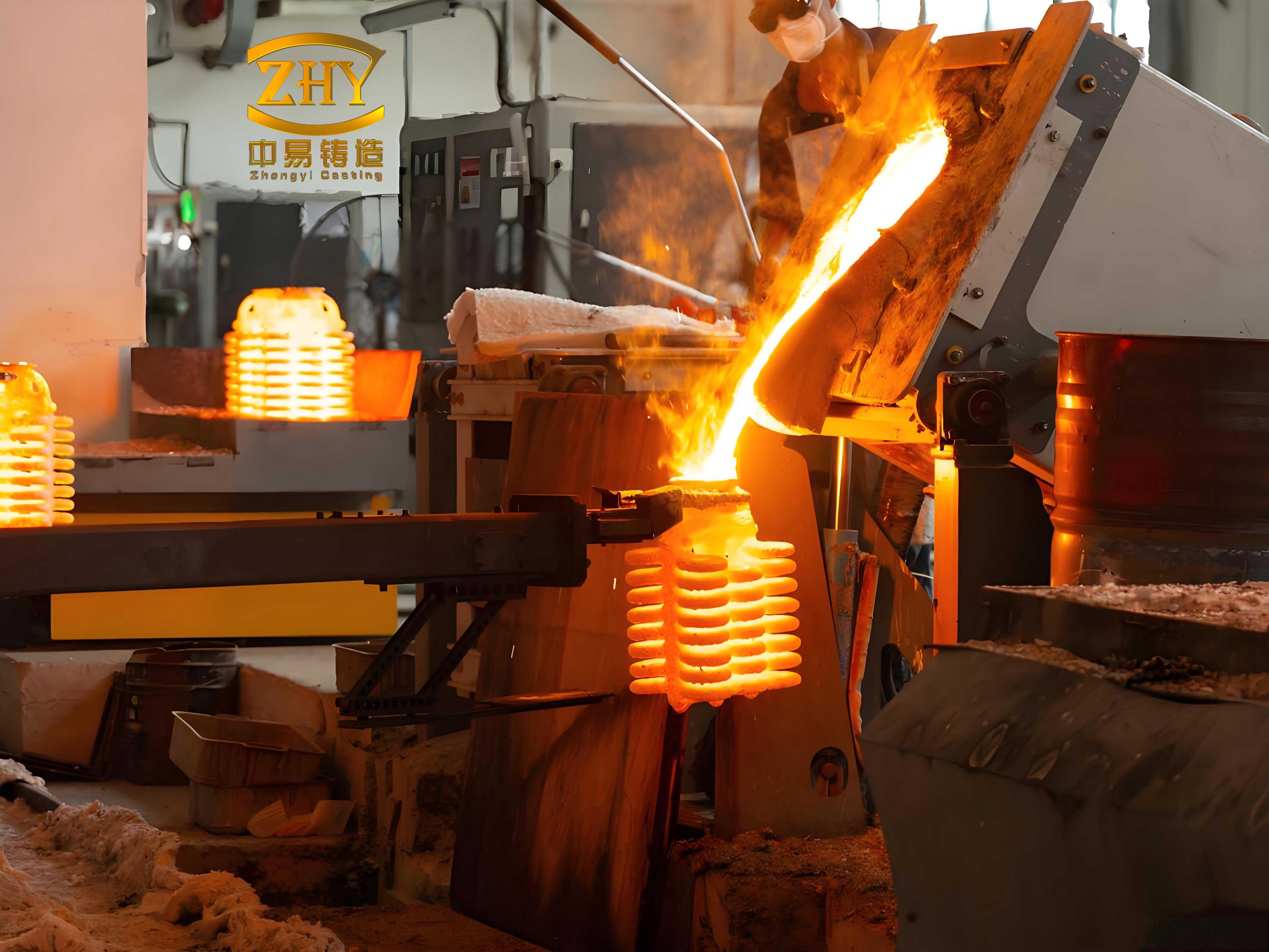
Table 2 summarizes the casting quality indicators.
| Parameter | Value | Requirement |
|---|---|---|
| Dimensional tolerance (mm) | ±0.5 | ±1.0 |
| Surface roughness (Ra, μm) | 12.5 | 25 |
| Porosity | None | No defect |
| Macro shrinkage | None | No defect |
Another example is a thin-walled structural casting prone to hot tearing. We printed a hollow core with a wall thickness of 8 mm, filled the interior with dry sand, and used a traditional sand mold for the external shape. The hollow core provided excellent collapsibility, eliminating cracking defects that had occurred with solid cores.
Sand Regeneration and Recycling
After casting, the mixed sand (printed shell + backing sand) can be reclaimed mechanically. Since both binders are acid-cured modified resol phenolic resins, the regeneration process is similar. The old sand is crushed, screened, and subjected to mechanical attrition to remove residual binder. The target properties for reclaimed sand are listed in Table 3.
| Parameter | Target Value |
|---|---|
| Grain size range | 100/140 mesh |
| Fines content (%) | ≤0.5 |
| Clay content (%) | ≤0.2 |
| Moisture content (%) | ≤0.2 |
| Loss on ignition (%) | ≤1.5 |
The recovery rate \( \eta \) can be calculated as:
$$ \eta = \frac{m_{\text{reclaimed}}}{m_{\text{original}}} \times 100\% $$
For silica sand, we achieve \( \eta > 95\% \); for ceramic sand, \( \eta > 98\% \). The reclaimed sand can be reused for both 3D printing and traditional backing, with slight adjustments in resin addition to maintain strength. This closed-loop recycling reduces waste and overall material cost. The process flow is depicted schematically:
- Pouring → Shakeout → Crushing → Magnetic separation → Mechanical regeneration → Sieving → Reclaimed sand storage.
- Reclaimed sand is mixed with fresh sand (10–20%) to control loss on ignition.
- Resin addition for printing with reclaimed sand is typically 1.6–1.8% (compared to 1.8–2.0% for 100% new sand).
Conclusions
Our experience demonstrates that the combination of sand 3D printing and traditional self-setting sand molding brings significant benefits:
- The hybrid approach reduces resin and sand consumption by printing only thin shells and using low-strength backing sand, lowering overall production cost by 30–50% compared to full 3D printing.
- It shortens product development cycles dramatically – from 4–5 weeks to under 1 week for new castings – by eliminating pattern making.
- It improves casting quality through hollow cores that enhance collapsibility and reduce defects such as hot tearing.
- The used sand can be mechanically regenerated with high recovery rates, enabling sustainable production.
This method is particularly suitable for large castings where full 3D printing would be prohibitively expensive. As 3D printing equipment scales up, we foresee even broader industrial adoption. Future work will focus on optimizing the interfacial bonding between the printed shell and the backing layer, as well as developing binder systems with even lower gas evolution.