
As a forward-thinking steel castings manufacturer, our journey towards operational excellence is fundamentally linked to the adoption and refinement of intelligent manufacturing systems. The smart foundry represents the pinnacle of this evolution, integrating digitalization, automation, and network technologies to create a responsive, efficient, and sustainable production environment. At the heart of such a facility for producing complex, high-value components lies the fully automatic molding line. This article, drawn from our direct experience, provides an in-depth examination of a fully automatic end cap molding line, detailing its architecture, operational principles, and the tangible benefits it delivers, thereby underscoring the transformative path for modern steel castings manufacturers.
The transition to a smart foundry is not merely an upgrade but a necessary strategic shift. It involves the deep integration of information technology with industrial processes, where data acquisition, real-time analysis, and automated decision-making drive every aspect of production. For a steel castings manufacturer, this means unprecedented control over quality, traceability, and resource utilization. The automatic end cap molding line is a critical module within this ecosystem, demonstrating how targeted automation can streamline a core, often labor-intensive, process. We will explore this system from first principles to integrated application, highlighting the technological synergies that make it a benchmark for the industry.
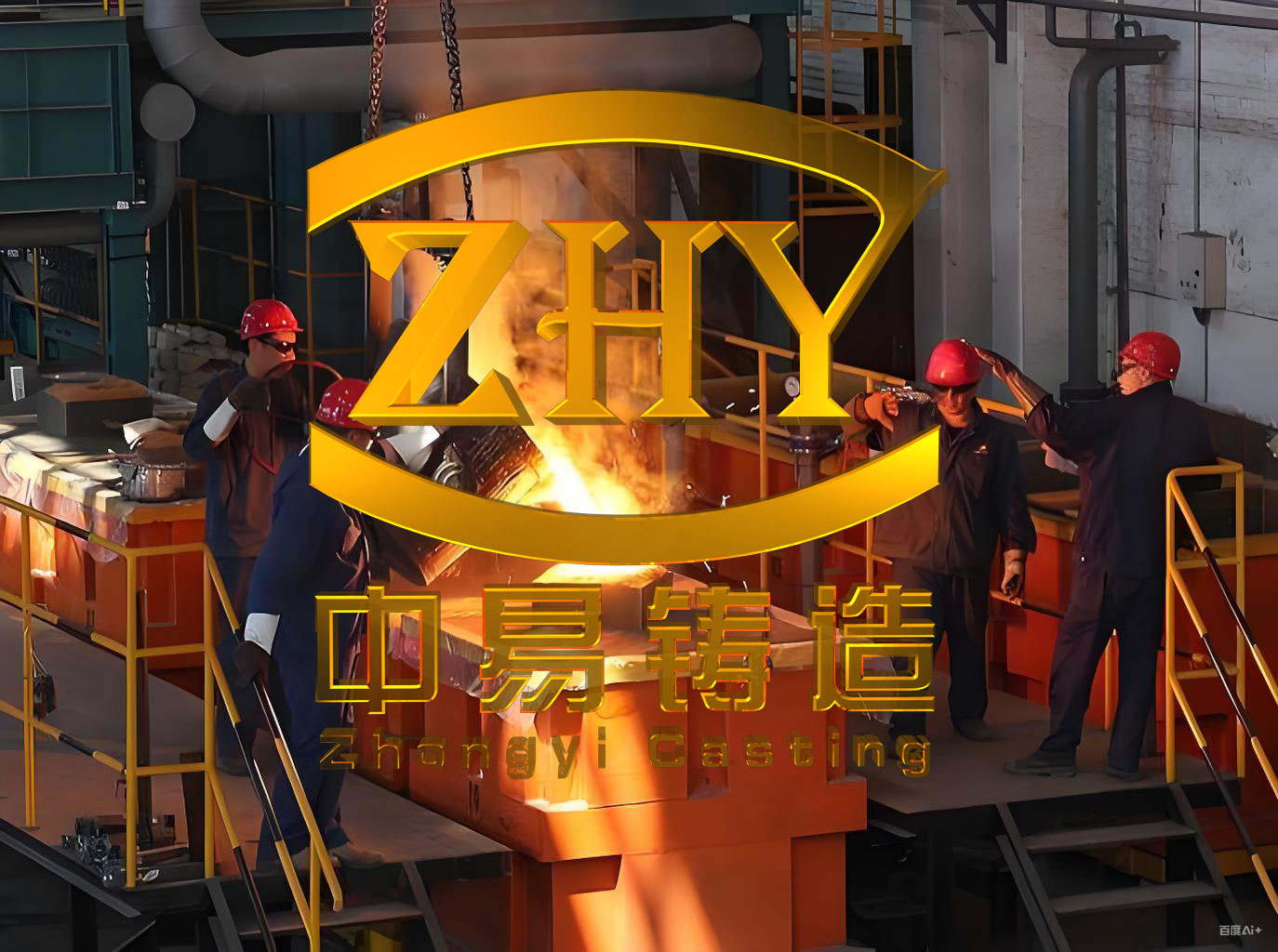
The image above provides a glimpse into the scale and organization of a modern foundry embracing such automation, a vision that guides every steel castings manufacturer aiming for leadership.
System Architecture of the Fully Automatic End Cap Molding Line
The line is a meticulously choreographed sequence of automated stations, each performing a specific function with minimal human intervention. The core philosophy is one of continuous, synchronized flow, managed by a central Programmable Logic Controller (PLC). The main components, as implemented in our facility, are as follows:
- Continuous Drying Kiln: A temperature-controlled tunnel furnace where molded assemblies undergo thermal curing. It operates on a stepwise indexing principle, precisely controlling dwell time.
- Automatic Demolding Station with Robotic Manipulator: Equipped with a servo-driven gripper capable of adjusting its clamping diameter based on the end cap size input.
- Residue Breakdown Station: A dedicated area, often serviced by a robotic arm with a pneumatic breaker, for removing leftover refractory material from used end caps and molds.
- Automatic Box Closing Station with Robotic Manipulator: Similar to the demolding robot, this unit precisely lifts and places the end cap onto the mold pattern.
- Automatic Molding Station: Features an automated refractory slurry mixer and pouring system, coupled with a vibrating compaction table.
- End Cap Return Conveyor & Transfer Carts: A network of powered roller conveyors and automated guided vehicles (AGVs) or rail-guided shuttles for material handling.
- Mold Repair & Inspection Station: A semi-automatic station where an operator performs final checks and touch-ups.
- End Cap Cleaning Station: For post-demolding cleaning of the reusable end caps.
- End Cap Return-to-Storage Line & High-Bay Storage Rack (Stereoscopic Warehouse): An automated storage and retrieval system (AS/RS) that serves dual purposes: storing end caps/molds and providing a controlled environment for ambient curing (healthing).
The interconnection and data flow between these modules are summarized in the table below, illustrating the integrated system logic that is crucial for a modern steel castings manufacturer.
| Module Name | Primary Function | Key Automation Feature | Data Input/Output to PLC |
|---|---|---|---|
| High-Bay Storage Rack | Storage & Curing Management | Automated retrieval/deposit via RGV & stacker crane | Receives production schedule; outputs end cap/mold ID & location. |
| Residue Breakdown Station | Preparation of Used Components | Robotic breaker tool manipulation | Signals job completion; may request maintenance data. |
| Auto Box Closing Station | Precise End Cap/Mold Assembly | Vision/positioning system; adaptive gripper | Receives end cap dimensions for grip adjustment; confirms assembly. |
| Automatic Molding Station | Refractory Slurry Pouring & Compaction | Precision volumetric pouring; programmable vibration | Receives slurry volume formula; outputs pour completion status. |
| Continuous Drying Kiln | Thermal Curing of Mold Assembly | Variable speed conveyor for precise dwell time control | Receives target temperature & time profile; outputs internal temperature data. |
| Auto Demolding Station | Separation of Cured Mold from End Cap | Adaptive gripper; controlled force application | Receives demolding parameters; confirms successful separation. |
Operational Principles and In-Depth Application Workflow
The operation of this line is a closed-loop process, initiated by the production schedule. As a steel castings manufacturer committed to lean principles, this seamless workflow is fundamental to our efficiency.
1. End Cap and Mold Re-Circulation
After casting and shakeout, the used end cap (now empty) and its corresponding mold pattern are placed on a dedicated pallet. This pallet is transported via the return conveyor system to the intake point of the molding line. An automated transfer cart then moves it to the pickup station for the High-Bay Storage Rack. The AS/RS system’s stacker crane automatically stores the pallet in a designated location, logging its identity and timestamp into the Manufacturing Execution System (MES). The end cap now enters a queue, awaiting its next production cycle based on the schedule.
2. The Core Molding Line Sequence
The intelligent scheduler within the MES dispatches work orders. The High-Bay Rack retrieves the required end cap and mold pallet and delivers it to the breakdown station. Here, a robotic arm equipped with a pneumatic chisel or similar tool removes any residual refractory material, a process critical for ensuring a perfect seal in the next cycle. The cleaned assembly is conveyed to the box closing station.
At this station, a positioning mechanism on the roller conveyor accurately locates the mold. The robotic manipulator, having received the specific dimensional data ($D_{cap}$ for diameter, $H_{cap}$ for height) from the MES, calculates its grip parameters. The grip radius $r_g$ and vertical travel $z_t$ are given by:
$$ r_g = \frac{D_{cap}}{2} + c_{offset} $$
$$ z_t = H_{cap} + \Delta h_{lift} $$
where $c_{offset}$ is a safety clearance constant and $\Delta h_{lift}$ is the required lift height. The robot then picks up the end cap and places it precisely onto the mold pattern.
The assembled unit proceeds to the automatic molding station. Here, the system’s most significant advancement for a steel castings manufacturer is showcased. The slurry preparation unit automatically mixes the refractory aggregate, binder, and additives according to a digital recipe linked to the part number. The required volume $V_{slurry}$ is calculated based on the end cap’s internal volume $V_{cap}$ and a packing efficiency factor $\eta$:
$$ V_{slurry} = \frac{V_{cap}}{\eta} $$
The slurry is poured into the end cap while the underlying vibration table operates at an optimized frequency ($f_v$) and amplitude ($A_v$) to ensure uniform compaction and eliminate air pockets:
$$ Compaction\ Quality \propto \int_{0}^{t_{vibe}} A_v \cdot f_v \cdot e^{-k t} \,dt $$
where $t_{vibe}$ is vibration time and $k$ is a material-dependent damping constant.
The filled assembly then moves to the manual repair station for a quick quality check and any necessary patching—the only manual step in the core sequence. Once approved, a transfer cart moves it to the entrance of the continuous drying kiln.
3. Precision Thermal Processing and Demolding
The continuous drying kiln is a cornerstone of the line’s productivity. Unlike batch ovens, it provides a steady-state thermal environment. The conveyor speed $v_{kiln}$ is dynamically controlled by the PLC to achieve the exact required dwell time $t_{dwell}$ for the given mold chemistry:
$$ v_{kiln} = \frac{L_{kiln}}{t_{dwell}} $$
where $L_{kiln}$ is the effective heated length of the kiln. For a typical formulation, a temperature of 190°C and a dwell time of 1 hour are sufficient. This precise control is a key advantage for a steel castings manufacturer seeking consistent mold properties.
Upon exit, the cured mold assembly arrives at the automatic demolding station. Using a similar adaptive gripping mechanism as the box closing robot, the demolding robot securely lifts the end cap, now containing the cured refractory mold, off the pattern. The two components are then placed on separate conveyors: the mold (green sand or cured resin mold) is sent for further processing or reclamation, while the end cap, with the mold cavity now ready for metal pouring, proceeds to the cleaning station for minor debris removal before being transferred back to the High-Bay Storage Rack for its final ambient curing or “healthing” period.
4. The Role of the Automated High-Bay Storage Rack
The stereoscopic warehouse is not merely a storage unit; it is an intelligent buffer and process management hub. It receives the molded end caps and stores them in designated locations. The MES tracks the entry time for each cap and manages the healthing duration $t_{health}$. The rack automatically retrieves end caps only when $t_{health} \geq t_{required}$, ensuring optimal mold strength before they are dispatched to the melting and pouring area. This eliminates guesswork and queue mismanagement, a common source of delays in traditional foundries.
Quantitative Analysis of Benefits for a Steel Castings Manufacturer
The implementation of such a system yields measurable gains across multiple metrics. The following table contrasts key performance indicators (KPIs) between conventional and automated molding lines, data reflective of our operational experience.
| Performance Indicator | Conventional Manual Line | Fully Automatic Line | Improvement Factor |
|---|---|---|---|
| Cycle Time for Mold Making | 24-36 hours (incl. long drying waits) | 12-14 hours | ~ 50-60% Reduction |
| Direct Labor per Mold Unit | High (manual handling, pouring, demolding) | Minimal (only inspection/repair) | ~ 70-80% Reduction |
| Mold Consistency (Dimensional Variance) | Higher (human-dependent variables) | Significantly Lower (process-controlled) | Variance reduced by ≥ 40% |
| Factory Floor Space Utilization | Low (extensive floor storage for drying) | High (vertical storage in AS/RS) | Effective area use increased by ~ 30% |
| Energy Consumption per Mold | Higher (inefficient batch kilns, crane use) | Lower (efficient continuous kiln, conveyor-based transfer) | Estimated 15-25% Reduction |
| Workplace Safety Incidents | Higher risk (manual lifting, crane operations) | Drastically Reduced (elimination of heavy manual tasks) | Major incident rate approaches zero |
The economic impact can be modeled. The total cost saving per mold unit ($\Delta C_{unit}$) can be expressed as a function of labor ($L$), energy ($E$), scrap/rework ($S$), and overhead ($O$) savings:
$$ \Delta C_{unit} = \Delta L + \Delta E + \Delta S + \Delta O $$
Where, for instance, $\Delta L = (t_{manual} – t_{auto}) \cdot rate_{labor}$ and $\Delta S = (scr_{manual} – scr_{auto}) \cdot cost_{material}$. For a high-volume steel castings manufacturer, the annualized savings are substantial, leading to a rapid return on investment (ROI) and stronger market competitiveness.
Conclusion: Defining the Future of Foundry Operations
The fully automatic end cap molding line is a microcosm of the intelligent foundry. It exemplifies how the strategic integration of robotics, IoT-enabled control systems, and data-driven process management can revolutionize a foundational manufacturing process. For any ambitious steel castings manufacturer, the benefits are unequivocal: a dramatic reduction in direct labor costs and physical strain, a significant compression of production lead times, enhanced consistency and quality of molds, superior utilization of plant footprint, and a markedly safer working environment.
The line’s design, where the continuous drying kiln also functions as a material handling conduit and the stereoscopic warehouse acts as an intelligent process buffer, showcases a holistic approach to automation. It moves beyond isolated machines to create a synchronized, self-regulating production cell. This is the definitive direction for green, sustainable, and economically resilient foundry operations. The adoption and continuous improvement of such systems are not just an option but an imperative for any steel castings manufacturer determined to thrive in the era of Industry 4.0, setting new standards for efficiency, quality, and innovation in the global marketplace.