
The relentless pursuit of higher thrust, efficiency, and performance in modern aircraft engines places extraordinary demands on the manufacturing of critical hot-section components. As a lead researcher and practitioner in advanced manufacturing, I have witnessed firsthand how the complexity of these parts, characterized by intricate internal cooling channels, extensive thin-walled sections, and complex spatial contours, pushes traditional foundry methods to their limits. These aerospace castings, primarily produced via vacuum investment casting of nickel-based superalloys, are plagued by multi-scale challenges that directly impact yield, performance, and operational lifespan. The control of microstructure, internal metallurgical defects like micro-porosity and hot tears, and dimensional distortion remains a significant bottleneck. The transition towards digitalization presents a transformative pathway to address these persistent quality issues. This article articulates a first-person perspective framework, integrating Industrial Internet of Things (IIoT) and Digital Twin (DT) technologies, to establish an intelligent quality control paradigm for the precision casting of superalloy aerospace castings.
The fundamental challenge lies in the process’s inherent nature. Superalloy investment casting is a high-temperature, multi-physics, multi-material, and multi-stage operation. Key characteristics that contribute to its complexity are summarized below:
| Process Aspect | Description & Challenge |
|---|---|
| Thermal Regime | Pouring temperatures exceed 1500°C, creating severe thermal gradients and stresses. |
| Material System | Alloys contain 10+ elements (Ni, Co, Cr, Al, Re, etc.), leading to complex solidification behavior. |
| Process Chain | Involves 20+ steps (wax injection, shell building, firing, pouring, etc.) with nearly 100 potential parameters. |
| Quality Issues | Span from nanoscale precipitates and micro-porosity to macro-scale shrinkage and distortion. |
| Geometric Complexity | Large thin-walled areas, drastic thickness variations, and internal cavities complicate filling and feeding. |
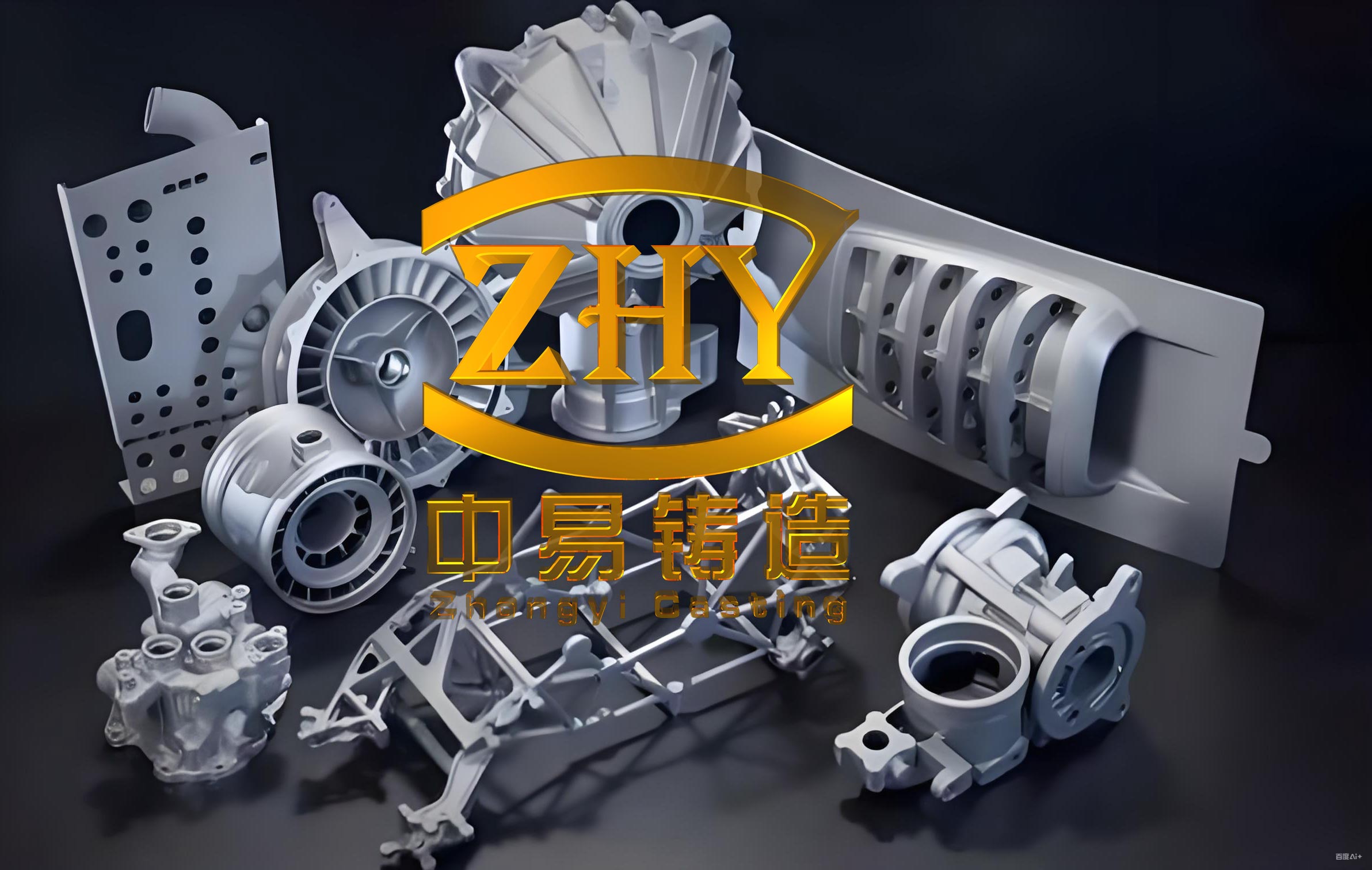
This multi-scale problem necessitates a paradigm shift beyond experience-based trial-and-error. The global trend of Industrial Digital Transformation, exemplified by initiatives like Industry 4.0 and the Industrial Internet, provides the necessary technological toolkit. The core objective is to achieve digital enablement—solving critical pain points like low yield and long lead times—to realize digital gains in cost, quality, and speed for aerospace castings.
1. A Digital Transformation Framework for Precision Casting
The proposed framework is built on the synergistic integration of three pillars: pervasive sensing via IIoT, predictive modeling and analytics, and closed-loop control through Digital Twins. This creates a cyber-physical production system specifically tuned for the rigorous demands of superalloy casting.
1.1. Industrial IoT Architecture for Foundry Operations
Implementing IIoT is the first step to digitize the physical process. Sensors, actuators, and inspection equipment are networked across key value-adding stations to create a continuous data stream. The focus is on the three most critical and variable-prone stages: Wax Pattern Production, Ceramic Shell Building, and Metal Pouring & Solidification.
The table below outlines the sensor deployment and key data acquired at each stage:
| Process Stage | Key Sensors & Devices | Monitored Parameters & Purpose |
|---|---|---|
| Wax Injection | Thermocouples, Pressure Sensors, CCD Cameras, 3D Scanner | Die/Plate temperature, injection pressure profile, visual surface defects, final pattern geometry. Prevents dimensional inaccuracies from thermal mismatch. |
| Shell Building | PLC for Robot Arm, Displacement Sensors, Cameras | Robot trajectory (dip/withdrawal speed, rotation), slurry viscosity (indirectly), shell surface for cracks/coverage. Ensures consistent layer application and detects shell faults. |
| Pouring & Solidification | Non-contact IR Pyrometers, Thermocouples, Flow Sensor, Vacuum Gauge | Shell pre-heat temperature, transfer time, pour rate, melt temperature, solidification cooling curve. Captures the thermal history defining microstructure and defect formation. |
This network generates high-frequency, time-series data that forms the foundational dataset for all subsequent digital models. It enables real-time monitoring and provides traceability for every aerospace casting produced.
1.2. Digital Twin Design for Critical Process Stages
A Digital Twin is not a single model but a suite of interconnected virtual representations that mirror the physical process, updated by IIoT data. For each key stage, the DT performs specific functions: real-time visualization, anomaly detection, and predictive simulation.
Digital Twin for Wax Injection: This DT focuses on dimensional fidelity. The 3D scan data of the assembled wax pattern is compared against the nominal CAD model in real-time. The DT calculates deformation vectors:
$$\Delta \mathbf{x} = \mathbf{x}_{\text{scanned}} – \mathbf{x}_{\text{CAD}}$$
Significant deviations trigger alerts for tooling maintenance or process parameter adjustment (e.g., injection temperature, pressure). The DT learns from historical data to predict deformation trends for new pattern designs.
Digital Twin for Shell Building: This DT addresses process consistency and shell quality. A machine vision module analyses camera images to classify shell surface defects (cracks, inclusions, poor coverage). Simultaneously, a data-driven model correlates robot motion parameters and environmental conditions (humidity, temperature) with shell properties like thickness uniformity and green strength. The DT can recommend optimal dip schedules for complex geometries.
Digital Twin for Pouring & Solidification: This is the most complex and impactful DT. It uses real-time thermal data from the IIoT as boundary conditions for a hybrid simulation model. A simplified physics-based model (e.g., using Fourier’s law for heat transfer) runs in near real-time:
$$\rho c_p \frac{\partial T}{\partial t} = \nabla \cdot (k \nabla T) + \dot{Q}_{\text{latent}}$$
where $\rho$ is density, $c_p$ is heat capacity, $k$ is thermal conductivity, and $\dot{Q}_{\text{latent}}$ is the latent heat release rate. This model is continuously calibrated and corrected by a surrogate machine learning model trained on high-fidelity offline simulations and historical defect data. The DT’s output is a predicted quality metric, such as a Shrinkage Porosity Index (SPI) or a distortion risk map, available within minutes after pour completion.
2. Intelligent Quality Modeling and Control for Aerospace Castings
The ultimate goal of digitization is proactive quality assurance. The data and models from the IIoT and DTs feed into specialized analytics engines designed to predict and prevent defects in aerospace castings.
2.1. Modeling and Prediction of Micro-porosity
Micro-porosity remains a critical reject criterion. A data-driven model is developed to predict the porosity risk as a function of critical process parameters captured by the IIoT. The general form of the predictive model can be expressed as:
$$\text{Porosity Risk Index }(PRI) = f(T_{\text{pour}}, \Delta t_{\text{transfer}}, \dot{T}_{\text{cool}}, \text{Geometry Factor})$$
where the function $f$ is derived using machine learning algorithms like Gradient Boosting or Neural Networks. The model is trained on labeled data where the output (PRI) is correlated with actual porosity measurements from X-ray radiography and quantitative metallography.
A simplified representation of the parameter influence can be summarized as:
| Process Parameter | Typical Optimal Range | Effect on Porosity |
|---|---|---|
| Shell Pre-heat Temperature ($T_{\text{shell}}$) | ~950-1100 °C | Too low: promotes mistruns, shallow porosity. Too high: increases metal-shell reaction, coarse porosity. |
| Metal Pouring Temperature ($T_{\text{pour}}$) | Liquidus + 30-100 °C | Higher temperature improves fluidity but can worsen segregation and shrinkage. |
| Solidification Cooling Rate ($\dot{T}$) | Process-dependent | Faster cooling generally reduces pore size but may increase stress; very slow cooling promotes macro-shrinkage. |
The real-time PRI from the DT allows for immediate corrective actions in subsequent heats, such as adjusting pre-heat schedules or modifying gating/risering design for future casts.
2.2. Dimensional Distortion Control
Distortion in large, thin-walled aerospace castings results from complex interactions between wax pattern stability, shell restraint, and thermal stress during cooling. A multi-stage distortion model is essential.
The total distortion $\mathbf{D}_{\text{total}}$ of a cast component can be conceptualized as a superposition of contributions from each major stage:
$$\mathbf{D}_{\text{total}} \approx \mathbf{D}_{\text{wax}} + \mathbf{D}_{\text{shell}} + \mathbf{D}_{\text{thermal}} + \mathbf{D}_{\text{phase}}$$
Where:
- $\mathbf{D}_{\text{wax}}$: Distortion from wax injection and assembly (addressed by the Wax Injection DT).
- $\mathbf{D}_{\text{shell}}$: Distortion from ceramic shell restraint during firing and cooling.
- $\mathbf{D}_{\text{thermal}}$: Distortion from uneven thermal contraction during casting solidification and cooling.
- $\mathbf{D}_{\text{phase}}$: Distortion from solid-state phase transformations.
The IIoT provides direct measurement of $\mathbf{D}_{\text{wax}}$ via 3D scanning. The Pouring DT predicts the thermal stress component $\mathbf{D}_{\text{thermal}}$ using a simplified thermo-elasto-plastic analysis. By comparing predicted vs. actual final distortion (measured post-heat treatment), the model for $\mathbf{D}_{\text{shell}}$ is iteratively refined. This allows for the proactive design of counter-distortion in the wax pattern or the optimization of shell heating/cooling cycles to minimize final dimensional error.
2.3. Automated Defect Inspection with Computer Vision
Post-casting inspection is automated using deep learning. Convolutional Neural Networks (CNNs) are trained to detect and classify surface defects from fluorescent penetrant inspection (FPI) images or direct visual images. The model performs pixel-wise segmentation to identify defect types (crack, porosity, inclusion) and quantify their severity. The accuracy of such a model can be represented by its performance on a validation set:
$$\text{Precision} = \frac{TP}{TP + FP}, \quad \text{Recall} = \frac{TP}{TP + FN}, \quad F1 = 2 \cdot \frac{\text{Precision} \cdot \text{Recall}}{\text{Precision} + \text{Recall}}$$
where $TP$ are true positives, $FP$ false positives, and $FN$ false negatives. This automation ensures consistent, rapid, and unbiased inspection of every aerospace casting, freeing skilled technicians for analysis and root-cause investigation.
3. Implementation Pathway and Future Outlook
The journey towards a fully intelligent foundry for aerospace castings is incremental. A practical implementation roadmap begins with a pilot project on a critical component. The first phase involves installing the core IIoT infrastructure on key furnaces, robots, and inspection stations to gather baseline data. The second phase develops the initial Digital Twins for the pouring and solidification stage, as this has the highest direct impact on internal quality. The predictive porosity model is the first analytics module to be deployed. The third phase integrates the wax and shell building DTs and the automated vision inspection system, closing the loop on dimensional and surface quality.
The future development of this intelligent ecosystem will focus on several frontiers:
- Advanced Networking: Utilizing 5G private networks for ultra-reliable, low-latency communication within the foundry, enabling real-time control of fast processes and massive data transfer from high-resolution sensors.
- Multiscale-Multiphysics AI: Developing hybrid AI models that seamlessly integrate fundamental physical laws (conservation equations) with data-driven corrections to predict not just defects but also final microstructure (grain size, $\gamma’$ precipitate morphology) and mechanical properties directly from process data.
- Generative Process Optimization: Employing generative AI and reinforcement learning to autonomously design optimal process parameters and even suggest modifications to gating system geometry for new aerospace casting designs, drastically reducing process development time.
- Closed-Loop Adaptive Control: Evolving the Digital Twin from a predictive monitoring tool to an autonomous control system. For example, the DT could direct a multi-zone furnace to apply a dynamic temperature field to the solidifying casting to actively mitigate thermal stresses and control grain growth.
In conclusion, the digital transformation of superalloy precision casting is no longer a visionary concept but an operational necessity to meet the escalating quality and efficiency demands of the aerospace industry. By architecting a synergistic system of Industrial IoT for data acquisition, Digital Twins for real-time process mirroring, and AI-driven analytics for predictive quality control, manufacturers can achieve unprecedented levels of assurance over the integrity of aerospace castings. This intelligent framework promises to shift the paradigm from defect detection to defect prevention, enabling the production of lighter, more reliable, and higher-performance components that are essential for the next generation of aircraft engines. The journey demands significant investment in technology and skills, but the payoff—in terms of yield improvement, cost reduction, and accelerated production cycles—is fundamental to sustaining leadership in the manufacturing of these mission-critical components.