
As a prominent steel castings manufacturer, we have witnessed the transformative impact of intelligent unit systems in modern foundries. With the rapid advancement of Industry 4.0 and initiatives like “Made in China 2025,” the casting industry faces increasing pressure to adopt smart manufacturing solutions. Traditional casting processes, characterized by discrete production steps and poor standardization, often struggle to achieve full automation. This is where intelligent unit systems come into play, offering a groundbreaking approach to integrate human, machine, and software interactions. For steel casting manufacturers, these systems represent a leap toward digitalization and intelligence, enabling seamless data flow, real-time monitoring, and optimized resource management. In this article, I will explore the design, functionality, and benefits of intelligent unit systems, drawing from extensive experience in implementing these solutions across multiple smart foundries. By leveraging tables and mathematical models, I aim to provide a comprehensive guide for China casting manufacturers seeking to enhance their operational efficiency and product quality.
The core of a smart foundry lies in its ability to connect various layers of production, from enterprise resource planning (ERP) to shop-floor devices. Intelligent unit systems act as a bridge between the车间层 (workshop layer) and设备层 (equipment layer), organizing casting processes into modular units such as molding, melting, post-processing, and machining. Each unit comprises hardware—like production equipment, logistics systems, and sensors—and software for control and management. The system architecture integrates with upper-level systems like MES (Manufacturing Execution System), VCS (Virtual Casting System), and LIMS (Laboratory Information Management System) through data interfaces such as Web Services. This integration allows for direct驱动 of production by order information,工艺参数, and scheduling data, minimizing human intervention. For instance, as a steel castings manufacturer, we have seen how intelligent units can self-perceive设备数据, self-analyze production environments, and self-execute decisions based on expert systems. The overall framework ensures that production, quality, cost, equipment, environment, and personnel parameters are centrally managed, forming a robust foundation for intelligent operations.
In terms of design, intelligent unit systems are tailored to the specific工艺流程 of casting. For example, in a typical steel casting process, the molding unit might include automated造型机 (molding machines) and砂处理设备 (sand processing equipment), while the melting unit integrates上料系统 (charging systems),电炉 (electric furnaces), and浇注机 (pouring machines). The post-processing unit encompasses抛丸 (shot blasting),喷漆 (painting), and热处理 (heat treatment) equipment. Each unit is controlled by a dedicated software system that handles plan management, process control, device management, and statistical analysis. A key aspect is the设备数据采集与互联平台 (equipment data acquisition and interconnection platform), which uses OPC Server to gather real-time data and enable communication with the unit system. This design not only supports the dynamic reorganization of production steps but also facilitates the self-learning and self-maintenance capabilities essential for a smart foundry. For China casting manufacturers, this modular approach allows for scalable solutions that can be adapted to diverse product lines, from large steel castings to precision components.
The functional application of intelligent unit systems revolves around four main areas: production, quality, equipment, and cost management. In production, the system ensures effective衔接 of production plans across different processes, tracking product status in real-time. This involves产前准备 (pre-production preparation),生产指令下达 (issuance of production commands),生产过程数据监控 (monitoring of production process data), and物流调度 (logistics scheduling). For quality control, the system implements closed-loop management of key parameters, from下发 (issuance) to执行 (execution) and反馈 (feedback). This扁平化管理 (flat management) approach reduces complexity by embedding technical knowledge bases into the system. Equipment management includes real-time monitoring of operational states, alarms, and faults, enabling predictive maintenance through online tracking and spare parts management. Cost management focuses on fine-grained control of raw material consumption, energy usage, and labor hours, captured via automated data collection. As a steel casting manufacturer, we have utilized these functions to achieve significant improvements in efficiency and consistency, with the system acting as a central hub for information exchange and decision-making.
To illustrate the benefits, consider the following table summarizing the advantages of intelligent unit systems for steel casting manufacturers:
| Aspect | Traditional Approach | Intelligent Unit System | Impact |
|---|---|---|---|
| Production Efficiency | Manual scheduling and data entry | Automated plan execution and real-time tracking | Reduced cycle times by up to 30% |
| Quality Control | Periodic inspections and paper-based records | Continuous parameter monitoring and digital feedback | Defect rate decrease of 25% |
| Equipment Utilization | Reactive maintenance and isolated controls | Predictive analytics and integrated device management | Uptime improvement of 20% |
| Cost Management | Estimates based on historical data | Real-time consumption tracking and analysis | Material waste reduction of 15% |
Moreover, the system’s impact on production can be quantified using mathematical models. For instance, the overall equipment effectiveness (OEE) can be expressed as: $$ \text{OEE} = \text{Availability} \times \text{Performance} \times \text{Quality} $$ where Availability accounts for downtime, Performance for speed losses, and Quality for defect rates. In intelligent unit systems, availability is enhanced through predictive maintenance, leading to higher OEE values. Similarly, cost savings can be modeled as: $$ \text{Cost Savings} = \sum (\text{Resource Input}_{\text{before}} – \text{Resource Input}_{\text{after}}) \times \text{Unit Cost} $$ where Resource Input includes materials, energy, and labor. For a steel castings manufacturer, these formulas help in benchmarking and continuous improvement efforts.
One of the standout features is the扁平化操作系统 (flat operating system), which simplifies on-site operations by delivering processed information directly to frontline workers. This eliminates intermediate steps, allowing personnel to focus on execution rather than data interpretation. Additionally, the设备层充分联动 (full linkage of equipment layers) enables seamless coordination between automated systems, such as between molding machines and sand treatment units. This联动 is governed by algorithms that optimize production sequences, reducing idle time and enhancing throughput. For example, in a scenario where multiple steel casting manufacturers collaborate, the system can synchronize operations across facilities, ensuring consistent quality and delivery. The监控功能 (monitoring function) ensures that信息流 (information flow) and实物流 (physical flow) are synchronized, providing a holistic view of the production process. This is crucial for identifying bottlenecks and implementing corrective actions promptly.
Standardized异常处理功能 (abnormal handling functions) further enhance reliability by automating the response to deviations. In quality management, for instance, if a parameter like pouring temperature deviates from the set range, the system triggers alerts and guides operators through predefined resolution steps. This reduces dependency on individual expertise and ensures consistent outcomes. For China casting manufacturers, this capability is vital in maintaining compliance with international standards and customer specifications. The system also fosters a culture of continuous improvement by collecting and analyzing data over time, enabling the refinement of processes and the accumulation of institutional knowledge.
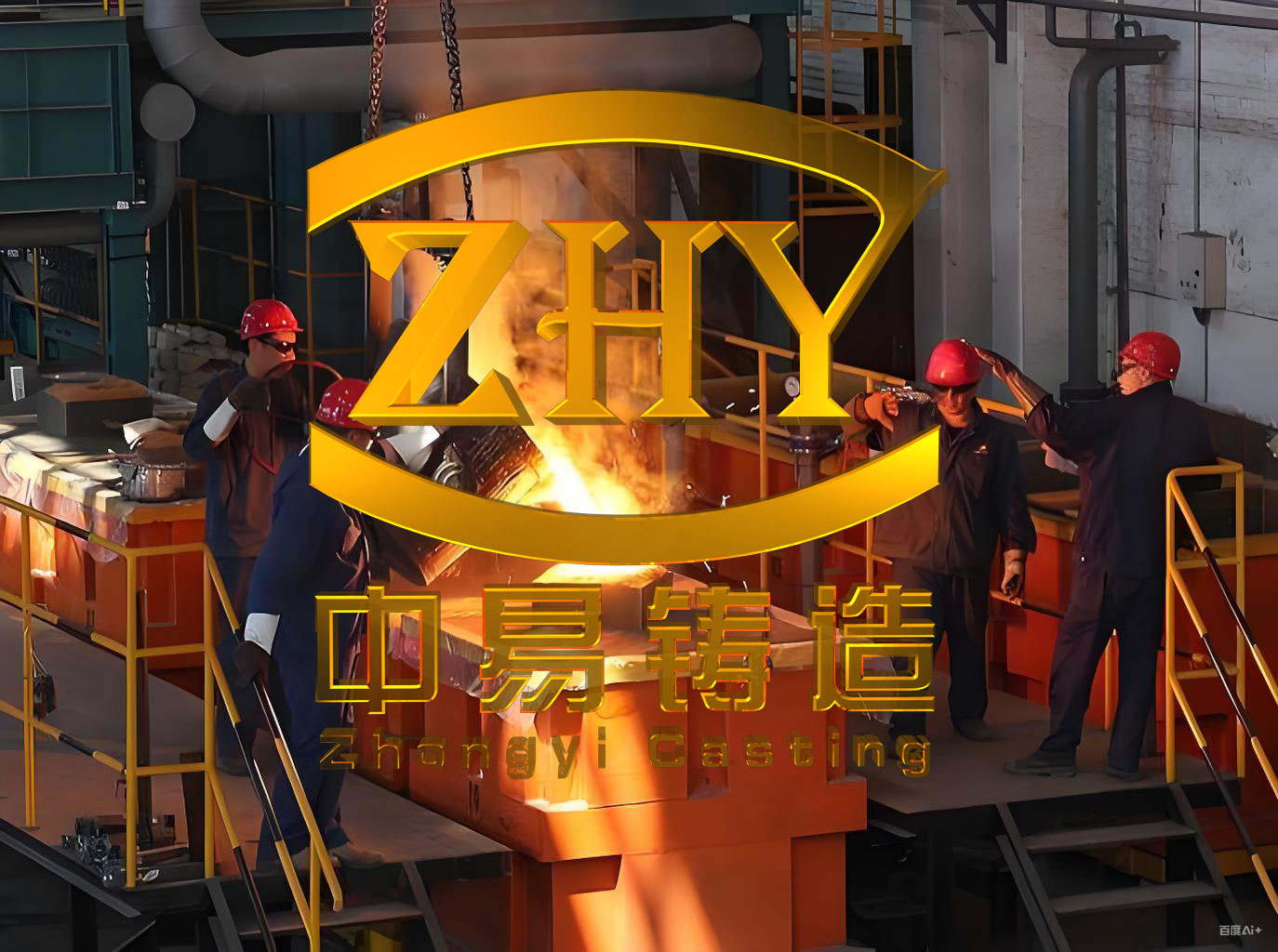
The implementation of intelligent unit systems has profound effects on various aspects of foundry operations. In terms of efficiency, the integration of digital tools with human workflows accelerates task completion and reduces errors. For example, in a steel castings manufacturer’s melting unit, the system can automatically adjust furnace parameters based on real-time sensor data, ensuring optimal energy use and metal quality. Management becomes more规范化 (standardized) as the system enforces predefined rules and procedures, reducing variability and enhancing accountability. Processes are固化 (solidified) through software configurations, which standardize work instructions and quality checks across shifts and teams. This not only improves consistency but also facilitates training and onboarding of new staff.
Perhaps the most significant impact is on human factors. By using the system to guide actions, workers develop a deeper understanding of process requirements and the importance of adherence. This shifts the focus from manual supervision to system-driven execution, empowering employees to contribute more effectively. For steel casting manufacturers in China, this alignment with technological advancements helps in attracting and retaining talent, as the work environment becomes more modern and engaging. Furthermore, the system’s ability to provide real-time feedback and performance metrics motivates continuous learning and improvement among the workforce.
In conclusion, intelligent unit systems are pivotal in the evolution of smart foundries, offering a structured approach to integrate automation, data analytics, and human expertise. For steel castings manufacturer and other China casting manufacturers, these systems provide a pathway to achieve higher productivity, superior quality, and reduced costs. By embracing this technology, foundries can not only meet the demands of Industry 4.0 but also establish themselves as leaders in the global market. The future will likely see further enhancements, such as the integration of artificial intelligence for predictive analytics and the expansion of IoT capabilities for broader connectivity. As we continue to refine these systems, the potential for innovation in casting processes remains vast, promising a new era of intelligent manufacturing.