
In my extensive research on machining processes, I have focused on the performance of cutting tools when processing ductile iron castings. Ductile iron castings are a class of materials renowned for their exceptional mechanical properties, including high strength, good ductility, and excellent wear resistance. These characteristics make ductile iron castings indispensable in critical applications such as automotive components like engine blocks, crankshafts, and valve bodies, as well as in various industrial machinery parts. However, the machining of ductile iron castings presents unique challenges due to their heterogeneous microstructure, which combines graphite nodules within a ferritic or pearlitic matrix. This study aims to delve deeply into the influence of rake face groove geometry on the cutting performance of D-style inserts during the turning of ductile iron castings. Through systematic experimentation involving cutting force measurement, wear analysis, and impact resistance testing, I have gathered significant insights that can guide tool design and machining parameter optimization for enhanced efficiency and tool life when working with ductile iron castings.
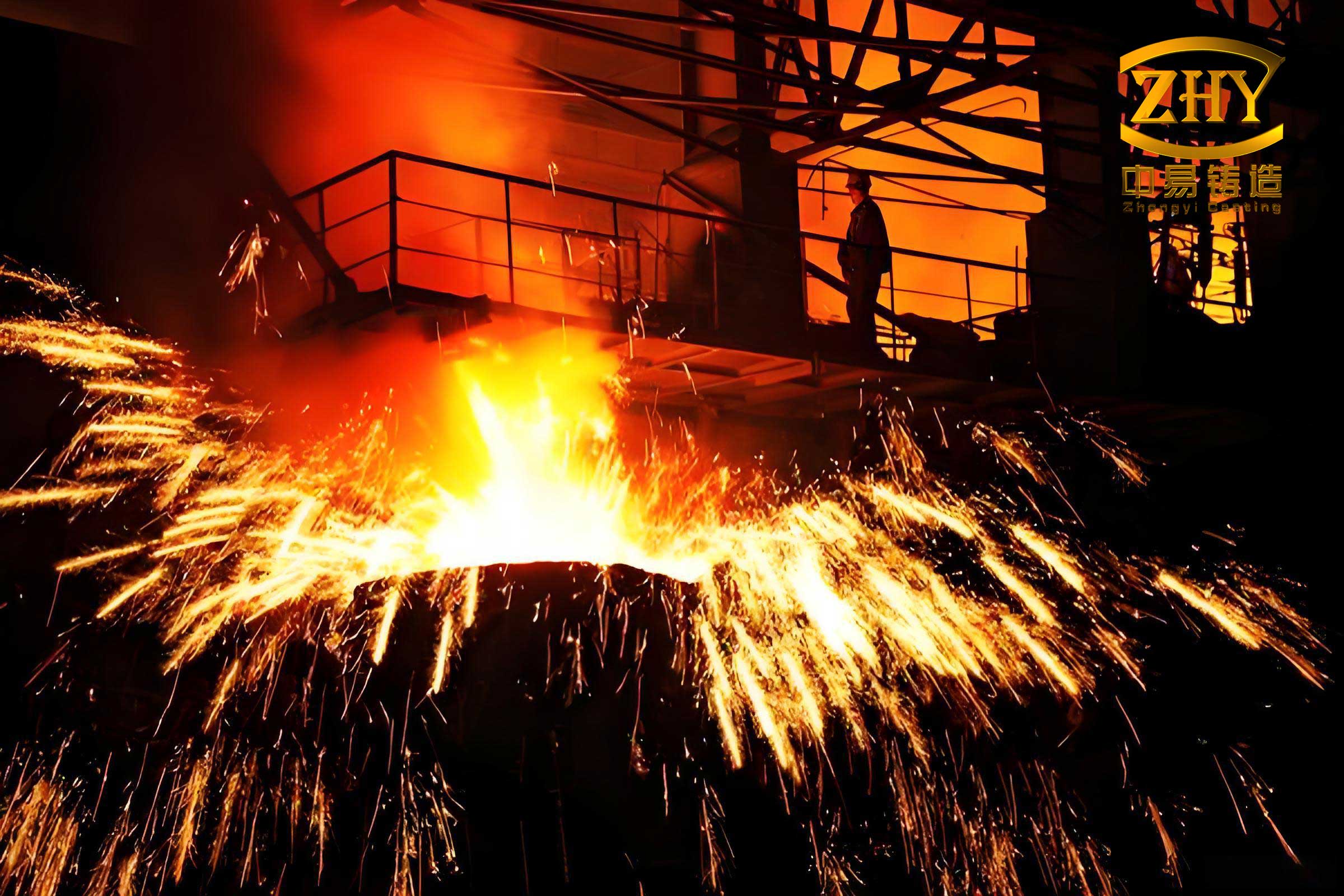
The importance of ductile iron castings in modern manufacturing cannot be overstated. Their superior castability, thermal stability, corrosion resistance, and economic viability have led to widespread adoption. From my review of prior studies, I note that the machining behavior of ductile iron castings lies between that of purely ductile metals and brittle materials, exhibiting characteristics of both. For instance, at higher cutting speeds, the cutting temperature rises, increasing plastic deformation and subsequently reducing cutting forces. Yet, because the plastic deformation in ductile iron castings is relatively moderate compared to fully ductile metals, the friction at the tool-chip interface is less pronounced, making the effect of cutting speed on cutting force less significant. This duality necessitates specialized tool geometries to optimize performance. Previous research has indicated that for ductile iron castings like QT500-7, the optimal rake angle for carbide tools falls within the range of 10° to 15°, as larger angles may compromise tool strength while smaller angles increase cutting forces. Moreover, the role of chip breaker grooves on the rake face is critical; they not only influence chip formation and evacuation but also affect tool wear and cutting stability. In my investigation, I have built upon these foundations to explore how specific groove parameters—such as the first rake angle, edge inclination angle, and land width—impact the machining outcomes for ductile iron castings.
To conduct this study, I selected a common grade of ductile iron castings, QT500, which exhibits a tensile strength of 500 MPa, yield strength of 320 MPa, hardness between 170 to 230 HB, and an elongation of 7%. The chemical composition of this material is detailed in Table 1. This grade is representative of many industrial applications, making the findings broadly applicable to the machining of ductile iron castings.
| Element | Content Percentage |
|---|---|
| Carbon (C) | 3.55 – 3.85 |
| Silicon (Si) | 2.34 – 2.86 |
| Manganese (Mn) | < 0.6 |
| Sulfur (S) | < 0.025 |
| Phosphorus (P) | < 0.08 |
| Magnesium (Mg) | 0.02 – 0.04 |
| Iron (Fe) | Balance |
The mechanical properties of these ductile iron castings are summarized in Table 2, highlighting their suitability for demanding applications where both strength and machinability are required. Understanding these properties is essential for designing effective machining strategies.
| Property | Value |
|---|---|
| Tensile Strength | 500 MPa |
| Yield Strength | 320 MPa |
| Hardness Range | 170 – 230 HB |
| Elongation | 7% |
For the experimental setup, I utilized a CNC lathe capable of handling diameters up to 500 mm, with a spindle speed maximum of 3000 rpm and a motor power of 15 kW. Cutting force data were acquired using a three-component piezoelectric dynamometer coupled with a charge amplifier and data acquisition system. To examine tool wear, I employed optical imaging systems and surface profilometers. The inserts under investigation were D-style carbide tools with identical coating and substrate composition (92% tungsten carbide, 8% cobalt), mounted on a standard tool holder. Three distinct rake face groove designs, labeled A, B, and C, were analyzed. Their geometric parameters, derived from precise measurements, are presented in Table 3. These parameters include the first rake angle, cutting edge inclination angle, and land width, which are pivotal in determining tool performance during the machining of ductile iron castings.
| Insert | First Rake Angle (°) | Edge Inclination Angle (°) | Land Width (mm) |
|---|---|---|---|
| A | 12.238 | 3 | 0.230 |
| B | 8.101 | 0 | 0.199 |
| C | 10.010 | 0 | 0.206 |
The primary cutting tests were conducted under dry conditions to isolate the effects of groove geometry. The cutting parameters were standardized at a cutting speed \( V_c = 200 \, \text{m/min} \), feed rate \( f = 0.15 \, \text{mm/rev} \), and depth of cut \( a_p = 2 \, \text{mm} \). These parameters were chosen based on industry practices for machining ductile iron castings. The workpiece was a cylindrical bar of QT500 with an initial diameter of 120 mm and length of 300 mm. For impact resistance evaluation, a modified workpiece with intermittent cuts was used to simulate harsh machining conditions often encountered with ductile iron castings.
In analyzing cutting forces, I observed that the groove design significantly influences the magnitude and distribution of forces. The results from the cutting force tests are summarized in Table 4. Insert A, with the largest first rake angle, exhibited the lowest cutting forces, while Insert B, with the smallest first rake angle, showed the highest forces. This trend underscores the critical role of the first rake angle in reducing cutting forces when machining ductile iron castings. The relationship can be expressed using the Lee and Shaffer shear angle formula, which relates the shear angle \( \phi \) to the friction angle \( \beta \) and the first rake angle \( \gamma_0 \):
$$ \phi = \frac{\pi}{4} – \beta + \gamma_0 $$
As \( \gamma_0 \) increases within the optimal range, \( \phi \) increases, leading to a smaller deformation coefficient and reduced plastic deformation. Consequently, the main cutting force decreases. For ductile iron castings, this reduction in force translates to lower energy consumption and reduced tool stress. The cutting force components—axial (\( F_x \)), radial (\( F_y \)), and tangential (\( F_z \))—were measured, and the resultant force \( F_r \) was calculated using:
$$ F_r = \sqrt{F_x^2 + F_y^2 + F_z^2} $$
The values for each insert are provided in Table 4, highlighting the superiority of Insert A in minimizing forces during the turning of ductile iron castings.
| Insert | \( F_x \) (N) | \( F_y \) (N) | \( F_z \) (N) | \( F_r \) (N) |
|---|---|---|---|---|
| A | 215.3 | 178.9 | 542.7 | 608.5 |
| B | 285.4 | 231.2 | 698.1 | 787.2 |
| C | 245.6 | 195.8 | 610.4 | 680.9 |
Tool wear is another critical aspect, especially for ductile iron castings, which can cause abrasive and adhesive wear due to their graphite nodules and hard phases. I conducted wear tests over extended periods, monitoring the flank wear land width \( VB \) as a function of cutting time. The progression of wear for Inserts A and C is detailed in Table 5. Insert A, with a wider land width (0.230 mm), demonstrated superior wear resistance compared to Insert C (land width 0.206 mm). After 180 seconds of cutting, Insert C reached a wear value of 0.467 mm, exceeding the typical failure criterion of \( VB = 0.3 \, \text{mm} \), whereas Insert A maintained a wear of only 0.235 mm at that time. After 300 seconds, Insert A’s wear was 0.394 mm, still within acceptable limits. This indicates that a larger land width enhances the cutting edge’s durability by acting as a negative chamfer, strengthening the edge against the abrasive action of ductile iron castings.
| Cutting Time (s) | Insert A Flank Wear \( VB \) (mm) | Insert C Flank Wear \( VB \) (mm) |
|---|---|---|
| 60 | 0.102 | 0.098 |
| 120 | 0.185 | 0.201 |
| 180 | 0.235 | 0.467 |
| 240 | 0.312 | – |
| 300 | 0.394 | – |
The wear mechanism involved both mechanical abrasion and adhesive wear. Optical images revealed that Insert C experienced more material adhesion on the flank face, likely due to its narrower land and lower edge strength. In contrast, Insert A showed a more uniform wear pattern, suggesting better stability during the machining of ductile iron castings. To quantify wear rates, I used the Taylor’s tool life equation adapted for ductile iron castings:
$$ VT^n = C $$
where \( V \) is cutting speed, \( T \) is tool life, \( n \) is an exponent, and \( C \) is a constant. For Insert A, the value of \( n \) was higher, indicating slower wear progression, which is advantageous for prolonged machining operations on ductile iron castings.
Impact resistance is vital for tools used in intermittent cutting or when machining ductile iron castings with surface irregularities. I performed impact tests by subjecting the inserts to repeated engagements with a workpiece featuring slots, simulating severe conditions. The results, summarized in Table 6, show that Insert A endured 51,333 impacts over 1100.1 seconds before reaching a flank wear of 0.388 mm, while Insert C failed after only 36,667 impacts over 578.7 seconds with a wear of 0.355 mm. This stark difference highlights the benefit of a positive edge inclination angle (3° for Insert A versus 0° for Insert C). The positive inclination angle enhances edge strength by distributing stresses more evenly and compensating for the larger rake angle’s potential weakening effect. The relationship between edge strength and inclination can be modeled using stress analysis formulas. For instance, the effective stress \( \sigma_e \) at the cutting edge can be approximated as:
$$ \sigma_e = \frac{F_r}{A_e} \cdot \cos(\lambda) $$
where \( A_e \) is the effective contact area and \( \lambda \) is the edge inclination angle. A positive \( \lambda \) reduces \( \sigma_e \), thereby improving impact resistance. This is crucial for applications involving ductile iron castings, where sudden loads are common.
| Insert | Impact Time (s) | Number of Impacts | Surface Roughness \( R_a \) (μm) | Final Flank Wear (mm) |
|---|---|---|---|---|
| A | 1100.1 | 51333 | 1.823 | 0.388 |
| C | 578.7 | 36667 | 1.895 | 0.355 |
Further analysis of chip formation revealed that the groove design also affects chip morphology. For ductile iron castings, continuous chips can lead to poor surface finish and tool entanglement. Insert A, with its combination of a larger rake angle and positive inclination, produced shorter, more manageable chips due to enhanced chip breaking action. This is attributed to the groove’s ability to induce bending stresses in the chip. The chip breaking criterion can be expressed using the strain energy model:
$$ U = \int \sigma \, d\epsilon $$
where \( U \) is the strain energy, \( \sigma \) is stress, and \( \epsilon \) is strain. Grooves that increase localized strain promote chip fracture, which is beneficial when machining ductile iron castings.
To generalize these findings, I developed a multi-variable optimization model for tool design when machining ductile iron castings. The objective function \( P \) representing overall performance can be defined as a weighted sum of cutting force reduction, wear resistance, and impact resistance:
$$ P = w_1 \cdot \left(1 – \frac{F_r}{F_{r,\text{max}}}\right) + w_2 \cdot \left(\frac{T_{\text{life}}}{T_{\text{life},\text{max}}}\right) + w_3 \cdot \left(\frac{N_{\text{impact}}}{N_{\text{impact},\text{max}}}\right) $$
where \( w_1, w_2, w_3 \) are weights assigned based on application priorities, and the max values are reference benchmarks. For ductile iron castings, typical weights might emphasize wear resistance due to the material’s abrasiveness. Based on my data, Insert A scores highest in this model, validating its superior design.
In conclusion, my comprehensive study on rake face groove structures for D-style inserts machining ductile iron castings has yielded several key insights. First, the first rake angle is the most influential parameter on cutting forces; increasing it within the 10° to 15° range significantly reduces forces, enhancing efficiency when processing ductile iron castings. Second, a wider land width improves wear resistance by strengthening the cutting edge against the abrasive nature of ductile iron castings. Third, a positive edge inclination angle boosts impact resistance, which is essential for intermittent cutting operations common with ductile iron castings. These findings provide a roadmap for tool designers and machinists to optimize insert geometries for improved performance and longevity. Future work could explore the effects of advanced coatings or hybrid groove designs tailored specifically for high-volume production of ductile iron castings. By continuing to refine tool technologies, we can further unlock the potential of ductile iron castings in demanding industrial applications.
Throughout this investigation, the recurring theme has been the adaptability of tool geometry to the unique challenges posed by ductile iron castings. Whether in automotive or heavy machinery sectors, the insights gleaned here can lead to more sustainable machining practices, reduced downtime, and higher quality components. I encourage practitioners to consider these geometric factors when selecting tools for ductile iron castings, as even small adjustments can yield substantial benefits in productivity and cost-effectiveness.