
In the field of advanced manufacturing, particularly for aerospace and naval applications, the demand for high-strength, lightweight components has driven significant interest in aluminum alloys. Among these, ZL205A aluminum alloy stands out due to its excellent combination of mechanical properties, including high strength, good machinability, and superior corrosion resistance. These characteristics make it ideal for producing large, complex shell castings that serve as critical load-bearing structures. However, the production of such shell castings via casting processes, especially for intricate geometries, is fraught with challenges. One prominent issue is the formation of defects like shrinkage porosity and segregation, which can severely compromise the integrity and performance of the final product. In this study, I delve into the investigation of these defects in large ZL205A alloy shell castings manufactured using counter-pressure casting, a technique known for its enhanced feeding capability and reduced tendency for hot tearing compared to conventional methods. The focus is on understanding the origins, characteristics, and impacts of these defects, with the aim of providing insights for optimizing the casting process and ensuring the reliability of shell castings in demanding applications.
The significance of shell castings in modern engineering cannot be overstated. These components often feature thin-walled, multi-layered frameworks with hollow tubular sections, designed to meet stringent weight and strength requirements. For instance, in naval equipment, large shell castings form the backbone of structural assemblies, where any defect can lead to catastrophic failures. The ZL205A alloy, with its broad solidification range of approximately 89°C, tends to solidify in a mushy manner, making it susceptible to defects if cooling conditions are not meticulously controlled. Counter-pressure casting, also known as differential pressure casting, offers advantages by applying pressure during solidification, thereby improving feeding and reducing gas porosity. Despite these benefits, defects such as shrinkage and segregation persist, particularly in complex shell castings, necessitating a thorough analysis. My investigation begins with an overview of the casting process and the specific shell casting in question, which measures up to 2600 mm in size and includes multiple double-layer hollow pipes and frame structures. Through a combination of experimental techniques, including mechanical testing, fractography, metallography, scanning electron microscopy (SEM), and energy-dispersive X-ray spectroscopy (EDS), I aim to unravel the mechanisms behind these defects and propose effective countermeasures.
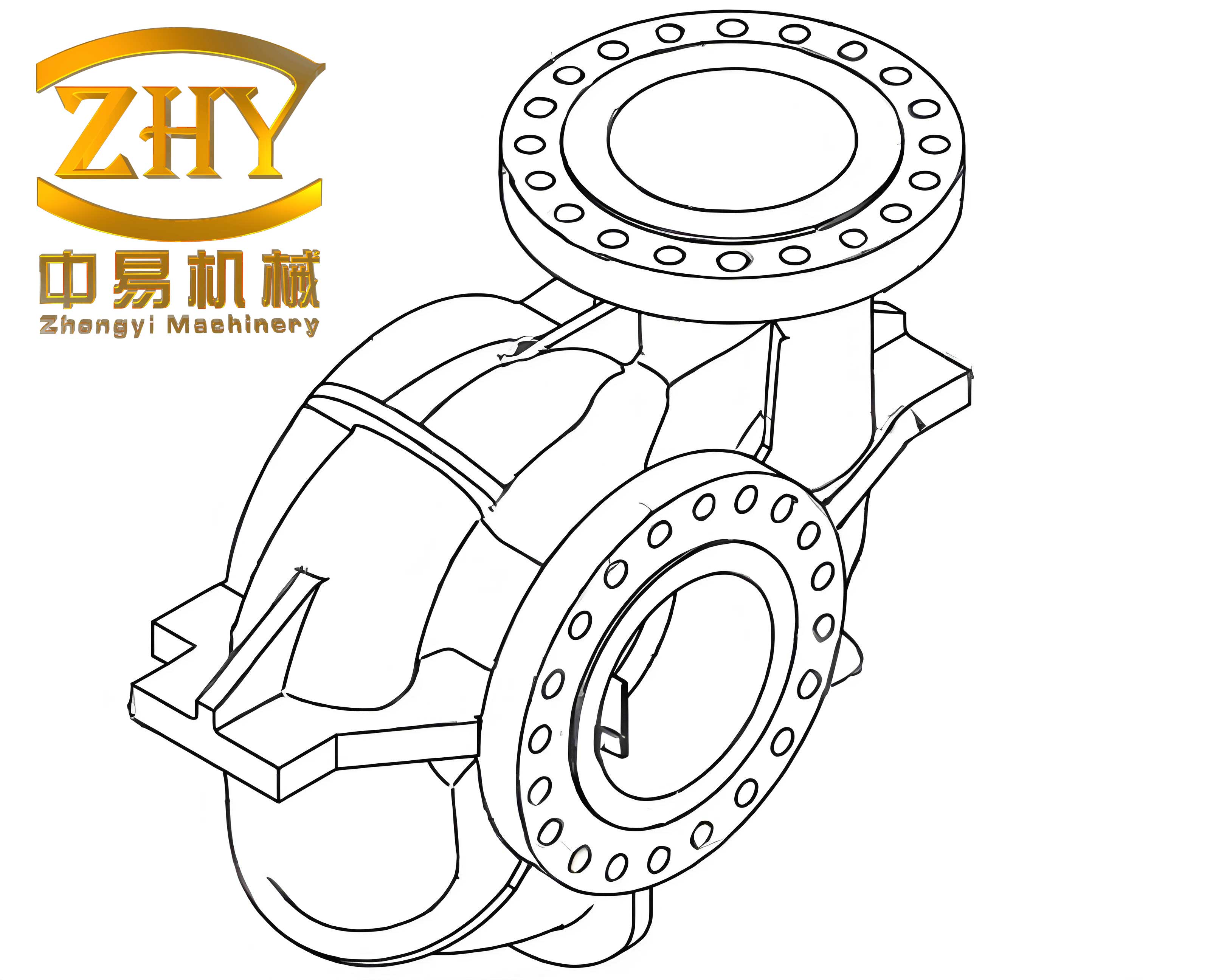
The methodology employed in this study is comprehensive, designed to capture the multifaceted nature of defects in shell castings. Initially, I collected samples from various regions of the ZL205A alloy shell casting, focusing on areas identified through X-ray inspection as having defects like shrinkage porosity and segregation. These defects were primarily localized near slot gates and double-layer sand core areas, which are common trouble spots in shell castings due to thermal gradients and feeding challenges. For mechanical evaluation, tensile tests were conducted using a DNS-200 electronic material testing machine, with a strain rate of 0.2 mm/min. The tensile specimens were machined according to standard dimensions, as illustrated in a schematic, and three replicates were tested for each condition to ensure statistical reliability. The results were tabulated to compare the mechanical properties—tensile strength, yield strength, and elongation—between normal, shrinkage-affected, and segregation-affected regions. This quantitative assessment provides a baseline for understanding how defects degrade performance in shell castings.
In addition to mechanical testing, I performed detailed microstructural analysis. Samples were sectioned, polished, and etched using a mixed corrosive solution comprising 50% HCl, 30% HNO3, and 20% HF by volume, followed by rinsing with distilled water and drying. The microstructures were examined using a Leica DM 2700M optical microscope and a TESCAN Mira 3 LMH scanning electron microscope. The SEM was equipped with an EDS detector for elemental analysis, allowing me to probe the chemical composition at defect sites. Fracture surfaces from tensile tests were also observed under SEM to identify failure modes, such as ductile dimples, cleavage steps, or intergranular fracture. This multimodal approach enables a holistic view of defect characteristics in shell castings, linking macro-scale properties to micro-scale features. Furthermore, to contextualize the findings, I reviewed the casting process parameters, including pouring temperature, cooling system design, and gating configuration, which are critical factors influencing defect formation in large shell castings.
The results of the mechanical tests reveal a stark contrast between defect-free and defect-containing regions in the shell castings. As summarized in Table 1, the normal areas exhibited average tensile strength, yield strength, and elongation of 422 MPa, 385 MPa, and 4.2%, respectively. In contrast, regions with shrinkage porosity showed reduced values of 356 MPa, 343 MPa, and 0.5%, while segregation-affected areas had even lower properties at 334 MPa, 307 MPa, and 1.0%. This degradation underscores the detrimental impact of defects on the structural integrity of shell castings. The near-zero elongation in defective samples indicates brittle behavior, which is unacceptable for components subjected to dynamic loads. To mathematically represent the relationship between defect severity and mechanical performance, I propose a simple empirical model: $$ \sigma_d = \sigma_0 – k \cdot D $$ where $\sigma_d$ is the tensile strength in the presence of defects, $\sigma_0$ is the baseline strength of defect-free material, $k$ is a degradation constant, and $D$ is a defect density parameter. For shell castings, minimizing $D$ through process optimization is crucial to maintaining $\sigma_d$ close to $\sigma_0$.
| Sample Type | Tensile Strength (MPa) | Yield Strength (MPa) | Elongation (%) |
|---|---|---|---|
| Normal Region | 422 | 385 | 4.2 |
| Shrinkage Area | 356 | 343 | 0.5 |
| Segregation Area | 334 | 307 | 1.0 |
Fractographic analysis provides deeper insights into the failure mechanisms. In normal shell casting samples, the fracture surfaces displayed numerous dimples and river patterns, indicative of a mixed mode of ductile and quasi-cleavage fracture. This suggests that the material underwent some plastic deformation before failure, contributing to its higher toughness. However, in shrinkage-affected samples, the fracture was dominated by cleavage steps and minimal dimples, characteristic of brittle cleavage fracture. The presence of shrinkage pores likely acted as stress concentrators, initiating cracks that propagated rapidly along crystallographic planes. For segregation-affected shell castings, the fracture exhibited intergranular features, with visible grain boundary melting and network-like segregates. This aligns with the EDS findings, where alloying elements like Cu, Cd, and Mn were enriched at grain boundaries, weakening the interfaces and promoting brittle intergranular fracture. Such fractographic signatures are critical for diagnosing defect types in shell castings and guiding corrective actions.
Microstructural observations further elucidate the defect morphology. In normal regions of the shell castings, the microstructure consisted of an α-Al matrix with finely dispersed precipitates along grain boundaries, primarily Al₂Cu phases. This uniform distribution contributes to strength through precipitation hardening. In shrinkage areas, however, the grain boundaries showed voids and discontinuities, corroborated by EDS analysis that detected only Al in these pores, indicating localized contraction due to inadequate feeding. The segregation areas revealed coarse, continuous networks of eutectic phases, such as Al₂Cu, Al-Cu-Mn compounds, and Al-Cd-Ti particles, along grain boundaries. These phases, often appearing as white constituents under SEM, create brittle pathways that facilitate crack propagation. To quantify the microstructural differences, I consider the area fraction of defects, $A_f$, which can be expressed as: $$ A_f = \frac{A_d}{A_t} $$ where $A_d$ is the area occupied by defects and $A_t$ is the total observed area. For high-quality shell castings, $A_f$ should be minimized, ideally below a threshold of 0.01, to ensure mechanical reliability.
Elemental analysis via EDS highlights the compositional shifts associated with defects. In normal shell casting samples, the matrix was predominantly Al, with minor traces of Mn, Ti, and Cd, while grain boundary precipitates showed high Cu content, confirming Al₂Cu formation. In shrinkage zones, EDS spectra indicated enrichment of Cu and Cd at grain boundaries, alongside Al-rich pores, suggesting solute redistribution during solidification. For segregation zones, the white phases were rich in Cu, Cd, and Mn, whereas the matrix remained Al-dominated. This segregation phenomenon can be modeled using the Scheil-Gulliver equation for non-equilibrium solidification: $$ C_s = k C_0 (1 – f_s)^{k-1} $$ where $C_s$ is the solute concentration in the solid, $C_0$ is the initial alloy composition, $k$ is the partition coefficient, and $f_s$ is the solid fraction. In shell castings, rapid cooling and wide freezing ranges exacerbate solute rejection, leading to localized enrichment and formation of brittle eutectics at grain boundaries.
The formation mechanisms of shrinkage and segregation defects in ZL205A alloy shell castings are multifaceted, rooted in the interplay of thermal stresses, temperature gradients, and alloy chemistry. Shrinkage porosity primarily arises from inadequate feeding during solidification, exacerbated by the mushy solidification characteristic of ZL205A. In the studied shell castings, shrinkage was concentrated behind slot gates, where temperature fields were elevated due to prolonged exposure to molten metal. The adjacent chills, though intended to promote directional solidification, were insufficiently thick to extract heat rapidly, creating a risk zone for shrinkage. Mathematically, the thermal gradient, $G$, and cooling rate, $\dot{T}$, are key parameters: $$ G = \frac{\Delta T}{\Delta x} $$ where $\Delta T$ is the temperature difference and $\Delta x$ is the distance. For effective feeding in shell castings, $G$ should be high enough to maintain a positive temperature gradient toward the feeder, but in this case, local overheating reduced $G$, leading to pore formation. Additionally, the high pouring temperature of 720°C increased the heat load on sand cores, further aggravating thermal stresses and contraction.
Segregation defects, on the other hand, stem from solute redistribution during solidification. In shell castings with complex geometries, such as double-layer hollow sections, the solidification front progresses unevenly, causing solute-rich liquid to be trapped in inter dendritic regions. The presence of heavy alloying elements like Cu and Mn promotes gravitational settling in the crucible, and during pouring, this concentrated liquid enters the mold through slot gates, depositing in thick sections like flanges or隔板. This results in banded segregates, as observed in X-ray images. The role of cooling rate can be described by the Fourier number for heat transfer: $$ Fo = \frac{\alpha t}{L^2} $$ where $\alpha$ is thermal diffusivity, $t$ is time, and $L$ is characteristic length. For large shell castings, low $Fo$ values indicate sluggish heat extraction, prolonging the solidification time and allowing more opportunity for solute diffusion and segregation. Furthermore, insufficient stirring or refining of the melt prior to pouring contributes to inhomogeneous distribution of alloying elements, fostering segregation in final shell castings.
To mitigate these defects in shell castings, several preventive measures are proposed based on the analysis. First, optimizing the cooling system is essential. Increasing the thickness of chills behind slot gates can enhance heat extraction, reducing local temperatures and promoting directional solidification. This can be quantified by adjusting the chill design to achieve a higher Biot number: $$ Bi = \frac{h L_c}{k} $$ where $h$ is the heat transfer coefficient, $L_c$ is the chill thickness, and $k$ is the thermal conductivity of the metal. A higher $Bi$ facilitates faster cooling, minimizing shrinkage risks. Second, lowering the pouring temperature, perhaps to around 700°C, can decrease the thermal load on sand cores and reduce overheating effects. Third, modifying sand cores to be hollow improves their collapsibility, allowing for better stress relief during solidification and reducing hot tearing tendencies. Fourth, enhancing melt treatment through vigorous stirring and shorter holding times before pouring can prevent solute settling and promote uniform dispersion. Implementing rotary degassing or electromagnetic stirring, for instance, can homogenize the alloy composition, reducing segregation in shell castings.
In addition to process adjustments, microstructural control via heat treatment warrants attention. ZL205A alloy typically undergoes T6 treatment, involving solution treatment and aging. However, if low-melting eutectics like Al₂Cu are not fully dissolved during solution treatment, they persist at grain boundaries, acting as stress raisers. Extending the solution time or temperature may help, but care must be taken to avoid grain growth. The kinetics of dissolution can be approximated by the Arrhenius equation: $$ k_d = A e^{-E_a / RT} $$ where $k_d$ is the dissolution rate constant, $A$ is a pre-exponential factor, $E_a$ is activation energy, $R$ is the gas constant, and $T$ is temperature. For shell castings, optimizing $T$ and time to maximize $k_d$ without causing overheating is key to eliminating residual segregates.
The broader implications of this study extend to the quality assurance of shell castings in critical applications. By integrating mechanical testing, microstructural analysis, and process modeling, a robust framework for defect diagnosis and prevention can be established. For instance, non-destructive testing techniques like X-ray radiography should be complemented with ultrasonic inspection to detect subsurface defects in shell castings. Moreover, computational simulations using finite element analysis (FEA) can predict temperature fields and stress distributions during casting, enabling proactive design of gating and cooling systems. The governing heat transfer equation in such simulations is: $$ \rho c_p \frac{\partial T}{\partial t} = \nabla \cdot (k \nabla T) + Q $$ where $\rho$ is density, $c_p$ is specific heat, $k$ is thermal conductivity, and $Q$ is heat source term. By solving this for shell casting geometries, hotspots can be identified and mitigated before actual production.
In conclusion, my investigation into defects in large ZL205A alloy shell castings produced by counter-pressure casting reveals that shrinkage porosity and segregation are predominant issues, significantly impairing mechanical properties. These defects arise from complex interactions between thermal stresses, temperature gradients, and alloy solidification behavior. Through detailed experimental analysis, I have characterized the morphological and compositional aspects of defects, linking them to process parameters. The proposed measures—such as optimized cooling, lower pouring temperatures, improved core design, and better melt treatment—offer practical pathways to enhance the quality of shell castings. Future work should focus on real-time monitoring of casting processes and advanced alloy modifications to further reduce defect susceptibility. Ultimately, ensuring defect-free shell castings is paramount for meeting the stringent demands of aerospace and naval sectors, where reliability and performance are non-negotiable.
To encapsulate the key findings, Table 2 provides a summary of defect characteristics and recommended solutions for shell castings. This serves as a quick reference for engineers and foundry personnel involved in manufacturing such components.
| Defect Type | Primary Location | Key Features | Recommended Solutions |
|---|---|---|---|
| Shrinkage Porosity | Behind slot gates, thick sections | Voids at grain boundaries, reduced ductility | Increase chill thickness, lower pouring temperature |
| Segregation | Near slot gates, double-layer areas | Network of eutectic phases, intergranular fracture | Enhance melt stirring, shorten holding time |
| General Defects | Throughout shell castings | Alloy element enrichment, brittle failure | Optimize gating design, use hollow sand cores |
Furthermore, the role of alloy composition cannot be overlooked. ZL205A contains Cu, Mn, Ti, and Cd, each contributing to strength but also posing segregation risks. Adjusting the composition within specification limits may help; for example, reducing Cu content slightly could decrease the tendency for Al₂Cu formation, though at the cost of strength. A balance must be struck, perhaps through the use of grain refiners like Al-5Ti-B to promote finer microstructure and better homogeneity in shell castings. The Hall-Petch relationship reinforces this: $$ \sigma_y = \sigma_0 + k_y d^{-1/2} $$ where $\sigma_y$ is yield strength, $\sigma_0$ is friction stress, $k_y$ is a constant, and $d$ is grain size. By refining grains, both strength and toughness can be improved, mitigating defect effects.
In summary, the production of high-integrity shell castings requires a holistic approach, blending material science, process engineering, and quality control. My study underscores the importance of defect analysis in advancing casting technologies for ZL205A alloy and similar materials. As the demand for complex, large-scale shell castings grows, continued research and innovation will be essential to overcome these challenges and achieve superior performance in critical applications.