
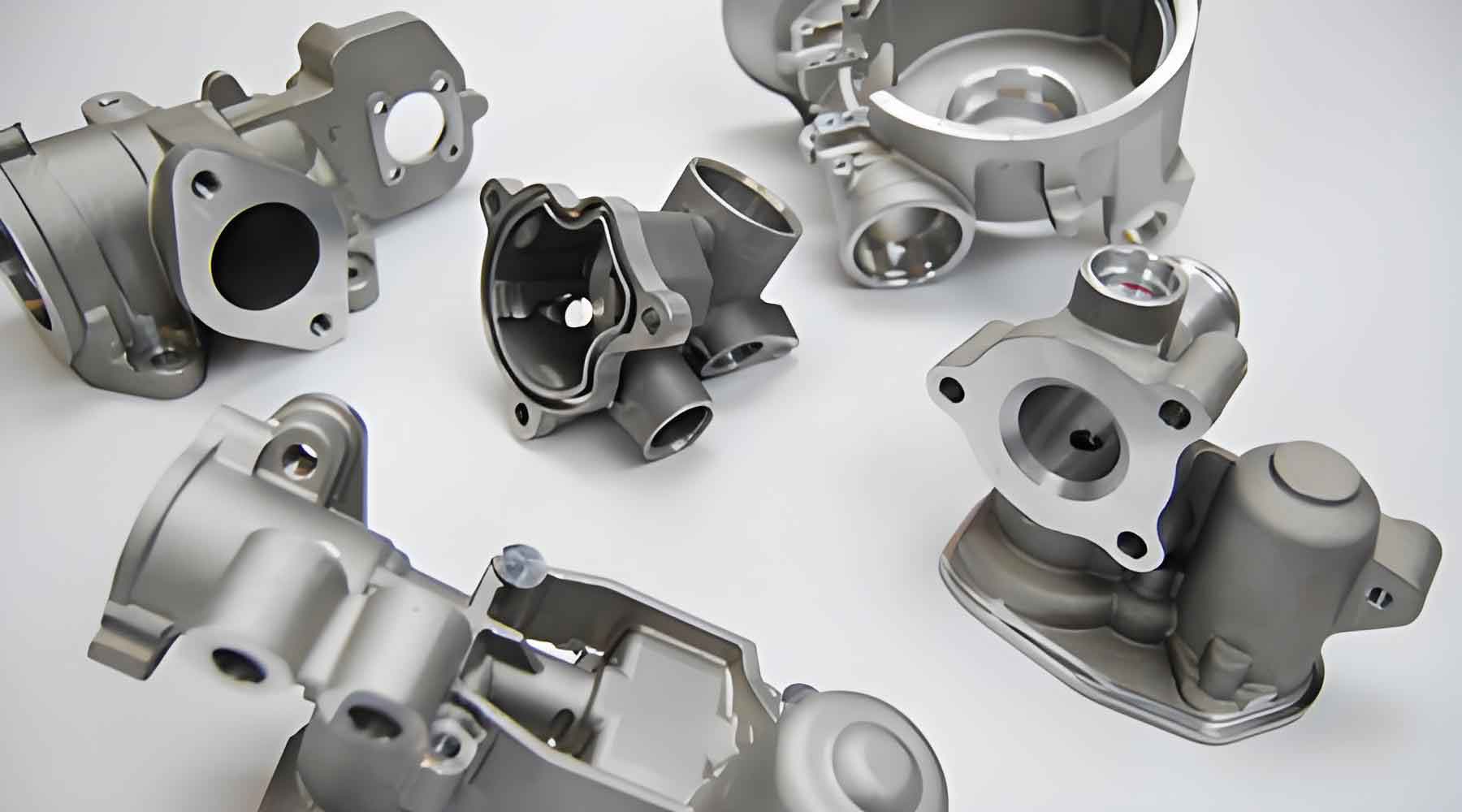
In modern manufacturing, lost wax investment casting plays a critical role in producing complex and high-precision components, particularly for aerospace and automotive industries. The process involves creating a ceramic shell around a wax pattern, which is then melted out to form a mold for molten metal. One of the key factors influencing the quality of castings is the heat transfer at the interface between the metal and the mold, known as the interfacial heat transfer coefficient (IHTC). This coefficient significantly affects solidification behavior, defect formation, and mechanical properties. Accurate determination of IHTC is essential for reliable numerical simulations, which are widely used to optimize casting processes and reduce trial-and-error experiments.
Traditional approaches often assume constant IHTC values, but this simplification can lead to substantial errors in predicting temperature distributions and stress fields. In lost wax investment casting, the IHTC varies dynamically due to factors like thermal contraction, gap formation, and phase changes. This study focuses on determining the IHTC for a magnesium-based alloy under air-cooled conditions using an inverse analysis optimization method. By combining experimental temperature measurements with numerical simulations, we derive IHTC as a function of metal temperature and validate its accuracy. The findings provide a refined boundary condition for simulating lost wax investment casting processes, enhancing predictive capabilities.
The inverse analysis method for solving IHTC relies on minimizing the difference between measured and simulated temperatures. Based on Beck’s nonlinear estimation technique, the approach assumes that the IHTC remains constant over a small time interval, allowing iterative optimization. The general heat conduction equation governs the process:
$$ \frac{\partial T}{\partial t} = \alpha \nabla^2 T $$
where \( T \) is temperature, \( t \) is time, and \( \alpha \) is thermal diffusivity. At the metal-mold interface, the heat flux \( q \) is expressed as:
$$ q = h (T_{\text{metal}} – T_{\text{mold}}) $$
Here, \( h \) is the IHTC, \( T_{\text{metal}} \) is the metal surface temperature, and \( T_{\text{mold}} \) is the mold surface temperature. The inverse problem involves finding \( h \) such that the objective function \( f(h) \) is minimized:
$$ f(h) = \sum_{i=1}^{N} \left[ T_{\text{sim}}(x_i, t_i, h) – T_{\text{exp}}(x_i, t_i) \right]^2 $$
where \( T_{\text{sim}} \) and \( T_{\text{exp}} \) are simulated and experimental temperatures at locations \( x_i \) and times \( t_i \), respectively. This method is implemented in commercial software like ProCAST, which we utilize for our analysis in lost wax investment casting.
To apply this approach, we designed an experimental setup using a cylindrical specimen with a diameter of 60 mm, fabricated via lost wax investment casting. The ceramic shell was constructed with multiple layers: a primary layer of zircon sand (1 mm thick), an intermediate layer of mullite (1 mm thick), and a backup layer of kaolin (3 mm thick). The shell was reinforced to withstand thermal stresses during pouring. We employed a bottom-gating system to fill the mold with a magnesium alloy, similar to ZM5, whose composition is detailed in Table 1. K-type thermocouples with a response time of 0.5 s were positioned at heights of 80 mm, 180 mm, and 280 mm from the base to capture temperature profiles during solidification under air-cooled conditions. Additionally, an infrared thermal imager recorded the shell’s surface temperature to complement the data.
| Element | Content (wt%) |
|---|---|
| Mg | Balance |
| Al | 8.5–9.0 |
| Zn | 0.5–0.7 |
| Mn | 0.2–0.3 |
| Si | ≤ 0.02 |
| Fe | ≤ 0.002 |
| Cu | ≤ 0.001 |
| Ni | ≤ 0.001 |
| Be | ≤ 0.005 |
| Other impurities | ≤ 0.1 |
The temperature data collected from the thermocouples revealed distinct cooling phases, as summarized in Table 2. Initially, the metal cooled rapidly from approximately 676°C to 580°C within 50 seconds, followed by a near-linear decrease until around 710 seconds. A plateau near 438°C between 800 and 850 seconds indicated latent heat release during solidification, after which the temperature declined linearly again. These profiles are crucial for inverse analysis in lost wax investment casting, as they capture the dynamic thermal behavior.
| Phase | Time Range (s) | Temperature Range (°C) | Characteristics |
|---|---|---|---|
| Initial Rapid Cooling | 0–50 | 676–580 | Fast heat dissipation due to direct metal-mold contact |
| Linear Cooling | 50–710 | 580–440 | Steady temperature decrease |
| Latent Heat Plateau | 800–850 | ~438 | Crystallization and gap formation |
| Post-Solidification Cooling | 850 onwards | 438–ambient | Slower cooling dominated by radiation and convection |
For numerical simulation, we developed a 3D model of the casting and shell assembly using UG software, followed by meshing in ProCAST. The mesh consisted of 75,216 surface elements and 774,382 volume elements, with a size of 4 mm, ensuring computational accuracy. The inverse optimization module in ProCAST was employed to compute IHTC as a function of metal temperature, leveraging the experimental data. The results, plotted in Figure 5, show IHTC variation across three stages: a high plateau above the liquidus temperature, a decreasing trend between liquidus and solidus, and a low plateau below solidus. This behavior is characteristic of lost wax investment casting, where initial intimate contact gives way to gap formation due to solidification shrinkage.
The IHTC can be modeled using a piecewise function based on temperature ranges. Let \( T_l \) and \( T_s \) represent the liquidus and solidus temperatures, respectively. For \( T > T_l \), IHTC is constant:
$$ h = h_{\text{max}} $$
For \( T_s \leq T \leq T_l \), IHTC decreases exponentially:
$$ h = h_{\text{max}} \exp\left(-k (T_l – T)\right) + h_{\text{min}} $$
where \( k \) is a decay constant. For \( T < T_s \), IHTC stabilizes:
$$ h = h_{\text{min}} $$
In our case, \( h_{\text{max}} \) reached approximately 1200 W/m²·K, while \( h_{\text{min}} \) was around 200 W/m²·K. The transition phases are critical in lost wax investment casting, as they influence microstructure development and defect formation.
To validate the derived IHTC, we conducted a separate experiment under identical lost wax investment casting conditions and compared the simulated temperatures with measured ones. The comparison, as shown in Table 3, demonstrates excellent agreement, with maximum deviations of 4°C in the metal and 15°C in the shell. This confirms the reliability of the inverse method for lost wax investment casting applications.
| Location | Maximum Temperature Difference (°C) | Minimum Temperature Difference (°C) | Remarks |
|---|---|---|---|
| Metal (Casting) | 4 | 0 | High accuracy in core regions |
| Shell (Mold) | 15 | 0 | Slight variations due to environmental factors |
The inverse analysis optimization method proves highly effective for determining IHTC in lost wax investment casting. By accounting for temperature-dependent variations, it addresses limitations of constant IHTC assumptions. The three-stage IHTC profile aligns with physical phenomena: initial high heat transfer due to direct contact, followed by a decline as gaps form from solidification shrinkage, and finally, a stable phase dominated by gaseous conduction and radiation. This dynamic behavior is essential for accurate numerical simulations in lost wax investment casting, enabling better prediction of thermal stresses, porosity, and dimensional accuracy.
Further research could explore IHTC under different cooling conditions, such as water quenching or controlled atmosphere, to broaden the applicability in lost wax investment casting. Additionally, incorporating material properties like thermal expansion coefficients could refine the models. The methodology presented here serves as a foundation for optimizing various lost wax investment casting processes, contributing to improved product quality and efficiency.
In conclusion, this study successfully determines the interfacial heat transfer coefficient for a magnesium alloy in lost wax investment casting using inverse analysis. The derived IHTC, as a function of metal temperature, enhances simulation accuracy and supports process optimization. The validation through experimental comparisons underscores its practical value, making it a valuable tool for advancing lost wax investment casting technologies.