
The pursuit of manufacturing complex, high-precision metal components drives continuous innovation in foundry technologies. Among these, the investment casting process stands out for its exceptional capability to produce parts with intricate details, excellent surface finish, and dimensional accuracy. This process is indispensable in demanding sectors such as aerospace and industrial gas turbines. This article details our comprehensive study on optimizing the investment casting process for an aluminum alloy impeller by strategically integrating Fused Deposition Modeling (FDM) additive manufacturing and computational numerical simulation. We present a full workflow from digital design and virtual prototyping to physical fabrication, demonstrating how this synergistic approach effectively overcomes traditional mold-making challenges and ensures casting quality.
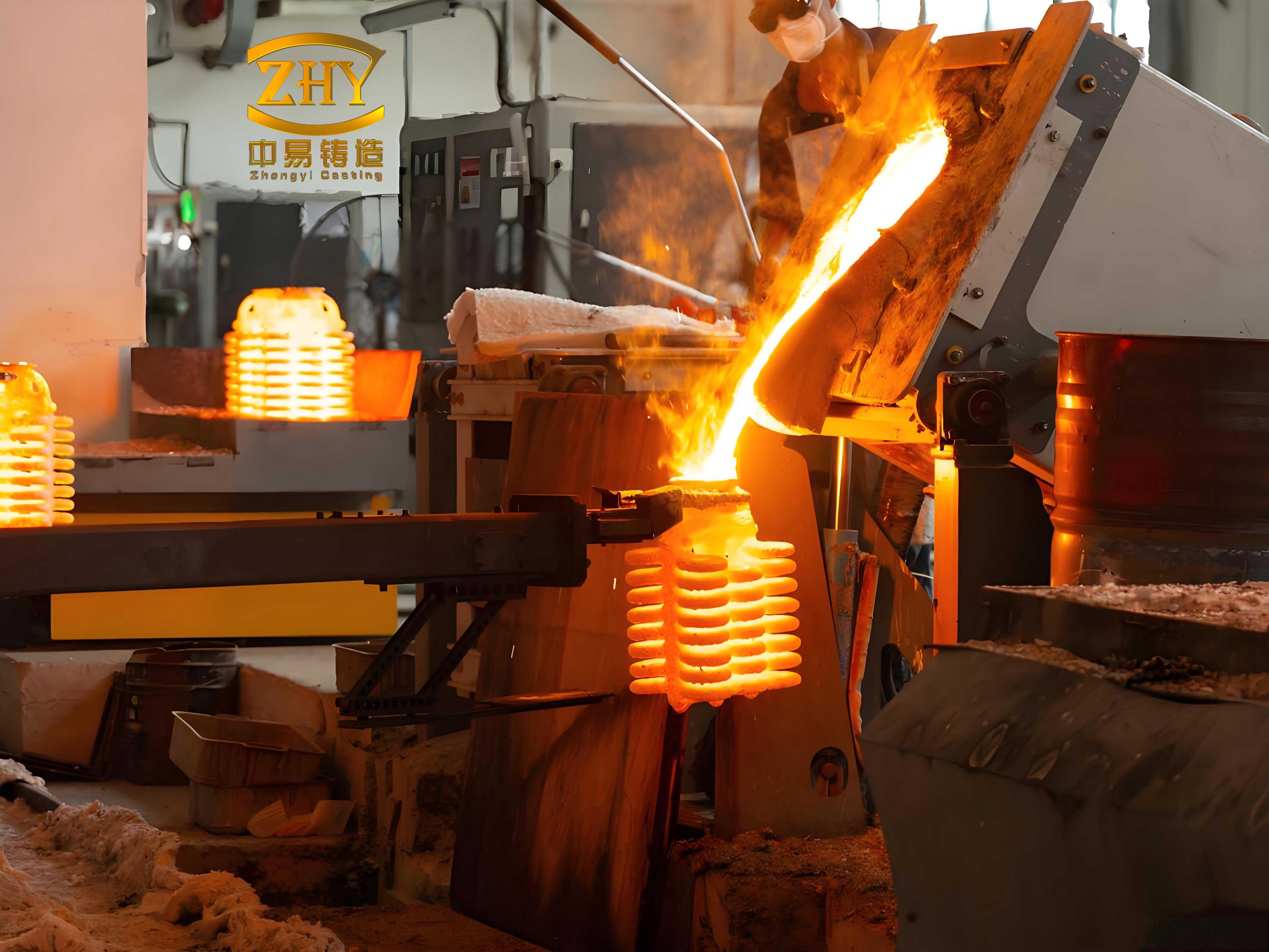
The conventional investment casting process involves several sequential steps: creating a precise wax pattern, assembling it onto a wax gating system, repeatedly coating it with a ceramic slurry to build a robust shell, dewaxing (typically via steam or heat), firing the ceramic mold to achieve high strength, pouring molten metal, and finally, removing the shell to reveal the cast part. The quality of the final casting is heavily dependent on the initial wax pattern. Herein lies a significant opportunity for enhancement through additive manufacturing. By utilizing 3D printing to produce the sacrificial pattern directly from a CAD model, we bypass the need for expensive and time-consuming hard tooling (injection molds for wax). This integration drastically shortens lead times, reduces costs for prototyping and low-volume production, and grants unparalleled freedom in geometric design. However, successfully implementing this hybrid approach requires careful consideration of the entire investment casting process chain, particularly the design of the gating system and the thermal dynamics during pouring and solidification, to prevent defects in the final metal part.
In our investigation, we focused on a specific component: a centrifugal impeller. The geometry of such a part, characterized by thin, curved blades arranged around a central hub, presents classic challenges for the investment casting process. Ensuring complete, turbulence-free filling of the thin blade sections and achieving directional solidification to minimize shrinkage porosity are critical. To systematically address these challenges, we employed a methodology combining numerical simulation with physical experimentation. Three distinct gating system designs—top-gating, side-gating, and bottom-gating—were conceived based on fundamental investment casting process principles. These virtual models were then subjected to rigorous filling and solidification analysis using AnyCasting simulation software. The predicted outcomes, including fluid flow patterns, temperature gradients, and potential defect locations, were compared to identify the optimal scheme. Subsequently, the chosen gating system was fabricated alongside the impeller pattern using FDM technology with Polylactic Acid (PLA) filament. This assembly then underwent the traditional stages of the ceramic shell investment casting process, followed by melting out of the PLA, preheating, and pouring with ZL104 aluminum alloy. The result was a qualitatively sound impeller casting, validating the virtual optimization and the efficacy of combining additive manufacturing with the investment casting process.
1. Component Analysis and Material Selection
The subject of this study is a radial-flow impeller. Its key dimensions are a bottom diameter of 104 mm, a top hub diameter of 25 mm, and a blade width of 49 mm. The most critical features are the multiple, curved blades emanating from the central hub. For successful replication via the investment casting process, determining the appropriate wall thickness is paramount. Based on standard guidelines for investment castings, the minimum feasible wall thickness correlates with the overall part size. For a component with major dimensions between 100 mm and 200 mm, the recommended typical wall thickness ranges from 3.0 mm to 5.0 mm, with a minimum of 2.5 mm. Considering the impeller’s need for lightweight and efficient fluid dynamic performance, a blade wall thickness of 2.5 mm was selected, aligning with the lower manufacturability limit and demanding precision from the investment casting process.
The material selected for the casting was ZL104 (equivalent to A413.0 or Al-Si10Mg) aluminum alloy. This alloy is widely used in investment casting due to its excellent castability, good strength-to-weight ratio, and corrosion resistance. For the sacrificial pattern, Polylactic Acid (PLA) was chosen as the FDM filament. PLA offers advantages such as low printing temperature, minimal warping, and, most importantly for the investment casting process, it can be completely removed from the ceramic shell through thermal degradation (burn-out) at temperatures below the shell’s firing point. The ceramic shell material was a proprietary investment casting slurry based on high-grade refractory plaster, selected for its fine particle size (enabling high surface detail replication), good permeability, and low thermal conductivity to control solidification rates.
The following table summarizes the key material properties and process parameters central to this investment casting process study:
| Category | Parameter | Value / Specification | Rationale |
|---|---|---|---|
| Casting Metal | Alloy | ZL104 (Al-Si10Mg) | Excellent fluidity, good mechanical properties. |
| Pouring Temperature ($T_{pour}$) | 750 °C | Superheat above liquidus (~600°C) to ensure complete filling. | |
| Liquidus Temperature ($T_{liq}$) | ~600 °C | Base for calculating superheat. | |
| Sacrificial Pattern | Material | Polylactic Acid (PLA) | Low-cost, easy to print, clean burn-out. |
| Print Technology | FDM (Fused Deposition Modeling) | Accessible and suitable for complex geometries. | |
| Burn-out Temperature | 400-750 °C (Controlled ramp) | Complete pyrolysis without damaging shell. | |
| Ceramic Shell | Base Material | Refractory Gypsum Blend | High precision, low thermal conductivity. |
| Shell Preheat Temperature ($T_{mold}$) | 650 °C | Reduces thermal shock, prevents premature freezing. | |
| Permeability | High | Allows escape of gases during burn-out and pouring. | |
| Process | Simulated Pouring Speed | 25 cm/s | Initial condition for filling simulation. |
| Key Solidification Parameter | Temperature Gradient ($G$) & Cooling Rate ($R$) | Governs microstructure and defect formation. |
2. Numerical Simulation of the Investment Casting Process
Numerical simulation has become an indispensable tool for optimizing the investment casting process. It allows for the virtual testing of different scenarios, predicting potential defects like mistruns, shrinkage porosity, and inclusions before any physical resources are committed. The governing equations for such a simulation involve solving for fluid flow, heat transfer, and solidification. The filling phase is modeled using the Navier-Stokes equations for incompressible, transient flow, often with a volume-of-fluid (VOF) method to track the melt-air interface:
$$ \nabla \cdot \vec{v} = 0 $$
$$ \rho \left( \frac{\partial \vec{v}}{\partial t} + (\vec{v} \cdot \nabla) \vec{v} \right) = -\nabla p + \mu \nabla^2 \vec{v} + \rho \vec{g} + \vec{F}_{drag} $$
where $\vec{v}$ is the fluid velocity, $p$ is pressure, $\rho$ is density, $\mu$ is dynamic viscosity, and $\vec{g}$ is gravity. $\vec{F}_{drag}$ represents the drag force in the porous mushy zone during solidification. The energy equation, encompassing both the molten metal and the ceramic mold, is solved concurrently:
$$ \rho c_p \frac{\partial T}{\partial t} + \rho c_p (\vec{v} \cdot \nabla T) = \nabla \cdot (k \nabla T) + \dot{q}_{latent} $$
Here, $c_p$ is specific heat, $k$ is thermal conductivity, and $\dot{q}_{latent}$ is the latent heat source term released during the liquid-to-solid phase change. The fraction of solid ($f_s$) is tracked using a suitable model (e.g., lever rule, Scheil-Gulliver). A critical output for defect prediction in the investment casting process is the thermal parameter, often expressed as the ratio of the temperature gradient ($G$) to the square root of the cooling rate ($R$), i.e., $G/\sqrt{R}$, or its inverse form related to feeding. Areas with low $G$ and high solidification time are prone to shrinkage porosity.
2.1 Gating System Design and Virtual Testing
Three classic gating schemes were designed for the impeller investment casting process, as illustrated in the CAD models. Each design presents distinct advantages and challenges for filling and solidification:
- Top-Gating System: The molten metal enters from the top of the impeller cavity. This design offers a short flow path and favorable thermal gradient for feeding if the part solidifies directionally upward. However, the free fall of metal can cause turbulence, oxide entrapment, and erosion of the delicate blade surfaces.
- Side-Gating System: The metal is introduced at the parting line or a side of the impeller. This can provide a more stable fill than top-gating but may lead to uneven thermal distribution and complicate the direction of solidification towards a riser.
- Bottom-Gating System: The metal enters from the bottom of the mold cavity and fills in an upward direction. This promotes a calm, non-turbulent fill—ideal for thin sections—and naturally establishes a temperature gradient that supports directional solidification from the top (farthest from the gate) back down towards the gate, which acts as a feeding source.
The 3D STL files of each system were imported into AnyCasting software. A finite-difference mesh with approximately 978,000 cells was generated to ensure sufficient resolution for the thin blades. The material properties of ZL104 and the ceramic shell were assigned from the software’s database. The initial conditions were set as per Table 1: pouring temperature of 750°C and mold preheat of 650°C.
2.2 Simulation Results and Comparative Analysis
The simulations provided clear visual and quantitative insights into the behavior of each investment casting process variant.
Top-Gating Simulation: The simulation confirmed the anticipated drawbacks. The metal stream impacted the bottom of the cavity at high velocity, creating significant turbulence and vortexing. This chaotic flow increases the risk of gas entrapment and oxide film formation. The solidification pattern was less than ideal, with the last-to-freeze zones located at the bottom of the blades. The defect prediction algorithm, which combines low temperature gradient and long local solidification time, highlighted a high propensity for shrinkage porosity in these lower blade regions. The formula for a simplified solidification time ($t_s$) for a section can be approximated by Chvorinov’s rule:
$$ t_s = B \left( \frac{V}{A} \right)^n $$
where $V$ is volume, $A$ is surface area, $B$ is a mold constant, and $n$ is an exponent (typically ~2). The bottom blade areas, with a higher $V/A$ ratio compared to blade edges, solidified last and were poorly fed.
Side-Gating Simulation: The filling was more controlled than the top-gate scenario. However, the thermal analysis revealed a problem. The primary thermal center (hot spot) was located at the junction where the side gate met the impeller hub. While the blades themselves showed a relatively sequential solidification pattern, this central hot spot solidified last, leading to a high predicted shrinkage cavity in the gate-hub junction area. This defect could potentially propagate into the blade roots, compromising the structural integrity of the impeller.
Bottom-Gating Simulation: This scheme demonstrated the most favorable outcomes for this specific impeller geometry within the investment casting process. The filling sequence showed a steady, progressive upward advancement of the melt front, effectively pushing air out through the top vents or the permeable shell. There was no visible splashing or severe turbulence. Most importantly, the solidification analysis showed a clear directional progression: the thin blade tips and the top of the hub solidified first, followed by the blade bodies, with the thermal center located in the feeder/gating system itself. The defect prediction map showed virtually no shrinkage risk within the impeller body; the only predicted porosity was isolated to sharp corners within the gating system, which is acceptable as it will be removed during post-casting cutoff. This confirms that the bottom-gating design successfully established a temperature field satisfying $ \frac{dT}{dx} > 0 $ from the casting extremities towards the feeder (positive temperature gradient for feeding).
The following table summarizes the key findings from the numerical simulation of the three investment casting process designs:
| Gating Design | Filling Behavior | Solidification Sequence | Predicted Defect Location | Suitability for Impeller |
|---|---|---|---|---|
| Top-Gating | Highly turbulent; free fall impact. | Non-directional; last freeze zones at blade bottoms. | Shrinkage porosity in lower blade sections. | Poor |
| Side-Gating | Moderately stable. | Hot spot at gate-hub junction; blades solidify fairly well. | Major shrinkage at gate/hub junction. | Fair |
| Bottom-Gating | Very stable, laminar upward fill. | Excellent directionality: tips → blades → hub → gate. | Porosity only in gating system (not in part). | Excellent |
Based on this comprehensive virtual analysis, the bottom-gating system was unequivocally selected as the optimal configuration for the subsequent physical investment casting process trials.
3. Physical Implementation of the Hybrid Investment Casting Process
With the optimal design validated through simulation, we proceeded to the physical execution of the investment casting process, integrating the additive manufacturing step.
3.1 Additive Manufacturing of the Sacrificial Assembly
The CAD model of the impeller with the integrated bottom-gating system was exported and sliced for FDM printing. A commercial FDM printer was used with standard PLA filament. Key printing parameters included a layer height of 0.15 mm to achieve a smooth surface finish (reducing subsequent ceramic coating effort), an infill density of 100% to ensure structural integrity during handling and shell building, and appropriate support structures for the overhanging gating channels. The successfully printed PLA pattern assembly exhibited good dimensional accuracy and surface quality, serving as a direct replacement for a traditional wax pattern in the investment casting process.
3.2 Ceramic Shell Building and De-waxing (De-PLAing)
The shell-building process is critical to the success of any investment casting process. The PLA pattern assembly was first cleaned to remove any dust or oils. It was then attached to a central pouring cup wax base. The entire assembly underwent a primary coating or “prime coat” by dipping it into a refined ceramic slurry with very fine refractory flour (e.g., zircon). This coat is responsible for capturing the finest details of the pattern. It was immediately stuccoed with fine-grained sand (e.g., 80-120 mesh zircon sand) to create a mechanical key for the next layer. This dip-and-stucco cycle was repeated for several subsequent “back-up coats” using progressively coarser slurry and stucco materials to build a shell thickness of approximately 6-8 mm, ensuring sufficient strength to withstand the metallostatic pressure during pouring.
Once the shell was fully dried and hardened, the removal of the PLA pattern—a key difference from traditional dewaxing—took place. The shell was placed in a burnout furnace. A carefully controlled thermal cycle was executed:
- Ramp to 400°C and hold: This stage allows the PLA to soften, melt, and begin flowing out of the shell. A slow ramp is essential to avoid cracking the shell due to rapid gas generation.
- Ramp to 600°C and hold: Further elevates the temperature to ensure complete pyrolysis (thermal decomposition) of any residual PLA within the shell walls. The hold time ensures the shell is heated uniformly.
- Ramp to 750°C and prolonged hold (2 hours): This final stage serves two purposes: it guarantees the elimination of all carbonaceous residues from the PLA, and it fires the ceramic shell to its maximum strength and stability. The mold is now ready for pouring.
This burnout cycle is tailored for PLA and is a crucial adaptation of the traditional investment casting process for use with additively manufactured patterns.
3.3 Mold Preheating, Pouring, and Casting Extraction
Following burnout, the ceramic shell molds were carefully transferred to a preheating furnace. They were maintained at a temperature of 650°C, as used in the simulation parameters. Preheating serves vital functions: it eliminates moisture, prevents thermal shock when the molten metal contacts the mold (which could cause cracking), and, most importantly, reduces the cooling rate of the metal, allowing it to remain fluid long enough to completely fill the thin sections and enable effective feeding to compensate for solidification shrinkage.
Concurrently, ZL104 aluminum alloy was melted in a resistance furnace and brought to a superheated temperature of 750°C. The molten metal was skimmed to remove dross. The preheated ceramic mold was then securely positioned in a pouring area. The metal was poured from the crucible in a steady, continuous stream into the pouring cup until it reached the top of the risers, ensuring a full mold and adequate metallostatic pressure. The filled mold was then left to cool naturally in ambient air.
After complete solidification and cooling, the post-casting operations began. The refractory shell, now brittle from the thermal cycle, was carefully broken away using hammers and mechanical vibration—a process known as “knock-out.” The raw casting, comprising the impeller and the attached gating system, was revealed. The gating system was removed using a bandsaw and abrasive cutting. Finally, the impeller underwent finishing processes including grinding to remove any residual gate stubs and light blasting (e.g., with glass bead) to achieve a uniform surface finish.
4. Results, Discussion, and Broader Implications
The final as-cast ZL104 aluminum impeller was visually inspected. The key findings were:
- Complete Filling: All thin blade sections (2.5 mm) were completely formed, with no evidence of mistruns or cold shuts.
- Surface Quality: The surface of the blades and hub was sound, showing a smooth replication of the original PLA pattern’s geometry. No major surface defects like erosion scars from turbulent flow were present, corroborating the simulation’s prediction of a calm fill with the bottom-gate design.
- Internal Soundness: While non-destructive testing like X-ray was not performed, the visual inspection of cut sections and the absence of surface sinks suggested a dense structure. This aligns with the simulation’s prediction that shrinkage porosity would be confined to the sacrificial gating system and not the functional part.
This successful outcome validates the core hypothesis of this work: that numerical simulation is a powerful tool for optimizing the investment casting process, and that additive manufacturing can be seamlessly integrated as a pattern-making technique. The simulation accurately identified the potential flaws in the top-gate and side-gate designs, allowing us to avoid costly physical trials with those configurations. The predicted superiority of the bottom-gate system was borne out in reality, leading to a first-time-successful casting.
The broader implications of this integrated approach for the investment casting process are significant:
- Accelerated Development Cycle: The time from finalized CAD model to functional prototype casting is dramatically reduced by eliminating the need to design and machine metal dies for wax injection.
- Cost-Effectiveness for Low Volumes: For small batches, prototypes, or complex one-off parts, the cost savings from avoiding hard tooling are substantial.
- Design Freedom & Complexity: Additive manufacturing imposes few geometric constraints compared to traditional mold making. This allows engineers to design parts with optimized, organic geometries (e.g., conformal cooling channels, lightweight lattice structures) that can be directly translated into a casting via this hybrid investment casting process.
- Digital Twin of the Process: The simulation creates a predictive digital twin of the physical investment casting process. This not only helps in initial design but also creates a knowledge base for future, similar castings, enabling continuous improvement and standardization.
Further optimization of this hybrid investment casting process could explore additional simulation parameters, such as varying the preheat temperature to minimize energy use while maintaining quality, or experimenting with different ceramic shell compositions for enhanced collapsibility or thermal properties. The use of alternative additive manufacturing materials, such as investment casting-specific wax-like photopolymer resins, could also be investigated for potentially even cleaner burnout and better surface finish.
5. Conclusion
This study successfully demonstrated a holistic and efficient methodology for producing complex aluminum alloy castings. By integrating Fused Deposition Modeling (FDM) for rapid pattern fabrication and computational numerical simulation for process optimization, we have enhanced the traditional investment casting process. For the specific case of a thin-walled impeller, numerical simulation using AnyCasting software proved crucial in identifying the optimal bottom-gating design, which promoted laminar filling and directional solidification. This virtual prediction was physically validated by producing a sound ZL104 impeller casting using the FDM-PLA pattern and standard investment casting shell techniques.
The synergy between additive manufacturing and simulation represents a paradigm shift for the investment casting process, particularly for applications requiring high geometric complexity, rapid turnaround, and cost-effective low-volume production. This approach effectively decouples the design freedom of additive manufacturing from the high-quality metallurgical outcomes of casting, offering a compelling solution for advanced manufacturing in sectors such as aerospace, energy, and specialized machinery. The investment casting process, thus augmented by digital tools, remains a vital and evolving technology for the fabrication of critical metal components.