
The investment casting process, often regarded as a premier near-net-shape manufacturing technology, holds a pivotal role in modern industry. This sophisticated process enables the production of intricate, high-integrity metal components characterized by complex internal geometries, excellent dimensional accuracy, and superior surface finish, all while minimizing subsequent machining requirements. Its applications are critical in demanding sectors such as aerospace, automotive, medical, and energy, where component performance and reliability are non-negotiable. However, the traditional approach to designing an effective investment casting process has historically relied heavily on empirical knowledge and extensive physical trial-and-error, making it time-consuming, costly, and less adaptable to increasingly complex part designs.
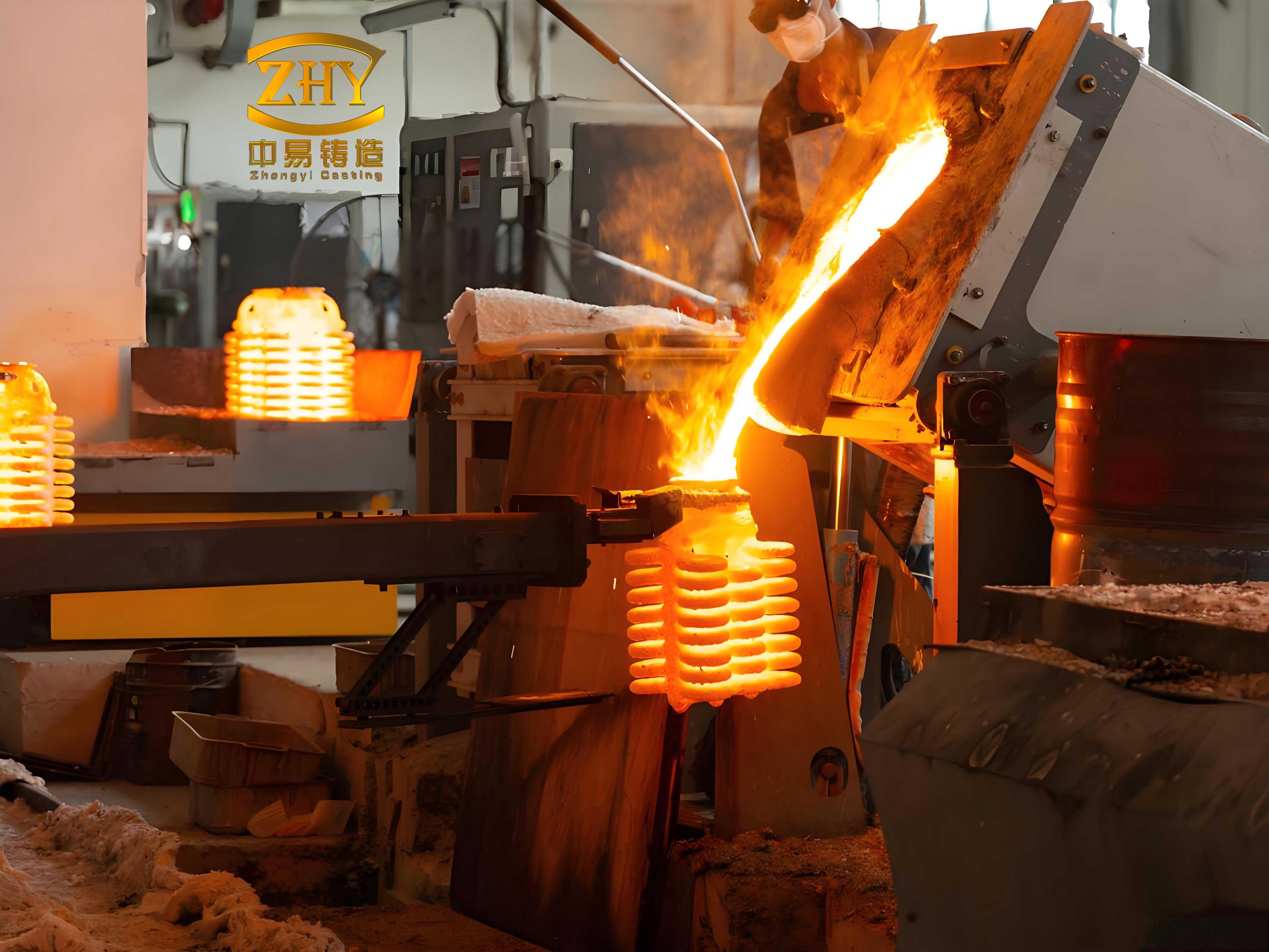
The core challenge in any investment casting process lies in managing the flow of molten metal during filling and its subsequent solidification. Defects like shrinkage porosity, gas entrapment, cold shuts, and hot tears are intrinsic risks that can compromise the structural integrity of the final casting. Predicting and mitigating these defects is paramount. This is where computational numerical simulation has revolutionized the field. By creating a virtual prototype of the entire investment casting process, foundry engineers can visualize, analyze, and optimize the process before a single mold is made, dramatically reducing development cycles, improving yield rates, and ensuring part quality.
This article delves into the comprehensive application of numerical simulation, specifically using advanced software tools, to design, analyze, and validate an investment casting process. We will explore the fundamental physics involved, walk through a detailed case study of a complex valve casting, and discuss broader implications for process optimization.
Fundamentals of Numerical Simulation for Investment Casting
Numerical simulation of the investment casting process is fundamentally a multi-physics problem involving fluid dynamics, heat transfer, and solidification kinetics. The governing equations are solved iteratively over a discretized mesh representing the part, gating system, and mold assembly.
Governing Equations and Models
The filling phase is modeled as a transient, incompressible, viscous flow with a free surface (the liquid metal front). The core equations are the Navier-Stokes equations, coupled with the volume-of-fluid (VOF) method to track the metal-air interface.
Conservation of Mass (Continuity Equation):
$$ \nabla \cdot \vec{v} = 0 $$
where $\vec{v}$ is the velocity vector.
Conservation of Momentum (Navier-Stokes Equation):
$$ \rho \left( \frac{\partial \vec{v}}{\partial t} + (\vec{v} \cdot \nabla) \vec{v} \right) = -\nabla p + \mu \nabla^2 \vec{v} + \rho \vec{g} + \vec{S} $$
where:
- $\rho$ is the fluid density
- $t$ is time
- $p$ is pressure
- $\mu$ is the dynamic viscosity
- $\vec{g}$ is the gravitational acceleration vector
- $\vec{S}$ represents source terms (e.g., momentum sinks in mushy zones).
During solidification, the energy equation is solved to predict temperature distribution and phase change:
Conservation of Energy:
$$ \rho c_p \frac{\partial T}{\partial t} = \nabla \cdot (k \nabla T) + \rho L \frac{\partial f_s}{\partial t} $$
where:
- $c_p$ is the specific heat capacity
- $T$ is temperature
- $k$ is the thermal conductivity
- $L$ is the latent heat of fusion
- $f_s$ is the solid fraction.
The prediction of shrinkage defects relies on calculating the feeding flow in the mushy zone and identifying regions where liquid metal cannot compensate for volumetric shrinkage. A common criterion is the Niyama criterion ($G/\sqrt{\dot{R}}$), where $G$ is the temperature gradient and $\dot{R}$ is the cooling rate. Low values of this criterion indicate a higher risk of microporosity.
Simulation Software and Setup
Dedicated foundry simulation software packages, such as MAGMAsoft, ProCAST, FLOW-3D CAST, and NovaFlow&Solid, encapsulate these complex physics with user-friendly interfaces. A standard simulation workflow involves the following steps, each critical for an accurate representation of the investment casting process:
- Geometry Import and Meshing: The 3D CAD models of the part and the proposed gating/feeding system are imported. The geometry is then discretized into millions of finite elements or finite volume cells. Mesh quality is paramount for accuracy.
- Material Property Assignment: Thermophysical properties (density, specific heat, thermal conductivity, viscosity) for the alloy and the ceramic shell (e.g., zircon, fused silica, aluminum silicate) are assigned from extensive built-in databases.
- Process Parameter Definition: Key parameters defining the investment casting process are set. A typical setup is summarized in the table below:
| Parameter Category | Parameter | Typical Value / Setting | Influence on Process |
|---|---|---|---|
| Thermal Conditions | Pouring Temperature | Alloy liquidus + superheat (e.g., 1560°C for steel) | Fluidity, metal-mold reaction, defect formation. |
| Shell Preheat Temperature | 800°C – 1100°C | Controls cooling rate, reduces thermal shock, influences fluidity. | |
| Shell-Metal Interfacial Heat Transfer Coefficient (HTC) | 500 – 2000 W/m²·K | Governs the rate of heat extraction; depends on shell material and contact. | |
| Operational Conditions | Pouring Speed / Time | Defined by pour weight (e.g., 3 kg/s) | Affects turbulence, oxide formation, and mold filling pattern. |
| Cooling Environment | Ambient air, controlled furnace | Final solidification rate and stress development. | |
| Numerical Controls | Mesh Size | ~5-10 million elements | Simulation accuracy and computational time. |
Case Study: Optimization of a Bypass Valve Investment Casting Process
To illustrate the practical application, we consider the development of an investment casting process for a bypass valve component. The part is a complex-shaped ductile iron or steel casting with varying wall thicknesses and several isolated thermal masses.
Initial Investment Casting Process Design and Problem Identification
The initial gating design for the investment casting process employed a top-gating system with multiple downsprue and ingate locations intended to feed different sections of the part. A preliminary filling simulation immediately revealed critical flaws in this investment casting process layout.
The velocity field analysis showed chaotic flow patterns. Metal streams from different ingates collided within the cavity, creating severe turbulence. More critically, one of the downsprue channels experienced delayed and intermittent filling, a phenomenon known as “mistuning.” This creates a high risk for cold shuts (where two metal fronts meet but fail to fuse) and gas entrapment (as air is folded into the turbulent liquid). The simulation predicted these defects with high probability in specific areas of the casting. This virtual result, obtained before any tooling was made, signaled that the initial investment casting process was non-viable and required redesign.
Process Optimization through Simulation
The root cause of the problem was an unbalanced gating system. The optimization goal was to achieve a smooth, progressive, and controlled fill. The primary modification was to relocate the main pouring cup directly above the ingate feeding the largest thermal mass of the part. This transformed the system into a more streamlined, single-point entry investment casting process for the initial fill stage, promoting laminar flow front advancement.
Rerunning the filling simulation on the optimized investment casting process design confirmed the improvement. The metal now entered the cavity in a stable, predictable manner, with a well-defined and progressively rising liquid front. Maximum velocities were within acceptable limits, and the chaotic flow and mistuning were eliminated. This validated the new gating design for the filling stage of the investment casting process.
The next phase was solidification and feeding analysis. The core requirement for soundness is directional solidification: the part must solidify progressively from the extremities (farthest points from the feed metal) back towards the feeders (ingates and risers). The simulation tracks the evolution of the liquid fraction over time. The critical output is the identification of “isolated liquid pockets” or “hot spots”—regions that solidify last and are cut off from a source of feed metal. These pockets inevitably become sites for macro-shrinkage porosity.
The solidification simulation of the optimized investment casting process showed a marked improvement. The thermal gradients were now favorably aligned, and the liquid metal retreated continuously from the thin sections of the part towards the heavier sections and finally into the main ingates. No significant isolated liquid zones were predicted within the casting body itself. The Niyama criterion map indicated a low risk of microporosity in the main casting. However, the simulation highlighted a potential minor shrinkage risk in a heavy section adjacent to a feeder. This was a manageable finding.
Physical Validation and Production Results
Based on the simulated investment casting process, the shell molds were manufactured using a standard ceramic shell building technique. To further enhance the feeding predicted as marginal by the simulation, practical foundry techniques were applied: insulating sleeves (ceramic wool) were wrapped around the critical feeder necks. This practice reduces the local cooling rate, effectively extending the feeder’s feeding range and solidification time.
The castings were produced, and rigorous inspection followed. Radiographic (X-ray) testing and sectioning of sample castings confirmed the simulation predictions. No shrinkage cavities, cold shuts, or major porosity were found in the critical areas of the valve body. The mechanical properties and chemical composition of the castings met all specifications. The successful first-time-right outcome demonstrated the power of using numerical simulation to design and validate a robust investment casting process.
Expanding the Scope: Parametric Optimization of the Investment Casting Process
Beyond diagnosing a single design, simulation enables systematic exploration of the investment casting process parameter space. Engineers can run multiple “what-if” scenarios to find an optimal set of parameters. Key relationships can be expressed and explored:
Effect of Pouring Temperature ($T_{pour}$): Higher temperature increases fluidity but also total heat content, potentially worsening shrinkage and grain size. An optimal window exists:
$$ T_{optimal} = T_{liquidus} + \Delta T_{superheat} $$
where $\Delta T_{superheat}$ is minimized to reduce shrinkage while ensuring complete fill.
Effect of Shell Preheat ($T_{shell}$): A higher shell preheat temperature slows the initial cooling rate, which can be expressed by modifying the boundary condition for the energy equation. The heat flux $q$ at the metal-shell interface is:
$$ q = h_{tc} (T_{metal} – T_{shell}) $$
where $h_{tc}$ is the interfacial heat transfer coefficient. Increasing $T_{shell}$ directly reduces $q$, promoting better feeding but risking mold-metal reaction.
We can conceptualize the interaction of two major parameters on a critical output like shrinkage volume ($V_{sh}$) using a response surface derived from multiple simulations:
| Shell Preheat Temperature | Low Pouring Temperature | Medium Pouring Temperature | High Pouring Temperature |
|---|---|---|---|
| Low | High $V_{sh}$ (Poor feeding, possible mistruns) | Medium-High $V_{sh}$ | Medium $V_{sh}$ (Severe thermal stress risk) |
| Medium | Medium $V_{sh}$ | Low $V_{sh}$ (Optimal Zone) | Medium $V_{sh}$ |
| High | Medium $V_{sh}$ | Medium $V_{sh}$ | High $V_{sh}$ (Excessive total heat) |
This table is a simplification, but it illustrates how simulation can map the process window. The true optimization of an investment casting process involves multi-variable analysis, potentially using algorithms to minimize a cost function (e.g., weighted sum of defect probabilities) across all parameters.
Advanced Considerations and Future Directions
The state of the art in simulating the investment casting process continues to advance. Key areas of development include:
- Microstructure and Mechanical Property Prediction: Coupling macroscopic heat transfer with mesoscopic models (e.g., Cellular Automaton – Finite Element, CAFE) to predict grain size, morphology (columnar vs. equiaxed), and secondary dendrite arm spacing (SDAS), which directly influence mechanical properties like yield strength and fatigue life.
- Residual Stress and Distortion Analysis: Incorporating thermo-elasto-plastic constitutive models to predict the stresses developed during cooling due to non-uniform thermal contraction. This allows engineers to anticipate warpage and potential hot tears, leading to better fixture design and heat treatment planning.
- Integration with Additive Manufacturing: The rise of 3D printed ceramic shells for the investment casting process introduces new complexities in shell geometry and properties. Simulation tools are evolving to account for the anisotropic thermal properties and unique geometries possible with additive manufacturing.
- Process-Structure-Property (PSP) Linkages: The ultimate goal is a fully integrated digital thread where simulation of the investment casting process predicts microstructure, which in turn feeds into a property prediction model, enabling true performance-based design of both the part and its manufacturing route.
Conclusion
Numerical simulation has transcended its role as a mere analysis tool to become the cornerstone of modern investment casting process engineering. It provides an unparalleled, physics-based window into the otherwise hidden phenomena of mold filling and solidification. As demonstrated in the case study, it enables the proactive identification and elimination of defects, the optimization of gating and feeding systems, and the validation of process parameters—all within the digital realm. This leads to significant reductions in lead time, cost, and material waste while simultaneously improving quality and yield.
The future of the investment casting process lies in the deeper integration of simulation across the entire manufacturing chain, from initial design to final performance. As computational power grows and models become more sophisticated, the vision of “right-first-time, every time” casting moves closer to reality, ensuring that investment casting remains a vital and evolving technology for producing the high-integrity components demanded by advanced industries.