
The investment casting process, renowned for producing components with exceptional surface finish, high dimensional accuracy, and complex geometries, remains a cornerstone of modern advanced manufacturing. However, this capability comes with a significant environmental footprint, primarily due to the substantial volume of ceramic shell waste generated. For every ton of metal cast, approximately 1 to 1.5 tons of spent ceramic mold material, or “waste shell,” is produced. With global production estimated in the millions of tons annually, the disposal and management of this waste present a critical challenge for the industry’s sustainable development. Consequently, the reclamation and recycling of waste investment casting shells have evolved from a niche concern to a major focus of research and industrial practice. This review synthesizes the technological progress in processing waste shells and their subsequent reuse, not only within the investment casting process itself but also across other material sectors, highlighting pathways toward a circular economy.
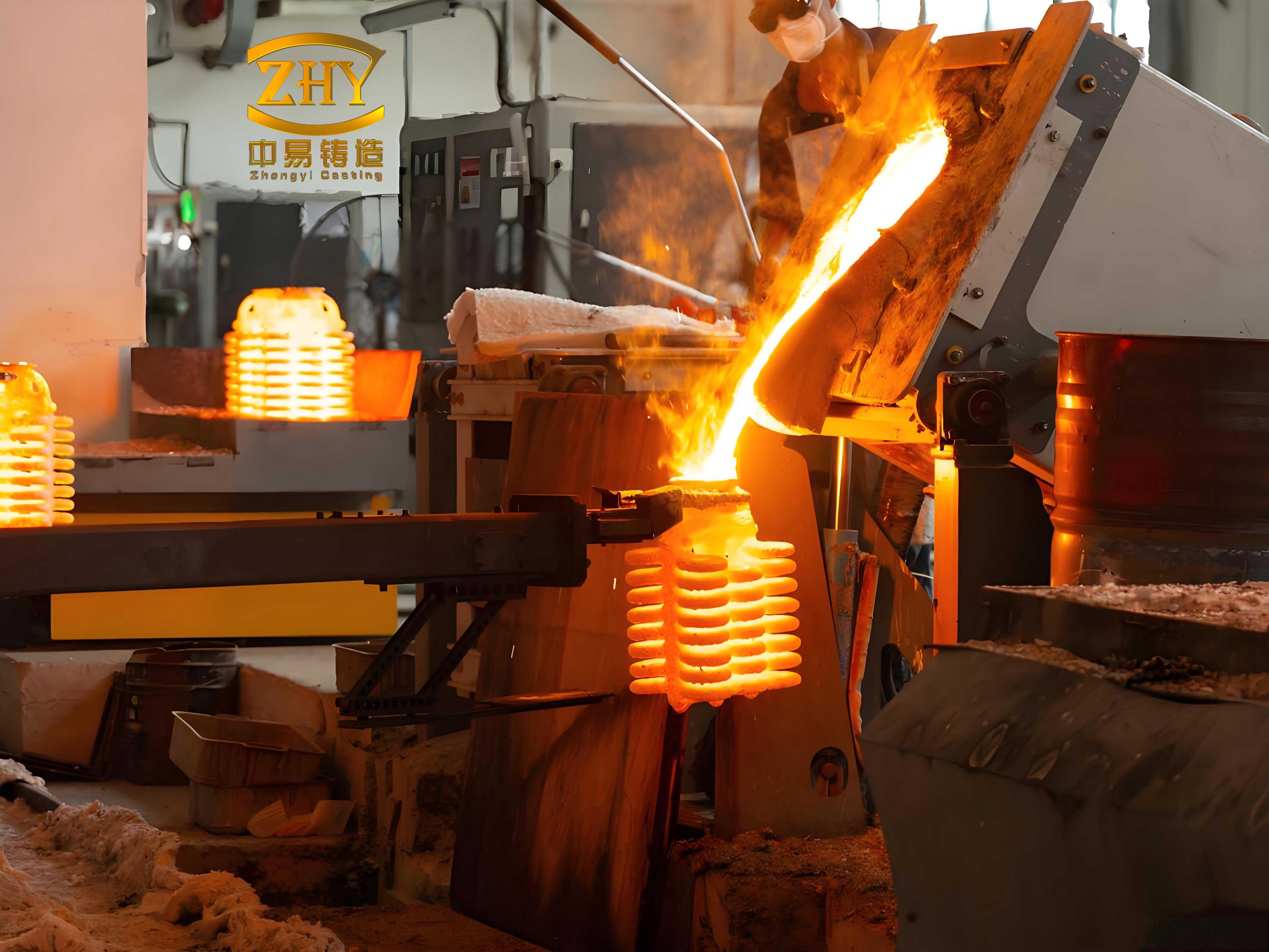
The ceramic shell in the investment casting process is a multi-layered composite, typically consisting of a refractory filler (e.g., zircon, alumina, mullite, or silica sands) and a binder (e.g., silica sol, ethyl silicate, or water glass). After metal pouring and cooling, the shell is broken away, leaving a mixture of fractured refractories, binder-derived glassy phases, and metal oxides from reactions with the molten alloy. The primary sources of waste shells are: 1) Shell fragments from dewaxing and handling; 2) Cracked or defective shells after firing; and 3) The main bulk of waste from knocked-out shells after casting. The third category constitutes the largest volume and is the primary target for reclamation.
1. Reclamation and Regeneration Processing Technologies
The goal of processing is to transform heterogeneous, contaminated waste into a consistent, usable material. The complexity of the process depends on the desired output quality, ranging from simple reclamation for low-duty applications to advanced regeneration for recovering high-value fractions.
1.1 Primary Reclamation for Direct Reuse
This approach involves minimal processing to produce a granular material suitable for use as a backup stucco or in non-critical applications within the foundry. The standard flow, often adapted from general foundry sand reclamation, involves sequential steps of crushing, magnetic separation, screening, and dedusting.
Crushing: Jaw crushers, roller crushers, or impact crushers are used to break down the large, sintered shell pieces into granular form.
Magnetic Separation: Belt or drum magnetic separators remove ferrous contaminants, primarily iron oxides from metal-mold reactions and embedded metal droplets. This step is crucial for improving the refractory properties of the reclaimed material.
Screening/Vibratory Classification: The crushed material is sieved to obtain specific grain size distributions (e.g., 10-30 mesh for stucco). Fines below a certain cut-off (e.g., 200 mesh) are often collected separately.
Dedusting: Air classification or washing may be employed to reduce the dust content on grain surfaces, improving handling and binder wetting characteristics.
The resulting material, often termed “reused sand,” retains the original mineralogical phases of the shell but with altered surface chemistry and morphology. The process flow can be summarized by the following generalized relation for mass output:
$$
M_{reclaimed} = M_{waste} – (M_{metal} + M_{fines\ removed} + M_{dust})
$$
Where efficiency depends on the separation fidelity at each stage.
1.2 Advanced Regeneration for High-Value Material Recovery
To recover premium refractory grains like zircon or fused alumina for potential reuse in primary coat applications, more sophisticated physical and chemical methods are employed. The core principle is exploiting differences in physical properties (density, hardness, surface chemistry) between the target phase and the matrix.
Gravity Concentration (e.g., Shaking Table): This method separates minerals based on specific gravity. For a shell containing zircon (SG ~4.6) and mullite (SG ~3.2), shaking table processing can produce a concentrate enriched in zircon. The separation efficiency can be modeled by partition curves, but a simple mass balance for zircon recovery is:
$$
R_{Zr} = \frac{C_{conc} \times m_{conc}}{F_{feed} \times m_{feed}} \times 100\%
$$
where \( R_{Zr} \) is the zircon recovery, \( C \) and \( F \) are the zircon grades in concentrate and feed, and \( m \) is the mass.
Froth Flotation: Following gravity pre-concentration, flotation can further upgrade zircon concentrates by selectively attaching air bubbles to zircon particles treated with specific collectors, separating them from silicate impurities.
Selective Comminution and Classification: Techniques like ball milling or rod milling can be tuned to exploit differences in hardness. For instance, grinding a shell mix containing hard fused alumina (Mohs 9) and softer glassy phases can liberate the alumina grains, which are then recovered via size classification. The grinding kinetics for a specific component can be described by a first-order law:
$$
\frac{dR}{dt} = -k R
$$
where \( R \) is the fraction of oversize material of the target component, and \( k \) is a rate constant dependent on milling conditions.
Chemical Leaching: Acid washing (e.g., with HCl or \( H_2SO_4 \)) is used to dissolve surface iron oxide stains (\( Fe_2O_3 \)), significantly improving the chemical purity of the regenerated sand. The dissolution reaction can be simplified as:
$$
Fe_2O_3 + 6H^+ \rightarrow 2Fe^{3+} + 3H_2O
$$
A generalized flow for advanced regeneration targeting multiple fractions is illustrated below:
Table 1: Generalized Advanced Regeneration Process Flow
| Process Stage | Input | Operation | Output Streams | Key Control Parameter |
|---|---|---|---|---|
| 1. Primary Crushing & Screening | Waste Shell | Jaw/Roller Crusher; Sieving | Oversize (recrush), Sand Fraction (e.g., 20-100 mesh), Fines | Crushing Gap, Screen Aperture |
| 2. Magnetic Separation | Sand Fraction | High-Intensity Magnetic Separator | Magnetic Fraction (Fe-rich), Non-Magnetic Sand | Magnetic Field Strength (>0.3T) |
| 3. Hydraulic Classification / Attrition | Non-Magnetic Sand | Water Elutriation, Scrubbing | Cleaned Sand, Slurry Fines | Water Flow Rate, Scrubbing Time |
| 4. Density Separation | Cleaned Sand | Shaking Table, Hydrocyclone | Heavy Concentrate (Zr-rich), Middlings, Light Tailing (Mullite/Silica-rich) | Table Slope, Water Flow |
| 5. Surface-based Separation | Heavy Concentrate | Froth Flotation | Final Zr Concentrate, Silicate Tailing | pH, Collector/Depressant Dosage |
| 6. Chemical Treatment | Final Concentrate | Acid Leaching (optional) | Leached, High-Purity Zr Sand; Spent Acid | Acid Concentration, Temperature, Time |
| 7. Drying & Final Screening | All Solid Streams | Rotary Dryer; Sieving | Regenerated Products (various grades), Final Fines | Drying Temperature, Final Mesh Size |
1.3 Quality Control of Reclaimed and Regenerated Sands
The suitability of processed material for any application depends on stringent quality parameters, analogous to those for virgin refractory materials.
Chemical and Phase Composition: XRF and XRD analyses determine purity. A key metric is the reduction of fluxing impurities like \( Fe_2O_3 \), \( Na_2O \), and \( K_2O \), which lower the refractoriness. Advanced regeneration aims to produce materials with compositions approaching virgin equivalents.
Table 2: Typical Chemical Composition Comparison (wt%)
| Material Type | SiO₂ | Al₂O₃ | ZrO₂ | Fe₂O₃ | Other (Na₂O, K₂O, etc.) | Dominant Phase(s) |
|---|---|---|---|---|---|---|
| Waste Shell (Silica-based) | 85-91 | 0.3-0.5 | – | 0.1-0.6 | 0.5-1.5 | Cristobalite, Quartz, Glass |
| Waste Shell (Alumino-Silicate) | 40-55 | 30-55 | 5-30 | 1.0-2.5 | 1.0-2.0 | Mullite, Cristobalite, Zircon |
| Reclaimed Sand (Processed) | Varies | Varies | Varies | <0.5 | <1.5 | Same as feed, but cleaner |
| Regenerated Zircon Concentrate | 30-35 | 1-5 | 60-65 | <0.3 | <0.5 | Zircon |
| Virgin Mullite Sand | ~50 | ~45 | – | <0.2 | <1.0 | Mullite |
| Virgin Zircon Sand | ~33 | <1 | ~66 | <0.1 | – | Zircon |
Grain Morphology and Surface: SEM analysis reveals that simple crushing yields angular grains with microcracks, while regenerated sands (especially after attrition/leaching) have cleaner, smoother surfaces.
Grain Size Distribution (GSD): Sieve analysis ensures the material fits the required stucco or flour specification. The GSD is often characterized by parameters like \( D_{10}, D_{50}, D_{90} \). Milling operations aim to shift the distribution. The Rosin-Rammler-Sperling-Bennett (RRSB) distribution is a common model:
$$
R(d) = 100 \times \exp\left[-\left(\frac{d}{d’}\right)^n\right]
$$
where \( R(d) \) is the cumulative oversize %, \( d \) is the particle size, \( d’ \) is the characteristic size, and \( n \) is the distribution modulus.
LOI (Loss on Ignition) and Moisture: LOI indicates residual organics or hydrated phases; moisture affects binder addition in the investment casting process.
Refractoriness under Load (RUL) and Permeability: For critical reuse within casting, these performance tests are essential.
2. Reuse Technologies and Applications
2.1 Reuse as Raw Material in the Investment Casting Process
The most direct recycling loop is within the investment casting process itself. The application is highly dependent on the quality of the processed material.
In Water Glass-Based Shell Systems: Reclaimed sand from water glass shells, typically silica-rich, finds ready application as a backup stucco. Studies show that a blend of reclaimed sand with 25-50% new alumina sand can produce backup layers with adequate strength, deformation resistance, and collapsibility for carbon and low-alloy steel castings. Reclaimed fines (200 mesh) can be used in backup slurries when blended with significant portions (e.g., >50%) of new refractory flour to maintain slurry stability and green strength.
In Silica Sol-Based Shell Systems: Higher-quality reclaimed or regenerated materials are required. Processed sand from alumino-silicate shells can be used directly for backup coats (3rd layer and beyond). Research on using inorganic geopolymer binders with 100% reclaimed shell powder for backup layers has shown promising results, offering faster drying times and comparable hot strength to conventional systems. The geopolymerization reaction can be represented as:
$$
Si-O-Al \ bonds \ (in \ powder) + M^+[OH]^- \rightarrow M^{+}[-Si-O-Al-O-] \ gel
$$
where \( M^+ \) is an alkali ion like \( Na^+ \) or \( K^+ \).
Use of Regenerated High-Value Sands: Successfully regenerated zircon or high-alumina sands can potentially be reintroduced into face coat or primary backup coat applications, closing the loop for the most expensive raw materials in the investment casting process.
2.2 Use as Construction and Building Material
While less common than foundry reuse, applications in construction leverage the granular nature and mineralogy of the waste.
Concrete Aggregate: Reclaimed sand can partially replace natural sand in concrete for non-structural or semi-structural applications (e.g., bedding, foundations, blocks). Studies indicate that concrete with reclaimed shell sand exhibits good cohesiveness but lower workability (slump). Its compressive and split-tensile strength can be comparable to conventional concrete, following a similar stress-strain relationship:
$$
\frac{\sigma}{f_c’} = \frac{\frac{\epsilon}{\epsilon_0} \cdot n}{n – 1 + (\frac{\epsilon}{\epsilon_0})^{nk}}
$$
where \( \sigma \) is stress, \( f_c’ \) is compressive strength, \( \epsilon \) is strain, \( \epsilon_0 \) is strain at peak stress, and \( n, k \) are material constants.
Mortar and Grout: Fine fractions can be used as an inert filler in mortars and grouts.
2.3 Use in Refractory and Ceramic Products
The alumino-silicate composition of many waste shells makes them a suitable starting material for medium-duty refractories.
Monolithic Refractories (Castables): Processed shell aggregate (e.g., 0-5 mm grain) can be used as the granular skeleton in castables for non-critical furnace linings, ladle backing, or troughs. Binders like calcium aluminate cement (CAC) or hydratable alumina are added. A typical simplified composition is:
$$
M_{castable} = 0.70-0.85\ (Reclaimed\ Aggregate) + 0.10-0.15\ (Binder) + 0.05-0.10\ (Microsilica/Additives)
$$
Properties such as cold crushing strength (CCS) of 30-50 MPa and refractory service temperature up to 1300-1400°C can be achieved.
Lightweight Insulating Materials: By adding pore-forming agents (sawdust, rice husk) to a mix of shell powder, clay, and fluxes, lightweight insulating bricks or aggregates can be fired. The pore former burns out during firing, creating porosity. The thermal conductivity (\( k \)) of such materials can be empirically related to bulk density (\( \rho \)):
$$
k \propto A \cdot \rho^{B}
$$
where \( A \) and \( B \) are constants, with \( B \) typically between 1 and 2 for porous ceramics.
Ceramic Proppants or Filter Media: Controlled spheroidization and sintering of fine shell powder can produce ceramic granules for use as foundry filters or proppants in oil/gas extraction.
2.4 Use as Raw Material for Composite and Advanced Ceramics
This represents a high-value avenue, transforming waste into engineered materials.
Mullite-Zirconia Composites: Waste shells rich in zircon and alumina-silica can be reaction-sintered with supplemental alumina (\( Al_2O_3 \)) to form high-performance mullite-zirconia composites. The in-situ reaction is:
$$
3Al_2O_3 + 2SiO_2 \ (from\ shell) \rightarrow Al_6Si_2O_{13} \ (Mullite)
$$
with zirconia (\( ZrO_2 \)) originating from the dissociation of zircon (\( ZrSiO_4 \)) acting as a toughening agent. The fracture toughness (\( K_{Ic} \)) enhancement from zirconia can be related to the transformable tetragonal zirconia fraction (\( V_f^{t-ZrO2} \)):
$$
\Delta K_{Ic} \propto V_f^{t-ZrO2} \cdot \epsilon^T \cdot E \cdot \sqrt{h}
$$
where \( \epsilon^T \) is the transformation strain, \( E \) is Young’s modulus, and \( h \) is the process zone size. These composites exhibit good mechanical strength (flexural strength ~150-200 MPa) and interesting functional properties like radiation shielding.
Cordierite-Based Materials: By mixing shell powder with magnesia (\( MgO \)) and controlling firing, low-expansion cordierite (\( 2MgO \cdot 2Al_2O_3 \cdot 5SiO_2 \)) ceramics can be synthesized for applications requiring thermal shock resistance.
3. Conclusion and Future Perspectives
The reclamation and recycling of waste from the investment casting process have matured significantly, evolving from simple landfill diversion to sophisticated material recovery operations. Technologies now enable the production of materials suitable for reuse within the casting loop, in construction, in conventional refractories, and even in advanced ceramic composites. The economic and environmental drivers for this are stronger than ever. However, to achieve true “zero waste” in the investment casting process, several frontiers need advancement:
1. Process Intensification and Specialization: Development of integrated, automated processing lines specifically designed for the varied chemistries of investment shells, with improved separation efficiencies for high-value fractions like zircon and alumina.
2. Quality Standardization: Establishment of industry-wide specifications for different grades of reclaimed and regenerated sands, similar to those for virgin materials, to build user confidence.
3. Expansion into New Alloy Systems: Research into recycling shells from reactive alloy casting (e.g., titanium, superalloys), which present greater chemical contamination challenges.
4. High-Value Material Synthesis: Further development of routes to synthesize advanced functional materials (e.g., porous filters, catalysts supports, shielding materials) from waste shells, creating new markets.
5. System-Level Life Cycle Assessment (LCA): Comprehensive LCA studies to quantify the true net environmental benefit of various reclamation and recycling pathways compared to virgin material use and disposal.
The journey of a spent ceramic shell from a waste burden to a valuable resource epitomizes the principles of industrial ecology. As technology progresses, the investment casting process is poised to become not only a precision manufacturing method but also a model for sustainable material cycles within the broader manufacturing landscape.