
In the field of precision casting, investment casting plays a critical role in producing complex components with high dimensional accuracy and superior mechanical properties. As an engineer involved in advanced manufacturing processes, I have extensively worked on the development of large nozzle rings for exhaust turbochargers using integral investment casting techniques. This method offers significant advantages over traditional welded assemblies, including enhanced strength, reduced deformation, and minimized machining allowances. The nozzle ring, which directs high-temperature, high-pressure exhaust gases to drive turbine blades, must withstand extreme operating conditions. Through precision casting, we achieved a robust design with an overall dimension of 656 mm in diameter and 112 mm in height, composed of an outer ring, 24 uniformly distributed nozzle blades, and an inner ring. This article delves into the detailed process, challenges, and solutions encountered during the production, emphasizing the principles of investment casting and its application to large-scale components.
The fundamental process of investment casting begins with the creation of wax patterns, which are assembled into a tree-like structure, coated with ceramic shells, and then melted out to form molds for metal pouring. For the large nozzle ring, the wax patterns were divided into three parts: the outer ring, the nozzle blades, and the inner ring. The outer ring wax pattern was produced by gravity pouring of medium-temperature wax into a mold, allowing it to solidify freely. This method ensured a consistent geometry for the ring-like structure with a rectangular cross-section. The nozzle blades, featuring an airfoil-shaped cross-section, were injection-molded using standard wax injection machines. However, the inner ring wax pattern posed a significant challenge due to its large size—600 mm in diameter—which exceeded the standard working space of the injection machine, characterized by a guide pillar spacing of 580 mm. To address this, we devised an innovative approach by modifying the injection process. We utilized a temporary fixture to secure the injection gun vertically above the inner ring mold, enabling downward injection of medium-temperature wax. This adjustment allowed us to bypass the machine’s spatial constraints without additional equipment investment, demonstrating the flexibility of precision casting techniques. The wax patterns were then assembled into a complete structure, including a riser of 140 mm height and a maximum outer diameter of 230 mm, connected via a cylindrical sprue of 80 mm diameter. The gating system featured a ring-shaped channel of 60 mm width and 10 mm height to facilitate proper feeding and solidification.
To illustrate the key parameters of the wax pattern production, the following table summarizes the dimensions and methods used for each component:
| Component | Dimensions | Wax Type | Forming Method |
|---|---|---|---|
| Outer Ring | ~656 mm diameter | Medium-Temperature Wax | Gravity Pouring |
| Nozzle Blades | Airfoil profile | Medium-Temperature Wax | Injection Molding |
| Inner Ring | 600 mm diameter | Medium-Temperature Wax | Modified Injection |
The shell molding process is a cornerstone of investment casting, ensuring the mold can withstand high temperatures and mechanical stresses during pouring. For this application, we employed a multi-layer approach to build the ceramic shell. The primary layer consisted of a alumina powder-based slurry applied with alumina sand to achieve a smooth surface finish and high refractoriness. This was followed by a transition layer using alumina powder slurry combined with quartz sand, which enhanced adhesion and thermal stability. Finally, several backup layers were applied using quartz powder slurry and quartz sand to build thickness and strength. A critical innovation involved reinforcing the shell after the transition layer by wrapping it with fine steel wires of less than 1 mm diameter. This step, analogous to adding reinforcement in concrete, significantly improved the shell’s resistance to deformation and cracking during subsequent stages. The shell was built up to 10 layers in total, with careful drying between each application to prevent defects.
The shell drying and firing process was optimized through a two-stage protocol to ensure complete wax removal and thermal stability. The first stage involved heating the shell to 550°C and holding for 1 hour to eliminate residual wax and moisture. The second stage raised the temperature to 850°C with a 2-hour hold to sinter the ceramic and achieve the necessary strength. This controlled firing cycle minimized thermal shocks and prepared the shell for red-hot pouring, where the mold is extracted from the furnace just before casting to maintain high temperatures. The effectiveness of this shell preparation can be expressed through the thermal stress resistance, which we estimated using the formula for thermal shock parameter: $$R = \frac{\sigma_f (1-\nu)}{\alpha E}$$ where $\sigma_f$ is the fracture strength, $\nu$ is Poisson’s ratio, $\alpha$ is the coefficient of thermal expansion, and $E$ is the Young’s modulus. For our alumina-quartz composite shell, this parameter ensured durability under the extreme conditions of investment casting.
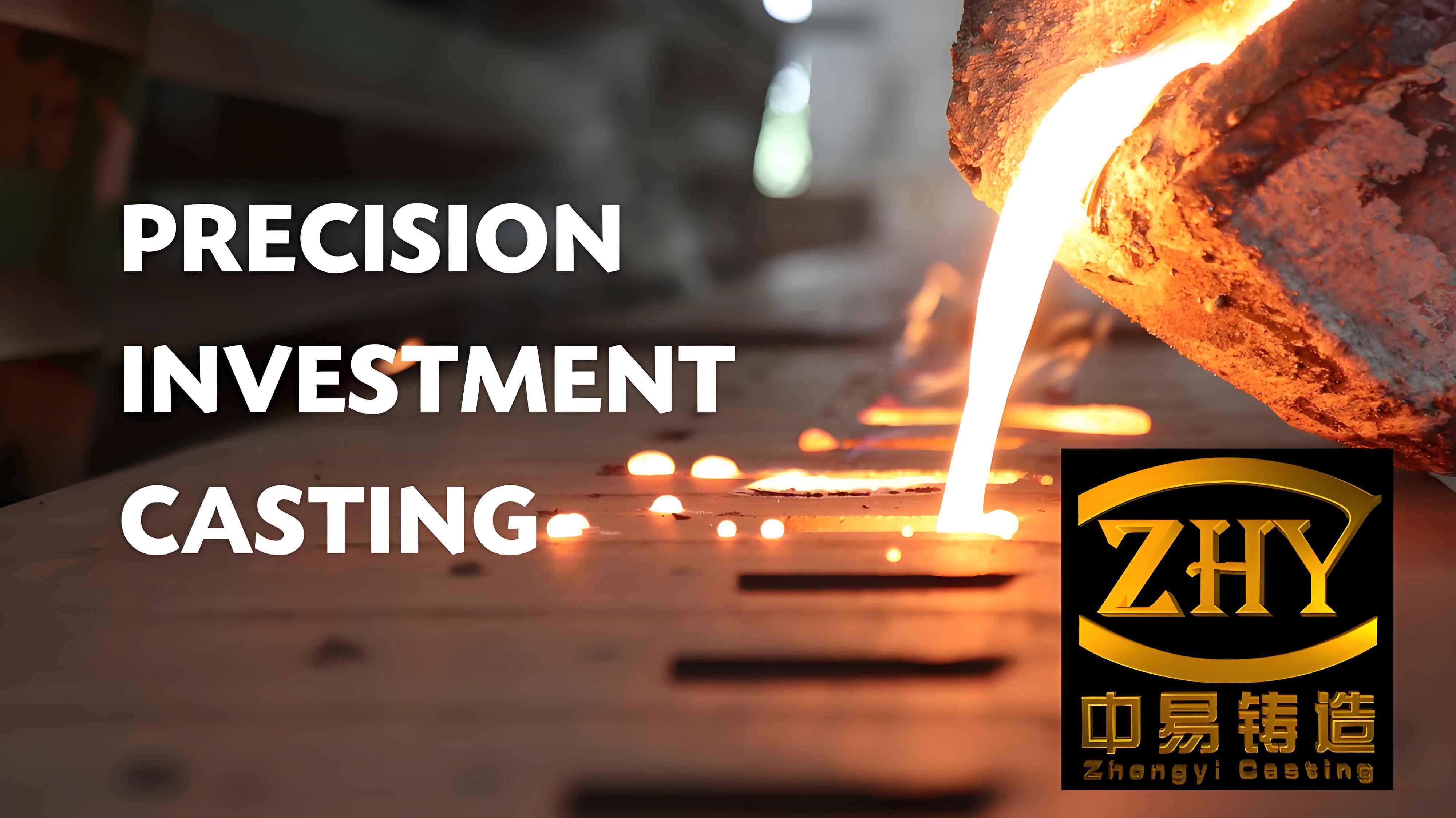
Melting and pouring are pivotal in precision casting to achieve defect-free components. We used a 150 kg medium-frequency induction furnace with a magnesia-based basic lining to melt the G-X40CrNiSi22.9 alloy, a heat-resistant stainless steel known for its high-temperature performance. The chemical composition was strictly controlled according to specifications, with key elements including chromium, nickel, and silicon to enhance oxidation resistance and mechanical strength. The molten metal was heated to a pouring temperature of at least 1580°C to ensure fluidity and complete mold filling. Given the thin sections of the nozzle blades, particularly at the trailing edges, gravity pouring alone risked incomplete filling due to slow flow rates. To overcome this, we adopted centrifugal casting at a rotational speed of 2 revolutions per second. The centrifugal force generated during pouring enhanced the metal’s velocity and directional flow, following the principle: $$F_c = m \omega^2 r$$ where $F_c$ is the centrifugal force, $m$ is the mass of the metal, $\omega$ is the angular velocity, and $r$ is the radius of rotation. This approach ensured uniform filling of the intricate blade profiles, resulting in a sound casting with a total pour weight of 150 kg and a final part weight of 63 kg. Single-cast test specimens were produced alongside for quality verification.
The table below outlines the key parameters of the melting and pouring process:
| Parameter | Value | Description |
|---|---|---|
| Furnace Type | 150 kg Medium-Frequency | Magnesia Lining |
| Alloy | G-X40CrNiSi22.9 | Heat-Resistant Stainless Steel |
| Pouring Temperature | ≥1580°C | Ensures Fluidity |
| Casting Method | Centrifugal | 2 rev/s Speed |
| Part Weight | 63 kg | After Machining |
Several challenges arose during the investment casting process, primarily related to equipment limitations and shell integrity. The inner ring wax pattern模具 could not be produced under standard injection machine conditions due to size constraints. By employing a temporary fixture to reposition the injection gun, we effectively extended the machine’s capabilities without capital expenditure. This adaptation highlights the versatility of precision casting in accommodating large components. Additionally, the shell’s strength was a concern, as large molds are prone to distortion and fracture during firing and pouring. The incorporation of steel wire reinforcement after the transition layer provided enhanced mechanical stability, reducing the risk of failure. The wire’s role can be modeled using the composite strength theory: $$\sigma_c = V_f \sigma_f + V_m \sigma_m$$ where $\sigma_c$ is the composite strength, $V_f$ and $V_m$ are the volume fractions of the wire and matrix, and $\sigma_f$ and $\sigma_m$ are their respective strengths. This approach ensured the shell could withstand the centrifugal forces and thermal gradients during casting.
Post-casting operations included the removal of the riser and gating system through turning operations, followed by surface inspection and dimensional checks. The final component underwent rigorous testing, including chemical analysis, mechanical property evaluation, and non-destructive examination. Results confirmed that the integral investment casting process met all design specifications, outperforming welded alternatives in terms of structural integrity and precision. The successful implementation of this method underscores the efficacy of investment casting for large, complex parts like nozzle rings, particularly in applications demanding high temperature and pressure resistance.
In reflection, this project demonstrates how precision casting can be adapted for oversized components through process innovations. The use of temporary fixtures for wax injection and shell reinforcement with steel wires are transferable solutions for similar investment casting challenges. For instance, other large disk-shaped parts with limited production volumes can benefit from this approach, optimizing resource utilization and minimizing costs. The integration of centrifugal pouring further enhances the quality of thin-section features, making it a valuable technique in the investment casting arsenal. As precision casting continues to evolve, such methodologies will play a crucial role in expanding its applicability to larger and more demanding geometries.
To summarize the material properties and process benefits, the following table provides a comparative overview:
| Aspect | Integral Investment Casting | Welded Assembly |
|---|---|---|
| Strength | High, monolithic structure | Lower, joint-dependent |
| Deformation | Minimal, controlled process | Higher, welding stresses |
| Machining Allowance | Reduced, near-net shape | Significant, multiple operations |
| Production Complexity | Streamlined, fewer steps | High, assembly required |
In conclusion, the investment casting process for large nozzle rings exemplifies the advancements in precision casting technology. By addressing equipment and material challenges through creative engineering, we achieved a high-quality component that meets rigorous operational demands. The repeated application of precision casting and investment casting principles throughout this project highlights their importance in modern manufacturing. As I continue to explore these techniques, I am confident that they will drive further innovations in the production of critical aerospace and automotive components.