
In the realm of advanced manufacturing, laser surface treatment has emerged as a pivotal technology for enhancing the properties of metallic materials, particularly grey cast iron. Grey cast iron is widely used in industrial applications such as engine cylinders, machine tool guides, and automotive components due to its excellent castability, damping capacity, and wear resistance. However, its relatively low surface hardness and susceptibility to wear under severe conditions often limit its performance. To address these issues, laser surface treatment offers a promising solution by enabling localized modification of the surface microstructure without affecting the bulk material. This study explores the process parameters and effects of laser surface treatment on grey cast iron, focusing on the formation of white iron layers, hardness improvements, and microstructural evolution. The goal is to optimize the process for practical applications, leveraging high-power CO₂ lasers to achieve superior surface properties.
The development of laser technology since the invention of the first ruby laser in 1960 has revolutionized material processing. By the 1980s, high-power continuous-wave CO₂ lasers with outputs exceeding 10 kW became available, facilitating industrial adoption. Laser surface treatment, including hardening, melting, and alloying, provides distinct advantages over conventional methods like induction or flame hardening. It allows precise control over heat input, resulting in rapid heating and cooling rates that lead to refined microstructures and enhanced mechanical properties. For grey cast iron, laser treatment can transform the graphite-rich surface into a hardened layer with reduced graphite content, thereby improving wear resistance. This experimental investigation aims to elucidate the relationships between laser parameters, coating absorptivity, and resulting characteristics, using statistical regression to model key outcomes.
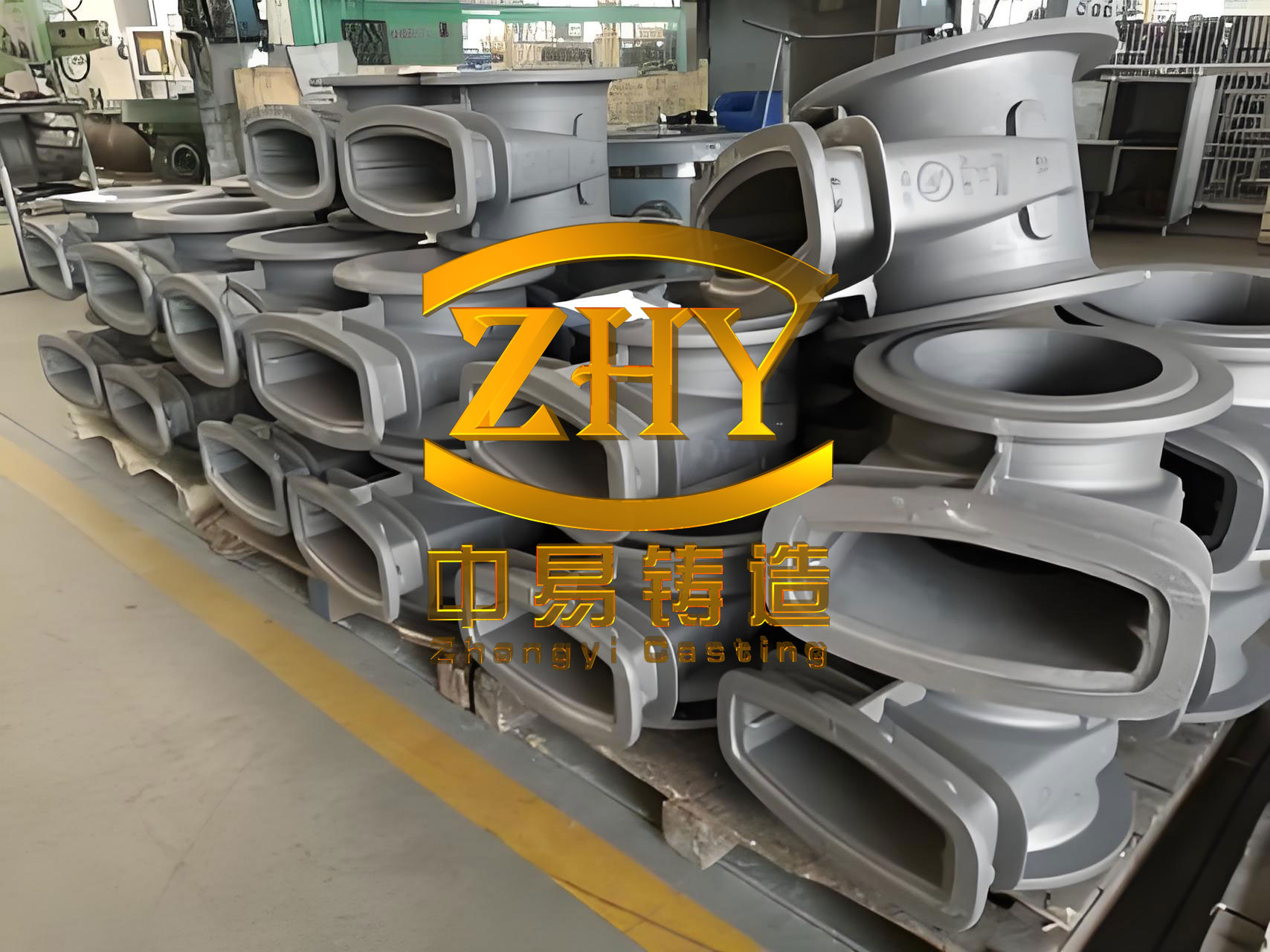
Grey cast iron, characterized by its graphite flakes embedded in a ferrous matrix, is a cornerstone material in casting industries. Its composition typically includes carbon, silicon, manganese, phosphorus, and sulfur, with carbon content ranging from 3.2% to 3.5%. The presence of graphite provides self-lubricating properties but also creates stress concentrators that can initiate cracks under load. Laser surface treatment mitigates this by melting the surface layer, dissolving graphite, and forming carbides or martensitic structures upon rapid solidification. Previous studies have demonstrated that laser processing can significantly increase the surface hardness of grey cast iron, with white iron layer depths influenced by power, scanning speed, and beam diameter. Moreover, the use of absorbing coatings is critical to maximize energy coupling, as the reflectivity of untreated grey cast iron surfaces to CO₂ laser wavelengths (10.6 μm) can be as high as 90%. This research builds on existing knowledge by systematically varying parameters and coatings to derive empirical models for process optimization.
The experimental methodology involved preparing samples of grey cast iron, specifically grade HT20-40, with a chemical composition detailed in Table 1. The base microstructure consisted of medium-flake pearlite with minor ferrite and type-A graphite distribution. A CO₂ closed-cycle transverse flow laser processing machine was employed for surface treatment, with key parameters such as laser power, scanning speed, beam diameter, and defocus distance controlled to study their effects. To enhance energy absorption, various coatings were applied to the sample surfaces prior to laser irradiation. The coating formulations, listed in Table 2, included carbon-based materials and alloying elements like chromium and nickel to investigate alloying effects. Each coated sample was subjected to laser scanning under different conditions, and subsequent analysis involved metallographic examination, hardness testing, and regression analysis of data to establish correlations.
| Element | Content |
|---|---|
| C | 3.2-3.5 |
| Si | 1.8-2.2 |
| Mn | 0.6-0.9 |
| P | ≤ 0.15 |
| S | ≤ 0.12 |
| Fe | Balance |
The laser processing parameters were meticulously recorded, as shown in Table 3. The laser power ranged from 800 W to 1200 W, scanning speed from 10 mm/s to 30 mm/s, and beam diameter was fixed at 4 mm through defocusing. A constant scanning width of 6 mm was maintained, and auxiliary gas pressure was set at 0.2 MPa to protect the optics. The samples were coated uniformly with a thickness of approximately 0.1 mm, and after drying, they were irradiated with the laser beam. Post-treatment, cross-sections were prepared for microstructural analysis using optical and scanning electron microscopy. Surface hardness was measured with a Rockwell hardness tester, while microhardness profiles across the treated zones were obtained using a Vickers microhardness indenter. Data on white layer depth and hardness were collected for regression modeling, with calculations performed using computer algorithms to ensure accuracy.
| Coating ID | Composition | Purpose |
|---|---|---|
| Coating A | Graphite powder in acetone | Enhance absorption |
| Coating B | Phosphate-based slurry | Improve energy coupling |
| Coating C | Cr and Ni powders in binder | Alloying for hardness |
| Coating D | Carbon black suspension | Increase absorptivity |
The results revealed significant insights into the laser treatment of grey cast iron. The white iron layer depth, denoted as \(d\), was found to depend linearly on the parameter \(P/\sqrt{v}\), where \(P\) is laser power in watts and \(v\) is scanning speed in mm/s. This relationship aligns with findings from prior studies on laser hardening of steels and cast irons. For instance, using Coating A, the regression analysis yielded the equation:
$$ d = -0.25 + 0.15 \cdot \frac{P}{\sqrt{v}} $$
with a correlation coefficient \(R^2 = 0.92\), indicating a strong linear fit. This implies that higher power and lower scanning speed promote deeper melting and subsequent white layer formation. The linear model can be generalized as:
$$ d = a + b \cdot \frac{P}{\sqrt{v}} $$
where \(a\) and \(b\) are constants influenced by material properties and coating type. For grey cast iron, the rapid cooling after laser melting suppresses graphite precipitation, leading to a ledeburitic structure (cementite and austenite) that appears white under etching—hence the term “white iron.” The depth of this layer is crucial for determining the wear resistance of treated components.
| Parameter | Value Range | Unit |
|---|---|---|
| Laser Power (P) | 800-1200 | W |
| Scanning Speed (v) | 10-30 | mm/s |
| Beam Diameter | 4 | mm |
| Defocus Distance | +10 | mm |
| Scanning Width | 6 | mm |
| Auxiliary Gas Pressure | 0.2 | MPa |
Coating absorptivity played a vital role in modulating white layer depth. As shown in Figure 1 (conceptual representation), Coating B, which had a rougher texture, resulted in deeper white layers compared to Coating A under identical laser parameters. This is attributed to reduced reflectivity, allowing more laser energy to be absorbed by the grey cast iron surface. The absorption coefficient \(\alpha\) for different coatings can be estimated using the Beer-Lambert law, where the intensity \(I\) at depth \(z\) is given by:
$$ I(z) = I_0 e^{-\alpha z} $$
with \(I_0\) being the incident intensity. Coatings with higher \(\alpha\) values facilitate greater heat input, leading to increased melting depths. Experimental data for Coating B showed white layer depths up to 0.8 mm at \(P = 1200\) W and \(v = 10\) mm/s, whereas Coating A achieved only 0.5 mm under the same conditions. This underscores the importance of selecting appropriate coatings for laser treatment of grey cast iron to optimize energy efficiency.
The surface hardness of the melted zone exhibited an exponential relationship with white layer depth. For samples treated with Coating C, which included alloying elements, the hardness \(H\) in HRC followed the equation:
$$ H = 20.5 \cdot e^{0.35 \cdot d} $$
where \(d\) is in millimeters. This indicates that deeper white layers correspond to higher hardness values, likely due to increased dissolution of graphite and formation of hard phases like martensite and carbides. The regression coefficients for this model, computed via iterative methods, are summarized in Table 4. The exponential growth in hardness can be explained by the microstructural refinement: as the melting zone extends, more graphite is eliminated, and the cooling rate promotes finer ledeburite or martensite, enhancing hardness. This relationship holds practical significance for designing laser-treated grey cast iron components requiring specific surface properties.
| Coefficient | Value | Standard Error |
|---|---|---|
| A (pre-exponential factor) | 20.5 | 0.8 |
| B (exponent multiplier) | 0.35 | 0.02 |
| R² (goodness of fit) | 0.94 | – |
Microstructural analysis of laser-treated grey cast iron revealed three distinct zones: the melted zone, heat-affected zone (HAZ), and base material. The melted zone, characterized by white iron, consists of ledeburite—a eutectic mixture of cementite (Fe₃C) and austenite—that forms due to rapid solidification. Under high cooling rates, typically exceeding \(10^3\) K/s, austenite may transform to martensite, further increasing hardness. The HAZ, adjacent to the melted zone, experiences temperatures below the melting point but above the austenitizing range, resulting in a microstructure of acicular martensite and some retained austenite. The base material remains unaffected, retaining its pearlitic matrix with graphite flakes. This zoning is critical for performance, as the hardened surface provides wear resistance while the tough core maintains overall ductility. Figure 2 (conceptual) illustrates these zones, with the melted zone showing a fine, dendritic structure typical of rapid solidification in grey cast iron.
To quantify the hardness distribution, microhardness profiles were measured across the treated cross-sections. As shown in Table 5, for a sample with \(P = 1000\) W and \(v = 20\) mm/s, the surface hardness peaked at 55 HRC in the melted zone, decreasing to 45 HRC in the HAZ and 20 HRC in the base material. This gradient ensures a smooth transition in mechanical properties, reducing the risk of delamination or cracking. The hardness profile can be modeled using a decay function, such as:
$$ H(x) = H_0 \cdot e^{-k x} + H_b $$
where \(H(x)\) is hardness at distance \(x\) from the surface, \(H_0\) is surface hardness, \(k\) is a decay constant, and \(H_b\) is base hardness. For grey cast iron, \(k\) values ranged from 2 to 4 mm⁻¹ depending on processing conditions, indicating rapid hardness drop within the first millimeter. This highlights the localized nature of laser treatment, which is advantageous for applications like guideways or cylinder liners where only surface enhancement is needed.
| Distance from Surface (mm) | Hardness (HRC) | Zone |
|---|---|---|
| 0.0 | 55 | Melted Zone |
| 0.2 | 52 | Melted Zone |
| 0.5 | 48 | Transition |
| 0.8 | 45 | HAZ |
| 1.2 | 30 | HAZ |
| 2.0 | 20 | Base Material |
The effects of alloying elements introduced via coatings were also investigated. Coatings containing chromium or nickel led to in-situ alloying during laser melting, forming carbides or solid solutions that further enhanced hardness. For example, with Coating C (Cr and Ni), the white layer hardness reached 60 HRC, compared to 50 HRC for non-alloyed coatings. This is due to the formation of complex carbides like (Fe,Cr)₃C and austenite stabilization by nickel, which can be described by thermodynamic models. The alloying process can be approximated using diffusion equations, such as Fick’s second law, where the concentration \(C\) of an alloying element over time \(t\) and depth \(x\) is:
$$ \frac{\partial C}{\partial t} = D \frac{\partial^2 C}{\partial x^2} $$
with \(D\) being the diffusion coefficient. In laser treatment, the short interaction times (typically 0.1-1 second) limit diffusion distances, but convection in the melt pool promotes homogenization. This results in a uniform distribution of alloying elements in the melted zone, benefiting the grey cast iron surface without bulk modification.
Statistical analysis of the data involved multiple regression to account for interactions between parameters. A generalized model for white layer depth \(d\) in grey cast iron can be expressed as:
$$ d = c_0 + c_1 P + c_2 v^{-1/2} + c_3 \cdot \text{Coating Factor} $$
where \(c_0, c_1, c_2, c_3\) are constants determined from experimental data. For our study, the coating factor was quantified based on absorptivity measurements, with values ranging from 0.5 for uncoated surfaces to 1.0 for optimal coatings. This model achieved an \(R^2\) of 0.88, confirming its predictive capability. Additionally, analysis of variance (ANOVA) showed that laser power contributed 60% to the variance in white layer depth, scanning speed 25%, and coating type 15%, emphasizing the dominance of power control in laser treatment of grey cast iron.
Wear resistance tests were conducted on laser-treated grey cast iron samples using pin-on-disc apparatus. Results indicated a reduction in wear rate by up to 70% compared to untreated grey cast iron, correlating with increased surface hardness and white layer depth. The wear volume \(W\) can be modeled using the Archard equation:
$$ W = k \cdot \frac{N \cdot s}{H} $$
where \(k\) is a wear coefficient, \(N\) is normal load, \(s\) is sliding distance, and \(H\) is hardness. For laser-treated grey cast iron, \(k\) decreased by an order of magnitude, highlighting the effectiveness of the process. This makes laser-treated grey cast iron suitable for heavy-duty applications where abrasion is a concern, such as in mining equipment or agricultural machinery.
Comparison with conventional heat treatment methods reveals advantages of laser surface treatment. While induction hardening can achieve similar hardness, it often leads to deeper heat-affected zones and distortion due to broader heating. Laser treatment, with its focused beam, minimizes thermal distortion and allows precise patterning. For grey cast iron, this is particularly beneficial because the material’s low thermal conductivity helps confine heat to the surface, enhancing process efficiency. Moreover, laser alloying enables tailored surface compositions that are not feasible with traditional methods, opening avenues for multifunctional grey cast iron components.
Challenges in laser treatment of grey cast iron include cracking susceptibility due to residual stresses and graphite dissolution. The rapid cooling can induce tensile stresses at the surface, potentially causing microcracks. To mitigate this, preheating or post-heat treatment can be employed. Additionally, optimizing coating uniformity is crucial to avoid uneven melting. Future work should explore real-time monitoring techniques, such as pyrometry or acoustic sensors, to control laser parameters dynamically for consistent results on grey cast iron.
In conclusion, this experimental study demonstrates that laser surface treatment is a viable method for enhancing the properties of grey cast iron. The white layer depth follows a linear relationship with \(P/\sqrt{v}\), and surface hardness increases exponentially with white layer depth. Coatings significantly influence energy absorption, with rough, absorptive coatings yielding deeper hardened layers. Microstructurally, the treated surface comprises a melted zone of ledeburite, a heat-affected zone with martensite, and an unaffected base. These changes translate to improved wear resistance, making laser-treated grey cast iron a candidate for demanding industrial applications. Further research should focus on scaling up the process, integrating alloying elements, and addressing crack formation to fully harness the potential of laser technology for grey cast iron.
The implications of this work extend beyond laboratory settings. Industries relying on grey cast iron for components like engine blocks, brake drums, or pump housings can adopt laser treatment to extend service life and reduce maintenance costs. With advancements in laser hardware and automation, the process can be integrated into production lines for high-volume manufacturing. As the demand for durable and efficient materials grows, laser surface treatment of grey cast iron will likely play an increasingly important role in material science and engineering.