
The manufacturing landscape for metal components is heavily reliant on casting processes. Among these, Lost Foam Casting (LFC) stands out as an advanced and versatile technique, enabling the production of complex, high-precision parts with reduced machining needs and significant economic benefits. The process involves creating a foam pattern, coating it with a refractory material, embedding it in unbonded sand within a flask, and then pouring molten metal. The metal vaporizes the foam, precisely taking its shape under the influence of a vacuum. While this simplifies mold-making for intricate geometries, the efficiency and final quality of castings are profoundly dependent on the precise control of numerous interlinked process parameters. A critical, yet often under-optimized, subsystem within the LFC production line is the sand treatment and reclamation system.
Unlike traditional green sand molding, Lost Foam Casting uses dry, unbonded sand—typically silica sand—which is repeatedly cycled through the process. After each casting cycle, the sand is hot, contains debris (like residual coating fragments, dust, and occasional metal particles), and has lost its ideal granular structure due to thermal and mechanical stress. Efficiently recycling this sand back to a state suitable for the next casting is paramount for economic and operational viability. Manual handling is labor-intensive, inefficient, and inconsistent, creating a bottleneck for high-volume production. Therefore, the development of an intelligent, self-optimizing management system for the sand treatment process represents a significant step forward in automating and perfecting Lost Foam Casting operations.
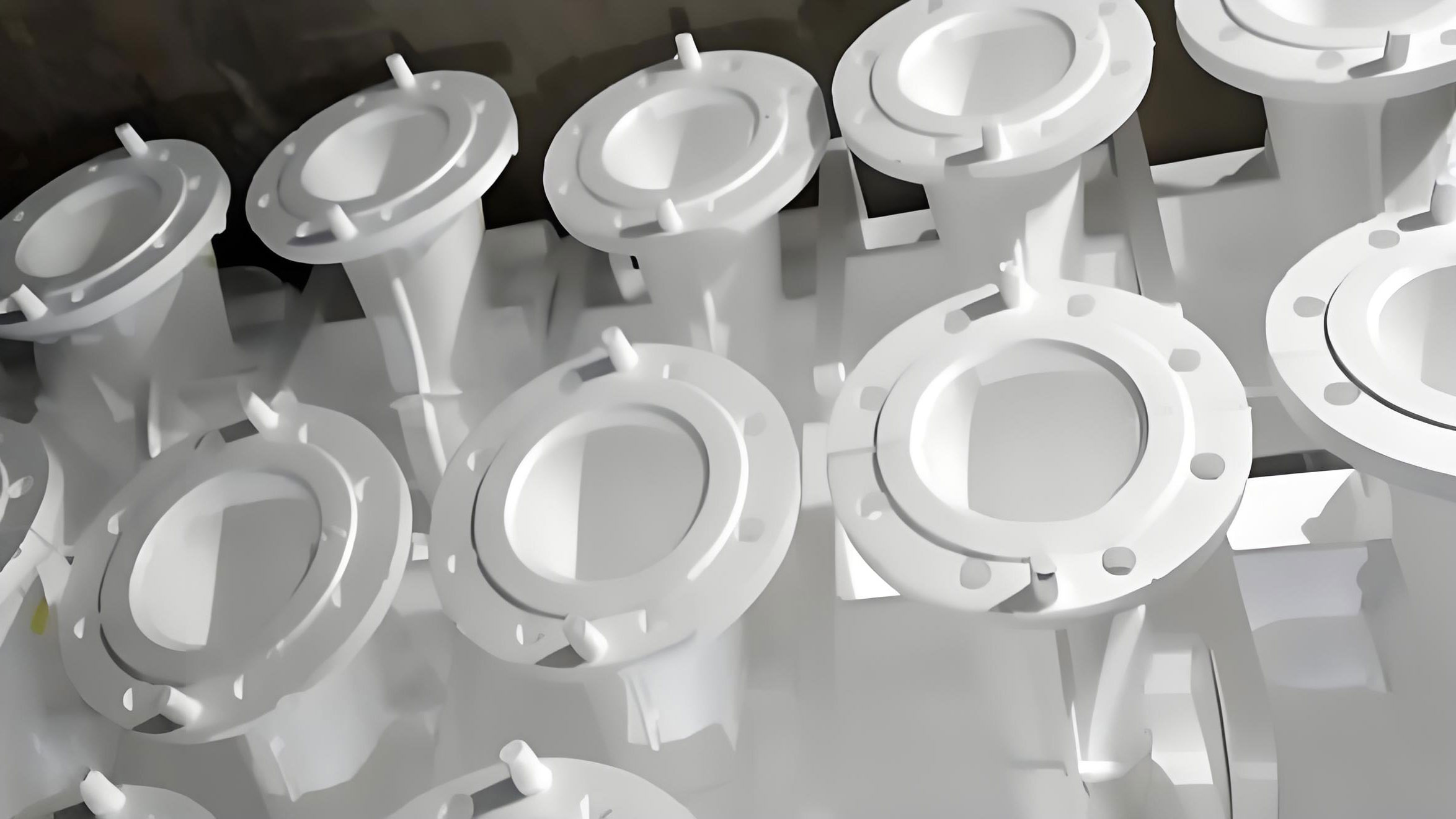
Analysis of the Lost Foam Sand Treatment Process
The primary goal of the sand treatment system in Lost Foam Casting is to restore used sand to its required specification: cool temperature, consistent grain size, minimal fines and dust, and freedom from metallic and non-metallic contaminants. A typical closed-loop sand reclamation system consists of several sequential stages, each with distinct functions and control parameters.
1. Shakeout & Initial Handling: The first step involves separating the cooled casting from the sand mold. The sand, now mixed with lumps, hot clumps, and debris, is discharged from the flask. A controlled feed mechanism regulates the flow of sand into the reclamation stream.
2. Screening/Sieving: The sand passes through vibrating screens or rotary drums to remove large lumps, agglomerated coating particles (“coatings caps”), and oversized debris. This step is crucial for restoring the sand’s granularity and permeability, which directly affect the escape of pyrolysis gases during the Lost Foam Casting pour and the overall quality of the final part.
3. Magnetic Separation: Following screening, the sand undergoes magnetic separation to remove ferrous metallic contaminants. These can originate from spilled metal, broken gates, or runner systems. Removing this material is essential to prevent damage to downstream equipment like pneumatic transporters and sand coolers, and to avoid sand inclusion defects in subsequent castings.
4. Cooling: Perhaps the most critical stage. The sand exiting the casting process can be very hot (often above 150-200°C). Reusing hot sand is detrimental: it can prematurely soften or distort the foam patterns, negatively affect coating integrity, and create poor compaction. Cooling systems, often using forced air (fluidized bed coolers, drum coolers with air flow), bring the sand temperature down to a target range, typically below 50°C. The efficiency of cooling is a major factor in the overall cycle time of the Lost Foam Casting line.
5. Transport, Storage, and Re-Filling: The processed, cool sand is transported via conveyors (belt, bucket elevator, pneumatic) to a storage silo. From there, it is discharged through controlled devices (like rain discharge units) to fill flasks containing the new foam cluster assemblies. This filling is often assisted by vibration (compaction tables) to achieve uniform and dense sand packing around the pattern before applying the vacuum for final tightness.
The entire sand treatment process in Lost Foam Casting is a continuous or batch-loop system where the performance of each unit operation affects the next. The key controlled parameters across these stages are summarized in the table below.
| Process Stage | Primary Function | Key Control Parameters & Metrics |
|---|---|---|
| Shakeout/Feed | Introduce used sand to reclaim line | Feed rate (tons/hour), Lump breaker efficiency |
| Screening | Remove lumps, fines, and coatings | Screen mesh size, Vibration amplitude/frequency, Throughput capacity, Fines content after screening (%) |
| Magnetic Separation | Remove ferrous metals | Magnetic field strength, Material flow rate, Metal removal efficiency (%) |
| Cooling | Reduce sand temperature | Inlet sand temperature (°C), Target outlet temperature (°C), Airflow rate & temperature, Cooling time/residence time, Cooling efficiency (kW/ton cooled) |
| Transport & Storage | Move and hold processed sand | Conveyor speed, Silo level, Sand aeration |
| Filling & Compaction | Fill flask and pack sand around pattern | Fill rate, Vibration frequency & amplitude, Compaction time, Achieved bulk density |
Traditionally, the settings for these parameters are based on standard operating procedures, experience, and paper-based documentation. This approach lacks dynamism; it cannot easily adapt to variations in sand condition (e.g., different coating amounts, moisture from atmospheric humidity) or optimize for changing production demands (e.g., different pattern sizes requiring different cooling loads). A static system often leads to sub-optimal operation, higher energy consumption, and potential quality inconsistencies in the Lost Foam Casting process.
Design of a Sand Treatment Process Management System (STPMS)
To overcome the limitations of manual and static control, a structured Sand Treatment Process Management System (STPMS) based on a central database is proposed. The core idea is to digitize, unify, and intelligently manage all process data, creating a single source of truth that can interact with both human operators and machine controls.
The system architecture is modular, mirroring the physical stages of the sand treatment line for Lost Foam Casting. Each major equipment unit corresponds to a software subsystem within the STPMS.
| Subsystem Module | Core Components | Function |
|---|---|---|
| Shakeout Control Module | Data Interface, Parameter DB, UI | Controls feed rate based on line demand and sand condition. |
| Screening Process Module | Data Interface, Parameter DB, UI | Manages screen settings, monitors fines generation, logs maintenance cycles. |
| Magnetic Separation Module | Data Interface, Parameter DB, UI | Controls magnet power, logs amount of metal removed for wear analysis. |
| Cooling Process Module | Data Interface, Parameter DB, UI | The most critical module. Controls blower speeds, damper positions, sand flow to achieve target temperature. Logs energy consumption. |
| Transport & Storage Module | Data Interface, Parameter DB, UI | Manages conveyor systems, monitors silo levels to prevent overflow/underflow. |
| Filling & Compaction Module | Data Interface, Parameter DB, UI | Controls sand discharge valves and vibration tables for consistent flask filling. |
| Central Database | Relational Database (e.g., SQL) | Stores all historical parameters, setpoints, production logs, and optimized recipes. |
| System Supervisor & UI | Central Server, HMI Software | Provides overview dashboard, alarm management, and manual override capabilities. |
Each module’s Database stores the optimal and historical operational parameters (setpoints) for its corresponding equipment. The Data Interface handles communication with the Physical Layer (PLCs, sensors, actuators) using standard industrial protocols (e.g., OPC UA, Modbus TCP). The User Interface (UI) allows operators to view real-time data, adjust parameters (within limits), and access historical trends.
This structure brings immediate benefits: rapid retrieval of process settings, consistent application of best practices, and seamless data exchange with higher-level plant systems (MES, ERP) or simulation software (CAE). However, a simple database retrieval system is still reactive. The true advancement lies in making the STPMS predictive and self-optimizing through the implementation of a self-learning algorithm.
Development of a Self-Learning Database Core
The static database becomes a limiting factor when sand conditions or production goals change. The solution is to embed a self-learning, optimization engine at the heart of the STPMS. This engine’s purpose is to continuously seek the best combination of process parameters to maximize a defined “process effectiveness” metric for the Lost Foam Casting sand system.
Step 1: Defining the Optimization Objective (Fitness Function)
The system’s performance is evaluated based on multiple, sometimes competing, criteria. We define a comprehensive fitness function \( F \) that quantifies the effectiveness of a single sand treatment cycle:
$$ F = w_1 \cdot \frac{S_g}{S_g^*} + w_2 \cdot \frac{T_{out}}{T_{min}} + w_3 \cdot \frac{E}{E_{min}} + w_4 \cdot \frac{t}{t_{min}} + w_5 \cdot \frac{W}{W_{min}} $$
Where:
- \( S_g \): Achieved sand granularity index (measured, e.g., by AFS Clay Content or sieve analysis). \( S_g^* \) is the target ideal value.
- \( T_{out} \): Actual sand outlet temperature (°C). \( T_{min} \) is the minimum achievable/required temperature.
- \( E \): Energy consumed per ton of sand processed (kWh/ton). \( E_{min} \) is the benchmark minimum energy.
- \( t \): Total cycle time for processing a batch (hours). \( t_{min} \) is the minimum possible time.
- \( W \): Waste sand generated (tons). \( W_{min} \) is the minimum waste.
- \( w_1, w_2, w_3, w_4, w_5 \): Weighting factors that assign importance to each criterion, with \( \sum w_i = 1 \).
A lower value of \( F \) indicates a better, more optimal process outcome—closer to ideal granularity, lower temperature, lower energy, faster time, and less waste.
Step 2: Establishing the Process Parameter Relationship Model
The fitness \( F \) is a function of numerous input variables: both state variables (describing the incoming sand) and control variables (the setpoints we can adjust).
Input State Variables (X): Sand type, Initial temperature (\(T_{in}\)), Moisture content, Fines/Dust load, Metal contaminant level, Reuse cycle count.
Control Variables (U): Screen frequency, Cooler fan speed, Airflow rate, Sand layer thickness in cooler, Transport speed, Vibration time.
Output Performance Metrics (Y): \( S_g, T_{out}, E, t, W \) (which feed into \( F \)).
The relationship \( Y = f(X, U) \) is highly non-linear and complex. This is where a machine learning model is ideal. A modified Backpropagation (BP) Neural Network is trained to act as this function \( f \).
Neural Network Structure: The network has an input layer for \( X \) and \( U \), several hidden layers with activation functions (e.g., ReLU), and an output layer for \( Y \). It is trained on a large historical dataset \( D \) collected from the operational STPMS:
$$ D = \{ (X_1, U_1, Y_1), (X_2, U_2, Y_2), …, (X_n, U_n, Y_n) \} $$
Once trained, this network can accurately predict the outcome \( Y \) for any given input condition \( X \) and control setting \( U \).
Step 3: The Self-Optimization Loop (Algorithm)
With the fitness function \( F \) and the predictive model \( f_{NN} \) (the neural network), we can close the loop. For a new batch of sand with measured state \( X_{current} \), the system’s goal is to find the control settings \( U_{opt} \) that minimize \( F \).
This is formulated as an optimization problem:
$$ \text{Minimize } F(Y) = F(f_{NN}(X_{current}, U)) $$
$$ \text{Subject to: } U_{min} \leq U \leq U_{max} $$
Where \( U_{min} \) and \( U_{max} \) are the operational limits of the equipment.
To solve this, a population-based stochastic algorithm like a Genetic Algorithm (GA) or Differential Evolution (DE) is well-suited, as it can handle non-linear, multi-modal search spaces. The self-learning algorithm works as follows:
- Initialization: Create a population \( P \) of \( NP \) candidate control vectors \( U_i \). These can be drawn from historical good setups stored in the database.
- Evaluation: For each candidate \( U_i \) in the population, use the neural network \( f_{NN} \) to predict the outcome \( Y_i \) given \( X_{current} \). Then compute the fitness \( F_i \) for each candidate.
- Selection: Identify the candidate with the best (lowest) fitness \( F_{best} \) and its corresponding control settings \( U_{best} \).
- Decision: Compare \( F_{best} \) to a threshold \( E_{op} \) (an acceptable performance level derived from experience).
- If \( F_{best} \leq E_{op} \), apply \( U_{best} \) to the physical sand treatment system for the current batch. Record the full result \( (X_{current}, U_{best}, Y_{actual}) \) back into the database \( D \) to retrain and improve \( f_{NN} \) periodically.
- If \( F_{best} > E_{op} \), proceed to evolution.
- Evolution (Mutation & Crossover): Generate a new population by randomly selecting and combining (“crossing over”) control parameters from high-fitness candidates in \( P \), and introducing small random changes (“mutations”) to explore new areas of the parameter space. Return to Step 2.
This loop continues until a satisfactory \( U_{opt} \) is found. Over time, as the database \( D \) grows with more operational data, the neural network model \( f_{NN} \) becomes more accurate, and the algorithm converges to optimal settings faster, creating a truly self-learning and adaptive management system for Lost Foam Casting sand reclamation.
Experimental Validation & System Performance
To validate the efficacy of the proposed self-learning STPMS, a key energy-intensive subsystem—the sand cooling stage—was isolated for testing. The experimental setup used a vertical air-cooling unit for silica sand (20-40 mesh). The system equipped with the STPMS was compared against the same unit running on fixed, standard operational parameters.
Test Condition 1: Varying Sand Throughput at Constant Sand Bed Depth.
Inlet sand temperature was set at ~200°C, with a target outlet of 50°C. The air temperature was 25°C, and the sand layer thickness in the cooler was maintained at 0.05 m. The power consumption was measured at different throughput rates.
| Sand Throughput (t/h) | Power – Standard System (kW) | Power – STPMS (kW) | Energy Saving (%) |
|---|---|---|---|
| 4 | 1.71 | 1.72 | -0.6% (Baseline) |
| 8 | 3.23 | 3.02 | 6.5% |
| 12 | 4.82 | 4.48 | 7.1% |
| 16 | 6.27 | 5.81 | 7.3% |
The results demonstrate a clear advantage of the self-learning system. At the baseline 4 t/h rate, both systems perform similarly as the standard parameters were tuned for this condition. However, as demand increases, the STPMS dynamically adjusts fan speeds, airflow, and perhaps residence time to optimize the cooling efficiency, leading to significant and growing energy savings—over 7% at higher throughputs. This is critical for Lost Foam Casting facilities running near capacity.
Test Condition 2: Varying Sand Bed Depth at Constant Throughput.
Throughput was fixed at 4 t/h, with inlet/outlet targets remaining the same. The sand layer thickness in the cooler was varied, which significantly impacts heat transfer dynamics and pressure drop.
| Sand Layer Thickness (m) | Power – Standard System (kW) | Power – STPMS (kW) | Energy Saving (%) |
|---|---|---|---|
| 0.05 | 1.71 | 1.70 | 0.6% |
| 0.10 | 3.52 | 3.33 | 5.4% |
| 0.15 | 5.48 | 5.23 | 4.6% |
| 0.20 | 7.36 | 7.03 | 4.5% |
Again, the STPMS consistently outperforms the standard system across different operating geometries. By sensing the increased load (thicker sand bed), the self-learning algorithm finds a more efficient operating point than the static setpoints, achieving energy savings of 4-5.5%. This proves the system’s robustness and adaptability to physical changes in the Lost Foam Casting sand line configuration.
Conclusion and Future Outlook
The integration of a database-centric, self-learning management system into the sand treatment loop of a Lost Foam Casting operation marks a significant evolution from empirical, fixed-parameter control towards intelligent, adaptive process optimization. By systematically analyzing each stage of sand reclamation—from shakeout to cooling and refilling—and structuring its parameters within a modular software architecture, the STPMS brings unparalleled organization and accessibility to process data.
The core innovation lies in the implementation of a hybrid data-driven model, combining a neural network for accurate process prediction with an evolutionary algorithm for multi-objective parameter optimization. This enables the system to autonomously seek optimal setpoints that minimize energy consumption, reduce cycle time, and maintain sand quality, even as input conditions and production demands fluctuate.
Experimental validation focusing on the critical cooling stage confirms the tangible benefits: the self-learning STPMS achieves measurable reductions in specific energy consumption (in the range of 4-7%) under varying throughputs and system geometries compared to static control schemes. This translates directly to lower operating costs, a reduced carbon footprint, and potentially higher and more consistent sand quality for the Lost Foam Casting process.
Future development will focus on expanding the system’s intelligence. This includes integrating real-time sand quality sensors (e.g., for granularity and moisture) directly into the feedback loop, implementing predictive maintenance modules based on equipment performance trends within the database, and exploring cloud-based deployment for data aggregation and benchmarking across multiple Lost Foam Casting facilities. Ultimately, the vision is a fully autonomous sand management system that guarantees optimal resource efficiency and casting quality as an integral, intelligent component of the modern Lost Foam Casting foundry.