
As a researcher deeply immersed in the study of ancient metallurgical techniques, I have always been fascinated by the origins and evolution of lost wax investment casting. This method, which involves creating intricate metal objects by using a wax model that is later melted away, has been a subject of intense debate among scholars for decades. The core principle, known as the lost mold principle, revolves around the idea of using a sacrificial material to form a mold cavity, which is then filled with molten metal. In this article, I will explore the historical context, technical details, and modern applications of lost wax investment casting, drawing from both ancient practices and contemporary industrial processes. I will use tables and formulas to summarize key aspects, ensuring a comprehensive understanding of this complex topic.
The origins of lost wax investment casting in ancient civilizations remain shrouded in mystery, with various theories proposed over the years. Some argue that it emerged independently in different regions, while others suggest cultural diffusion. From my perspective, the lost wax investment casting process represents a remarkable convergence of art and science, where the choice of materials—such as wax, clay, and binders—played a crucial role in its development. The principle involves creating a wax model, coating it with a refractory material to form a shell, and then heating it to remove the wax, leaving a mold for casting. This lost wax investment casting technique has evolved significantly, but its fundamental steps retain echoes of ancient methods.
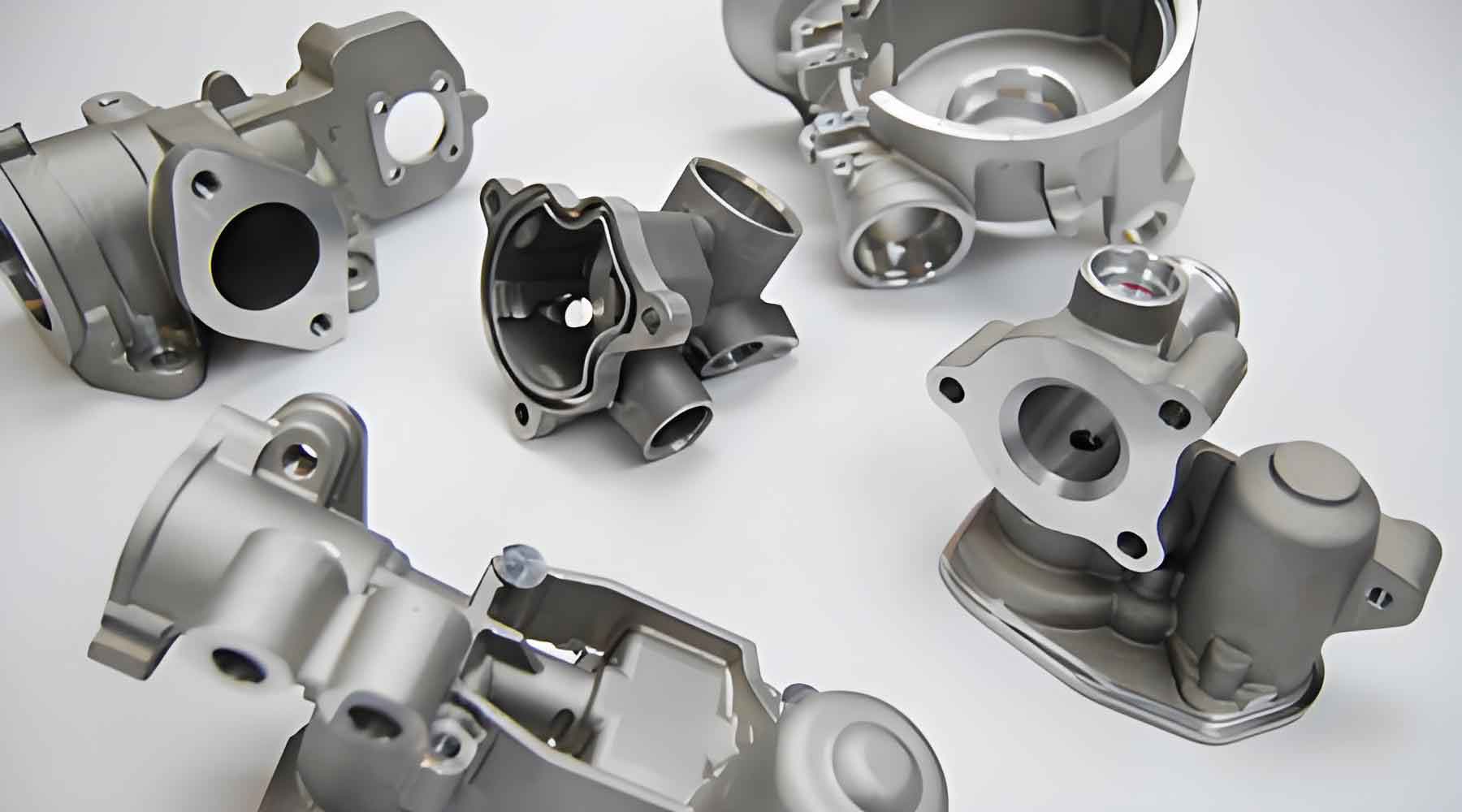
In modern times, lost wax investment casting is widely used in industries like aerospace and jewelry making due to its ability to produce high-precision components. However, as I delved into historical records and conducted experiments, I realized that many aspects of ancient lost wax investment casting are still poorly understood. For instance, the handling of wax materials, the composition of slurries, and the methods for mold removal all present challenges that bridge past and present. Through this article, I aim to shed light on these issues by comparing ancient techniques with contemporary lost wax investment casting processes, using empirical data and theoretical models.
One of the key elements in lost wax investment casting is the wax model preparation. In my experiments, I observed that the wax must be carefully processed to remove impurities. The viscosity of the wax mixture can be described by the formula: $$\eta = \eta_0 e^{E_a / RT}$$ where $\eta$ is the viscosity, $\eta_0$ is a constant, $E_a$ is the activation energy, $R$ is the gas constant, and $T$ is the temperature. This relationship highlights how temperature control is critical in lost wax investment casting to ensure proper flow and detail reproduction. Below is a table summarizing the main steps in wax model preparation:
| Step | Description | Key Parameters |
|---|---|---|
| Wax Melting | Heating wax to a liquid state for injection | Temperature: 90°C, Pressure: 4-6 MPa |
| Injection | Filling molds with wax under pressure | Cooling rate: 8-13°C, Time: 12-14 hours |
| Trimming | Removing imperfections from wax models | Tools: knives, Temperature: 120-130°C for welding |
Another critical phase in lost wax investment casting is the shell building process. The slurry, typically composed of binders like silica sol and refractory powders such as zircon, must be applied in layers to form a robust mold. The thickness of each layer can be modeled using the equation: $$\delta = k \sqrt{t}$$ where $\delta$ is the layer thickness, $k$ is a constant dependent on slurry properties, and $t$ is time. This formula underscores the importance of controlled drying in lost wax investment casting to prevent defects. In ancient times, similar principles might have been applied using natural materials, but the exact compositions remain speculative. The table below outlines the shell building steps:
| Layer Type | Composition | Drying Conditions |
|---|---|---|
| Primary Layer | Silica sol, zircon powder (140 mesh) | Viscosity: 10±2 s, Humidity controlled |
| Secondary Layers | Zircon powder (80-120 mesh), silica sol | Viscosity: 17±2 s, Multiple layers applied |
During my research, I encountered numerous debates about the authenticity of lost wax investment casting in ancient artifacts. For example, some scholars argue that certain bronze objects with intricate patterns could not have been made without lost wax investment casting, while others propose alternative methods like piece molding. From my first-hand experiments, I found that the lost wax investment casting process inherently leaves traces, such as folds or seams, which can be misinterpreted. The formula for stress during dewaxing, $$\sigma = E \alpha \Delta T$$ where $\sigma$ is stress, $E$ is Young’s modulus, $\alpha$ is the coefficient of thermal expansion, and $\Delta T$ is the temperature change, helps explain why cracks may form if not managed properly. This insight is crucial for distinguishing lost wax investment casting from other techniques in archaeological studies.
The integration of modern technology into lost wax investment casting has led to significant advancements, but it also raises questions about the preservation of traditional knowledge. In my view, the lost wax investment casting method is at a crossroads, where automation threatens to erase the手工 elements that defined its historical roots. For instance, the use of automated injection machines vs. hand-sculpting in wax model creation highlights a trade-off between efficiency and artistry. The economic viability of lost wax investment casting can be expressed as: $$C = C_m + C_l + C_e$$ where $C$ is total cost, $C_m$ is material cost, $C_l$ is labor cost, and $C_e$ is energy cost. This equation shows why lost wax investment casting is often reserved for high-value applications, mirroring ancient practices where it was used for prestige items.
In contemporary lost wax investment casting, the dewaxing step involves high-temperature steam at around 300°C to melt the wax without damaging the shell. The heat transfer during this process can be described by Fourier’s law: $$q = -k \nabla T$$ where $q$ is the heat flux, $k$ is thermal conductivity, and $\nabla T$ is the temperature gradient. This principle ensures efficient wax removal, a challenge that ancient craftsmen might have addressed using open fires or hot water, as suggested by some historical reconstructions. The recovery and reuse of wax in lost wax investment casting are also critical; the recycling efficiency can be modeled as: $$\eta_r = \frac{m_r}{m_i} \times 100\%$$ where $\eta_r$ is the recycling efficiency, $m_r$ is the mass of recovered wax, and $m_i$ is the initial mass. This aspect is often overlooked in historical analyses but is essential for sustainable lost wax investment casting practices.
Moreover, the role of core materials in lost wax investment casting cannot be overstated. In complex geometries, cores made of ceramic or sand are used to form internal cavities. The strength of these cores can be approximated by the formula: $$\sigma_c = A e^{-B t}$$ where $\sigma_c$ is the core strength, $A$ and $B$ are constants, and $t$ is time. This decay in strength must be managed to prevent collapse during casting, a problem that ancient artisans might have solved using organic binders. The table below compares ancient and modern core materials in lost wax investment casting:
| Era | Core Materials | Advantages |
|---|---|---|
| Ancient | Clay, sand, organic fibers | Natural availability, low cost |
| Modern | Ceramic, zircon, silica | High strength, precision |
As I reflect on the evolution of lost wax investment casting, I am struck by the persistent challenges in scaling the process for large objects. The stress distribution in large molds can be analyzed using the von Mises criterion: $$\sigma_v = \sqrt{ \frac{(\sigma_1 – \sigma_2)^2 + (\sigma_2 – \sigma_3)^2 + (\sigma_3 – \sigma_1)^2}{2} }$$ where $\sigma_v$ is the von Mises stress, and $\sigma_1$, $\sigma_2$, $\sigma_3$ are principal stresses. This formula helps in designing molds that withstand thermal shocks during lost wax investment casting. Historically, this might have limited the size of cast objects, but modern simulations allow for optimization.
In conclusion, lost wax investment casting is a testament to human ingenuity, bridging millennia of technological progress. Through my research, I have come to appreciate the delicate balance between tradition and innovation in this field. The lost wax investment casting process, with its intricate steps and material considerations, continues to inspire new applications while preserving its historical essence. As we move forward, it is imperative to document and study these techniques to ensure that the principles of lost wax investment casting are not lost to time. The formulas and tables presented here serve as a foundation for further exploration, highlighting the enduring relevance of lost wax investment casting in both academic and industrial contexts.
Finally, the environmental impact of lost wax investment casting warrants attention. The emission of volatile organic compounds during dewaxing can be quantified by: $$E = k \int C(t) dt$$ where $E$ is total emissions, $k$ is a rate constant, and $C(t)$ is concentration over time. This emphasizes the need for greener alternatives in lost wax investment casting, such as water-based slurries or biodegradable waxes. By addressing these challenges, lost wax investment casting can continue to evolve as a sustainable and precise manufacturing method, honoring its rich heritage while embracing the future.