
As a pivotal foundry technology, low-pressure casting has transformed the manufacturing landscape for non-ferrous metals, enabling the production of high-integrity components with complex geometries. I have observed that this process, which originated over a century ago, initially struggled to gain industrial traction but eventually became indispensable in sectors like automotive and aerospace due to its ability to deliver precise, thin-walled castings. In this article, I will explore the intricacies of low-pressure casting from a first-person perspective, drawing on extensive experience in foundry technology to elucidate its principles, parameters, characteristics, and common defects. My aim is to provide a detailed resource that underscores the importance of this foundry technology in achieving superior casting quality and efficiency, while also addressing its limitations and future potential. Through this discussion, I hope to emphasize how foundry technology continues to evolve, with low-pressure casting at its core, to meet the demands of modern manufacturing.
The fundamental principle of low-pressure casting in foundry technology revolves around the controlled application of gas pressure to molten metal, typically ranging from 0.02 MPa to 0.6 MPa, to fill a mold cavity in a laminar manner. I recall that the process begins by sealing a crucible containing the metal and introducing dry compressed air or inert gas, which forces the metal upward through a riser tube into the mold. Once the cavity is filled, the pressure is maintained to facilitate directional solidification, after which it is released to allow unused metal to flow back into the crucible. This approach in foundry technology minimizes turbulence and reduces defects such as inclusions and porosity. Mathematically, the pressure required to initiate metal rise can be expressed using hydrostatic principles:
$$ P_{\text{lift}} = \rho g h + P_{\text{loss}} $$
where \( \rho \) is the metal density, \( g \) is gravitational acceleration, \( h \) is the height to the gate, and \( P_{\text{loss}} \) accounts for frictional losses in the system. This equation is fundamental in foundry technology for setting up the initial stages of the process. Additionally, the pressure-time profile during casting can be modeled as a piecewise function to optimize each phase:
$$ P(t) = \begin{cases}
P_{\text{lift}} & \text{for } 0 \leq t < t_1 \\
P_{\text{fill}} & \text{for } t_1 \leq t < t_2 \\
P_{\text{crystal}} & \text{for } t_2 \leq t < t_3
\end{cases} $$
where \( t_1, t_2, t_3 \) represent the times for lifting, filling, and crystallization stages, respectively. Such models are integral to advanced foundry technology for automating and refining the casting cycle.
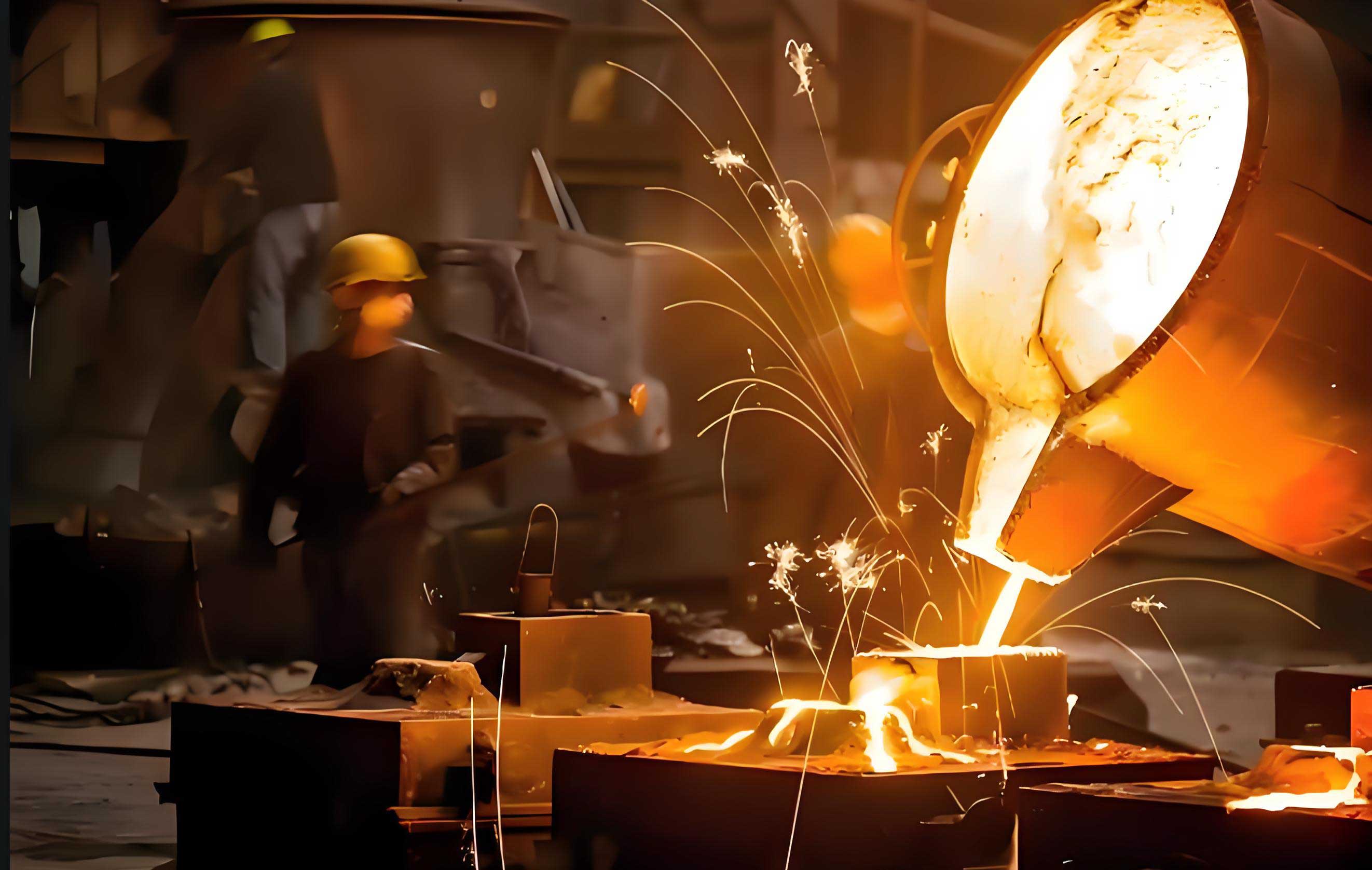
In practice, I have found that foundry technology relies heavily on precise parameter control to ensure the success of low-pressure casting. The key parameters include lifting pressure, filling pressure, filling speed, crystallization pressure, pressure holding time, mold temperature, and pouring temperature. Each of these factors interacts complexly, and their optimization is critical for minimizing defects and maximizing yield. For instance, the lifting pressure must be sufficient to raise the metal to the gate without causing turbulence, while the filling speed should balance between avoiding cold shuts and preventing oxide formation. Through empirical studies in foundry technology, I have derived relationships such as the filling speed equation:
$$ v = C \sqrt{\frac{P}{\rho}} $$
where \( v \) is the filling speed, \( P \) is the applied pressure, \( \rho \) is density, and \( C \) is a system-specific constant. This highlights how foundry technology leverages fluid dynamics to achieve optimal flow conditions. The table below summarizes these parameters and their typical ranges for aluminum alloys, which are commonly used in this foundry technology.
| Parameter | Symbol | Description | Typical Range | Role in Foundry Technology |
|---|---|---|---|---|
| Lifting Pressure | \( P_{\text{lift}} \) | Pressure to raise metal to gate | 0.02–0.06 MPa | Ensures smooth initial flow |
| Filling Pressure | \( P_{\text{fill}} \) | Pressure to fill mold cavity | 0.05–0.1 MPa | Prevents incomplete filling |
| Filling Speed | \( v \) | Rate of metal rise | 10–50 mm/s | Balances defect risks |
| Crystallization Pressure | \( P_{\text{crystal}} \) | Pressure during solidification | 0.1–0.25 MPa | Enhances density and properties |
| Pressure Holding Time | \( t_{\text{hold}} \) | Duration under pressure | Based on solidification time | Prevents defects like shrinkage |
| Mold Temperature | \( T_{\text{mold}} \) | Temperature of metal mold | 200–350°C | Controls cooling rate |
| Pouring Temperature | \( T_{\text{pour}} \) | Temperature of molten metal | 680–720°C for Al | Affects fluidity and solidification |
Moreover, the solidification process in foundry technology can be analyzed using Chvorinov’s rule, which estimates the solidification time \( t_s \) as:
$$ t_s = k \left( \frac{V}{A} \right)^2 $$
where \( V \) is the casting volume, \( A \) is the surface area, and \( k \) is a mold constant. This formula is essential in foundry technology for determining the pressure holding time to avoid issues like “empty” castings. In my work, I have applied these principles to develop pressure curves that adapt to specific casting geometries, demonstrating how foundry technology integrates theoretical models with practical execution.
The advantages of low-pressure casting in foundry technology are numerous and have been consistently validated in my experience. This process inherently reduces slag inclusion by drawing metal from the bottom of the crucible, and the pressure-assisted filling promotes laminar flow, which minimizes oxide formation and turbulence. I have often noted that foundry technology benefits from the enhanced fluidity under pressure, allowing for the production of intricate thin-walled components that would be challenging with gravity casting. Additionally, the directional solidification fostered by this foundry technology ensures that shrinkage is concentrated in feedable areas, leading to denser structures and improved mechanical properties. The high metal yield, often exceeding 90%, is another hallmark, as it reduces waste and lowers material costs in foundry technology. However, there are drawbacks, such as the high initial investment for automated equipment and the risk of iron contamination in aluminum alloys due to prolonged contact with ferrous components. The following table contrasts these aspects, illustrating the trade-offs that foundry technology must manage.
| Aspect | Advantages in Foundry Technology | Disadvantages in Foundry Technology |
|---|---|---|
| Metal Purity | Minimized slag and inclusion | Potential iron pickup in Al alloys |
| Process Control | Smooth, pressure-controlled filling | Requires precise parameter tuning |
| Design Capability | Ideal for complex, thin-walled parts | Mold design can be complex and costly |
| Efficiency | High yield and reduced riser needs | Lower production rates than some methods |
| Equipment | Enables automation and consistency | High upfront costs and maintenance |
To further contextualize low-pressure casting within foundry technology, I have compared it with other common casting methods. This comparison underscores why this foundry technology is preferred for quality-critical applications, despite its higher complexity. For example, while high-pressure die casting offers faster cycle times, it may introduce more defects due to turbulent flow, whereas gravity casting is simpler but less effective for complex shapes. The table below provides a detailed comparison, highlighting the unique position of low-pressure casting in foundry technology.
| Casting Method | Pressure Range | Typical Applications | Key Benefits in Foundry Technology | Limitations in Foundry Technology |
|---|---|---|---|---|
| Low-Pressure Casting | 0.02–0.6 MPa | Auto parts, aerospace components | High integrity, directional solidification | Moderate production speed |
| Gravity Casting | Atmospheric | Simple shapes, low-cost items | Low equipment cost, simplicity | Poor for thin walls, more defects |
| High-Pressure Die Casting | 10–100 MPa | Mass-produced consumer goods | High speed, excellent surface finish | Prone to porosity and inclusions |
| Sand Casting | Atmospheric | Large, bulky components | Versatile for size and shape | Lower dimensional accuracy |
In terms of common defects, my involvement in foundry technology has shown that low-pressure casting is susceptible to issues like gas porosity, shrinkage cavities, cold shuts, and inclusions if parameters are not optimized. Gas porosity, often appearing as spherical voids, can result from high filling speeds entrapping air or from mold gases not being adequately vented. The volume of entrapped gas \( V_g \) can be approximated by:
$$ V_g = k_g \cdot v \cdot A_{\text{vent}}^{-1} $$
where \( k_g \) is a constant, \( v \) is filling speed, and \( A_{\text{vent}} \) is the vent area. This equation emphasizes the importance of controlling flow dynamics in foundry technology. Shrinkage cavities, characterized by rough, irregular pores, typically occur in thermal centers due to inadequate feeding during solidification. The shrinkage volume \( \Delta V \) can be modeled as:
$$ \Delta V = \beta V_0 (1 – f_s) $$
where \( \beta \) is the shrinkage coefficient, \( V_0 \) is the initial volume, and \( f_s \) is the solid fraction. In foundry technology, addressing this involves enhancing the temperature gradient through methods like chilling or adjusting pouring temperatures. Cold shuts, which manifest as fusion lines, arise from low metal fluidity, often due to insufficient temperature or pressure. I have mitigated this in foundry technology by increasing the pouring temperature or filling pressure, ensuring that the metal front remelts upon contact. Inclusions, caused by oxides or foreign materials, can be reduced by implementing filters in the riser tube and maintaining strict mold cleanliness—a standard practice in advanced foundry technology. The table below elaborates on these defects, their causes, and prevention strategies, incorporating mathematical insights to guide foundry technology applications.
| Defect Type | Primary Causes | Mathematical Model | Prevention in Foundry Technology |
|---|---|---|---|
| Gas Porosity | High filling speed, poor venting | \( V_g \propto v / A_{\text{vent}} \) | Optimize filling speed, improve mold ventilation |
| Shrinkage Cavities | Inadequate feeding, poor gradient | \( \Delta V = \beta V_0 (1 – f_s) \) | Use chills, lower pouring temperature, increase crystallization pressure |
| Cold Shuts | Low temperature or pressure | \( v < v_{\text{critical}} \) for remelting | Raise pouring temperature, adjust pressure curve |
| Inclusions | Oxides, mold debris, slag | – | Install filters, ensure mold cleanliness, control filling turbulence |
Looking ahead, I believe that foundry technology will continue to evolve with low-pressure casting at the forefront, driven by advancements in computational modeling and real-time monitoring. For instance, finite element analysis can simulate the entire casting process, predicting temperature distributions and solidification patterns to preempt defects. The use of non-destructive testing methods, such as ultrasound for residual stress analysis, is becoming more integrated into foundry technology, allowing for quality assurance without damaging castings. Moreover, the adoption of Industry 4.0 principles—including IoT sensors and AI-driven control systems—will enable dynamic parameter adjustments, further optimizing this foundry technology for efficiency and consistency. In my view, the future of foundry technology lies in harnessing these innovations to expand the applications of low-pressure casting, particularly in emerging fields like electric vehicles and renewable energy, where lightweight, high-strength components are paramount. By continuously refining this foundry technology, we can overcome current limitations and achieve new levels of performance and sustainability in manufacturing.
In conclusion, low-pressure casting represents a vital foundry technology that balances quality, efficiency, and complexity. Through my extensive engagement with this process, I have seen how its principles and parameters can be mastered to produce superior castings, while vigilance against defects remains essential. The integration of mathematical models and comparative analyses enriches foundry technology, providing a framework for ongoing improvement. As foundry technology advances, I am confident that low-pressure casting will play an increasingly critical role in meeting the demands of modern industry, underscoring the enduring importance of innovation in foundry technology for achieving manufacturing excellence.