
The pursuit of advanced materials for demanding industrial applications has led to the widespread adoption of high-chromium white cast iron. This alloy is renowned for its exceptional wear resistance, a direct result of a dense network of hard, chromium-rich carbides (M7C3) embedded within a matrix that can range from pearlitic to fully martensitic. The typical hardness of this white cast iron material falls within the formidable range of 58 to 65 HRC. Its primary application domain spans industries where abrasion is the dominant failure mode, such as mining (e.g., slurry pump impellers, crusher liners), cement production, power generation, and heavy engineering machinery.
However, these very properties that make white cast iron so valuable in service render it exceptionally difficult to machine using conventional tooling. Traditional cemented carbide tools suffer from rapid abrasive and adhesive wear, leading to unacceptably short tool life and unstable machining processes. Ceramic tools, while harder, often lack the necessary toughness to withstand the intermittent cutting forces and thermal shocks common when machining cast components, resulting in catastrophic fracture or chipping. This machining challenge necessitates the use of ultra-hard cutting tool materials, among which Polycrystalline Cubic Boron Nitride (PCBN) has emerged as the most effective and economically viable solution for turning and milling operations on hardened white cast iron.
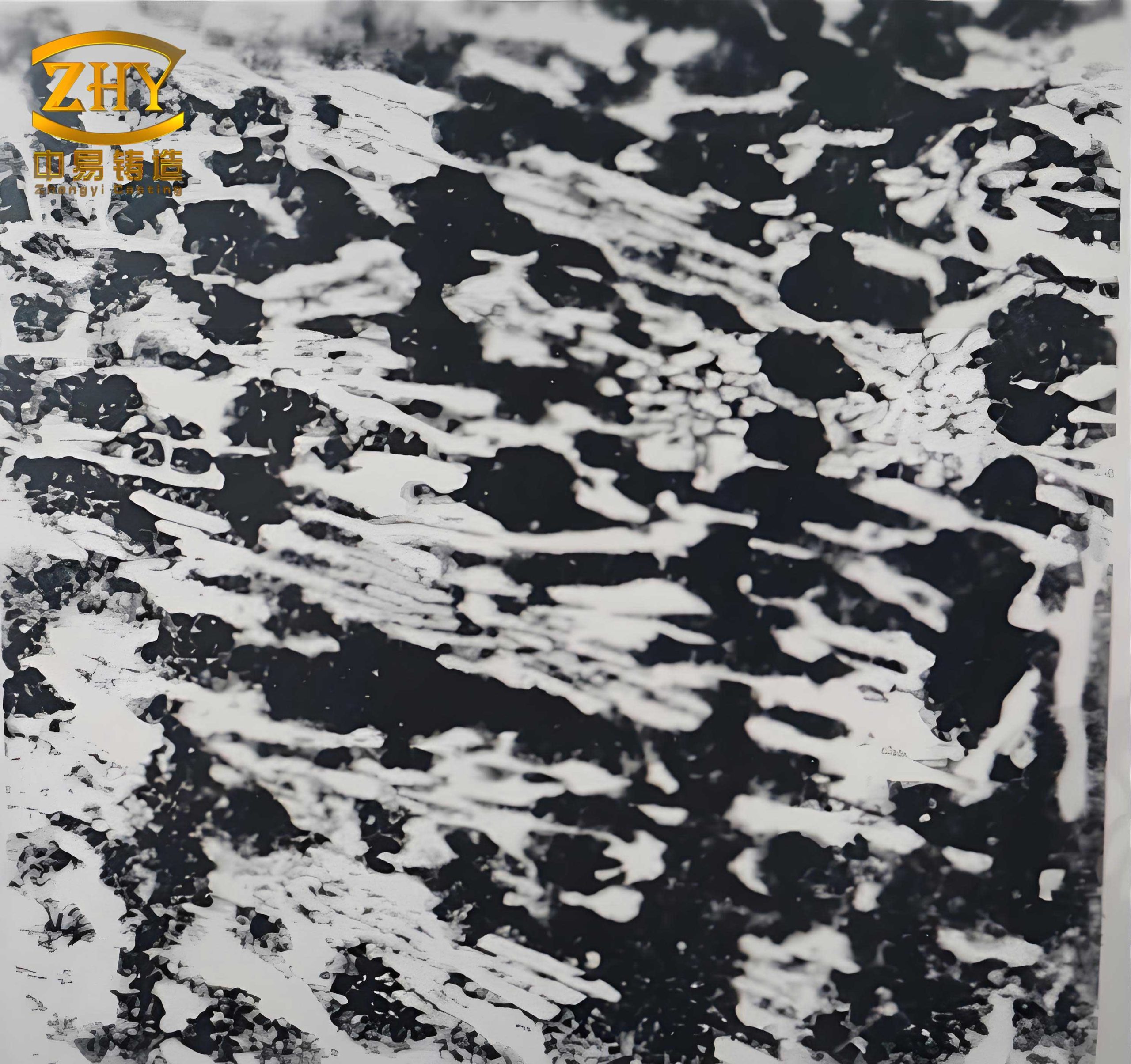
PCBN compacts are synthesized under high pressure and high temperature (HPHT) conditions, bonding micron-sized CBN crystals together with a ceramic or metallic binder phase. This structure grants PCBN tools a unique combination of properties critical for machining white cast iron: extreme hardness (second only to diamond), high thermal conductivity to dissipate heat from the cutting zone, excellent chemical inertness that minimizes diffusion wear with iron-based materials, and superior thermal stability allowing operation at temperatures where most tools fail. The successful application of PCBN, however, is not a simple plug-and-play solution; it requires a systematic approach encompassing the correct selection of tool grade, precise optimization of cutting parameters, and meticulous design of tool geometry.
1. Systematic Selection of PCBN Tool Grades
The performance of a PCBN tool in machining white cast iron is profoundly influenced by its material composition and microstructure. Key variables include the volume percentage of CBN, the average CBN grain size, and the nature of the binder phase. These factors collectively determine the tool’s balance between hardness, toughness, wear resistance, and thermal conductivity. Selection is primarily governed by the machining operation (turning vs. milling) and the severity of the cut (roughing vs. finishing, continuous vs. intermittent).
A fundamental classification is based on the depth of cut (ap). For machining white cast iron, operations with ap > 0.5 mm are typically classified as roughing, while those with ap ≤ 0.5 mm are considered finishing. This distinction guides the initial grade choice. In general, both roughing and finishing of white cast iron benefit from PCBN grades with a high CBN content (≥ 80%). Higher CBN content directly correlates with greater abrasion resistance against the hard carbides present in the white cast iron workpiece.
The following tables provide a generalized framework for PCBN grade selection. The “Priority Grade” indicates the recommended first choice for the given condition.
| Machining Operation | Cutting Condition | Priority Grade | Alternative Grade |
|---|---|---|---|
| Turning | Continuous / Light Intermittent | High-CBN, Medium-Grain | High-CBN, Fine-Grain |
| Heavy Intermittent | High-CBN, Fine-Grain | High-CBN, Medium-Grain | |
| Milling | Continuous / Light Intermittent | High-CBN, Fine-Grain | High-CBN, Medium-Grain |
| Heavy Intermittent | High-CBN, Fine-Grain | — |
| Machining Operation | Cutting Condition | Priority Grade | Alternative Grade |
|---|---|---|---|
| Turning | Continuous / Light Intermittent | High-CBN, Fine-Grain | High-CBN, Medium-Grain |
| Heavy Intermittent | High-CBN, Fine-Grain | — | |
| Milling | All Conditions | High-CBN, Fine-Grain | — |
| Threading / Grooving | — | High-CBN, Fine-Grain | High-CBN, Medium-Grain |
The underlying rationale connects microstructure to function. Fine-grained PCBN grades offer higher toughness and better edge security, making them indispensable for intermittent cuts (like milling) and finishing operations where edge integrity is paramount for surface quality. Medium-grained grades, while slightly less tough, may offer marginally better abrasion resistance in stable, high-volume roughing scenarios. The binder phase, often based on TiN, Al, or ceramic compounds, influences thermal stability and chemical wear resistance. For instance, a TiN-based binder can enhance resistance to diffusion when machining ferrous materials like white cast iron.
The effective cutting time or tool life (T) can be empirically related to the cutting speed (Vc) using Taylor’s tool life equation, adapted for PCBN tools machining hard materials:
$$ V_c \cdot T^n = C $$
where ‘n’ is the Taylor exponent (typically very low for PCBN, e.g., 0.1-0.3, indicating low sensitivity of tool life to speed changes), and ‘C’ is a constant dependent on the specific tool-workpiece pair, feed, depth of cut, and critically, the PCBN grade. Selecting a grade with higher abrasion resistance effectively increases the ‘C’ value for a given set of conditions.
2. Optimization of Cutting Parameters
Optimal machining of white cast iron with PCBN tools hinges on parameter selection that leverages the tool’s strengths while mitigating its limitations. Unlike machining softer steels, the strategy does not prioritize maximizing cutting speed. Instead, the goal is to achieve a stable, productive process that ensures predictable tool wear and economic viability. The general principle is to use a cutting speed significantly higher than that used with carbide (to promote thermal softening of the workpiece material just ahead of the tool) but often lower than that used for ceramics (to manage thermal and mechanical shock). The feed rate should be relatively high to ensure the cut is made below any decarburized or uneven casting skin and to promote chip formation via fracture rather than plastic deformation, which reduces cutting forces and heat generation.
The following parameter ranges serve as a robust starting point for machining typical high-chromium white cast iron (55-65 HRC).
| Operation | Condition | Cutting Speed, Vc (m/min) | Feed, f (mm/rev or mm/tooth) | Depth of Cut, ap (mm) |
|---|---|---|---|---|
| Turning | Roughing | 60 – 90 | 0.20 – 0.35 | 1.0 – 4.0 |
| Finishing | 80 – 120 | 0.10 – 0.25 | 0.1 – 0.5 | |
| Milling | Roughing | 100 – 180 | 0.10 – 0.20 | 1.0 – 3.0 |
| Finishing | 150 – 250 | 0.05 – 0.15 | 0.1 – 0.5 |
The specific cutting force (kc), a critical parameter for power calculation, is exceptionally high for white cast iron. An approximate model can be used for estimation:
$$ k_c \approx k_{c1} \cdot a_p^{z} \cdot f^{y} $$
where kc1 is the specific cutting force for ap=1 mm and f=1 mm/rev (a very high value for hardened white cast iron, often in the range of 3000-5000 N/mm²), and ‘z’ and ‘y’ are negative exponents (typically around -0.15 and -0.3, respectively). This relationship underscores why a moderately high feed is beneficial: it reduces the specific cutting force, lowering the mechanical load on the PCBN cutting edge. The main cutting force (Fc) can then be estimated as:
$$ F_c = k_c \cdot a_p \cdot f $$
The heat generated in the primary shear zone (Qs) is a function of this force and speed:
$$ Q_s \approx F_c \cdot V_c $$
PCBN’s high thermal conductivity helps divert a significant portion of this heat into the chip, protecting the workpiece surface integrity and the tool itself. Dry machining is almost always recommended for PCBN tools on white cast iron to avoid thermal cracking caused by coolant quenching of the hot tool tip.
3. Tool Geometry and Edge Preparation
The geometry and condition of the cutting edge are non-negotiable factors for success in machining white cast iron. A poorly prepared edge will fracture immediately under the high stresses involved. The design philosophy centers on maximizing edge strength and promoting favorable stress distributions.
3.1 Geometry for Roughing
The standard geometry for roughing operations employs a strong, negative rake angle (γo = -5° to -7°). This configuration puts the cutting edge in compression, dramatically increasing its load-bearing capacity. This negative rake is universally combined with a controlled chamfer, or honed edge. The chamfer (bγ = 0.1 – 0.3 mm, γo1 = -15° to -25°) acts as a reinforced support for the sharp cutting edge behind it, preventing micro-chipping. A final edge hone (rε = 0.02 – 0.05 mm) is applied to remove microscopic imperfections and further increase fracture resistance. The clearance angle (αo) is typically kept small (5°-7°) to maintain a robust wedge angle. For extremely heavy interrupted cuts (e.g., milling a heavily scaled casting), the chamfer width can be increased to 0.4 mm or more to absorb higher impact forces.
3.2 Geometry for Finishing
Finishing geometries also rely on negative rake angles and honed edges to ensure edge stability and predictable flank wear progression. The chamfer may be slightly smaller than in roughing. A critical exception is in threading or form turning operations, where maintaining the precise tool profile is mandatory. In these cases, a zero-degree rake angle is used, but the cutting edge must still be protected with a dedicated honing process to prevent premature failure when engaging the hard white cast iron.
The effective rake angle (γeff) experienced by the material during cutting, considering a chamfer, is more negative than the nominal rake and can be approximated for planning purposes. The edge strength (S) can be conceptually related to the wedge angle (βo) and the hone radius:
$$ S \propto \frac{1}{\sin(\beta_o)} \cdot \log(r_ε) $$
$$ \text{where } \beta_o = 90^\circ – |\gamma_o| – \alpha_o $$
This simplified relation highlights why a large wedge angle (from negative rake and small clearance) and a honed edge are crucial for machining the abrasive white cast iron.
4. Application Insights and Process Considerations
The theoretical framework comes to life in practical applications. Consider the machining of a slurry pump casing or a crusher liner made of high-chromium white cast iron (~25% Cr, 59-62 HRC). The casting skin is often harder and more abrasive than the bulk material. Therefore, the first rule is to set a depth of cut that fully penetrates this skin, ensuring the PCBN edge engages the more uniform material beneath. Interruptions (e.g., from cast holes, gaps, or uneven surfaces) are the primary adversary of tool life. Process planning should aim to minimize these where possible, or alternatively, select the toughest, fine-grained PCBN grade and use a robust geometry with a wide chamfer.
In a typical rough turning operation on such a component, using a high-CBN, fine-grained grade, parameters like Vc = 75 m/min, f = 0.28 mm/rev, and ap = 3.0 mm would be expected to deliver stable, productive metal removal with flank wear as the dominant, predictable failure mode. Switching to a finishing pass with Vc = 100 m/min, f = 0.15 mm/rev, and ap = 0.3 mm should produce a good surface finish with minimal tool wear extension.
Tool wear progression when machining white cast iron is primarily abrasive, leading to gradual flank wear (VB). The wear rate can be modeled in relation to the hardness of the workpiece (H) and a material-dependent abrasiveness factor (Kab):
$$ \frac{d(VB)}{dt} \propto V_c \cdot f^{x} \cdot a_p^{y} \cdot (K_{ab} \cdot H) $$
Monitoring flank wear (VB) is crucial. For roughing, a wear land of 0.3-0.4 mm is often acceptable. For finishing, it should be limited to 0.1-0.15 mm to maintain dimensional accuracy and surface finish. Catastrophic failure is rare with well-applied PCBN but can occur due to excessive intermittent loading or hidden defects in the casting.
5. Discussion and Future Perspectives
PCBN technology has fundamentally enabled the efficient machining of high-chromium white cast iron, transforming it from a “near-unmachinable” material to one that can be productively shaped and finished. The economic argument is compelling: while the initial cost per cutting edge is higher than carbide, the dramatic increase in tool life, cutting speeds, and process reliability results in a lower cost per part and higher overall equipment effectiveness. The ability to machine hardened castings to net or near-net shape also eliminates or reduces subsequent grinding operations, streamlining the manufacturing process.
Future developments are likely to focus on further tailoring PCBN grades for specific challenges posed by white cast iron. This includes the development of multi-layered or functionally graded PCBN compacts, where a tougher subsurface supports an ultra-wear-resistant surface layer. The integration of advanced coatings (like AlCrN) on PCBN substrates is another promising avenue to further reduce friction and adhesion. Furthermore, the rise of data-driven machining and process monitoring will allow for the real-time optimization of cutting parameters based on acoustic emission or force signals, maximizing tool life when machining variable-quality castings of white cast iron.
In conclusion, the successful machining of high-chromium white cast iron is a paradigm of matching an advanced cutting tool material to a extreme application. It requires a holistic understanding of the PCBN tool’s microstructure, a disciplined approach to parameter selection centered on stability rather than sheer speed, and a meticulous focus on creating and maintaining a strong, well-prepared cutting edge. When these elements are aligned, PCBN tools unlock the full manufacturing potential of this critically important wear-resistant material, delivering performance and economy unattainable by any other cutting technology.