
In my decades-long career specializing in precision casting, the production of large, structurally critical components from high-strength aluminum alloys using the lost wax casting process has been a central and challenging pursuit. This narrative details my first-hand experience and the systematic approach developed to overcome the significant hurdles associated with a specific large conical casting made from ZL205A alloy. The journey from low yield and inconsistent performance to a reliable, high-quality manufacturing process underscores the intricate interplay between alloy metallurgy, foundry practice, and thermal treatment within the realm of lost wax casting.
The lost wax casting process, renowned for its ability to produce complex, near-net-shape parts with excellent surface finish and dimensional accuracy, was the indispensable choice for this component. However, the very attributes of the ZL205A alloy that make it desirable for high-stress aerospace applications—such as landing gear components, missile fins, and structural frames—also make it notoriously difficult to cast. My initial production runs were plagued by a host of defects, leading to an X-ray inspection pass rate of merely 14% and mechanical properties that barely met the minimum specifications, with only 20% of samples achieving a tensile strength above 470 MPa and 10% reaching an elongation over 3%. Through rigorous analysis and iterative refinement of every step in the lost wax casting sequence, these metrics were dramatically improved to 90%, 92%, and 93%, respectively.
The ZL205A alloy is an Al-Cu system alloy developed for maximum strength. Its chemical composition is complex and must be controlled within very narrow limits, as outlined in Table 1. The pursuit of high strength through multi-element alloying comes at the cost of castability. The alloy has a wide freezing range, poor fluidity, high shrinkage, and a pronounced tendency for hot tearing, segregation, and porosity. Controlling impurity levels, especially iron, is critical, as excess Fe leads to the formation of brittle intermetallic phases that severely degrade ductility and fatigue resistance.
| Element | Cu | Mn | Ti | Cd | V | Be | Al |
|---|---|---|---|---|---|---|---|
| Content | 4.6-5.3 | 0.3-0.5 | 0.15-0.35 | 0.15-0.25 | 0.05-0.30 | 0.005-0.060 | Bal. |
The target component was a large conical structure with an outer diameter ranging from 200 mm to 387 mm and a height of 520 mm. Its wall thickness varied significantly, from a mere 3.8 mm to a hefty 37.5 mm, and it featured four equally spaced radial ribs that were primary load-bearing elements. This geometry, typical of parts made via lost wax casting, presented classic foundry challenges: thermal gradients, differential solidification, and stress concentration at junctions. The initial gating and risering system for the lost wax casting process employed a bottom and side gating arrangement with a central sprue and four vertical gates connected to the part via slit gates. To mitigate turbulence and metal impingement in a gravity-poured lost wax casting process, a serpentine spruce was incorporated. The entire ceramic shell cluster stood approximately 750 mm tall.
The initial production phase revealed several chronic issues inherent to lost wax casting of this alloy and geometry. Segregation manifested in thin sections, while shrinkage porosity and micro-cracks consistently appeared at the root of the four ribs (the junction between the thick hub and thinner rib). Non-metallic inclusions (slag) were prevalent throughout the castings, attributed to both melt handling and the long metal travel distance within the mold. Perhaps most critically, widespread gas porosity (pinholes) was detected via radiography, and the mechanical properties of both separately cast test bars and cast-on coupons were unacceptably low and erratic.
My strategy for rectification was holistic, addressing the entire chain of the lost wax casting process: raw material control, melting and purification, mold design, pouring practice, and post-casting heat treatment. The first and non-negotiable step was raw material fidelity. We strictly used primary aluminum ingots, master alloys, and limited the use of internal returns to less than 30% of the total charge to prevent impurity build-up. Crucible selection is vital in lost wax casting of aluminum alloys sensitive to iron pickup; we exclusively used graphite crucibles to minimize iron contamination from the furnace lining.
The melting and treatment protocol was completely overhauled. The sequence began with charging the preheated graphite crucible with aluminum ingots and returns. After complete melting, the temperature was raised to 700-710°C to add Al-Cu master alloy and cadmium, followed by thorough stirring. Subsequently, the temperature was increased to 740°C for the addition of Al-Ti-B grain refiner. A key innovation was adjusting the refining temperature. Traditional wisdom for aluminum alloys often suggests refining at lower temperatures (700-720°C). However, for the viscous ZL205A melt, I found that a higher refining temperature of 720-740°C significantly improved slag separation and removal efficiency. The refining process itself was intensified. We employed a two-stage degassing and cleaning approach. First, hexachloroethane (C2Cl6) tablets, wrapped in aluminum foil and amounting to 0.5-0.8% of the melt weight, were plunged into the melt using a bell and stirred continuously for 15 minutes. This was immediately followed by rotary degassing with high-purity argon gas. The rotary impeller creates a vortex and shears the argon bubbles into fine dispersions, significantly increasing the surface area for hydrogen diffusion and facilitating the flotation of non-metallic inclusions. The combined effect is described by the enhanced kinetics of hydrogen removal, which can be approximated by:
$$ \frac{dC_H}{dt} = -k A (C_H – C_{H,eq}) $$
where $C_H$ is the instantaneous hydrogen concentration, $k$ is a mass transfer coefficient, $A$ is the total gas-liquid interfacial area (vastly increased by rotary degassing), and $C_{H,eq}$ is the equilibrium solubility. The rotary action also provides intense bulk mixing, effectively combating density-driven segregation of alloying elements like copper and manganese. After refining, the melt was held for 15-20 minutes to allow for slag coalescence and flotation before being skimmed.
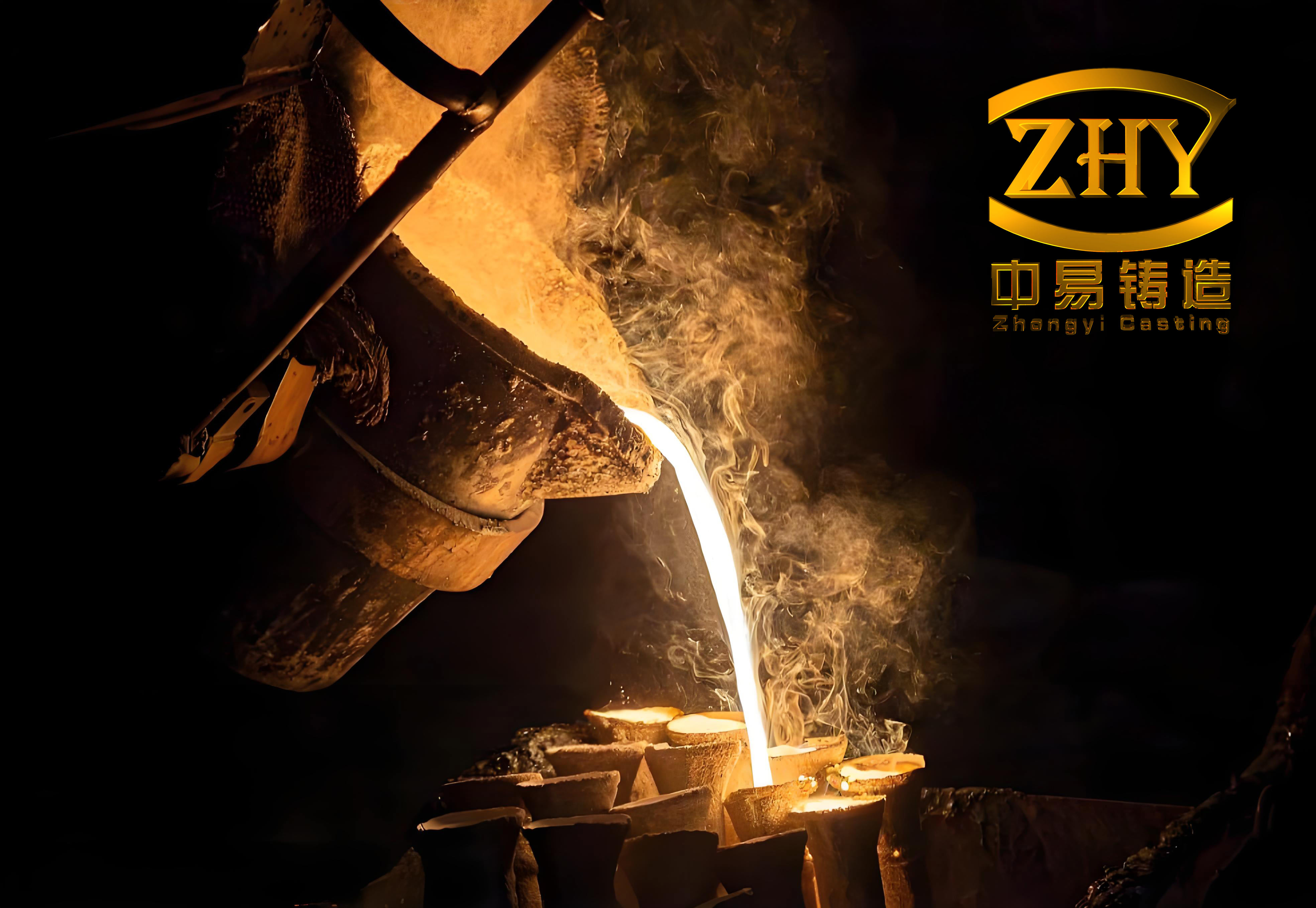
The pouring temperature was another critical parameter optimized for the lost wax casting process. While lower temperatures reduce shrinkage, they increase viscosity and the risk of misruns and slag entrapment. We established an optimal range of 720-730°C, which provided sufficient fluidity for the metal to fill the intricate ceramic shell from the lost wax casting process while keeping volumetric shrinkage manageable. To further combat inclusions, we implemented a dual-stage ceramic foam filter within the gating system of the lost wax casting cluster.
Addressing the specific defect modes required targeted modifications to the lost wax casting mold and process. For the shrinkage at the rib roots, simple external chilling (air or water spray) was inconsistent and could induce cracking. The solution was to redesign the wax pattern to include a strategic “cooling fin” or padding at the thick-thin junction. This padding, which is later removed by machining, effectively modifies the local solidification geometry, promoting directional solidification towards the feeder and eliminating the isolated hot spot. The solidification time $t_f$ for a simple shape can be estimated by Chvorinov’s rule:
$$ t_f = B \left( \frac{V}{A} \right)^n $$
where $V$ is volume, $A$ is surface area, $B$ is a mold constant, and $n$ is an exponent (typically ~2). By adding the padding, we increased the surface area $A$ at the critical junction, thereby reducing $t_f$ and synchronizing it with the surrounding thinner sections, which prevented shrinkage porosity.
To eliminate gas porosity, the enhanced degassing was paramount. Additionally, during the pouring of the lost wax casting, we applied controlled air cooling to the thick sections of the ceramic shell immediately after fill. This accelerated the solidification rate in these regions, reducing the time available for hydrogen bubble nucleation and growth. The critical pressure $P_{cr}$ for pore nucleation is related to the hydrogen supersaturation and surface tension $\gamma$:
$$ P_{cr} \approx \frac{2\gamma}{r} + P_a $$
where $r$ is the nucleus radius and $P_a$ is the ambient pressure. By rapidly increasing the local solid fraction through chilling, the diffusion path for hydrogen atoms to coalesce is curtailed, effectively suppressing pore formation above a critical size.
While achieving sound castings via lost wax casting was a major victory, the mechanical properties remained subpar. This directed our focus to the post-casting heat treatment, which is where the high strength of ZL205A is ultimately developed. The standard T6 treatment for this alloy involves solution heat treatment, quenching, and artificial aging. Our initial properties suggested incomplete solutionizing, insufficient quenching severity, or non-optimal aging. I conducted a series of experiments to map the effects of these parameters. The solution treatment dissolves the soluble secondary phases (like Al2Cu, $\theta$ phase) into the aluminum matrix. The kinetics of dissolution follow an Arrhenius-type relationship:
$$ \frac{dX}{dt} = k (X_{eq} – X) \quad \text{with} \quad k = k_0 \exp\left(-\frac{Q}{RT}\right) $$
where $X$ is the fraction dissolved, $Q$ is the activation energy, and $R$ is the gas constant. We found that using the upper limit of the solution temperature range (540°C) and extending the holding time to 17 hours ensured complete homogenization, especially for the large casting sections produced by lost wax casting. Quenching is a race against time to freeze the supersaturated solid solution. The critical factor is the cooling rate through the temperature range where the solute solubility drops precipitously. We optimized this by ensuring castings were racked individually to avoid thermal shielding, using a water quench bath maintained at a precise 43-45°C to minimize distortion and cracking while maintaining a high cooling rate, and rigorously enforcing a transfer time from furnace to quench of less than 20 seconds. The relationship between quench rate and resulting yield strength $\sigma_y$ can be empirically modeled as:
$$ \sigma_y = \sigma_0 + m \cdot \log(\dot{T}) $$
where $\dot{T}$ is the cooling rate, and $\sigma_0$ and $m$ are material constants. A delay of even 30 seconds could reduce the cooling rate sufficiently to cause significant precipitation of coarse phases during quenching, depleting the matrix and compromising subsequent aging response.
Artificial aging precipitates fine, coherent dispersoids (like $\theta’$ and $\theta”$) that impart strength. The aging curve for ZL205A exhibits a classic peak-aged condition. We determined that aging at 175°C for 5.5 to 6.0 hours consistently yielded the peak strength and a good balance with ductility. The growth kinetics of these strengthening precipitates can be described by the Lifshitz-Slyozov-Wagner theory for Ostwald ripening, where the average precipitate radius $\bar{r}$ increases with time $t$:
$$ \bar{r}^3 – \bar{r}_0^3 = \frac{8 \gamma D C_\infty V_m}{9RT} t $$
where $\gamma$ is interfacial energy, $D$ is diffusivity, $C_\infty$ is equilibrium solubility, and $V_m$ is molar volume. Over-aging beyond the peak occurs as precipitates coarsen, losing coherency and reducing strengthening efficacy. The optimized parameters are summarized in Table 2, contrasting the initial and final practices.
| Process Parameter | Initial Practice | Optimized Practice | Rationale |
|---|---|---|---|
| Solution Temperature | ~535°C | 540°C | Maximize solubility & dissolution kinetics |
| Solution Time | 10-12 h | 17 h | Ensure complete homogenization of thick sections |
| Quench Medium Temp. | Ambient (~20-30°C) | 43-45°C controlled | Reduce thermal stress while maintaining supersaturation |
| Transfer Time | Up to 45 s | < 20 s (target <15 s if ambient <10°C) | Minimize deleterious precipitation during cooling |
| Aging Temperature | 170°C | 175°C | Shift to efficient peak-aging kinetics |
| Aging Time | 4 h | 5.5-6.0 h | Achieve peak strength without entering over-aging |
The culmination of these integrated improvements across the entire lost wax casting workflow yielded transformative results. The metallurgical quality, as judged by X-ray inspection, saw its pass rate soar from 14% to 90%. The mechanical property distributions, drawn from hundreds of test bars, shifted dramatically. The proportion of samples achieving the critical tensile strength benchmark of 470 MPa increased from 20% to 92%. Even more strikingly, the ductility, often sacrificed for strength in high-performance alloys, improved markedly, with samples exhibiting elongation over 3% rising from 10% to 93%. This data is consolidated in Table 3, highlighting the efficacy of the comprehensive process optimization in lost wax casting.
| Performance Metric | Initial Production Yield | Optimized Production Yield | Relative Improvement |
|---|---|---|---|
| X-ray Inspection Pass Rate | 14% | 90% | ~543% increase |
| Tensile Strength > 470 MPa | 20% of samples | 92% of samples | 360% increase |
| Elongation > 3% | 10% of samples | 93% of samples | 830% increase |
The success of this project reaffirmed several core principles in advanced lost wax casting. First, the process is not merely a shape-forming technique but a comprehensive metallurgical operation where every step—from alloy preparation to final heat treatment—profoundly influences the final properties. Second, tackling defects requires a root-cause approach that often involves coupled solutions; for instance, solving porosity required improvements in both melt refining (hydrogen removal) and solidification control (chilling). Third, the lost wax casting process offers unique control over mold geometry, allowing for the incorporation of strategic padding or chills that would be difficult or impossible in other casting methods.
Despite these advances, challenges remain inherent to the lost wax casting of such high-performance alloys. The consistency of mechanical properties from one test bar to another, even within the same heat, can still show scatter, influenced by micro-scale variations in solidification structure and pore distribution. Furthermore, guaranteeing equivalent properties in the thickest sections of a large lost wax casting compared to a separately cast test bar is an ongoing endeavor. Future work may involve advanced process modeling to predict local cooling rates and solidification paths within complex lost wax casting shells, and the exploration of intensified quenching techniques or stress-relief practices tailored for large, thin-walled structures produced by lost wax casting.
In conclusion, the journey of perfecting the lost wax casting process for large ZL205A components has been a testament to systematic engineering. By rigorously controlling material inputs, revolutionizing melt treatment with combined chemical and rotary refining, intelligently modifying mold design to manage solidification, and meticulously optimizing heat treatment parameters, we transformed a problematic production into a reliable one. The lost wax casting process, when executed with this depth of understanding and control, is fully capable of delivering large, complex aluminum alloy castings that meet the most demanding strength and quality requirements of modern aerospace applications. The lessons learned here—emphasizing purification, thermal management, and holistic process integration—are broadly applicable to the lost wax casting of other challenging alloys, promising further advancements in the field of precision investment casting.