
In my extensive career as a manufacturing and design engineer, I have consistently turned to the investment casting process for producing complex, high-precision components. This ancient yet perpetually evolving technique, often referred to as lost-wax casting, represents a pinnacle of manufacturing artistry where meticulous design converges with controlled material transformation. The core of the investment casting process lies in its ability to faithfully replicate intricate geometries that would be economically unfeasible or technically challenging through other manufacturing routes. My objective here is to delve deep into the engineering principles, design methodologies, and analytical frameworks that underpin a successful investment casting project, moving beyond a simple procedural description to a holistic understanding of the system.
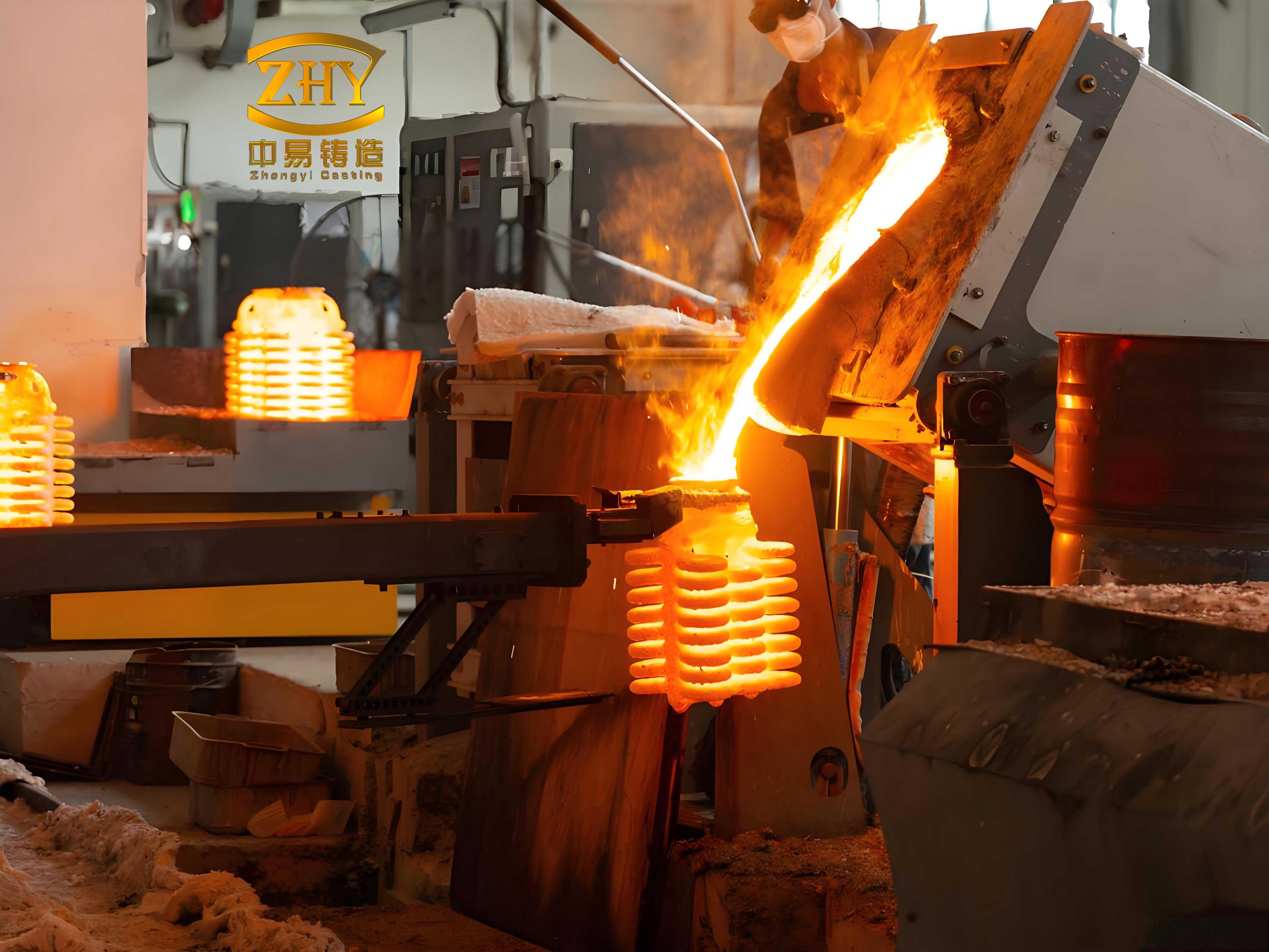
The fundamental sequence of the investment casting process is a choreographed series of material phase changes and shell-building operations. It begins with the creation of a precise wax pattern, a duplicate of the final part. This pattern is then assembled onto a wax “tree” to form a cluster. The cluster undergoes repeated dipping into ceramic slurries and stuccoing with refractory sands to build a robust, multi-layered ceramic shell. Once the shell is sufficiently thick and dried, the internal wax is melted out in a dewaxing operation, leaving a precise ceramic negative cavity. This mold is then fired at high temperatures to burn out any residual wax and to sinter the ceramic, achieving the necessary strength and permeability. Finally, molten metal is poured into the preheated mold, solidifying to form the casting. After cooling, the ceramic shell is removed, and the individual castings are cut from the tree for further finishing. This entire investment casting process is governed by a set of interdependent parameters which can be summarized for clarity:
| Process Stage | Key Input Parameters | Primary Output Characteristics | Governing Physical Principles |
|---|---|---|---|
| Pattern & Tree Assembly | Wax injection pressure ($P_w$), temperature ($T_w$), die temperature, wax linear shrinkage coefficient ($\alpha_w$) | Pattern dimensional accuracy, surface finish, weld line integrity | Fluid dynamics, non-Newtonian flow, thermal contraction: $\Delta L_w = L_0 \cdot \alpha_w \cdot (T_{inj} – T_{room})$ |
| Shell Building | Slurry viscosity ($\eta$), density ($\rho_s$), stucco particle size distribution, drying time ($t_d$), relative humidity (RH%) | Shell thickness ($h_s$), green strength, permeability ($k$) | Capillary flow, particulate deposition, diffusion-controlled drying. Layer thickness often follows: $h_s \propto \sqrt{\eta / \rho_s \cdot t_{dip}}$ |
| Dewaxing & Firing | Dewaxing medium temperature ($T_{dewax}$), heating rate, final firing temperature ($T_{fire}$), soak time | Shell fracture strength ($\sigma_f$), mold preheat temperature ($T_{mold}$), thermal expansion mismatch | Phase change kinetics (wax melt-out), sintering kinetics. The sintering driving force relates to surface energy reduction. |
| Metal Pouring & Solidification | Metal pouring temperature ($T_p$), superheat ($\Delta T_{sh}$), mold preheat temp ($T_{mold}$), alloy properties (e.g., latent heat $L_f$, specific heat $c_p$) | Grain structure, feeding efficiency, shrinkage porosity propensity, surface quality | Heat transfer: $\frac{\partial T}{\partial t} = \alpha \nabla^2 T$, where $\alpha = k/(\rho c_p)$. Chvorinov’s Rule: $t_s = B \cdot (V/A)^n$, where $t_s$ is solidification time, V is volume, A is surface area. |
The decision to employ the investment casting process is primarily driven by geometric complexity, material considerations, and required tolerances. As highlighted in the initial problem, this process can achieve remarkable feats: minimum castable hole diameters approaching 0.5 mm and wall thicknesses as low as 0.3 mm. This capability allows for part consolidation, where an assembly of several pieces can be redesigned as a single, integrated component cast directly. The economic and performance benefits are substantial, eliminating assembly time, reducing weight, and often improving structural integrity. The governing equation for assessing the feasibility of such consolidation often involves a trade-off between casting complexity and cost. A simplified model might consider the “Casting Complexity Factor” ($C_{cf}$), which can be expressed as a function of surface area to volume ratio, number of cores, and undercut features: $$C_{cf} = k_1 \cdot \left(\frac{A}{V}\right) + k_2 \cdot N_{cores} + k_3 \cdot N_{undercuts}$$ where $k_1$, $k_2$, and $k_3$ are weighting factors specific to the foundry’s capabilities. A successful investment casting process for a consolidated part requires $C_{cf}$ to be within a manufacturable window.
The journey from a final part design to a successful casting begins with intelligent 3D modeling of both the finished component and its casting “rough” or blank. In my workflow, I always start by analyzing the as-designed part, such as the mentioned valve component with its numerous small-diameter holes and external cylindrical surfaces. The first rule of thumb for the investment casting process is to identify features that push the boundaries of the technique. Small holes, deep recesses, and extremely thin sections require special attention. For features below the practical minimum castable size, the solution is to design the casting blank with solid volumes in those locations. These features will be machined in a subsequent post-casting operation. Furthermore, machining allowances must be added uniformly to all surfaces requiring finish machining. The amount of allowance ($A_m$) depends on the part size, alloy shrinkage, and expected distortion, and can be estimated as: $$A_m = C_{base} + \Delta L_{shrinkage} + \Delta L_{distortion}$$ where $C_{base}$ is a standard allowance (e.g., 0.5-2 mm), $\Delta L_{shrinkage}$ is the linear shrinkage from the alloy’s pattern expansion coefficient, and $\Delta L_{distortion}$ is an empirical factor for shape warping. Using CAD software like Pro/ENGINEER (now Creo Parametric) or equivalent, I create a secondary model—the casting blank—which is essentially the “as-cast” geometry. This model becomes the core input for all subsequent mold design activities within the investment casting process.
The heart of engineering for the investment casting process lies in the design of the wax injection mold. This mold, typically made from aluminum or steel, produces the wax patterns. Its design dictates pattern quality, dimensional accuracy, and production efficiency. The single most critical decision is the selection of the parting plane or parting surface. The primary goals are to: 1) allow for proper ejection of the wax pattern, 2) avoid undercuts that would lock the pattern in the mold, 3) minimize flash (excess wax at the seam), and 4) facilitate the placement of gating systems. For the component in discussion, with two external cylindrical surfaces on its sides, the logical parting plane runs along the axis connecting these cylinders and is parallel to the larger upper and lower faces. This choice cleanly splits the external cylindrical features and aligns with the dominant draft direction of the central body. Mathematically, the parting surface ($S_p$) can be defined as a surface that intersects the part model such that the resulting mold halves ($M_{upper}$ and $M_{lower}$) are simply connected and draft-positive. A simplified check involves analyzing the draft angle ($\theta_d$) for all surfaces relative to the proposed mold opening direction $\vec{d}$: $$\vec{n} \cdot \vec{d} \geq \cos(90^\circ – \theta_{min})$$ where $\vec{n}$ is the surface normal. Any surface failing this condition suggests a potential undercut requiring side-actions or cores in the wax mold.
Following parting surface definition, the detailed mold assembly takes shape. It consists of several standardized yet custom-configured components. The core and cavity blocks form the negative impression of the wax pattern. The gating system—comprising sprue, runners, and ingates—must be designed to ensure complete, laminar filling of the cavity with wax while minimizing air entrapment and residual stresses. The fill time ($t_{fill}$) for wax injection can be approximated using a modified Bernoulli’s equation for non-Newtonian fluids, considering the mold geometry: $$t_{fill} \approx \frac{V_{cavity}}{\int_{A_{gate}} v \, dA} \quad \text{with} \quad \Delta P = \frac{1}{2} \rho_{wax} v^2 + \frac{8 \eta L_{flow}}{\pi R_{channel}^4} Q$$ where $\Delta P$ is the injection pressure drop, $v$ is velocity, $Q$ is volumetric flow rate, $\eta$ is wax viscosity, and $L_{flow}$ and $R_{channel}$ are the flow path length and hydraulic radius, respectively. Proper venting is crucial to allow air to escape. Ejection is another critical system. For this component, due to its relatively flat geometry, a simple ejector pin system in the lower mold half suffices. The number and placement of ejector pins are calculated to keep stress on the wax pattern below its tear strength during ejection. If $F_{eject}$ is the total ejection force and $N_{pins}$ is the number of pins, the force per pin should satisfy: $$\frac{F_{eject}}{N_{pins}} \cdot A_{pin} \leq \sigma_{tear}^{wax}$$ where $A_{pin}$ is the contact area of the pin tip. Guide pillars and bushings ensure alignment between the mold halves, critical for maintaining part dimensional accuracy and preventing shear-induced flash. The entire assembly is designed with cooling channels to regulate mold temperature and control wax solidification rate, which impacts cycle time and pattern shrinkage uniformity.
The sophistication of the modern investment casting process is greatly enhanced by simulation software. Before cutting metal for the mold, I run comprehensive analyses. Wax injection simulation predicts fill patterns, potential weld lines, air traps, and shrinkage porosity in the wax pattern itself. This allows for iterative optimization of gate locations, injection parameters, and vent placement. Thermomechanical simulation of the ceramic shell building and firing stages predicts stress development and potential cracking. Finally, solidification and thermal simulation for the metal casting stage is paramount. It helps identify hotspots, predict shrinkage porosity locations, and optimize the riser and gating design for the metal itself. These simulations solve the fundamental equations of fluid dynamics and heat transfer. For fluid flow, the Navier-Stokes equations are solved: $$\rho \left( \frac{\partial \vec{v}}{\partial t} + \vec{v} \cdot \nabla \vec{v} \right) = -\nabla p + \nabla \cdot \boldsymbol{\tau} + \rho \vec{g}$$ coupled with the energy equation for heat transfer during solidification: $$\rho c_p \frac{\partial T}{\partial t} + \rho c_p \vec{v} \cdot \nabla T = \nabla \cdot (k \nabla T) + \dot{Q}_{latent}$$ where $\dot{Q}_{latent}$ accounts for the release of latent heat ($L_f$) during the phase change. The output of these simulations directly informs modifications to the investment casting process parameters, leading to a right-first-time manufacturing approach.
Material science is an inseparable pillar of the investment casting process. The selection of wax, ceramic, and metal alloy forms a synergistic triad. Pattern waxes are proprietary blends of natural and synthetic compounds designed for specific properties: low shrinkage, high dimensional stability, good surface finish, and complete removability. Their thermal expansion behavior is critical. Ceramic shell materials are selected based on the alloy being cast and the required shell strength. A typical shell might consist of a primary layer of fine zircon flour for surface finish, backed up by layers of fused silica or alumino-silicate for insulation and strength. The metal alloys used in investment casting range from carbon and alloy steels to stainless steels, aluminum, cobalt, and nickel-based superalloys. Each alloy has a characteristic shrinkage factor that must be compensated for in the wax pattern dimensions. The linear shrinkage ($S_l$) from wax pattern to final metal part is a composite effect: $$S_l = \alpha_{wax-sol} \Delta T_{wax} + \alpha_{ceramic} \Delta T_{fire} + \alpha_{metal} \Delta T_{solid} + \text{Phase Transformation Effects}$$ where the $\alpha$ terms are linear thermal expansion coefficients for the respective materials over their relevant temperature ranges ($\Delta T$). Precise knowledge of this total shrinkage allows the wax pattern and mold cavity to be scaled accordingly.
| Alloy Family | Typical Pouring Temperature Range, $T_p$ (°C) | Pattern Shrinkage Allowance (Linear %) | Critical Shell Material Consideration | Typical As-Cast Surface Roughness ($R_a$, µm) | Relative Susceptibility to Hot Tearing |
|---|---|---|---|---|---|
| Aluminum Alloys (e.g., A356) | 680 – 750 | 0.8 – 1.2 | Chemical reactivity with molten Al; use non-wetting coatings. | 3.2 – 6.3 | Low-Medium |
| Carbon & Low-Alloy Steels | 1540 – 1650 | 1.8 – 2.2 | High temperature strength and thermal shock resistance. | 6.3 – 12.5 | Medium |
| Stainless Steels (e.g., 316L) | 1500 – 1600 | 1.9 – 2.3 | Resistance to metal/shell interaction to prevent surface contamination. | 3.2 – 6.3 | Medium-High |
| Nickel-Based Superalloys (e.g., Inconel 718) | 1350 – 1450 | 2.0 – 2.4 | Extreme high-temperature stability and chemical inertness. | 1.6 – 3.2 | High |
| Titanium Alloys (e.g., Ti-6Al-4V) | 1650 – 1800 | 1.0 – 1.5 | Extreme reactivity requires inert atmosphere or vacuum pouring and special face coats (e.g., yttria). | 3.2 – 6.3 | High |
Quality control and defect analysis are continuous feedback loops within the investment casting process. Common defects include inclusions (ceramic or slag), porosity (shrinkage or gas), mistruns, and cracks. Each defect has a root cause traceable to a specific stage of the process. For instance, gas porosity often relates to improper shell dewaxing or firing, leaving residual volatiles. Shrinkage porosity is a function of inadequate feeding, governed by the famous feeding distance rules. The Niyama criterion is a widely used indicator for predicting shrinkage porosity in steel castings based on local thermal conditions during solidification: $$N_y = \frac{G}{\sqrt{\dot{T}}}$$ where $G$ is the temperature gradient and $\dot{T}$ is the cooling rate. Regions with a Niyama value below a critical threshold are prone to microporosity. Implementing statistical process control (SPC) on key parameters—wax injection pressure and temperature, slurry viscosity, drying environment, firing curves, and metal pouring temperature—is essential for maintaining consistency in the investment casting process. Control charts for these parameters help identify drift and prevent defects before they occur in production batches.
Looking forward, the investment casting process is being transformed by digital and additive technologies. While traditional wax pattern molding remains dominant for high-volume production, additive manufacturing (AM) is revolutionizing low-volume and prototyping applications. Direct 3D printing of wax or wax-like patterns eliminates the need for hard tooling, drastically reducing lead time. AM also enables the creation of conformal cooling channels within wax injection molds, improving cycle times and pattern quality. Furthermore, topology optimization algorithms can now generate organic, lightweight structures that are ideally suited for the “complexity for free” ethos of the investment casting process. These algorithms solve for material distribution within a design space under given loads and constraints, often resulting in shapes that are only manufacturable via investment casting. The synergy between generative design and the investment casting process opens new frontiers in lightweight, high-performance component design for aerospace, medical, and automotive industries.
In conclusion, mastering the investment casting process is not merely about following a set of steps; it is about understanding and controlling a complex, interconnected system of materials, thermodynamics, and fluid mechanics. From the initial 3D model and judicious application of allowances, through the meticulous design of the wax injection mold—with its critical parting surface, gating, and ejection systems—to the final simulation-validated metal pour, every decision is consequential. The process offers unparalleled geometric freedom, enabling part consolidation and performance optimization that other methods cannot match. As a foundational manufacturing technique continuously refined by digital tools and advanced materials science, the investment casting process remains a cornerstone for producing the intricate, high-integrity components that modern engineering demands. Its successful application hinges on a deep, analytical approach that views the journey from digital model to physical part as a single, optimized continuum.