
In the process of lost foam castings, also known as evaporative pattern casting, the molding procedure requires no binders, enabling the production of complex shapes (including internal and external cavities) without pattern removal. The production cycle is simple, solid waste is minimal, and the process is pollution-free and environmentally friendly. Castings produced via lost foam castings exhibit high dimensional accuracy, a smooth surface, and excellent quality, making this a near-net-shape green casting technology. The molding sand can be recycled repeatedly, with an old sand reuse rate of up to 95%, significantly reducing production costs. As a result, lost foam castings are widely adopted by an increasing number of enterprises.
Since the foam pattern (pattern cluster) is made from EPS beads, its working temperature should generally not exceed 85°C. Therefore, the temperature of the molding sand (old sand) during molding must be controlled; otherwise, high temperatures will directly reduce the strength of the foam pattern, causing deformation or even collapse of the mold, ultimately affecting casting quality. Moreover, when the sand temperature is too high, hot sand contacting cold surfaces (such as sand silos and flasks) causes water vapor to condense, leading to sand sticking and adhesion, which hinders shakeout. If the sand temperature remains high continuously, production cannot proceed smoothly, and the need to add new sand (by removing old sand) directly increases costs and disrupts operations. In other words, the temperature of the recycled old sand directly impacts product quality, production efficiency, and the economic viability of the process.
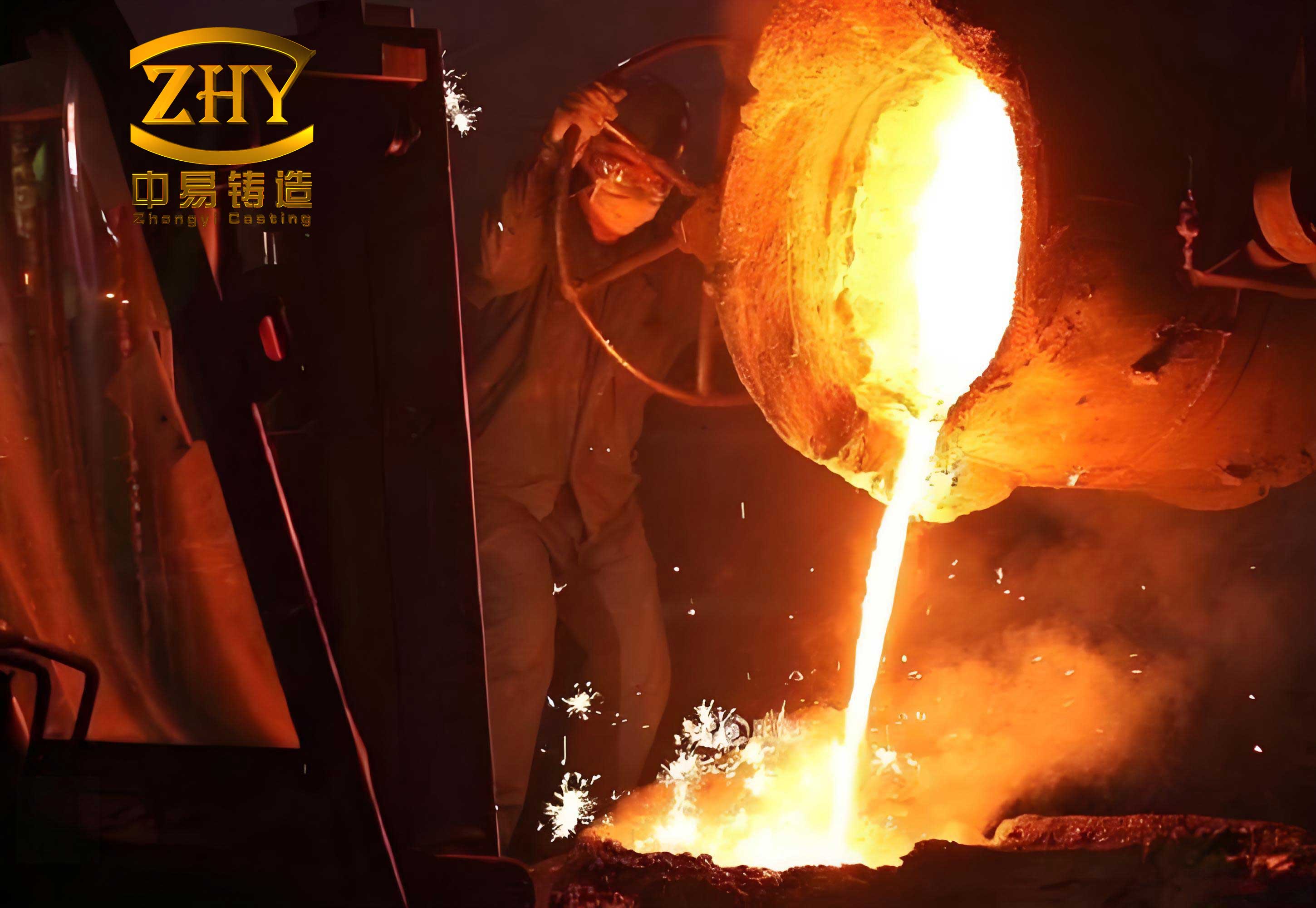
Production Status
Layout of the Lost Foam Casting Production Line
Our company operates a 10,000 t/a lost foam castings automatic production line, which includes: one automatic flask turnover machine, one vibrating shakeout conveyor trough, one vibrating shakeout conveyor screen, one magnetic separator, one sand temperature conditioner, one baghouse dust collector, one high-temperature bucket elevator, three normal-temperature bucket elevators, one molding sand silo (35 t), one sand temperature conditioning silo (25 t), one intermediate sand silo (50 t), one circulating water tank (200 m³), and 61 flasks. The total circulating sand mass is no less than 200 t, and the circulating water volume is 200 m³.
Process Flow
The process flow of the lost foam castings production line is as follows: During normal operation, after pouring and holding, the flask is transported to the automatic turnover machine. The casting and old sand are then separated via the vibrating shakeout conveyor trough. The casting proceeds to the shot blasting area via a slat conveyor for further cleaning and finishing. The old sand, along with other debris, enters the vibrating shakeout screen for sieving. The separated debris is collected and periodically removed. The old sand is then conveyed through a bucket elevator, magnetic separator, fluidized cooling bed, intermediate sand silo, sand temperature conditioning silo, and sand temperature conditioner to be cooled and returned to the molding sand silo for reuse.
Cooling of the old sand is primarily achieved through the fluidized cooling bed and the sand temperature conditioner. Under the action of centrifugal pumps (3#/4# and 1#/2#, one working and one standby), cold water from the circulating water tank is supplied to the inlet pipes of the fluidized cooling bed and sand temperature conditioner. After heat exchange, the hot water returns via return pipes to two fiberglass cooling towers (2#/1#) for cooling before re-entering the circulating tank. This cycle repeatedly removes heat from the old sand. Other processes rely on natural cooling to reduce sand temperature.
Problems Encountered
Our lost foam castings production line was installed and commissioned in March 2018. The sand handling capacity of the automatic line is 40 t/h, with a molding cycle of 5 min per flask and a turnover cycle of 3–4 min per flask. As production capacity gradually increased, we observed that the old sand temperature became unstable and often exceeded the required range (≤50°C–60°C). In summer, temperatures sometimes reached 70°C–80°C or more, causing the foam pattern cluster to lose strength and deform, making molding impossible. Consequently, production had to be halted to allow the sand to cool to an acceptable level. According to incomplete statistics, at least one shutdown per shift was required, each lasting 2–3 hours, severely restricting normal production.
Analysis of Causes for Elevated Old Sand Temperature
In the lost foam castings line, the cooling of recycled old sand relies on sand‑sand and sand‑water heat exchange. The main influencing factors include circulating sand mass, cooling water, and cooling equipment. The circulating sand mass involves not only the storage capacity of the silos but also the actual amount that can participate in the circulation. Similarly, the cooling water effectiveness depends on the storage volume of the circulating tank and the condition of the cooling devices.
To identify the root causes, we measured sand temperatures at the inlet and outlet of the fluidized cooling bed, the intermediate sand silo, the sand temperature conditioner, and the molding sand silo. We also measured the discharge angles of the silos to calculate the effective circulating sand mass, monitored the inlet/outlet water temperatures of the cooling towers, and regularly inspected the water level and equipment condition.
Sand Temperature Measurements at Key Points
We recorded sand temperatures at various positions along the recycling loop. The results are summarized in Table 1.
| Location | Inlet | Outlet | ΔT | Remarks |
|---|---|---|---|---|
| Fluidized cooling bed | >200 | 100 | >100 | Sunny, ambient 25°C, 16 heats |
| Fluidized cooling bed | 198 | 102 | 96 | Sunny, ambient 27°C, 15 heats |
| Fluidized cooling bed | 186 | 78 | 108 | Cloudy, ambient 23°C, 14 heats |
| Fluidized cooling bed | 120 | 84 | 36 | Light rain, ambient 20°C, 13 heats |
| Intermediate silo (50 t) inlet | 86 | 82 | 4 | |
| Intermediate silo (50 t) inlet | 83 | 84 | -1 | |
| Sand temperature conditioner inlet | 86 | 90 | -4 | |
| Sand temperature conditioner inlet | 85 | 88 | -3 | |
| Molding sand silo inlet | 84 | 85 | -1 | |
| Molding sand silo inlet | 80 | 82 | -2 |
From Table 1, the following observations can be made:
- At the fluidized cooling bed, the temperature drop exceeded 71°C, indicating that the water circulation system was functioning effectively.
- At the sand temperature conditioner, the temperature difference was only –4 to 5°C, meaning the heat exchange was negligible.
- The temperature change across the storage silos was small, confirming that natural cooling is inefficient.
- In some cases, the outlet temperature was higher than the inlet, likely due to the low specific heat of sand ($$c_{\text{sand}} = 840 \, \text{J/(kg·K)}$$) compared to water ($$c_{\text{water}} = 4200 \, \text{J/(kg·K)}$$). After pouring, the sand cools slowly, and when the sand is in a static pile with limited surface contact, its temperature may even rise when ambient temperature drops slowly.
- Ambient temperature directly affects natural cooling: cloudy/rainy days promote better cooling than sunny days.
- Higher continuous heat input (more heats per shift) reduces the overall cooling efficiency when the total circulating sand mass is fixed.
Analysis of Circulating Sand Mass
Due to sand consumption during the lost foam castings process (e.g., sand adhering to castings, fine dust lost in the dust collector, spillage), new sand must be added periodically. According to the designed circulation of 200 t, the number of empty flasks on the line after shakeout and before molding should not exceed 6. However, we observed that in some shifts, up to 17 empty flasks were present. Each empty flask requires 2 t of sand, so the actual circulating sand mass was reduced by about 20 t, i.e., 10% of the design value.
Furthermore, we measured the discharge angles of the intermediate silo (50 t) and the sand temperature conditioning silo (25 t) to assess whether all sand could flow freely. The results are:
- Intermediate silo: cone angle 41°–42°; discharge chute angle 50°–51°.
- Sand temperature conditioning silo: cone angle (transition piece) 29°–30°; discharge chute angle 44°–45°.
The repose angle of the molding sand is 45° (static) and 30° (dynamic). Since the cone angles at both silos are below 45°, dead zones exist where sand accumulates and does not participate in circulation. This reduces the effective heat exchange volume.
Analysis of Circulating Cooling Water
We measured the inlet and outlet water temperatures at the fluidized cooling bed and the sand temperature conditioner (Table 2).
| Location | Inlet | Outlet | ΔT |
|---|---|---|---|
| Fluidized cooling bed | 21 | 45 | 24 |
| Fluidized cooling bed | 22 | 48 | 26 |
| Fluidized cooling bed | 21 | 48 | 27 |
| Sand temperature conditioner | 21 | 21 | 0 |
| Sand temperature conditioner | 22 | 23 | 1 |
| Sand temperature conditioner | 21 | 23 | 2 |
Table 2 shows that the fluidized cooling bed achieved a temperature rise of about 25°C, indicating effective heat exchange. However, at the sand temperature conditioner, the temperature difference was only 1–2°C, meaning almost no heat transfer occurred.
The circulating water tank has a design capacity of 200 m³ (dimensions 17.5 m × 3.2 m × 5.0 m, with a practical water depth of 4.5 m, giving ~200 m³). In practice, we found that the water level was often 1.0–1.2 m below the top, reducing the water volume by about 50 m³ (25% of design). The inlet water temperature reached 38°C and outlet 55°C, far above the design values (inlet ≤25–28°C, outlet ≤45–50°C). Insufficient water volume and high return water temperature reduce the cooling efficiency of the entire loop.
Analysis of Cooling Equipment
Sand Temperature Conditioner: The unit has a diameter of 1,300 mm and a length of 2,000 mm. It contains 241 sand tubes, each with a diameter of 42 mm and a length of 2 m. The total cross-sectional area of the tubes is:
$$S_{\text{total}} = n \cdot \frac{\pi D^2}{4} = 241 \times \frac{\pi \times (0.042)^2}{4} \approx 0.33 \, \text{m}^2.$$
The sand handling capacity is 40 t/h. With a sand density of 1.6 t/m³, the volumetric flow rate is:
$$Q_v = \frac{40}{1.6 \times 3600} \approx 0.00694 \, \text{m}^3/\text{s}.$$
Thus, the sand velocity in the tubes is:
$$v = \frac{Q_v}{S_{\text{total}}} = \frac{0.00694}{0.33} \approx 0.021 \, \text{m/s}.$$
The total heat exchange area is:
$$A = n \cdot \pi D L = 241 \times \pi \times 0.042 \times 2 \approx 63.6 \, \text{m}^2.$$
The residence time of sand in the tubes is only about 2 m / 0.021 m/s ≈ 95 seconds. This short contact time is insufficient for effective heat transfer.
Fiberglass Cooling Towers: Inspection revealed that the packing of the cooling towers was partially broken, unevenly stacked, and some parts were clogged. The water distributors were damaged or missing, leading to uneven water distribution and reduced heat exchange area.
Solutions Implemented
Based on the analysis, we carried out modifications to the intermediate silo, the sand temperature conditioning silo, the sand temperature conditioner, and the water circulation system. The modifications were designed to maximize the use of existing space and resources while minimizing capital expenditure.
Modification of Sand Silos
Intermediate Silo (50 t): The existing cone was dismantled and replaced with a new cone having an angle ≥45° to ensure smooth material flow. Additionally, cooling coils were installed on both the cone and the cylindrical body. The cooling coils were designed to fit within the silo walls, with inlet and outlet pipes routed outside the silo columns to avoid sand leakage. The coils were fixed using supports welded to the silo columns.
Sand Temperature Conditioning Silo (25 t): The existing transition piece (square-to-round) and the sand temperature conditioner (φ1,300×2,000) were removed. The cylindrical body of the silo was extended by 0.5–0.8 m to increase capacity. A new cooling coil assembly and a new cone (angle ≥45°) were fabricated and connected via flanges. The pneumatic sand gate was relocated from the bottom of the bucket elevator pit to a position above ground at the cone outlet, allowing the discharge chute angle to be increased to ≥30°–35°. The extra height was added to the silo body to maximize volume.
Sand Distributor Plates: Inside each modified silo, we installed distribution plates (two or three layers) to break the falling sand stream and spread it evenly over the cooling coils. This reduces direct erosion of the coils and improves heat transfer. The top plate is 700 mm × 700 mm × 6 mm with elongated slots of φ70 mm × 200 mm; the middle plate is 800 mm × 600 mm × 5 mm with slots of φ60 mm × 200 mm; the bottom plate is 1,300 mm × 1,300 mm × 6 mm with slots of φ50 mm × 150 mm. The gap between the lowest plate and the top layer of coils is kept ≤200 mm to ensure a uniform sand layer in a creeping flow state.
Improvement of Circulating Water System
Additional water pipes were connected to the existing system via tees and valves, linking the new cooling coils to the circulating water pumps and the cooling towers. The water level in the circulating tank is now maintained at least 0.5 m below the top, ensuring a minimum volume of 200 m³. The cooling tower packing and distributors were replaced and cleaned to restore full performance.
Enhanced Maintenance
We established a regular inspection schedule for the cooling towers, pumps, and pipes. Damaged packing and distributors are replaced promptly. The water quality is monitored to prevent scaling and fouling.
Results After Implementation
After the modifications, we measured the cooling water temperatures at the inlet and outlet of the new cooling coils installed in the sand temperature conditioning silo. The results are given in Table 3.
| Inlet | Outlet | ΔT |
|---|---|---|
| 29 | 41 | 12 |
| 32 | 43 | 11 |
| 35 | 45 | 10 |
A temperature difference of about 10–12°C indicates that the new water-cooled coils are effectively removing heat from the sand.
Key outcomes of the retrofit:
- The intermediate silo capacity increased by 15 t, while the addition of cooling coils reduced the sand volume by less than 1 t (0.5% of total), so the net circulating sand mass remained essentially unchanged.
- The increased discharge angles eliminated dead zones, allowing all stored sand to participate in the cycle, improving the effective heat exchange mass.
- The cooling method was changed: previously, sand flowed inside tubes (heat exchange area ~64 m²); now water flows inside pipes, and the sand surrounds the pipes. The total heat exchange area from the silo coils alone exceeds 470 m², an increase of 406 m². Moreover, the residence time of sand in the silo is much longer (minutes to hours), greatly enhancing heat transfer.
- The sand temperature at the molding station is now consistently maintained at ≤50°C–60°C, meeting the requirements for lost foam castings. The forced production stoppages due to high sand temperature have been eliminated.
- The water temperature difference across the modified sand temperature conditioning silo coils is about 10°C, providing a reliable cooling effect for continuous operation.
- During a trial, the line successfully supported 24-hour (three-shift) operation with 45 heats per day, significantly increasing production capacity.
- Labor intensity decreased, production efficiency improved, and the environmental conditions were enhanced due to reduced dust and heat.
Conclusion
In lost foam castings production, the temperature of recycled old sand is influenced by multiple factors: circulating sand quantity, cooling water volume and efficiency, silo geometry, and equipment design. Through systematic analysis and targeted modifications, we achieved effective control of the old sand temperature without major capital investment.
Key lessons from this project that can benefit other lost foam castings facilities:
- Optimize silo geometry: Cone angles must be larger than the sand’s repose angle (≥45°) to avoid dead zones. Discharge chutes should have angles ≥30°–35° to ensure flow.
- Maximize silo volume: Use available headroom to increase storage capacity, providing more buffer for heat dissipation.
- Select the right cooling configuration: Water flowing inside pipes with sand on the outside (coils around silos) offers much larger heat exchange area and longer contact time than sand flowing inside small tubes.
- Install sand distribution plates: Prevent direct erosion of cooling coils and ensure uniform sand coverage, improving heat transfer and prolonging equipment life.
- Maintain adequate circulating sand and water mass: Regularly replenish sand losses and keep the water tank at or above design level. Even a 10% reduction can significantly degrade cooling performance.
- Keep cooling towers in good condition: Damaged packing and distributors drastically reduce cooling tower efficiency; routine maintenance is essential.
These measures have proven effective in our lost foam castings line, ensuring stable production, improved casting quality, and reduced operating costs. We hope our experience can serve as a reference for other foundries facing similar challenges.