
The pursuit of optimal mechanical properties in grey cast iron components is fundamentally linked to the control of graphite morphology. As a foundry engineer deeply involved in the production of critical automotive parts, I have consistently encountered the challenge of coarse graphite formation, particularly in specific regions of castings like camshafts. The graphite phase, while essential for the material’s machinability and damping capacity, acts as a stress concentrator and discontinuity. Its size, distribution, and shape directly govern key properties such as tensile strength, hardness, fatigue resistance, and pressure tightness. The presence of coarse, type A graphite flakes, especially in thermally disadvantaged areas like those adjacent to ingates or in heavy sections, can lead to significant degradation of these properties. This article synthesizes practical experiences and metallurgical principles focused on eliminating coarse graphite in grey cast iron, with a particular emphasis on camshaft production, exploring a variety of effective measures beyond conventional approaches.
The problem is most acute in castings produced with certain gating system designs that prioritize yield over thermal uniformity. For instance, a single-end ingate system offers excellent yield but creates a pronounced thermal gradient. The region near the ingate experiences prolonged exposure to hotter metal, resulting in slower solidification and, consequently, the growth of undesirably coarse graphite. This is often accompanied by micro-shrinkage porosity, further compromising the component’s integrity. The hardness in such areas can drop significantly below specification, threatening the part’s functional performance and wear resistance. My initial investigations into this issue for a camshaft casting involved rigorous chemical analysis, which revealed a crucial correlation not typically highlighted in standard textbooks: the role of titanium.
Comparative analysis of two production batches with nearly identical base chemistries—carbon equivalent (CE), silicon, manganese, chromium, nickel, and copper—showed a dramatic difference. Batches with a titanium content on the lower end (approximately 0.03-0.04 wt.%) exhibited the problematic coarse graphite and associated low hardness (177-198 HB). In contrast, batches where the titanium content was deliberately increased to 0.07-0.08 wt.% displayed a markedly refined graphite structure. Not only was the graphite finer, but the structure also showed areas of undercooled (Type D and E) graphite, and the hardness consistently reached 205-210 HB. This finding served as a pivotal entry point into a broader exploration of graphite refinement techniques for grey cast iron.
Fundamental Metallurgy of Graphite Formation in Grey Cast Iron
To effectively combat coarse graphite, one must understand its genesis. Graphite precipitation occurs during the eutectic solidification of hypoeutectic grey cast iron. The final size and morphology of the graphite flakes are determined by two competing factors: the number of active nucleation sites and the growth rate of the graphite in the liquid austenite-graphite eutectic. A low nucleation count combined with a high growth rate, fostered by slow cooling and high carbon equivalent, inevitably leads to coarse flakes. The growth of graphite in grey cast iron is anisotropic, proceeding preferentially along the basal planes of its hexagonal crystal structure, leading to the characteristic flake shape. The undercooling at the solidification front, $\Delta T$, is a critical driver:
$$ \Delta T = T_e – T_a $$
where $T_e$ is the equilibrium eutectic temperature and $T_a$ is the actual temperature of the solidifying interface. Low undercooling promotes the stable eutectic (austenite-graphite), yielding Type A graphite. Higher undercooling can lead to the metastable eutectic (austenite-cementite) or, under certain inoculation conditions, to the refined, branched structures of Type D graphite. The goal of refinement is to increase the number of eutectic cells (graphite nucleation events) and/or to restrict the growth of individual flakes, even under less-than-ideal thermal conditions.
Systematic Analysis of Graphite Refinement Strategies
The strategies for refining graphite in grey cast iron can be categorized into several interconnected domains: process and thermal control, chemical composition adjustment, alloying, and advanced melt treatments. The following table summarizes the primary levers available to the foundry engineer.
| Strategy Category | Specific Measure | Primary Mechanism | Key Considerations & Limitations |
|---|---|---|---|
| Process & Thermal Control | Increased Cooling Rate | Shortens solidification time, limiting graphite growth. | Limited by casting geometry; risk of chilling/mottled structure. |
| Lower Pouring Temperature | Reduces overall heat content, promoting faster solidification. | Must balance fluidity and mistrun risks; effectiveness varies with section size. | |
| Controlled/Active Cooling | Direct extraction of heat from specific regions (e.g., chills, water-cooled cores). | Excellent for local control; adds complexity and cost to tooling/process. | |
| Chemical Composition | Reduction of Carbon Equivalent (CE) | Shifts composition away from eutectic, promoting austenite dendrites which refine the eutectic matrix. | Increases melting point, reduces fluidity and castability; may require alloying to maintain strength. |
| Strategic Use of Sulfur | Forms MnS particles that act as nucleation substrates; may impede graphite growth. | Requires adequate manganese (Mn:S ≈ 1.7); optimal window is narrow (typically 0.06-0.12% S). | |
| Alloying (Micro-additions) | Titanium (Ti) Addition | Forms high-melting-point Ti(C,N) or TiS particles that nucleate graphite; refines both graphite and matrix. | Potent effect at low levels (0.05-0.15%); can promote hard inclusions if excessive. |
| Antimony (Sb) Addition | Strongly promotes pearlite and refines graphite by segregating at the solid-liquid interface. | Very potent (<0.05%); risk of creating shrinkage tendency and embrittlement; must be controlled precisely. | |
| Rare Earth (RE, e.g., Ce, La) Addition | Modifies sulfide inclusions (e.g., forms CeS) to become more effective nuclei; also combats detrimental trace elements. | ||
| Melt Treatment | Effective Inoculation | Introduces exogenous nuclei (e.g., FeSi-based alloys containing Ca, Al, Ba, Zr) to increase eutectic cell count. | Timing, method, and alloy choice are critical; effect fades with time (fade). |
| Elimination of “Genetic” Inheritance | High superheating or careful charge material selection to dissolve coarse graphite from the charge. | High superheat increases cost and energy use; may affect nucleation potency. |
Detailed Examination of Key Refinement Measures
Process Parameters and Solidification Control
The most direct method to refine the microstructure of any cast alloy is to increase its solidification cooling rate. For grey cast iron, this approach is highly effective but often constrained by the geometry of the casting itself. In the case of a camshaft, a slender but relatively thick-walled component, the thermal mass can lead to slow cooling in the core and near hot spots. One practical method is to lower the pouring temperature as much as the mold filling requirements allow. A low pouring temperature reduces the total heat that must be extracted, leading to a shorter solidification time and finer graphite. This technique has been successfully applied even in large castings like wind turbine hubs to prevent coarse graphite formation.
For localized problems, such as the ingate area, active cooling methods are invaluable. This can involve the strategic placement of chilling materials in the mold or, in more advanced setups, the use of water-cooled cores. By forcibly extracting heat from a specific region, the local solidification time is drastically reduced, effectively suppressing the growth of coarse graphite.
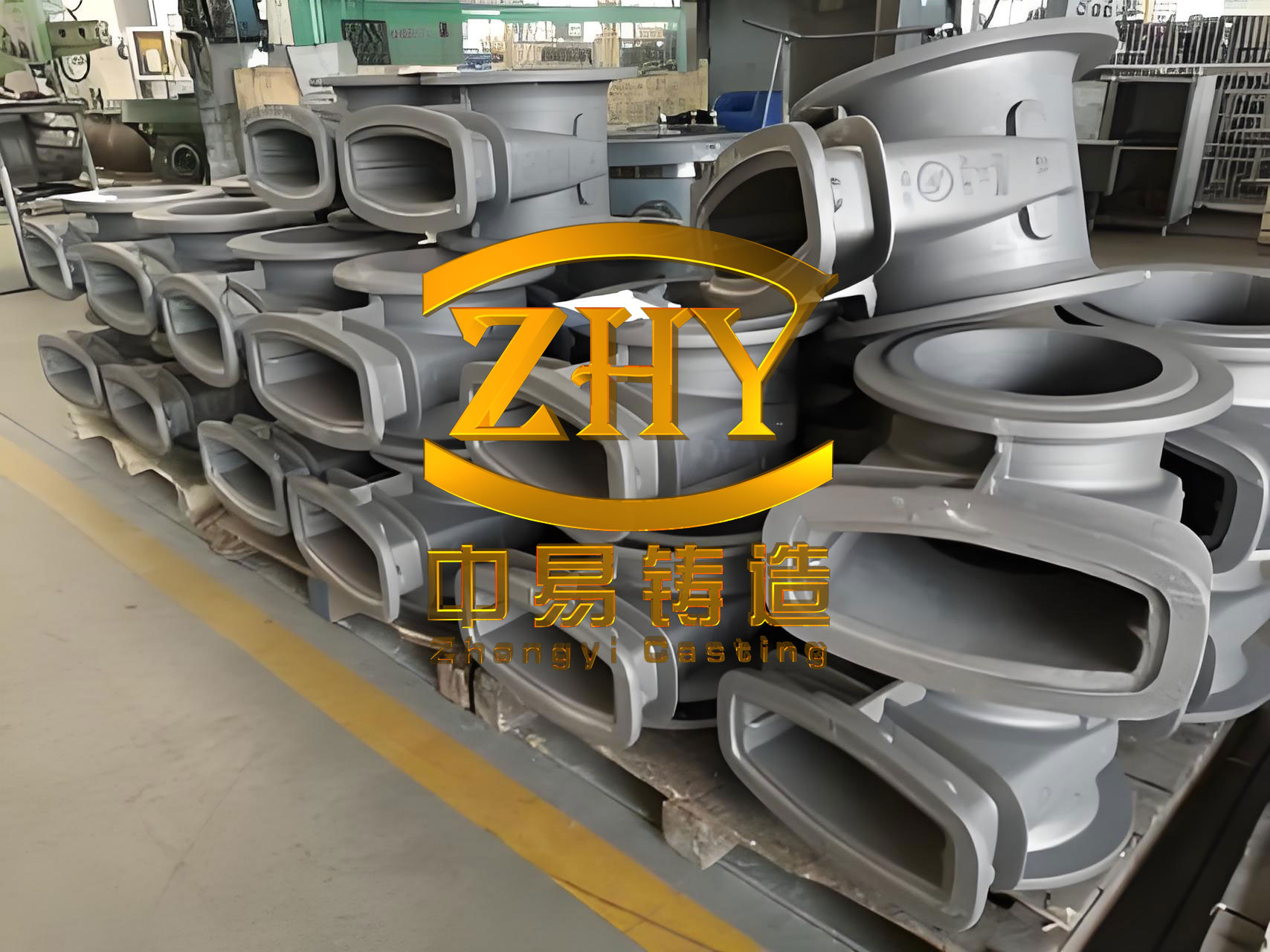
The choice of gating design is itself a process control decision. While a multiple ingate system provides more uniform temperature distribution and minimizes local thermal saturation—effectively refining graphite throughout—it comes at the cost of lower yield. The economic pressure often drives the selection of high-yield systems, making the implementation of the other refinement measures discussed here even more critical.
Chemical Composition: The Role of Carbon Equivalent and Sulfur
The Carbon Equivalent (CE) is the master variable for grey cast iron properties. It is calculated as:
$$ CE = \%C + \frac{\%Si + \%P}{3} $$
A high CE favors graphite precipitation but also promotes coarseness. Reducing the CE, typically by increasing the scrap steel content in the charge, moves the composition into the hypoeutectic range. This promotes the formation of a network of austenite dendrites during the primary solidification stage. These dendrites physically divide the remaining liquid into smaller compartments, thereby refining the subsequent eutectic cells (graphite-austenite aggregates). The result is a finer graphite dispersion and an overall stronger matrix. However, this comes with trade-offs: reduced fluidity, increased shrinkage propensity, and a higher melting point, often necessitating complementary alloying to recover hardness and strength.
The role of sulfur is nuanced and often misunderstood. In modern electric furnace melting, sulfur levels can become very low (<0.02%), which can ironically lead to poor inoculation response and coarse graphite. A moderate, controlled sulfur level (e.g., 0.07-0.10%) is beneficial. Sulfur combines with manganese to form manganese sulfide (MnS) inclusions. The free energy of formation for various sulfides is telling. While MnS has a relatively moderate formation energy, sulfides of elements like Cerium (CeS) or Titanium (TiS) have higher negative free energies. This thermodynamic drive means that in the presence of these elements, more stable sulfides form. These particles, particularly when coated with complex oxides or silicates, are believed to be potent nucleation sites for graphite. Furthermore, sulfur adsorbed at the graphite-liquid interface may impede the lateral growth of graphite flakes, contributing to refinement.
The Potent Effects of Alloying Elements
The observed powerful effect of titanium in refining camshaft graphite is a prime example of targeted alloying. Titanium is a strong carbide and nitride former. In liquid grey cast iron, it readily forms microscopic particles of titanium carbonitride, Ti(C,N). These particles have a crystal lattice that provides a good crystallographic match (low disregistry) with graphite, making them excellent heterogeneous nucleation substrates. The result is a dramatic increase in the number of eutectic cells, producing a much finer graphite dispersion. The presence of titanium also refines the pearlitic matrix. The transition from coarse A-type graphite to a mixed A-D type structure with increased titanium directly correlates with the measured rise in hardness. This can be achieved economically by using a portion of V-Ti-bearing pig iron in the charge or through direct addition of ferrotitanium.
Other elements play similarly powerful roles:
- Antimony (Sb): A remarkably potent pearlite promoter and graphite refiner. Additions as low as 0.02-0.04% can completely eliminate ferrite and refine both pearlite and graphite. Its mechanism is primarily one of microsegregation; it concentrates at the solid-liquid interface during solidification, inhibiting graphite growth and stabilizing pearlite. However, its potency demands extreme control, as excess Sb leads to embrittlement.
- Rare Earths (RE): Elements like Cerium (Ce) and Lanthanum (La) are powerful desulfurizers and deoxidizers. They modify the morphology of sulfide inclusions, making them more globular and potentially more effective as nuclei. They also neutralize the damaging effects of trace elements like lead and bismuth that can promote graphite flake distortion. The formation of high-stability sulfides like CeS is key to their action.
The interaction of alloying elements can be synergistic. For example, the combination of Ti (for graphite refinement and nucleation) with Mn (for pearlite stabilization and sulfide balance) allows for the successful production of high-CE, high-strength grey cast iron that resists graphite coarsening.
Melt Treatment and Inoculation Practices
Inoculation is the deliberate, late addition of materials to the melt to create nucleation sites. Effective inoculation is non-negotiable for producing high-quality grey cast iron. Modern inoculants are ferrosilicon-based alloys containing carefully balanced amounts of calcium, aluminum, barium, strontium, or zirconium. These elements help form complex silicate or aluminate particles in the melt that act as nuclei for graphite. The inoculation effect is transient (“fade”), so timing and method are critical. A common best practice is a dual inoculation approach: a primary treatment in the transfer ladle and a secondary, late stream inoculation during pouring.
Beyond chemical inoculation, physical melt treatments can alter graphite morphology. Electromagnetic stirring disrupts the normal solidification front, breaking up growing graphite flakes and distributing them more uniformly, leading to a “spheroidized” or compacted form that improves mechanical properties. While more experimental, treatments like ultrasonic vibration or pulsed electric current have shown promise in laboratory settings. The cavitation and acoustic streaming from ultrasound can fragment primary graphite and enhance nucleation, while pulsed current is thought to affect atomic diffusion and interfacial energy at the solidification front.
A critical, often overlooked aspect of melt treatment is addressing the “genetic inheritance” from charge materials. If the charge contains pig iron or returns with coarse graphite, and the melting temperature is insufficient to fully dissolve these graphite clusters, they can act as pre-existing templates, leading to coarse graphite in the final casting. A sufficiently high superheating temperature (often above 1500°C) or the careful selection of charge materials with fine initial graphite (such as steel scrap and specially processed pig iron) is necessary to break this inheritance.
Implementing a Practical Solution for Camshaft Production
Returning to the practical problem of the camshaft, the theoretical and strategic overview crystallizes into a concrete action plan. Given the existing high-yield, single-end gating system, major process changes like adding chills or redesigning the gating were initially less desirable due to cost and yield impact. The chemical analysis pointed clearly to titanium as a differentiating variable. Therefore, the most direct and implementable solution was to adjust the charge makeup to ensure a consistent, elevated titanium content.
This was achieved by two methods:
- Blending with V-Ti Pig Iron: Replacing a portion of the standard pig iron with a locally sourced V-Ti-bearing pig iron. This provided a consistent, economical source of both titanium and vanadium.
- Direct Ferrotitanium Addition: For finer control, calculated amounts of ferrotitanium alloy were added to the furnace during melting.
The target titanium range was established at 0.07-0.10 wt.%. This adjustment, within an otherwise stable production process (controlled CE, effective dual inoculation, and consistent pouring temperature), successfully transformed the microstructure in the ingate area. The coarse, problematic graphite was replaced by fine, well-distributed Type A graphite, with occasional undercooled types, resulting in a reliable and significant increase in hardness to the specified 205-210 HB range, eliminating the previous soft spots and associated quality concerns.
Conclusion and Forward Perspective
The challenge of coarse graphite in grey cast iron is multifaceted, but a systematic approach grounded in solidification science provides multiple avenues for resolution. No single measure is a universal panacea; the optimal solution typically involves a synergistic combination of strategies tailored to the specific casting geometry, production constraints, and property requirements.
For the camshaft and similar components, the controlled addition of titanium—either through selected charge materials or direct alloying—has proven to be an exceptionally powerful and practical tool. It directly addresses the nucleation aspect of solidification, refining the graphite structure and enhancing mechanical properties without necessitating costly alterations to the existing foundry layout or a sacrifice in yield. This experience underscores the importance of detailed metallographic and chemical analysis in problem-solving and highlights that sometimes the most effective levers are found in the subtle chemistry of the alloy rather than in major process overhauls. The continued development and understanding of nucleation mechanisms, the interplay of minor elements, and advanced melt treatments promise even greater control over the microstructure and performance of this versatile and enduring material, grey cast iron.