
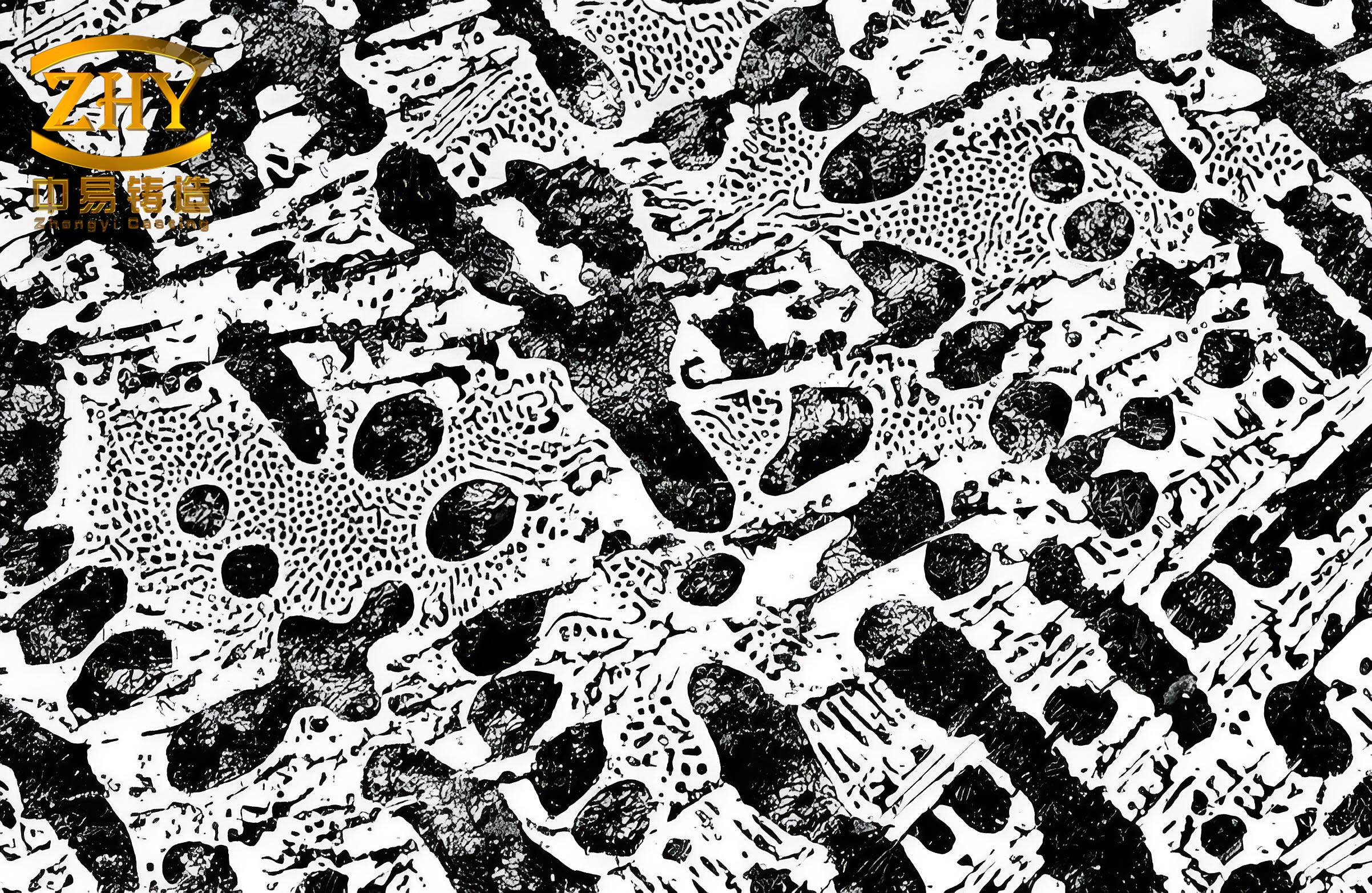
The pursuit of ultra-low friction and near-zero wear states in mechanical systems represents a fundamental goal in tribology, offering immense benefits for energy efficiency, longevity, and performance. In this context, the sliding pair of silicon nitride (Si3N4) ceramic against white cast iron under distilled water lubrication has emerged as a phenomenally effective combination. My investigations, building upon foundational research, have systematically revealed that this exceptional tribological performance is not merely a result of the intrinsic properties of the materials but is dominantly governed by the in-situ formation of a protective tribochemical film. This article delves deeply into the mechanistic processes of film formation, its characteristics, and the critical parameters influencing its development, with a particular focus on the indispensable role played by the microstructure of white cast iron.
The initial friction coefficient for the Si3N4-white cast iron pair under water lubrication is typically high, often exceeding 0.8. However, with continued sliding, a dramatic transition occurs. The friction coefficient plummets, stabilizing at an exceptionally low value of approximately 0.02. Concurrently, the wear rates for both materials diminish to levels virtually immeasurable by conventional means. This transition coincides with the visual and tactile smoothing of both contact surfaces. The core thesis, which I have explored in detail, is that this transition is caused by the formation of a coherent, gel-based surface film. The formation of this film is a direct tribochemical consequence of the interaction between the Si3N4 debris and the aqueous environment, catalyzed and anchored by the unique morphology of the worn white cast iron surface.
1. The Multistage Mechanism of Tribofilm Genesis on White Cast Iron
The formation of the protective film is not an instantaneous event but a progressive, multi-stage process intimately linked to the evolving surface topography and chemistry. The process can be dissected into four sequential, yet overlapping, stages.
Stage 1: Surface Activation and Debris Generation. During the initial run-in period, asperity contact and abrasive action lead to wear on both surfaces. For the white cast iron, this involves the plastic deformation of the relatively soft pearlitic matrix. The hard, brittle carbides (primarily (Fe,Cr)3C in the studied alloy) embedded within this matrix cannot accommodate this strain and consequently undergo subsurface cracking and eventual spalling. This process creates micron-scale pits or “spalling pits” across the white cast iron surface. Simultaneously, the Si3N4 surface also experiences wear, generating fine ceramic debris particles. The initial high friction is characteristic of this abrasive and adhesive wear regime.
Stage 2: Mechanical Entrapment and Chemical Precursor Formation. The spalling pits on the white cast iron surface act as natural traps for the Si3N4 debris particles. These particles become mechanically embedded or lodged within these pits. Once confined, the debris is subjected to the combined effects of frictional heating (flash temperatures can easily exceed 400-500 K at asperity contacts) and the presence of water. Under these conditions, Si3N4 is thermodynamically and kinetically prone to tribochemical reactions. The primary reactions are oxidation and hydrolysis, which can be represented as:
$$ \text{Si}_3\text{N}_4(s) + 6\text{H}_2\text{O}(l) \rightarrow 3\text{SiO}_2(s) + 4\text{NH}_3(aq) \quad \text{(Oxidation/Hydrolysis)} $$
$$ \text{SiO}_2(s) + 2\text{H}_2\text{O}(l) \rightleftharpoons \text{Si(OH)}_4(aq) \quad \text{(Hydration to Silicic Acid)} $$
The generation of ammonia (NH3) has been verified by chemical testing of the used lubricant water. The solid SiO2 and soluble silicic acid (Si(OH)4) are the crucial chemical precursors for film formation. The spalling pit plays a vital role here: it provides a confined, semi-stagnant micro-environment where the reaction products (silicic acid molecules) can accumulate rather than being immediately flushed away by the bulk water flow.
Stage 3: Polycondensation and Gelation within Pits. As the concentration of monomeric silicic acid, Si(OH)4, increases within the pit, it becomes supersaturated. These monomers then undergo a series of dehydration-condensation reactions, linking together to form polymeric silica species. This process transforms the aqueous solution into a silica sol, and eventually, a wet silica gel fills the pit.
$$ \text{Si(OH)}_4 + \text{Si(OH)}_4 \rightarrow (\text{HO})_3\text{Si-O-Si(OH)}_3 + \text{H}_2\text{O} \quad \text{(Condensation)} $$
This reaction continues, building a three-dimensional network. The iron oxides (e.g., Fe2O3) from the slight oxidation of the fresh white cast iron surface may also become incorporated into this growing gel network. At this stage, individual pits are filled with a nascent gel material.
Stage 4: Film Coalescence and Surface Planarization. With continued sliding, the process repeats: more pits form and are subsequently filled. The gel from adjacent pits begins to merge under the shear and normal pressure of the sliding contact. The Si3N4> counterface, itself undergoing smoothing via dissolution and polishing, acts as a “tribological lathe,” shearing and compacting the gel material. This action spreads the gel over the inter-pit regions, eventually forming a contiguous, thin film covering a significant fraction of the white cast iron surface. The final film is a composite of amorphous silica gel, possibly some crystalline SiO2 nanoparticles, and minor iron oxides. This film is extremely smooth and has very low shear strength, facilitating the transition to hydrodynamic or mixed lubrication with a friction coefficient of ~0.02.
The following table summarizes this staged mechanism:
| Stage | Key Process on White Cast Iron | Chemical/Tribological Event | Observable Outcome |
|---|---|---|---|
| 1. Initiation | Carbide spalling, pit formation | Mechanical wear, debris generation | Rough surface, high friction (μ > 0.8) |
| 2. Precursor Formation | Entrapment of Si3N4 debris in pits | Oxidation/Hydrolysis: Si3N4 → SiO2 → Si(OH)4 | White debris particles visible in pits |
| 3. Gel Nucleation | Concentration of Si(OH)4 in pits | Polycondensation: Sol → Gel formation | Pits fill with dark gel-like material |
| 4. Film Maturation | Coalescence of gel from multiple pits | Shear-induced spreading and compaction | Continuous smooth film, μ ≈ 0.02, near-zero wear |
2. Critical Factors Influencing Film Formation on White Cast Iron
The efficiency and speed of this self-generating protective mechanism are highly sensitive to several operational and material parameters. Understanding these is key to harnessing the effect in practical applications involving white cast iron components.
2.1. Role of White Cast Iron Microstructure. This is arguably the most critical material factor. The volume fraction, type, size, and distribution of carbides dictate the film formation kinetics.
- Carbide Volume Fraction: A higher volume fraction of hard carbides (e.g., >20%) generally promotes more frequent spalling events, creating a higher density of nucleation sites (pits) for film formation. However, if the carbide network is too continuous, it may lead to excessive initial wear or surface instability.
- Carbide Type and Hardness: Hard, brittle carbides like M3C (cementite) and especially alloy carbides like M7C3 or M23C6 are more prone to spalling than softer or more fracture-resistant phases. The choice of white cast iron alloy (e.g., nickel-chromium, high-chromium) directly controls this.
- Matrix Strength: A stronger matrix (e.g., martensitic vs. pearlitic) can better support the carbides, potentially delaying spalling and film initiation but possibly leading to a more stable surface once the film is formed.
2.2. Tribological Operating Conditions.
- Load (Contact Pressure): Moderate loads are essential. Too low a load may not generate sufficient stress to cause carbide spalling and create pits. Too high a load may cause catastrophic fracture or deep deformation of the white cast iron subsurface, preventing stable film formation and leading to severe wear. An optimal load range exists where pit formation is controlled and progressive.
- Sliding Speed: Speed influences frictional heating and the shear rate at the interface. Higher speeds increase flash temperatures, accelerating the hydrolysis reaction of Si3N4. However, they also increase hydrodynamic effects and may hinder the entrapment of debris if the water flow becomes too turbulent.
- Lubricant Chemistry: While distilled water is effective, the pH and presence of additives can dramatically alter film formation. Mildly alkaline conditions can accelerate the hydrolysis and condensation of silica. Conversely, highly acidic or complexing environments may dissolve the forming gel.
The interplay of load and sliding speed on the steady-state friction coefficient for a typical Si3N4-white cast iron pair can be conceptualized as follows:
| Load / Speed Regime | Effect on White Cast Iron Surface | Effect on Tribochemistry | Expected Friction Outcome |
|---|---|---|---|
| Low Load, Low Speed | Insufficient carbide spalling, few pits | Minimal debris generation and reaction | Moderate, unstable friction, no film |
| Moderate Load, Moderate Speed (Optimal) | Controlled pit formation, stable surface | Ideal debris entrapment & reaction rate | Ultra-low friction (μ ~0.02), stable film |
| High Load, Any Speed | Severe deformation/cracking, unstable surface | Reaction may occur but film is scraped off | High, erratic friction, high wear |
| Any Load, Very High Speed | Possible thermal softening of matrix | Rapid reaction but poor debris retention | Variable friction, possible film instability |
3. Characteristics and Properties of the Formed Film on White Cast Iron
The tribofilm that results from this process is a sophisticated functional layer. Analysis reveals it possesses unique characteristics that explain its performance.
3.1. Chemical and Structural Nature. The film is predominantly amorphous silica (SiO2·nH2O) in a hydrated, polymeric gel state. X-ray diffraction confirms the absence of long-range order, matching a gel structure. Energy-dispersive X-ray spectroscopy (EDS) or Auger Electron Spectroscopy (AES) on cross-sections shows a high concentration of Si and O within the film, with traces of Fe from the white cast iron substrate and any alloying elements from the ceramic (e.g., Y, La). The film is not a simple transferred layer but a true in-situ reaction product.
3.2. Thickness and Coverage. The film thickness is self-limiting, typically on the order of 0.5 to 1.0 micrometers. Once it reaches a certain thickness, the shear forces and the ultra-smooth Si3N4 counterface prevent further excessive buildup. The percentage of the white cast iron surface area covered by the film is critical for low friction; measurements indicate coverage can exceed 30-40% in the optimal state. This coverage effectively transforms the contact from a rough ceramic-on-iron contact to a smooth ceramic-on-silica-gel/iron composite contact.
3.3. Mechanical and Tribological Properties.
- Low Shear Strength: The gel-like structure provides very little resistance to shear, which is the direct cause of the ultra-low friction coefficient.
- Conformability: The film can deform slightly to accommodate minor surface irregularities, promoting better conformity with the counterface.
- Load-Carrying Capacity: While the gel itself is not exceptionally strong, its intimate bonding to the white cast iron substrate and support from the surrounding hard carbide/matrix structure allow it to sustain the applied contact pressures without immediate failure.
- Self-Replenishing Ability: A key feature is the film’s ability to repair itself. If locally removed by an extreme event, the underlying mechanism (pit formation, debris entrapment, reaction) can re-initiate in that area, leading to film regeneration.
The transition to the ultra-low friction state can be modeled as a competition between film formation and removal rates. A simplified kinetic model can be expressed as:
$$ \frac{d\theta}{dt} = k_f(1 – \theta) – k_r \theta $$
Where:
- $\theta$ is the fractional surface coverage of the tribofilm on the white cast iron (0 to 1).
- $k_f$ is the formation rate constant, dependent on factors like load (for pit creation), temperature (for reaction speed), and white cast iron carbide density.
- $k_r$ is the removal rate constant, dependent on shear stress and film adhesion.
The steady-state coverage $\theta_{ss}$ is given by:
$$ \theta_{ss} = \frac{k_f}{k_f + k_r} $$
For ultra-low friction ($\theta_{ss} \rightarrow 1$), the design goal is to maximize $k_f$ and minimize $k_r$. This is achieved by selecting a white cast iron with an appropriate carbide structure (high $k_f$) and operating under conditions that promote gentle shear (low $k_r$).
4. Conclusion and Forward Perspective
The formation of a silica-based tribochemical film is the cornerstone of the exceptional tribological synergy observed in the Si3N4-white cast iron pair under water lubrication. This process is inherently linked to the microstructure of the white cast iron, where the spalling of hard carbides provides the necessary sites for the entrapment and subsequent tribochemical transformation of Si3N4 wear debris. The resulting gel film planarizes the surface, drastically reduces shear stress, and establishes a lubrication regime that virtually eliminates wear.
Future research and engineering efforts should focus on several key areas to translate this phenomenon into widespread practical application. First, the deliberate engineering of white cast iron microstructures—through alloy design, heat treatment, and processing—to optimize and control the carbide spalling behavior for predictable and rapid film formation. Second, the exploration of additive-modified water-based lubricants that could further accelerate film formation, enhance its stability, or extend the operational envelope (e.g., to higher loads). Third, the development of predictive models that incorporate material properties of white cast iron (carbide size, spacing, hardness) and operating conditions to forecast film formation time and steady-state performance. Finally, investigating the applicability of this mechanism to other ceramic-metal pairs where the metal component can provide a similar surface activation role. The understanding that a carefully selected white cast iron is not just a passive wear partner but an active participant in creating its own protective surface opens new avenues for designing durable, low-friction mechanical systems.