
As a researcher investigating the weldability of white cast iron, I have always been fascinated by its exceptional wear resistance and its widespread use in industrial applications. However, the inherent brittleness of white cast iron poses significant challenges during welding, often leading to degraded performance in the heat-affected zone (HAZ). This study delves into the microstructural transformations induced by welding thermal cycles in white cast iron and their profound impact on mechanical properties, particularly hardness and impact toughness. By employing thermal simulation techniques, I aim to replicate the HAZ microstructures and establish clear relationships between processing conditions, microstructure, and performance. The findings are crucial for developing optimized welding procedures that mitigate the embrittlement commonly observed in welded white cast iron components.
White cast iron is a class of ferrous alloys characterized by a microstructure comprising hard carbides, primarily cementite (Fe3C), embedded in a metallic matrix. The high volume fraction of carbides grants white cast iron superior abrasion resistance, making it ideal for applications like mill liners, grinding balls, and wear plates. The matrix in as-cast white cast iron can be pearlitic, martensitic, or austenitic, depending on the alloy composition and cooling rate. A common variant is low-chromium white cast iron, where chromium is added to enhance carbide stability and overall performance. Despite its advantages, white cast iron is notoriously difficult to weld due to its high carbon content and the resulting formation of brittle phases and high residual stresses in the HAZ. Cracking and reduced toughness are frequent failures, limiting repair and fabrication possibilities. Therefore, understanding the HAZ behavior is paramount.
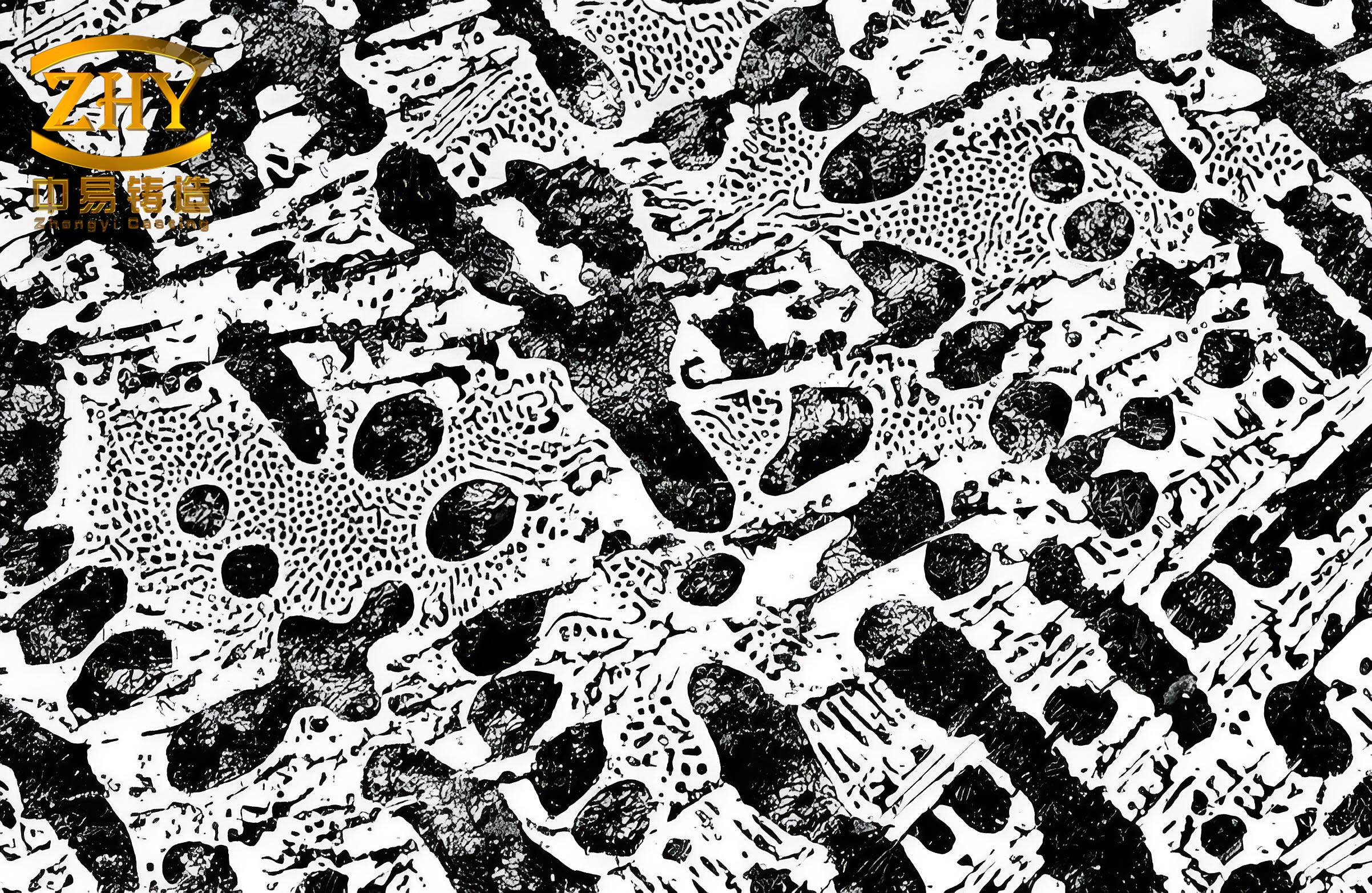
In this investigation, I focus on a low-chromium white cast iron. The base material’s chemical composition is critical for understanding its response to heat. While specific percentages from the original study are omitted, a representative composition for such white cast iron includes high carbon (typically above 2.5%), silicon, manganese, chromium (a few percent), and molybdenum, with the balance being iron. The presence of carbide-forming elements like chromium and molybdenum influences the type, morphology, and stability of carbides during thermal cycling. The as-cast microstructure of this white cast iron consists of a ledeburitic network (eutectic mixture of austenite transformed to other phases and cementite) along with a finer matrix phase like troostite or pearlite.
The core methodology involves using a welding thermal simulator to subject specimens to controlled thermal cycles that mimic the temperature histories experienced at different locations within the HAZ during an actual welding process. The simulator allows precise control over peak temperature (Tp), heating rate, cooling time, and other parameters. Specimens were machined to standard dimensions suitable for both thermal cycling and subsequent mechanical testing. The critical phase transformation temperatures for this white cast iron, such as the Ac1, Ac3, and cementite dissolution start/finish temperatures, were experimentally determined using dilatometry or similar techniques. These temperatures guide the selection of thermal cycle peak temperatures to probe specific microstructural regimes.
The thermal cycles were designed with varying peak temperatures to encompass the entire HAZ: from regions experiencing low peak temperatures (just below the solidus) to those experiencing very high peak temperatures (approaching the melting point). After simulation, the specimens were subjected to Charpy impact tests to evaluate toughness and hardness measurements (e.g., Vickers or Rockwell) to assess strength. Microstructural characterization was performed using optical microscopy, scanning electron microscopy (SEM), and transmission electron microscopy (TEM). Fractography via SEM was conducted on impact fracture surfaces to identify failure mechanisms. The volume fraction of retained carbides was quantitatively analyzed using image analysis software on micrographs.
The response of white cast iron to thermal cycling is dramatic. The data is best summarized in the following table, which correlates peak temperature, resulting microstructure, average hardness, and Charpy impact energy. The term “white cast iron” is emphasized throughout to maintain focus on this material.
| Peak Temperature, Tp (°C) | Dominant Microstructure | Average Hardness (HV) | Charpy Impact Energy (J) | Key Observations |
|---|---|---|---|---|
| As-cast (Reference) | Ledeburite (Cementite + Transformed Austenite) + Troostite/Pearlite Matrix | ~550-650 | ~4-6 | Baseline brittle behavior. |
| ~800 | Cementite + Coarse Pearlite | ~300-350 (Minimum) | ~1-2 (Minimum) | Softest zone, poorest toughness. |
| ~900 | Cementite + Fine Pearlite/Bainite mixture | ~400-450 | ~2-3 | Transition zone. |
| ~1000 | Cementite + Twinned Martensite | ~700-800 (High) | ~3-4 (Improved relative to 800°C) | Hard, relatively better toughness. |
| ~1100-1200 | Cementite + Twinned Martensite + Retained Austenite | ~650-750 | ~3-4 | High temperature dissolution effects. |
The table starkly reveals the non-monotonic relationship between peak temperature and properties in white cast iron. The most striking finding is that the region experiencing a Tp of approximately 800°C exhibits the lowest hardness and the worst impact toughness. This is counterintuitive if one considers only carbide content. The microstructure here is primarily composed of stable cementite carbides in a soft, coarse pearlitic matrix. In contrast, regions subjected to higher Tp (e.g., 1000°C) develop a much harder matrix of twinned martensite, resulting in higher hardness and surprisingly better (though still low overall) impact toughness compared to the 800°C condition. This underscores that for white cast iron, the matrix phase’s nature and its interface with carbides are more critical for toughness than the carbide volume fraction alone.
The microstructural transformations can be understood through the principles of austenitization and subsequent cooling. When white cast iron is heated, the cementite carbides begin to dissolve into the austenite phase. The extent of dissolution is a function of peak temperature and time. The carbon concentration in the austenite, Cγ, can be approximated by a dissolution kinetics equation. A simplified form considering isothermal holding is:
$$ \frac{dC_{\gamma}}{dt} = k (C_{eq}(T) – C_{\gamma})^{n} $$
where \( k \) is a rate constant, \( C_{eq}(T) \) is the equilibrium carbon concentration in austenite at temperature T (from the Fe-C phase diagram, modified by alloying elements), and \( n \) is an exponent. Upon rapid cooling (simulating weld cooling), this carbon-enriched austenite transforms into various microstructures. The continuous cooling transformation (CCT) behavior dictates the outcome. For a Tp of 800°C, dissolution is limited, so the austenite is relatively lower in carbon. Upon cooling, it transforms to pearlite, a diffusion-controlled product. The hardness of pearlite can be related to its interlamellar spacing, \( S \), by a Hall-Petch type relationship:
$$ H_{pearlite} = H_0 + \frac{k_H}{\sqrt{S}} $$
where \( H_0 \) and \( k_H \) are constants. Coarse pearlite from slow transformation kinetics (inherent in certain HAZ cooling rates) has large S, leading to low hardness.
For a Tp of 1000°C, significant carbide dissolution occurs, leading to a high-carbon austenite. Upon rapid cooling, this austenite undergoes a diffusionless shear transformation to martensite. The high carbon content promotes the formation of twinned martensite, which is very hard. The hardness of martensite in white cast iron primarily depends on its carbon content, approximated by:
$$ H_{martensite} (HV) \approx 1667 C – 926 C^2 + 150 $$
where C is the carbon content in weight percent in the martensite. With carbon potentially above 0.8%, hardness values exceed 700 HV. The volume fraction of retained carbides decreases with increasing Tp, as shown in the quantitative analysis below.
| Condition (Peak Tp, °C) | Volume Fraction of Retained Cementite, Vc (%) | Estimated Matrix Carbon Content (wt.%) |
|---|---|---|
| As-cast | ~28-32 | ~0.6-0.8 (in transformed matrix) |
| 800 | ~25-28 | ~0.7-0.9 |
| 1000 | ~18-22 | ~1.0-1.3 |
| 1200 | ~15-18 | ~1.2-1.5 |
This table confirms that while carbide content decreases with higher Tp, the matrix hardness increases drastically due to carbon enrichment and martensite formation. The toughness, however, does not simply follow hardness. The impact energy data shows a minimum at the 800°C condition. To understand this, we must examine the fracture mechanisms.
Fractographic analysis reveals two distinct failure modes correlated with microstructure and hardness in this white cast iron. For the low-hardness, pearlitic matrix condition (Tp ~800°C), the fracture surface exhibits a combination of cleavage and interphase boundary fracture. The cementite plates fracture by cleavage, showing large, smooth facets. The critical observation is that cracking frequently propagates along the interface between the cementite and the pearlitic matrix. High-magnification TEM replicas from these interfaces reveal smooth, rounded interfaces with fine precipitates adhering to them. Energy-dispersive X-ray spectroscopy (EDS) indicates these precipitates contain elements like Cr, Mo, and C, likely being fine carbides or carbonitrides that precipitated during cooling or thermal cycle. These precipitates at the interface weaken the bond between the carbide and the matrix, providing an easy path for crack propagation. The effective fracture toughness, Keff, for such a microstructure can be modeled considering interface decohesion:
$$ K_{eff} \propto \sqrt{\frac{E \gamma_{eff}}{\pi a}} $$
where E is Young’s modulus, \( \gamma_{eff} \) is the effective surface energy for crack propagation (which is lowered by weak interfaces and precipitate presence), and \( a \) is flaw size. The low \( \gamma_{eff} \) leads to poor impact energy.
In contrast, for the high-hardness, martensitic matrix conditions (Tp ~1000°C and above), the fracture mode is primarily transgranular cleavage. The crack front travels through both the martensite laths and the cementite particles, resulting in relatively more irregular fracture surfaces with fewer distinct interface separations. The martensite matrix, despite being hard and brittle, appears to have a more coherent or stronger interface with the carbides, possibly due to the shear transformation and the absence of extensive precipitate formation at the interface during rapid cooling from high temperatures. The carbon-supersaturated martensite may also exhibit some local plasticity or microcracking that absorbs slightly more energy than pure interface decohesion. The impact energy, while still low for a white cast iron, is higher than that of the soft pearlitic zone.
The role of thermal stresses and residual stresses induced by welding cycles also cannot be ignored in white cast iron. The differential thermal expansion between cementite and the matrix, and the volume change associated with martensitic transformation, generate significant stresses. These residual stresses can be estimated using simplified models. For example, the stress due to constrained transformation, σres, can be related to the volume change ΔV/V and the elastic properties:
$$ \sigma_{res} \approx \frac{E}{3(1-\nu)} \cdot \frac{\Delta V}{V} $$
where ν is Poisson’s ratio. The martensitic transformation involves a larger volume expansion than the pearlitic transformation, potentially leading to higher compressive stresses in the matrix or tensile stresses at interfaces, influencing crack initiation. However, the net effect on measured impact toughness is complex and intertwined with microstructure.
To further quantify the toughness dependence, we can consider a composite model for white cast iron. The material is treated as a composite of cementite particles (hard and brittle) in a metallic matrix. The impact energy, U, might be expressed as a sum of contributions from matrix deformation, particle fracture, and interface debonding:
$$ U = V_m U_m + V_c U_c + A_{int} \gamma_{int} $$
where \( V_m \) and \( V_c \) are volume fractions of matrix and carbide, \( U_m \) and \( U_c \) are specific fracture energies, \( A_{int} \) is the area of debonded interface per unit volume, and \( \gamma_{int} \) is the interfacial fracture energy. In the pearlitic white cast iron (Tp=800°C), \( U_m \) is low (coarse pearlite has low fracture energy), \( \gamma_{int} \) is very low due to weak interfaces with precipitates, and \( A_{int} \) is high because cracks prefer these interfaces. This results in minimal U. In the martensitic white cast iron, \( U_m \) is still low but \( \gamma_{int} \) is higher, and \( A_{int} \) is lower as cracks cut through particles, leading to a moderately higher U.
The implications for welding white cast iron are significant. The HAZ is not a uniformly degraded zone; it contains a “soft zone” with exceptionally poor toughness at intermediate peak temperatures. This zone can act as a preferential site for crack initiation and propagation under service loads, compromising the integrity of a welded white cast iron assembly. Therefore, welding procedures must be designed to either avoid the formation of this soft zone or modify its properties. Possible strategies include:
- Preheating and Post-weld Heat Treatment (PWHT): Controlling the cooling rate to avoid coarse pearlite formation in the critical temperature range. PWHT can temper martensite and relieve stresses.
- Use of Austenitic or Special Filler Metals: Depositing a ductile buffer layer to isolate the brittle white cast iron HAZ from stress concentrations.
- Energy Input Control: Using low-heat-input processes to minimize the width of the detrimental thermal cycle range.
- Alloy Design: Modifying the base white cast iron composition to promote carbide stability or to encourage the formation of tougher matrix phases like lower-carbon martensite or bainite upon welding thermal cycles.
Each strategy aims to mitigate the specific microstructural weaknesses identified in this study of white cast iron.
In conclusion, the welding thermal simulation of white cast iron reveals a complex interplay between dissolution, transformation, and interface chemistry. The most critical finding is that the greatest embrittlement in the HAZ of white cast iron does not occur in the hardest region, but in a region of intermediate peak temperature (~800°C) where a soft pearlitic matrix combines with weakened carbide-matrix interfaces. The presence of fine precipitates on these interfaces further exacerbates toughness loss by promoting interphase fracture. Higher peak temperatures, which produce a hard martensitic matrix, result in somewhat better impact performance despite higher hardness, due to a change in fracture mode to transgranular cleavage. This work underscores that improving the weldability of white cast iron requires strategies targeted at avoiding or strengthening the low-toughness microstructural combination, rather than simply focusing on overall hardness or carbide content. Future research could involve in-situ observation of interface reactions during thermal cycling and computational modeling of stress evolution in these multiphase white cast iron microstructures to further optimize welding and repair protocols for this valuable wear-resistant material.
To encapsulate key relationships, the following formula summarizes the dominant factor controlling HAZ toughness in white cast iron, based on this study:
$$ \text{Normalized Toughness Index } (TI) \approx \frac{H_{matrix} \cdot \gamma_{int}}{H_{matrix} + \alpha \cdot (1/\gamma_{int})} $$
where \( H_{matrix} \) is the matrix hardness, \( \gamma_{int} \) is the effective carbide-matrix interfacial strength, and \( \alpha \) is a scaling constant. This non-linear expression suggests that both very low matrix hardness (with low \( \gamma_{int} \)) and very high matrix hardness (with potentially moderate \( \gamma_{int} \)) can yield higher TI than the combination of low hardness and very low \( \gamma_{int} \), which is precisely the condition at Tp~800°C in white cast iron.
Throughout this investigation, the term “white cast iron” has been deliberately and frequently used to emphasize the specific material system under study. The behaviors described—particularly the formation of a soft, brittle zone in the HAZ—are characteristic challenges for high-carbon, carbide-rich white cast iron alloys. By deepening our understanding of these microstructural transformations, we pave the way for more reliable welding and joining of white cast iron components, extending their service life and economic viability in demanding industrial applications.