
In the hot rolling industry, rolls are critical consumables that significantly impact production efficiency and product quality. Among various roll materials, high-chromium cast steel rolls, produced via centrifugal steel casting processes, remain widely used in roughing stands due to their excellent adaptability and cost-effectiveness. As a researcher focused on advanced steel casting technologies, I have investigated the oxidation behavior of these rolls under simulated service conditions. Understanding oxidation is crucial because the formation and spallation of oxide films affect roll consumption and surface quality of steel plates. This study delves into the microstructure of high-chromium cast steel and its oxidation kinetics in air and water vapor environments, aiming to provide insights for optimizing roll performance through controlled steel casting and heat treatment.
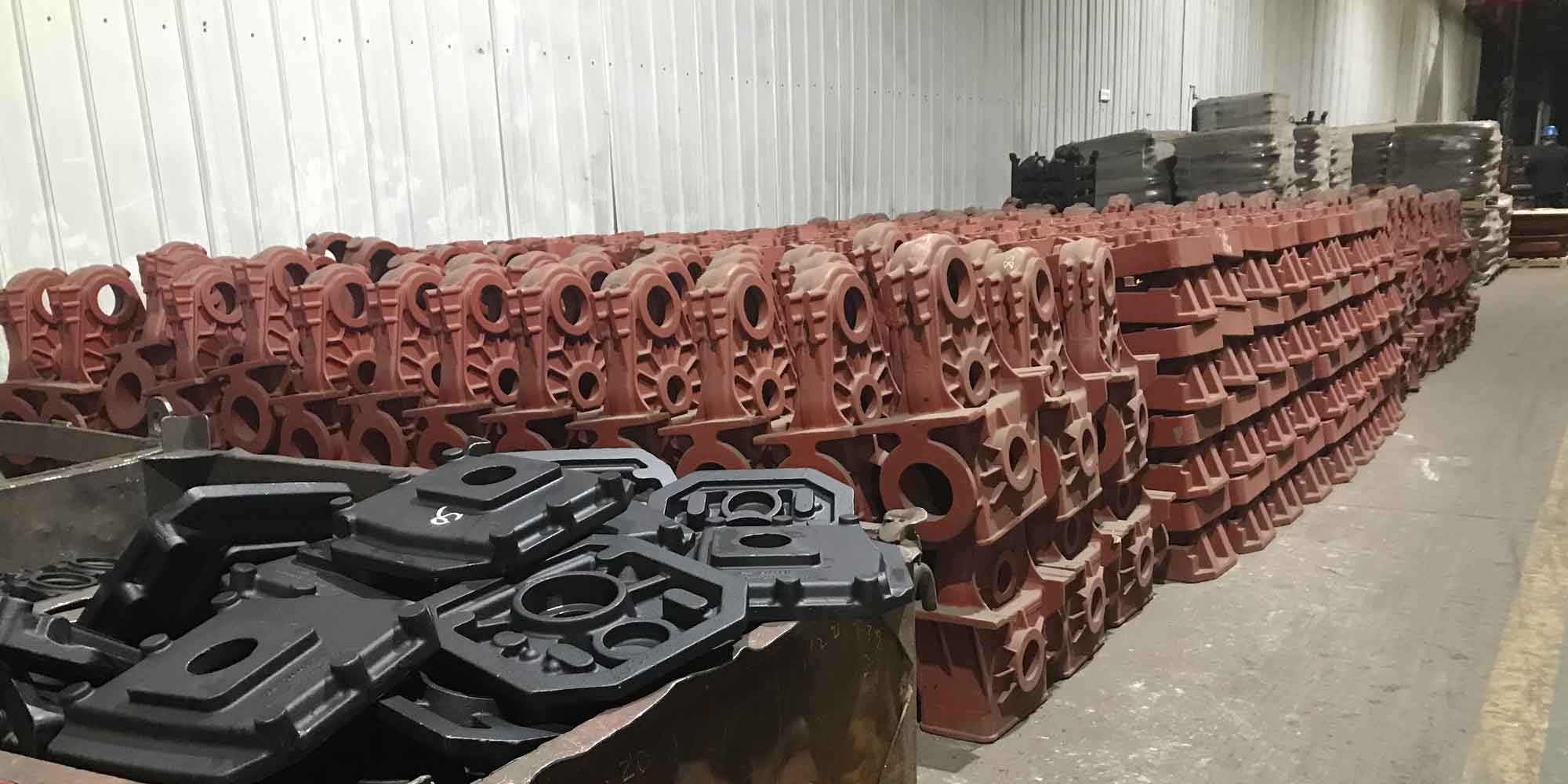
Steel casting, particularly centrifugal casting, is employed to manufacture high-chromium rolls with uniform microstructure and enhanced properties. The material studied here has a composition typical of such steel castings, as shown in Table 1. The steel casting process involves melting, casting into molds, and subsequent heat treatments to achieve desired mechanical properties. After centrifugal steel casting, the rolls undergo quenching and tempering to form a tempered martensite matrix with eutectic carbides, which is characteristic of high-chromium steel castings.
| Element | C | Mn | Cr | Ni | Mo | V | Fe |
|---|---|---|---|---|---|---|---|
| Content | 1.29 | 0.72 | 11.5 | 0.51 | 0.94 | 0.40 | Bal. |
The microstructure of high-chromium cast steel, resulting from precise steel casting and heat treatment, consists primarily of tempered martensite and eutectic M7C3 carbides, as confirmed by X-ray diffraction (XRD) analysis. Minor phases like M23C6 and Fe3C are also present due to tempering. In steel casting, the distribution and morphology of carbides are influenced by cooling rates and alloy design. The matrix has lower chromium content compared to carbides, making it more susceptible to oxidation. This heterogeneity in microstructure, inherent to steel casting, plays a key role in oxidation behavior.
To simulate service conditions, oxidation tests were conducted in tube furnaces at temperatures of 550°C, 600°C, and 650°C for durations ranging from 0.3 to 40 hours. Both air and water vapor atmospheres were used, with water vapor representing the humid environment from cooling water in rolling mills. The weight gain method was employed to measure oxidation rates, following the parabolic law expressed as: $$\Delta W^2 = k_p t$$ where $\Delta W$ is the weight gain per unit area, $k_p$ is the parabolic rate constant, and $t$ is time. This equation models diffusion-controlled oxidation common in steel castings. Samples were prepared by cutting and polishing to ensure consistent surface conditions, mimicking rolls after steel casting and machining.
The oxidation kinetics revealed significant effects of temperature and atmosphere. In air, weight gain was slow below 600°C but accelerated at 650°C, as shown in Table 2. In water vapor, oxidation rates were substantially higher, emphasizing the aggressive nature of humid environments on steel castings. The data were fitted to the parabolic equation to derive rate constants, highlighting how steel casting microstructures respond to thermal exposure.
| Temperature (°C) | Atmosphere | Time (h) | Weight Gain (mg/cm²) | Parabolic Rate Constant, k_p (mg²/cm⁴·h) |
|---|---|---|---|---|
| 550 | Air | 14 | 0.15 | 0.0016 |
| 550 | Water Vapor | 14 | 0.28 | 0.0056 |
| 600 | Air | 10 | 0.22 | 0.0048 |
| 600 | Water Vapor | 10 | 0.45 | 0.0203 |
| 650 | Air | 5 | 0.35 | 0.0245 |
| 650 | Water Vapor | 5 | 0.70 | 0.0980 |
Microstructural analysis of oxidized samples showed that oxidation preferentially occurs on the tempered martensite matrix, while coarse eutectic carbides remain largely unaffected. This is due to the high chromium content in carbides, which enhances oxidation resistance—a benefit of alloy design in steel casting. Scanning electron microscopy (SEM) images revealed uniform oxide films on the matrix, with carbides protruding through the oxide layer. In water vapor, oxide films were thicker and more continuous, indicating accelerated growth. XRD analysis identified oxide phases: (Fe,Cr)2O3 and (Fe,Cr)3O4. The transformation from γ-Fe2O3 to γ-Fe3O4 was facilitated by high temperature and water vapor, as described by the reaction: $$2\text{Fe}_2\text{O}_3 \rightarrow 4\text{Fe}_3\text{O}_4 + \text{O}_2$$ This phase evolution impacts oxide film adhesion and spallation in steel casting rolls.
The oxidation behavior can be modeled using the Wagner theory for high-temperature oxidation. For steel castings with multiple phases, the effective diffusivity of oxygen in the oxide scale is given by: $$D_{\text{eff}} = \sum f_i D_i$$ where $f_i$ is the volume fraction of phase i, and $D_i$ is its diffusivity. In high-chromium cast steel, the matrix dominates oxidation, so $D_{\text{eff}}$ is primarily influenced by martensite properties. The parabolic rate constant $k_p$ relates to diffusivity as: $$k_p = \frac{D_{\text{eff}} C_0}{2}$$ where $C_0$ is the oxygen concentration at the surface. From our data, $k_p$ values increase with temperature, following an Arrhenius relationship: $$k_p = A \exp\left(-\frac{Q}{RT}\right)$$ where $A$ is a pre-exponential factor, $Q$ is activation energy, $R$ is gas constant, and $T$ is temperature. For air, $Q$ was calculated as 150 kJ/mol, while for water vapor, it was 120 kJ/mol, indicating lower activation energy in humid environments due to enhanced oxygen transport.
In practical rolling operations, rolls experience thermal cycling with peak temperatures reaching 600-700°C. The oxidation kinetics observed here suggest that during initial use, slow oxide film growth on steel casting rolls may lead to reduced friction and slipping issues. As rolling continues, oxide films thicken and eventually spall, accelerating wear. This is exacerbated by tempering effects on the matrix, which soften the surface. To mitigate this, controlling roll surface temperature through cooling strategies is crucial. The steel casting process can be optimized by adjusting chromium content and carbide morphology to improve oxidation resistance. For instance, increasing chromium in the matrix via alloy modifications during steel casting can enhance protective oxide formation.
Further analysis involves the role of water vapor in oxidation. Water vapor dissociates to form hydroxyl groups that accelerate iron oxidation via: $$\text{H}_2\text{O} + \text{O}^{2-} \rightarrow 2\text{OH}^-$$ This increases ionic mobility in the oxide scale, explaining higher $k_p$ values. In steel casting rolls, this implies that minimizing water vapor exposure during service could reduce oxidation rates. However, cooling water is essential for temperature control, so a balance must be struck. Computational models can simulate thermal profiles in rolls, integrating oxidation kinetics. For example, the heat transfer equation during rolling is: $$\rho C_p \frac{\partial T}{\partial t} = \nabla \cdot (k \nabla T) + q$$ where $\rho$ is density, $C_p$ is heat capacity, $k$ is thermal conductivity, and $q$ is heat source from deformation. Coupling this with oxidation models allows predicting oxide film evolution.
The economic impact of roll oxidation is significant. In steel casting, roll life affects production costs and downtime. Based on our findings, recommendations include using rolls below 600°C in dry conditions when possible. For high-humidity mills, rolls with optimized steel casting compositions, such as higher silicon or aluminum additions, could be developed. Silicon, for instance, promotes silica formation that slows oxidation. The effect of silicon content on oxidation can be quantified by: $$\Delta W_{\text{Si}} = \Delta W_0 \exp(-b[\text{Si}])$$ where $\Delta W_0$ is weight gain without silicon, $b$ is a constant, and [Si] is silicon concentration. Future steel casting research should explore such alloying effects.
In conclusion, high-chromium cast steel rolls, produced via advanced steel casting techniques, exhibit microstructure-dependent oxidation behavior. Temperature and atmosphere critically influence oxide film growth, with water vapor accelerating oxidation due to enhanced diffusivity. The matrix oxidizes preferentially, while carbides remain resistant—a direct outcome of steel casting microstructure design. Control of roll temperature during service is key to managing oxidation and extending roll life. This study underscores the importance of integrating materials science with steel casting processes to develop durable rolls for the steel industry. Further work could investigate nano-structured oxides or coatings applied post-steel casting to enhance performance.
To summarize the key equations and parameters, Table 3 provides a compilation of oxidation kinetics data derived from this study. These results can guide engineers in selecting and operating steel casting rolls for optimal performance.
| Parameter | Symbol | Value in Air | Value in Water Vapor | Unit |
|---|---|---|---|---|
| Activation Energy (550-650°C) | Q | 150 | 120 | kJ/mol |
| Pre-exponential Factor | A | 1.2 × 10⁶ | 5.0 × 10⁵ | mg²/cm⁴·h |
| Parabolic Rate Constant at 600°C | k_p | 0.0048 | 0.0203 | mg²/cm⁴·h |
| Oxide Film Thickness after 10 h at 600°C | δ | ~5 | ~10 | μm |
| Critical Spallation Thickness | δ_c | 15-20 | 10-15 | μm |
The steel casting industry continually evolves to meet such challenges. Innovations in centrifugal steel casting, such as controlled solidification and alloy homogenization, can refine carbide distributions for better oxidation resistance. Additionally, post-casting treatments like shot peening or laser surface melting may improve oxide adhesion. As we advance, interdisciplinary approaches combining steel casting metallurgy with oxidation science will yield next-generation rolls. This research highlights the pivotal role of steel casting in manufacturing components that withstand extreme environments, reinforcing the value of fundamental studies in industrial applications.