
In the production of nodular cast iron, the spheroidization treatment stands as a critical and delicate stage. The effectiveness of this treatment, which transforms graphite from flake to spheroidal form, is influenced by a multitude of factors including treatment temperature, methodology, the selection and use of spheroidizing agents, and operational rigor. A failure in spheroidization typically results in the scrapping of an entire batch of castings, leading to substantial losses in both production efficiency and cost control. While industry practitioners have extensively documented potential causes for such failures and pursued various studies to enhance the microstructure and properties of nodular iron, practical challenges persist. This article draws from first-hand experience in a production environment focused on thin-walled nodular cast iron housing castings, where a recurring issue of suboptimal spheroidization was observed in grade QT500-7. The following presents a detailed analysis of the root causes and the systematic corrective measures implemented to restore and ensure consistent casting performance.
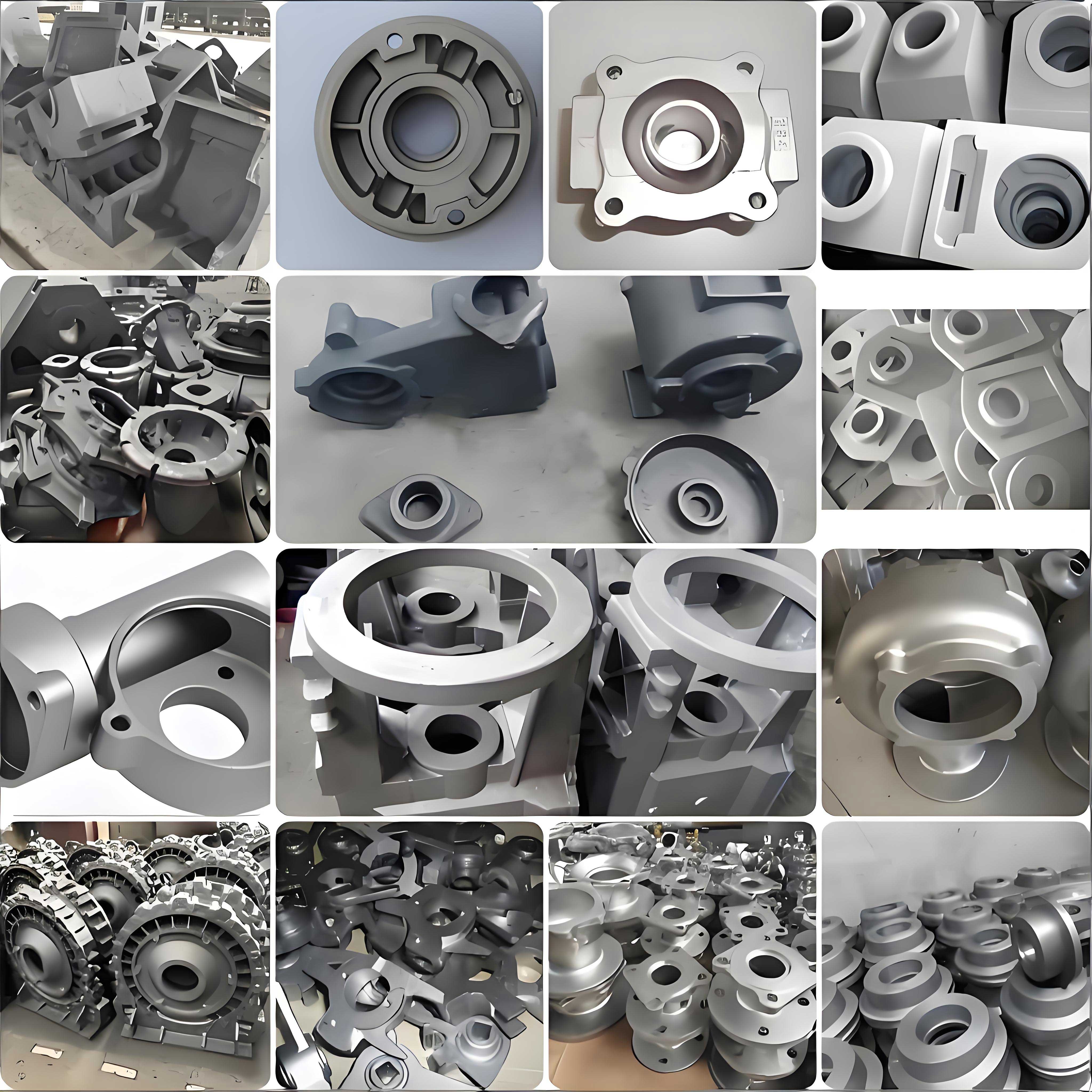
The standard production process utilized a 500 kg medium-frequency induction furnace. The charge composition was set at 80% pig iron, 10% steel scrap, and 10% returns. The target chemical composition for QT500-7 was controlled within the following ranges: C: 3.2-4.0%, Si: 2.0-2.9%, Mn: 0.3-0.8%, P ≤ 0.07%, S ≤ 0.03%, with residual Rare Earth (RE) and Mg targeted between 0.02-0.05% and 0.02-0.06%, respectively. Prior to tap, the base iron chemistry was analyzed, and adjustments for Si and Mn were made using FeSi75 and metallic manganese. Upon achieving the correct composition and a specified tapping temperature, the melt was deemed ready for treatment.
The spheroidization process employed a sandwich method in an open ladle. The ladle was preheated to between 600-800°C (dark red to red). A spheroidizer of type QRMg8RE5, sized between 5-25 mm and amounting to 1.3% of the total charge weight, was placed in the well on one side of the ladle’s dividing wall. This was followed by 0.6% of a 3-8 mm BaSi inoculant and 0.1% desulfurizer. The materials were compacted, and a steel plate was placed on top. During tapping, a post-inoculation of 0.7% fine-grained (1-3 mm) BaSi inoculant was added in-stream. The spheroidization reaction typically lasted around 75 seconds. After reaction completion, slag was removed repeatedly using a covering flux. The treated metal was then transferred to the pouring station, with the entire pouring cycle completed within 15 minutes to prevent fading.
Despite adherence to this procedure, a period of inconsistent results was encountered. Metallographic analysis of affected batches revealed poor spheroidization, with the worst cases graded at level 4, exhibiting a nodularity of only approximately 70% and graphite size of grade 6. The graphite appeared irregular, with vermicular and imperfectly formed spheroids present. Correspondingly, the mechanical properties fell short of the QT500-7 specification, with tensile strength around 480 MPa and elongation near 13.2%, compared to the required minimums.
Systematic Investigation of Influencing Factors
The pursuit of high-quality nodular cast iron necessitates a deep understanding of the variables at play. The following factors were identified and investigated as potential contributors to the spheroidization failure.
1. Inadequate Spheroidizer Addition and Absorption
The primary role of the spheroidizer, typically a magnesium-rare earth alloy, is to provide the necessary elements to promote spherical graphite growth during solidification. Magnesium, with its low density (1.738 g/cm³) and low boiling point (1107°C), is highly reactive. Its behavior in iron melt can be summarized by sequential reactions: vaporization, desulfurization/deoxidation, and finally, the residual portion facilitating nodularization. The amount of effective residual magnesium available for graphitization is therefore a fraction of the initial addition. The required addition depends critically on the base sulfur content, tapping temperature, and the treatment method (open vs. covered ladle). For the open ladle sandwich method used, the magnesium recovery is inherently limited and volatile. An insufficient initial addition, or one not adjusted for other process variables, directly leads to low residual levels and poor spheroidization.
2. Detrimental Impact of Excessive Tapping Temperature
Tapping temperature exerts a profound influence on the thermodynamics of the spheroidization process. An excessively high temperature drastically increases the vaporization rate of magnesium due to its low boiling point. This results in a violent, prematurely rapid reaction where a significant portion of the magnesium is lost as fume before it can effectively react with the melt. The data collected from problematic production heats clearly illustrates this relationship. The table below correlates tapping temperature with key process outcomes under similar base sulfur conditions.
| Tap Temp. (°C) | Base S (%) | Reaction Time (s) | Residual Mg (%) | Residual RE (%) | Spheroidization Grade |
|---|---|---|---|---|---|
| 1447 | 0.029 | 86 | 0.051 | 0.042 | 3 (Poor) |
| 1468 | 0.029 | 82 | 0.044 | 0.037 | 3 |
| 1496 | 0.028 | 56 | 0.023 | 0.022 | 4 |
| 1445 | 0.036 | 92 | 0.035 | 0.031 | 3 (Poor) |
| 1465 | 0.039 | 76 | 0.032 | 0.029 | 3 (Poor) |
| 1498 | 0.038 | 58 | 0.024 | 0.021 | 4 |
The trend is unmistakable: as the tapping temperature approaches 1500°C, the reaction time shortens significantly due to violent boiling, and the residual magnesium and rare earth contents drop to their lowest levels (~0.02%), resulting in the poorest spheroidization grade (4). This can be conceptualized as a loss function. While precise modeling is complex, the effective residual magnesium $$Mg_{res}$$ can be thought of as:
$$Mg_{res} = Mg_{added} \times R – k_{S} \cdot [S] – k_{T} \cdot (T – T_{ref})$$
Where \(R\) is a base recovery factor, \(k_{S}\) is a coefficient for sulfur consumption, \([S]\) is the sulfur concentration, \(k_{T}\) is a temperature-dependent loss coefficient, and \(T_{ref}\) is a reference temperature. The high temperature term becomes dominant beyond a critical point.
3. The Critical Role of Base Sulfur Content
Sulfur is a powerful surface-active element in iron that promotes flake graphite formation. It is a primary consumer of spheroidizing elements. The fundamental desulfurization reactions are:
$$Mg + S \rightarrow MgS$$
$$2Ce + 3S \rightarrow Ce_2S_3$$
The MgS and cerium sulfides form slag that must be removed. Crucially, if slag removal is incomplete, these compounds can react with atmospheric oxygen at the melt surface in a “re-sulfurization” reaction:
$$2MgS + O_2 \rightarrow 2MgO + 2S$$
$$2Ce_2S_3 + 3O_2 \rightarrow 2Ce_2O_3 + 6S$$
The liberated sulfur re-enters the melt, consuming more residual magnesium and rare earth, effectively causing a late-stage fade of the nodularizing effect. The data shows that for a given tapping temperature range (e.g., ~1465°C), a higher base sulfur content consistently leads to lower residual levels and worse spheroidization. Controlling the initial sulfur load is therefore paramount for efficient and stable production of nodular cast iron.
4. Optimal Residual Element Levels
Achieving and maintaining the correct residual levels of magnesium and rare earth is the cornerstone of successful spheroidization. Research indicates that an excess can lead to carbides, slag inclusions, and embrittlement, while a deficiency causes imperfect nodules and vermicular graphite. For the grade in question, the analysis of successful heats pointed to an optimal window. Residual magnesium (Mg_res) should be maintained above 0.04%, preferably around 0.044%, and residual rare earth (RE_res) around 0.037%. These values ensure sufficient nodularizing potential without promoting excessive carbide formation. The relationship between these residuals and the resulting nodularity (N) is not linear but follows a plateau within an optimal range:
$$N \propto f(Mg_{res}, RE_{res}) \quad \text{for} \quad Mg_{res} > 0.03%, \quad RE_{res} > 0.02%$$
Outside this range, the function \(f\) decreases rapidly.
5. Melt Oxidation and Trace Elements
Oxidized charge materials (rusty scrap, pig iron) or excessive turbulence during melting can increase the dissolved oxygen content in the form of FeO. Magnesium has a higher affinity for oxygen than for sulfur, leading to preferential oxidation and consumption: \(Mg + FeO \rightarrow MgO + Fe\). This reduces the amount available for graphitization control.
Furthermore, the presence of certain trace elements, even in minute quantities, can severely impair spheroidization. These “anti-nodularizing” elements include Pb, Sb, Bi, Sn, Te, As, and Ti. They act by segregating at the graphite/liquid interface during growth, poisoning the crystal lattice and promoting flake or distorted graphite forms. Sources of these elements include contaminated steel scrap (e.g., leaded, plated, or painted parts) and certain alloying additions. In the context of producing nodular cast iron, strict control over charge material purity is non-negotiable.
6. Inoculation Efficacy
Inoculation is essential for promoting a large number of small, well-distributed graphite nodules. Ineffective inoculation or inoculation fade (the dissolution of inoculant particles over time) results in a low nodule count. This places greater demand on the growth conditions of each individual nodule, making them more susceptible to becoming irregular or degenerating into vermicular forms under marginal spheroidizing conditions. While the primary issue in this case was linked to the spheroidization step itself, robust inoculation remains a critical supporting factor for achieving the desired microstructure in nodular cast iron.
Implemented Corrective Actions and Process Optimization
Based on the root cause analysis, a multi-pronged corrective action plan was established and implemented to stabilize the production of QT500-7 nodular cast iron.
1. Precise Thermal Management
The tapping temperature was strictly controlled within a refined window of 1460°C to 1480°C. This range was low enough to minimize magnesium vaporization losses but sufficiently high to ensure proper fluidity for treatment and casting, especially for thin-walled components. The pouring temperature was consequently managed at approximately 1420°C. This lower pouring temperature is also beneficial for soundness, as nodular cast iron solidifies in a mushy mode. The total liquid contraction volume is related to the temperature drop from pouring (\(T_{pour}\)) to the start of solidification (liquidus, \(T_{liq}\)):
$$\Delta V_{liq} \propto \alpha_v \cdot (T_{pour} – T_{liq})$$
where \(\alpha_v\) is the volumetric coefficient of thermal contraction. Reducing \(T_{pour}\) directly reduces \(\Delta V_{liq}\), thereby decreasing the propensity for shrinkage porosity.
2. Aggressive Sulfur Control
A two-fold strategy was adopted to combat sulfur. First, incoming pig iron and other charge materials were subjected to stricter specification and testing, rejecting high-sulfur batches. Second, the efficiency of the in-process desulfurization was enhanced by ensuring a more consistent and adequate addition of high-quality calcium carbide (CaC₂) based desulfurizer within the treatment sandwich. Furthermore, the slag-off procedure was reinforced to ensure thorough removal of the sulfide-rich slag after reaction, definitively preventing any re-sulfurization effect. The target for base sulfur was set at ≤ 0.03%.
3. Stabilization of Residual Elements
With the tapping temperature stabilized and base sulfur lowered, the 1.3% addition of QRMg8RE5 was confirmed to be appropriate. The focus shifted to consistent execution to achieve the target residual ranges. Process monitoring confirmed that under the new parameters, residual magnesium consistently reached ~0.044% and residual rare earth ~0.037%, squarely within the identified optimal zone for this specific production setup and nodular cast iron grade.
4. Charge Material Purity Protocol
A stringent charge control protocol was instituted. Steel scrap was restricted to clean, low-alloy material (e.g., Q235 plate), with explicit prohibition of galvanized, painted, or unknown alloy scraps. All internal returns (gates, risers, scrap castings) were required to be thoroughly shot-blasted to remove any paint or surface coatings before being charged into the furnace, eliminating a potential source of lead, tin, or cadmium.
5. Enhanced Inoculation Practice
The existing in-stream inoculation practice was maintained and its consistency emphasized. This method, delivering fine-grained inoculant directly into the metal stream during pouring, provides the most potent and fade-free inoculation effect, maximizing graphite nodule count and supporting the spheroidizing elements in achieving a fine, uniform microstructure.
Results and Confirmation
The implementation of these integrated measures yielded immediate and sustained improvement. The spheroidization process became highly consistent. Metallographic evaluation returned stable spheroidization grades of 2-3, with nodularity consistently above 80% and a fine, uniform graphite size (ASTM 6). The graphite nodules were predominantly well-formed spheroids. Correspondingly, the mechanical properties reliably met and exceeded the QT500-7 specification, with tensile strength averaging 560 MPa and elongation around 11%. The periodic recurrence of spheroidization failure was completely eliminated.
Conclusion
The phenomenon of spheroidization failure in nodular cast iron, specifically grade QT500-7, is rarely attributable to a single cause. It is typically the consequence of the interaction and cumulative effect of several process variables drifting outside their optimal windows. Through systematic investigation, the primary culprits in this instance were identified as excessive tapping temperature leading to high magnesium loss, and variability in base sulfur content affecting the consumption of nodularizing elements. Secondary factors included the need for precise control of residual element levels and vigilance against anti-nodularizing trace elements. By adopting a holistic approach to process optimization—encompassing precise thermal control, aggressive sulfur management, stabilization of residuals, rigorous charge purification, and robust inoculation—the production of high-integrity nodular cast iron was successfully stabilized. This case underscores that consistent quality in nodular cast iron manufacturing is founded on disciplined process control and a deep understanding of the underlying metallurgical principles governing graphite formation.