
As a simulation engineer specializing in foundry processes, I have observed the evolving demands in the casting industry. Shell castings, in particular, are increasingly required to exhibit superior comprehensive performance, higher dimensional accuracy, reduced machining allowances, and smoother surfaces. Simultaneously, the industry must adhere to energy-saving, emission-reduction, and green casting principles. To address these challenges, numerical simulation has become an indispensable tool. It enables the prediction of defects such as shrinkage porosity, shrinkage cavities, misruns, cold shuts, and slag inclusions during the filling and solidification stages of shell castings. The casting process inherently involves complex phenomena of fluid flow, temperature drop, and solidification. In modeling the filling phase, the molten metal is typically treated as an incompressible Newtonian fluid, assuming continuous and stable flow.
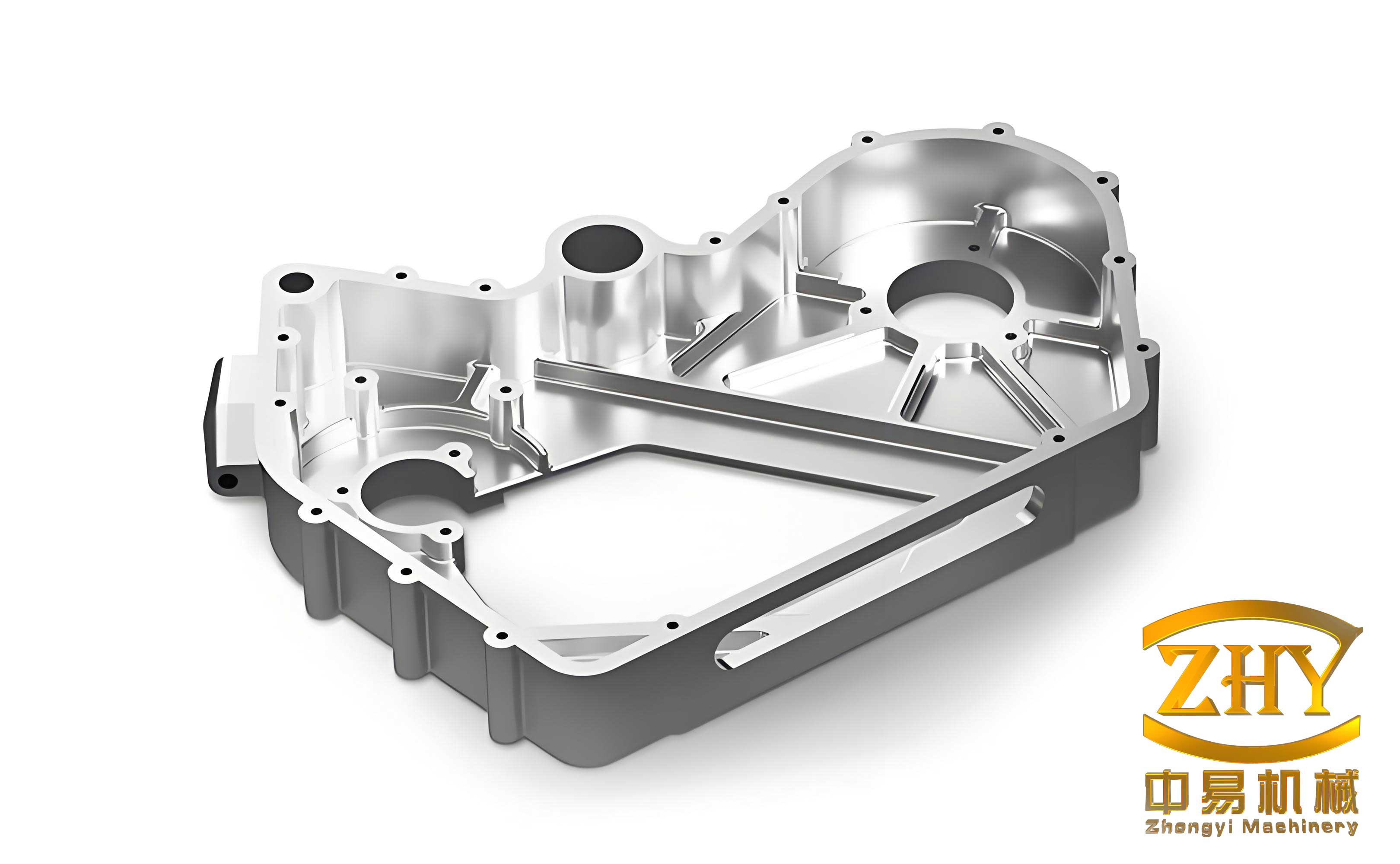
The core of casting simulation lies in solving the fundamental governing equations that describe fluid dynamics and heat transfer. For the filling process of shell castings, the SOLA-VOF (Solution Algorithm-Volume of Fluid) method is widely employed. The mathematical model is expressed through the continuity equation and the energy conservation equation. The continuity equation for an incompressible fluid is given by:
$$ \nabla \cdot \mathbf{u} = \frac{\partial u_x}{\partial x} + \frac{\partial u_y}{\partial y} + \frac{\partial u_z}{\partial z} = 0 $$
where \(\mathbf{u}\) is the velocity vector with components \(u_x, u_y, u_z\) in the Cartesian coordinates \(x, y, z\). This equation ensures mass conservation during the filling of shell castings.
The energy equation, which accounts for heat transfer during the filling and solidification of shell castings, is formulated as:
$$ \rho c_p \left( \frac{\partial T}{\partial t} + \mathbf{u} \cdot \nabla T \right) = \nabla \cdot (\lambda \nabla T) + S $$
Here, \(\rho\) is the density of the molten metal, \(c_p\) is the specific heat capacity, \(T\) is the temperature, \(t\) is time, \(\lambda\) is the thermal conductivity, and \(S\) is the internal heat source term, often zero for typical shell castings processes. This equation is crucial for predicting temperature fields and subsequent solidification behavior in shell castings.
For the solidification simulation of shell castings, the primary objective is to predict the formation of shrinkage defects. Based on the computed temperature field, the shrinkage volume can be calculated for each computational cell over time. The total volumetric shrinkage \(\Delta V_m\) within an isolated hot spot region is given by:
$$ \Delta V_m = \sum_{i=1}^{n} (\Delta V_{m}^{si} + \Delta V_{m}^{li}) $$
where \(n\) is the total number of non-solidified cells in the isolated region. The solidification shrinkage \(\Delta V_{m}^{si}\) and liquid shrinkage \(\Delta V_{m}^{li}\) for cell \(i\) are calculated as:
$$ \Delta V_{m}^{si} = \beta \cdot \Delta f_{si}^m \cdot V_i $$
$$ \Delta V_{m}^{li} = \alpha_{sl} \cdot (1 – f_{si}^{m-1}) \cdot (T_i^{m-1} – T_i^m) \cdot V_i $$
In these equations, \(\beta\) is the solidification shrinkage coefficient, \(\Delta f_{si}^m\) is the change in solid fraction for cell \(i\) at time step \(m\), \(V_i\) is the volume of cell \(i\), \(\alpha_{sl}\) is the liquid thermal contraction coefficient, and \(f_{si}^{m-1}\) is the solid fraction at the previous time step. These calculations are fundamental for assessing the risk of shrinkage porosity in shell castings.
To systematically evaluate the quality of shell castings, various defect prediction criteria are used. One prominent method is the Niyama criterion, but in my simulations for shell castings, I often utilize the Probabilistic Defect Parameter model, specifically the Retained Melt Modulus (RM). This parameter is defined as:
$$ RM = \frac{R_V}{R_A} $$
where \(R_V\) is the volume of the retained molten metal and \(R_A\) is the surface area of the retained molten metal. A higher \(R_V\) indicates a larger isolated molten pool, while a lower \(R_A\) suggests that the melt is more concentrated, both of which increase the likelihood of shrinkage defects in shell castings. The RM value serves as a quantitative indicator; for instance, a threshold between 0.8 and 1.0 is commonly applied for the Niyama criterion, but for RM, lower values generally denote better feeding and reduced defect probability in shell castings.
In my work with shell castings, the pre-processing phase is critical. The three-dimensional model of the shell casting, including the part, gating system, and risers, is assembled in CAD software and imported in STL format into simulation software like AnyCasting. The mesh generation must be fine enough to capture complex flow features, especially in intricate regions of shell castings. For typical shell castings, I often use around 2 million grid cells to ensure accuracy. The material properties assigned are essential; for aluminum alloy shell castings, such as ZL111, key parameters include density, specific heat, and thermal conductivity. A summary of typical material properties for aluminum alloy shell castings is presented in Table 1.
| Property | Symbol | Value | Unit |
|---|---|---|---|
| Density | \(\rho\) | 2700 | kg/m³ |
| Specific Heat Capacity | \(c_p\) | 900 | J/(kg·K) |
| Thermal Conductivity | \(\lambda\) | 0.2 | cal/(cm·s·°C) [≈83.68 W/(m·K)] |
| Solidification Shrinkage Coefficient | \(\beta\) | 0.06 | – |
| Liquid Thermal Contraction Coefficient | \(\alpha_{sl}\) | 1.2 × 10⁻⁴ | 1/K |
The solver settings involve using methods like the Successive Over-Relaxation (SOR) iteration for efficient computation of time steps, ultimately yielding results for metal flow, temperature distribution, and solidification in shell castings.
In an initial casting design for shell castings, the gating system was arranged to introduce metal from the edge of the shell casting, with a riser placed at the bottom. The simulation results for this shell castings configuration revealed a relatively small temperature gradient during solidification. This small gradient promotes coarse dendritic growth with a larger secondary dendrite arm spacing (SDAS), measured at approximately 0.0210 mm. The Retained Melt Modulus was calculated as 5.197, indicating a high probability of defects, particularly near the edges of the shell casting where feeding from the riser is insufficient. The predicted defect-prone areas are highlighted in simulation outputs, showing that shrinkage porosity is likely in regions distant from the gating and riser in these shell castings.
To quantify the performance of different designs for shell castings, I often compile key simulation metrics into comparison tables. Table 2 summarizes the results for the initial and optimized schemes for shell castings.
| Parameter | Initial Scheme | Optimized Scheme |
|---|---|---|
| Gating Type | Edge Gating | Bottom Gating |
| Number of Risers | 1 (at bottom) | 4 (at top) |
| Temperature Gradient | Small | Large |
| Secondary Dendrite Arm Spacing (SDAS) | 0.0210 mm | 0.0104 mm |
| Retained Melt Modulus (RM) | 5.197 | 3.943 |
| Defect Probability | High | Reduced |
| Filling Stability | Moderate | Excellent |
The optimized design for shell castings features a bottom gating system that introduces molten metal from the base of the shell casting, coupled with four risers positioned at the top. This configuration for shell castings creates a more favorable temperature gradient, promoting directional solidification. The larger gradient inhibits the formation of isolated molten pools and encourages finer dendritic structures, with an SDAS of about 0.0104 mm. The Retained Melt Modulus decreases to 3.943, signifying a lower risk of shrinkage defects in the shell castings. Furthermore, bottom gating ensures a smoother filling process, effectively venting entrapped gases into the risers and minimizing defects like gas entrapment and cold shuts in shell castings.
The underlying physics for the improvement in shell castings can be further elaborated through additional formulas. The temperature gradient \(G\) is a key factor influencing solidification morphology. It is defined as:
$$ G = \left| \nabla T \right| $$
For directional solidification in shell castings, a high \(G\) is desirable. The cooling rate \(\dot{T}\) is also critical and is related to the local solidification time \(t_f\):
$$ \dot{T} = \frac{\Delta T}{t_f} $$
where \(\Delta T\) is the freezing range. The secondary dendrite arm spacing \(\lambda_2\) is empirically related to the cooling rate by:
$$ \lambda_2 = k \cdot \dot{T}^{-n} $$
where \(k\) and \(n\) are material constants. For aluminum alloy shell castings, a higher cooling rate (achieved with a larger temperature gradient) yields a smaller \(\lambda_2\), leading to improved mechanical properties and reduced microporosity in shell castings.
Another important aspect in simulating shell castings is the fluid flow behavior during filling. The momentum equation for an incompressible Newtonian fluid is given by the Navier-Stokes equation:
$$ \rho \left( \frac{\partial \mathbf{u}}{\partial t} + \mathbf{u} \cdot \nabla \mathbf{u} \right) = -\nabla p + \mu \nabla^2 \mathbf{u} + \rho \mathbf{g} $$
where \(p\) is pressure, \(\mu\) is the dynamic viscosity, and \(\mathbf{g}\) is gravity. In the context of shell castings, solving this equation alongside the continuity and energy equations allows for the prediction of flow-related defects. The volume of fluid (VOF) method tracks the free surface, which is crucial for modeling the advancing melt front in complex geometries of shell castings.
To further analyze the feeding efficiency in shell castings, the feeding distance can be estimated. For a cylindrical riser, the feeding distance \(L_f\) for a plate-like shell casting can be approximated by:
$$ L_f = C \cdot \sqrt{\frac{V_c}{A_c}} $$
where \(C\) is a constant depending on the alloy and cooling conditions, \(V_c\) is the volume of the casting section, and \(A_c\) is its cross-sectional area. This formula helps in determining the optimal placement and size of risers for shell castings to ensure soundness.
In my simulation practice for shell castings, I also evaluate the solidification sequence. The fraction of solid \(f_s\) as a function of temperature \(T\) can be modeled using a Scheil-type equation for non-equilibrium solidification:
$$ f_s = 1 – \left( \frac{T_m – T}{T_m – T_l} \right)^{\frac{1}{1-k}} $$
where \(T_m\) is the melting point of the pure solvent, \(T_l\) is the liquidus temperature, and \(k\) is the partition coefficient. This relation aids in understanding the mushy zone development in aluminum alloy shell castings.
The defect prediction for shell castings using the Retained Melt Modulus can be enhanced by considering the local solidification time \(t_{loc}\). A correlation often exists where areas with longer \(t_{loc}\) are more prone to shrinkage. The local solidification time can be derived from the temperature field:
$$ t_{loc} = \int_{T_l}^{T_s} \frac{dT}{\dot{T}} $$
where \(T_s\) is the solidus temperature. Integrating this over the domain of shell castings helps identify hot spots.
For comprehensive reporting, I often include tables summarizing simulation parameters and conditions for shell castings. Table 3 lists typical boundary conditions and numerical settings used in simulations for shell castings.
| Parameter | Setting |
|---|---|
| Fluid Model | Incompressible Newtonian |
| Turbulence Model | Laminar (common for thin sections in shell castings) |
| Heat Transfer Coefficient at Mold-Metal Interface | 500 W/(m²·K) |
| Initial Pouring Temperature | 720 °C |
| Mold Material | Silica Sand |
| Mold Initial Temperature | 25 °C |
| Time Step Control | Adaptive, based on CFL condition |
| Convergence Criterion for Solvers | Residual < 10⁻⁴ |
Through iterative simulation and analysis of shell castings, I have found that bottom gating combined with top risers significantly enhances the quality of shell castings. The improved thermal gradient not only reduces shrinkage but also refines the microstructure. The governing equations and defect criteria provide a robust framework for optimizing the process parameters for shell castings.
To further illustrate the benefits, consider the solidification path. In a well-designed shell castings process, the temperature field should satisfy the condition for directional solidification toward the risers. This can be expressed by monitoring the gradient of the temperature field relative to the riser locations. Let \(T(\mathbf{x},t)\) be the temperature field. The directional solidification condition for shell castings can be checked by ensuring that the temperature decreases monotonically from the casting extremities toward the risers at any given time during solidification.
Moreover, the pressure distribution during filling of shell castings is vital to avoid mistruns. The Bernoulli equation can provide insights for simple gating systems:
$$ p + \frac{1}{2} \rho u^2 + \rho g h = \text{constant} $$
where \(h\) is height. In bottom gating for shell castings, the pressure head is more stable, reducing velocity fluctuations and oxide formation.
In conclusion, numerical simulation is a powerful tool for designing and optimizing the casting process for shell castings. By applying fluid dynamics and heat transfer principles, and using defect prediction models like the Retained Melt Modulus, I can identify potential issues and implement corrective measures. For the aluminum alloy shell castings discussed, switching from edge gating to bottom gating with multiple top risers resulted in a steeper temperature gradient, finer dendritic structure, and a lower defect probability. These modifications ensure higher integrity and performance of the final shell castings. Future work may involve integrating more advanced models for microstructure prediction and coupling with stress analysis to further enhance the quality of shell castings.
Throughout this analysis, the term “shell castings” has been emphasized to underscore the specific application focus. The methodologies described—from solving the fundamental equations to interpreting simulation results—are broadly applicable but particularly critical for complex geometries like shell castings. The continuous advancement in simulation software and computational power will undoubtedly lead to even more accurate and efficient optimization processes for shell castings, contributing to the goals of high performance and sustainable manufacturing in the foundry industry.