
As a fundamental pillar of the manufacturing sector, sand castings production is characterized by high output volumes, a large workforce, and complex occupational hazards leading to diverse health outcomes for workers. Historically, research has focused on mass concentrations, particle size distribution, and free silica content. However, the evolution of the industry through automation, new binder systems, and advanced processes like 3D printing necessitates a re-evaluation of exposure profiles. Furthermore, while health surveillance has traditionally centered on pneumoconiosis, the contribution of complex particulate mixtures to lung cancer, cardiovascular diseases, and other work-related illnesses demands a more nuanced understanding of the particles themselves. This article synthesizes current knowledge on the physical and chemical characteristics of airborne particulate matter generated during sand castings processes, aiming to provide a foundation for precise exposure assessment and future health studies.
1. The Sand Castings Process and Primary Particulate Sources
The sand castings process involves melting metal, creating a mold from sand mixtures, pouring the molten metal into the mold, and allowing it to solidify to form a metal part. The core production stages—sand preparation, molding, core-making, melting, pouring, and cleaning/shakeout—are major sources of airborne particulate matter (PM). The particulates originate from two primary mechanisms: (1) mechanical generation during physical processes like sand mixing and handling, and (2) thermal generation during processes involving heat, such as melting, pouring, baking, and shakeout. The raw materials used and the particulates generated vary significantly by production stage.
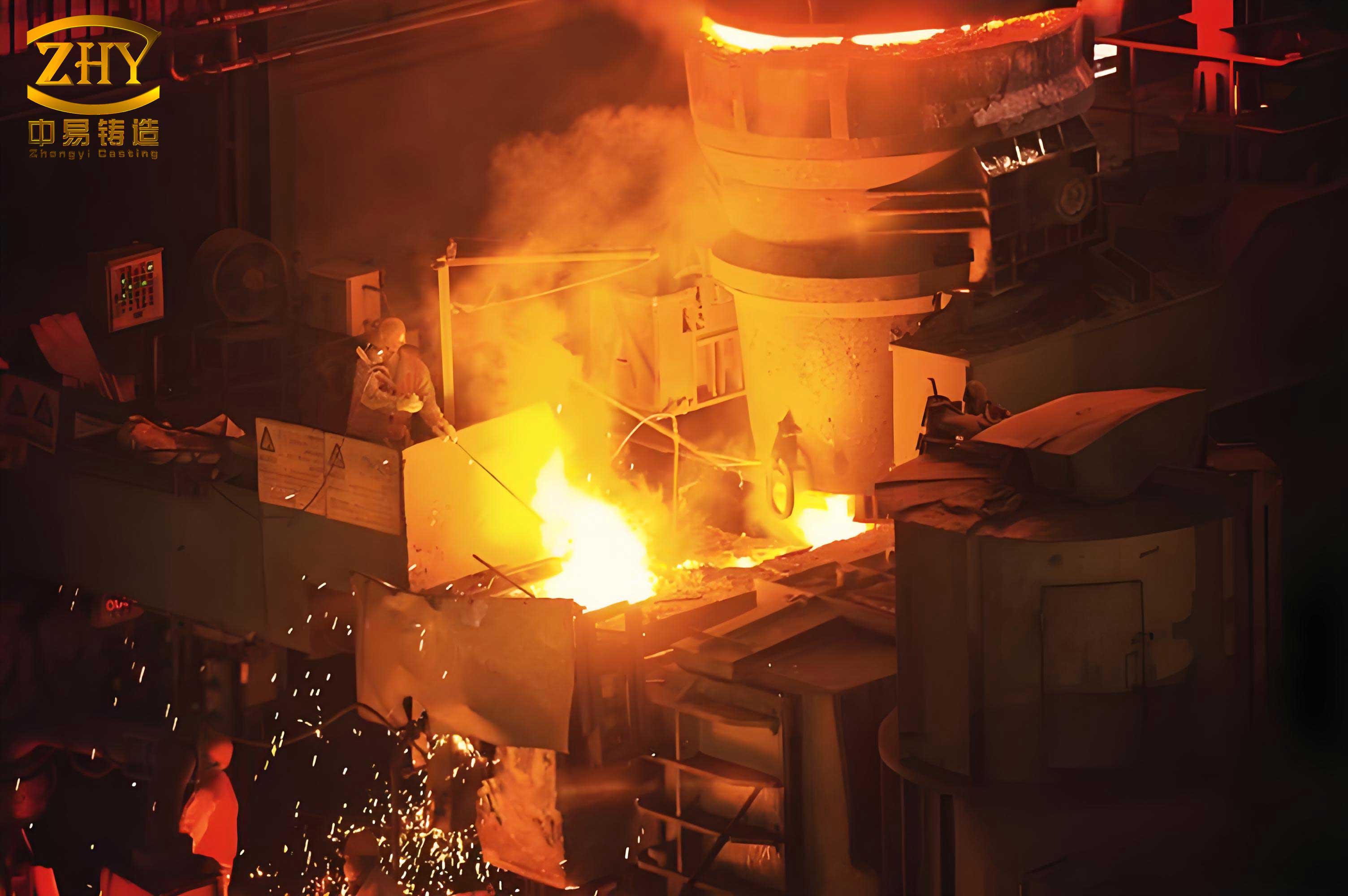
The nature of the particulates in a sand castings foundry is inherently complex, comprising a mixture of mineral dusts, metallic fumes, condensates, and organic combustion products. The table below summarizes key particulate components identified in various sand castings operations.
| Production Stage | Primary Raw Materials | Particulate-Generating Operations | Identified Particulate Components |
|---|---|---|---|
| Sand Preparation | Silica sand, bentonite, coal dust | Mulling, screening, mixing, sand drying/reclamation | Crystalline silica (SiO2), metals (Mn, Fe, Zn), PAHs (e.g., Benzo[a]pyrene), various organic compounds (e.g., phthalates). |
| Molding & Core-Making | Silica sand, resins, catalysts | Molding, core shooting and curing | Crystalline silica, metallic elements, decomposition products of binders (e.g., phenolic resins, isocyanates), PAHs. |
| Melting & Pouring | Metal alloys, coke, limestone fluxes | Furnace operations (charging, melting, slagging), pouring into molds | Metal oxide fumes (Fe, Mn, Al, Zn, Pb, etc.), fluorides, crystalline silica, complex organic compounds including dioxins/furans and PAHs. |
| Cleaning & Shakeout | Sand molds, castings | Shakeout, shot blasting, grinding, cutting | Crystalline silica, metal dust from castings and shot, residual organics from burned binders, PAHs. |
2. Physical Characteristics of Sand Castings Particulate Matter
2.1 Mass Concentration and Size Distribution (Dispersity)
Historically, monitoring in sand castings environments has focused on the mass concentration of total inhalable and respirable dust. Concentrations have decreased significantly with improved engineering controls. For instance, historical data from large automotive foundries show average respirable silica dust concentrations falling from levels above 8 mg/m³ to approximately 2-3 mg/m³ following technological interventions. However, even at lower mass concentrations, the size distribution remains a critical parameter for health risk assessment. The respirable fraction, typically defined as particles with an aerodynamic diameter less than 4 µm (following the ISO/ACGIH curve), can penetrate deep into the alveolar region of the lungs. Studies consistently show a high proportion of fine particles in sand castings dust. For example, particles below 5 µm often constitute over 80% of the sampled dust by count in operations like cleaning and molding. The size distribution can be described by a log-normal function, where the mass concentration dM/d(log dp) for a particle diameter dp is given by:
$$ \frac{dM}{d(\log d_p)} = \frac{M_0}{\sqrt{2\pi} \log \sigma_g} \exp\left(-\frac{(\log d_p – \log \text{MMD})^2}{2 (\log \sigma_g)^2}\right) $$
Here, MMD is the mass median diameter and σg is the geometric standard deviation. In sand castings, the MMD for total dust is often in the range of 10-50 µm, but the respirable fraction has a much smaller MMD, typically between 2-5 µm.
2.2 Morphology and Free Silica Content
The morphology of particles, particularly crystalline silica (quartz, cristobalite, tridymite), is a key determinant of toxicity. In sand castings, the free silica content varies widely by job task. Core-making and cleaning operations, which involve high-temperature exposure of silica sand, often show the highest percentages, sometimes exceeding 70% free silica in the respirable dust. Crucially, the intense heat during pouring and cooling can transform quartz into its more fibrogenic polymorph, cristobalite. Analysis using scanning electron microscopy (SEM) reveals that sand castings dust particles are often angular and fragmented. Particles from cleaning operations may appear as large, agglomerated masses with complex, multifaceted structures at high magnification, indicating repeated fracture and thermal stress.
3. Chemical and Elemental Composition
The chemical complexity of sand castings PM is its defining feature. Particles act as carriers for a vast array of elements and compounds adsorbed onto their surfaces.
3.1 Inorganic and Metallic Elements
Elemental analysis via techniques like X-ray fluorescence (XRF) or inductively coupled plasma mass spectrometry (ICP-MS) reveals a rich inorganic profile. The specific elements present depend on the metals being melted, the sand additives, and the furnace fluxes.
| Element Source Category | Typical Elements Found | Primary Sand Castings Source |
|---|---|---|
| Major Matrix Elements | Si, O, Al, Ca, Mg, K, Na | Silica sand, clay binders (bentonite), slag formers (limestone). |
| Ferrous Alloy Elements | Fe, Mn, Cr, Ni, Mo, V | Melting and pouring of steel and iron alloys; wear from machinery and shot. |
| Non-Ferrous Alloy Elements | Al, Zn, Cu, Pb, Sn, Ti | Melting and pouring of aluminum, brass, bronze, etc. |
| Trace/Contaminant Elements | As, Cd, Co, Sb, Be | Impurities in metal scrap, certain alloying elements. |
The concentration of these elements often follows a size-dependent distribution. Finer particles, due to their higher surface area-to-volume ratio, can be enriched with certain volatile metals (e.g., Zn, Pb) that condense from the furnace fume.
3.2 Organic Pollutants and Polycyclic Aromatic Hydrocarbons (PAHs)
The thermal decomposition of organic binders (e.g., phenolic urethanes, furan resins), coal dust (used as a sand additive), and pouring of molten metal onto organic-containing molds leads to the generation of complex organic aerosols. Of paramount concern are Polycyclic Aromatic Hydrocarbons (PAHs), many of which are carcinogenic. Benzo[a]pyrene (BaP) is a key marker. Studies have detected airborne BaP concentrations in sand castings environments ranging from sub-microgram to tens of micrograms per cubic meter. Other identified organics include benzene, toluene, formaldehyde (from resin breakdown), and even dioxins/furans from incomplete combustion processes. The adsorption of these compounds onto the large surface area of respirable dust particles creates a potent delivery mechanism to the deep lung.
| Pollutant Class | Example Compounds | Typical Concentration Range in Sand Castings |
|---|---|---|
| Polycyclic Aromatic Hydrocarbons (PAHs) | Benzo[a]pyrene, Naphthalene, Phenanthrene, Pyrene | Air: ng/m³ to µg/m³; Dust: µg/g levels. |
| Volatile Organic Compounds (VOCs) | Benzene, Toluene, Formaldehyde, Phenol | ppm range, highly variable based on binder system. |
| Dioxins and Furans (PCDD/Fs) | 2,3,7,8-TCDD (Dioxin), various PCDFs | Dust: pg TEQ/g; Air: fg to pg TEQ/m³. |
4. The Emerging Focus: Fine (PM2.5) and Ultrafine/Nanoparticles (UFPs, PM0.1) in Sand Castings
Recent research, enabled by advanced instrumentation, has highlighted the significant presence of fine (aerodynamic diameter ≤ 2.5 µm) and ultrafine particles (UFPs, diameter ≤ 0.1 µm or 100 nm) in sand castings. These particles are generated abundantly during high-temperature processes like melting, pouring, and welding, as well as during mechanical processes like grinding at high speeds.
From a health perspective, UFPs are concerning due to their high particle number concentration, large total surface area, and enhanced ability to penetrate biological barriers and translocate from the lungs. While their contribution to overall dust mass is minimal, they dominate the particle number count. Key metrics for UFPs include:
- Number Concentration (Particle Count): Particles per cubic centimeter (#/cm³).
- Surface Area Concentration: Total surface area of particles per unit volume of air (µm²/cm³).
Studies in iron and aluminum sand castings foundries reveal UFP number concentrations ranging from ~10⁴ to over 10⁶ #/cm³, with the highest levels typically found near melting and pouring stations. The surface area concentration in these areas can reach several hundred µm²/cm³. The size distribution of these UFPs often shows a peak in the 30-100 nm range. The following formula approximates the surface area concentration (SA) from number concentration data assuming spherical particles:
$$ S_A = \sum_i \pi d_{p,i}^2 \cdot N_i $$
where dp,i is the mean diameter and Ni is the number concentration in size channel i. The chemical composition of UFPs can differ from coarse particles, as they form primarily through nucleation and condensation of vaporized metals and organics, leading to potential enrichment with toxic species.
5. Implications for Occupational Health and Exposure Assessment
The multifaceted nature of sand castings PM dictates a complex health risk profile:
- Respiratory Effects: Crystalline silica is a well-established cause of silicosis and contributes to chronic obstructive pulmonary disease (COPD). The angular morphology and high free silica content of sand castings dust are primary factors. Combined with other irritant dusts, they cause chronic bronchitis.
- Systemic and Cardiovascular Effects: Fine and ultrafine particles can induce pulmonary inflammation, leading to systemic oxidative stress and inflammation. This is a proposed mechanism for the observed increased risk of ischemic heart disease among sand castings workers. Certain metal constituents (e.g., vanadium, soluble nickel) may also have direct cardiovascular toxicity.
- Carcinogenicity: The International Agency for Research on Cancer (IARC) classifies occupational exposure in the iron and steel founding industry as carcinogenic (Group 1). This is attributed to the complex mixture, including crystalline silica, certain metal fumes (e.g., from chromium alloys), and PAHs.
Current occupational exposure limits (OELs) in many jurisdictions, including China, often regulate sand castings dust based on its free silica content (as “silica dust” or “nuisance dust”). The UK’s approach of defining “Ferrous Foundry Particulate” as a complex mixture with its own OEL is noteworthy. However, modern assessment must move beyond just mass concentration of total or respirable dust and consider:
- Specific Speciation: Differentiating quartz from cristobalite, and quantifying specific metal and PAH components.
- Particle Number & Surface Area: For UFPs, mass-based limits are insufficient. Metrics like number or surface area concentration may be more relevant for risk assessment.
- Low-Level Detection: Improving analytical methods to reliably detect crystalline silica at levels well below 0.025 mg/m³ is crucial for effective control and prevention of silicosis over a full working lifetime.
6. Control Strategies Based on Particulate Characteristics
Effective control in sand castings must account for the diverse nature of the PM:
| Particulate Type/Property | Primary Control Strategy | Examples in Sand Castings |
|---|---|---|
| Coarse & Respirable Dust (Mechanical) | Source Enclosure, Local Exhaust Ventilation (LEV), Wet Methods | Enclosed sand mixing and conveying systems, LEV at shakeout stations, wet cutting during cleaning. |
| Fume & UFPs (Thermal/Condensation) | Capturing at source before dilution, high-efficiency filtration | Canopy hoods over pouring lines, direct capture on electric arc furnaces, use of HEPA filters in LEV for fine particles. |
| Organic Vapors & PAHs | Combination of LEV and air cleaning (e.g., carbon filtration) | Exhaust from core-making machines routed through carbon adsorbers. |
| All Particulates (Personal Protection) | Respiratory Protective Equipment (RPE) | Use of assigned protection factor (APF) 20 or higher respirators (e.g., powered air-purifying respirators – PAPRs) for tasks with high fume/UFP exposure like melting and pouring. |
The selection of RPE is critical. For ultrafine particles in sand castings, tight-fitting particulate filters (e.g., P100/FFP3) are effective due to mechanical filtration mechanisms like diffusion, which is highly efficient for nanoparticles. However, ensuring a good face seal is paramount, making fit-testing essential.
7. Conclusion and Future Perspectives
The airborne particulate matter in sand castings operations is a complex and dynamic mixture. Its characteristics—spanning a wide size spectrum from coarse grit to nanometer-scale fumes, containing crystalline silica, a plethora of metallic elements, and adsorbed organic carcinogens—create a unique and potent occupational hazard. While historical control efforts have successfully reduced mass concentrations, the persistence of fine, ultrafine, and chemically complex particles underscores the need for a more sophisticated approach to exposure science and health protection in this industry.
Future research and practice should focus on:
- Advanced Characterization: Routine application of real-time particle sizers and chemical speciation techniques to map UFP and PM2.5 exposure profiles across different sand castings processes and job titles.
- Exposure Metric Development: Epidemiological studies to determine whether particle number, surface area, or specific chemical components (e.g., bioavailable metals, cristobalite) are better predictors of chronic diseases like lung cancer and cardiovascular outcomes in sand castings workers.
- Control Technology Innovation: Developing and validating ventilation and filtration solutions specifically designed to capture the full spectrum of particles, especially UFPs, generated during high-temperature sand castings operations.
- Harmonized Standards: Moving towards an integrated exposure limit or control banding approach that considers the particulate mixture as a whole, similar to the “foundry particulate” concept, while maintaining strict limits on its most toxic components like crystalline silica and specific carcinogens.
By deepening our understanding of the fundamental properties of sand castings particulates, we can move beyond traditional dust monitoring towards a more predictive and preventative model of occupational health, ultimately better safeguarding the health of the foundry workforce.