
The relentless push for higher efficiency in thermal power generation has driven the development of advanced steam turbines operating under ultra-supercritical (USC) conditions. These environments, characterized by temperatures exceeding 600°C and pressures above 25 MPa, demand materials with exceptional creep strength, oxidation resistance, and microstructural stability. Among the candidates, a high-alloy martensitic heat-resistant cast steel, designated as ZG13Cr11MoVNbN, has emerged as a critical material for key components such as high-pressure casings, main steam valves, and high-temperature diaphragms. These are quintessential steel castings where complex geometries and the need for high-temperature integrity converge. The development of reliable production and heat treatment protocols for these steel castings is therefore of paramount industrial importance. This article details a comprehensive experimental investigation from a first-person research perspective, focusing on the melting control, heat treatment optimization, and resulting mechanical and microstructural properties of ZG13Cr11MoVNbN steel castings.
1. Material Design and Chemical Composition Strategy
ZG13Cr11MoVNbN belongs to the family of 9-12% Cr martensitic steels, strengthened by a sophisticated cocktail of carbide-forming elements. Its base of chromium and molybdenum is augmented by niobium, vanadium, and nitrogen, facilitating the formation of fine, stable MX-type carbonitrides (e.g., Nb/V(C,N)) that provide superior creep resistance by pinning dislocations and grain boundaries. The precise control of the chemical composition is the foundational step in ensuring the desired balance of strength, toughness, and phase stability in the final steel castings.
Our experimental approach began with establishing a stringent internal control range beyond the standard specification. The primary challenge was to avoid the formation of excessive delta-ferrite, a soft phase that can deteriorate creep strength and toughness, while ensuring full hardenability to achieve a fully martensitic structure upon cooling. This was managed through the calculation and control of the chromium equivalent (Creq), a predictive parameter for the microstructural phase balance. The formula we employed was:
$$C_{eq} = \omega(Cr) – 40\omega(C) – 2\omega(Mn) – 4\omega(Ni) + 6\omega(Si) + 4\omega(Mo) + 11\omega(V) + 5\omega(Nb) – 30\omega(N)$$
We targeted a Creq value between 8 and 10 to suppress excessive delta-ferrite. Concurrently, extreme caution was exercised to limit trace elements detrimental to hot ductility and long-term stability, such as phosphorus, sulfur, and particularly tin. Aluminum, a potent ferrite stabilizer and nitride former, was strictly minimized by using a Si-Zr alloy for deoxidation. Nitrogen, a crucial alloying element for strengthening, was introduced via chromium nitride additions under controlled conditions. The internally controlled chemical composition range and the result from our trial melt are summarized in Table 1.
| Element | Standard Range | Internal Control Target | Trial Melt Result | |
|---|---|---|---|---|
| C | 0.11-0.15 | 0.11-0.15 | 0.12 | |
| Si | 0.20-0.60 | 0.20-0.50 | 0.40 | |
| Mn | 0.30-0.60 | 0.40-0.60 | 0.46 | |
| P | ≤0.025 | ≤0.015 | 0.010 | |
| S | ≤0.025 | ≤0.015 | 0.008 | |
| Cr | 9.50-11.50 | 9.70-11.00 | 10.14 | |
| Mo | 0.70-1.00 | 0.70-0.90 | 0.84 | |
| Ni | 0.40-0.70 | 0.45-0.65 | 0.51 | |
| V | 0.20-0.30 | 0.20-0.30 | 0.28 | |
| Nb | 0.05-0.20 | 0.05-0.20 | 0.13 | |
| N | 0.03-0.06 | 0.03-0.06 | 0.035 | |
| Al | – | ≤0.010 | 0.008 | |
| Sn | – | ≤0.05 | 0.01 | |
| Creq (Calculated) | 10.0 (within 8-10 target) | |||
The trial melt was conducted in a 50 kg vacuum induction furnace using a vacuum melting and pouring process to minimize gas pickup and oxidation. The resultant chemistry met all internal control targets, with a Creq of 10.0, successfully solidifying the foundation for subsequent heat treatment studies.
2. Experimental Methodology: Heat Treatment Design
Following casting, the microstructure of ZG13Cr11MoVNbN is typically as-cast martensite with inhomogeneous carbide distribution and potential delta-ferrite networks. A carefully designed heat treatment cycle is essential to transform this into a homogeneous, tempered microstructure with optimal properties. The standard approach involves a high-temperature austenitization (normalizing) followed by one or more tempering steps.
Our experimental design focused on two key variables: the cooling method after austenitization and the number of tempering cycles. The aim was to evaluate their impact on the final microstructure and mechanical properties of the steel castings.
- Normalizing Cooling Rate: Air cooling versus oil cooling. Oil cooling provides a faster quench, potentially suppressing proeutectoid ferrite formation and ensuring a more complete martensitic transformation, especially in heavier section steel castings.
- Tempering Strategy: A single high-temperature temper versus a double tempering treatment. Double tempering is known to promote a more complete transformation of retained austenite and a more uniform precipitation and coarsening of carbides, leading to enhanced stability.
The specific heat treatment matrix applied to the trial blocks (Keel-type specimens) is outlined in Table 2.
| Specimen ID | Heat Treatment Process |
|---|---|
| S09-1 | 1050°C Normalizing (Air Cool) + 720°C Tempering |
| S09-2 | 1050°C Normalizing (Air Cool) + 720°C Tempering + 710°C Tempering |
| S09-3 | 1050°C Normalizing (Oil Quench) + 720°C Tempering |
| S09-4 | 1050°C Normalizing (Oil Quench) + 720°C Tempering + 710°C Tempering |
All samples underwent a preliminary high-temperature annealing (e.g., 950°C furnace cool) to relieve casting stresses and homogenize the microstructure before the performance heat treatments listed above.
3. Analysis of Room-Temperature Mechanical Properties and Microstructure
Samples from each heat treatment condition were subjected to tensile, impact (Charpy V-notch), and hardness testing according to relevant ASTM/ISO standards. The results, presented in Table 3, provided clear insights.
| Specimen ID | Yield Strength (Rp0.2) MPa | Tensile Strength (Rm) MPa | Elongation (A) % | Reduction of Area (Z) % | Impact Energy (KV2) J | Hardness (HBW) | ||||||
|---|---|---|---|---|---|---|---|---|---|---|---|---|
| S09-1 | 526 | 734 | 22.5 | 62 | 56.7 (avg) | 230 | ||||||
| S09-2 | 521 | 715 | 19.5 | 55.0 | 47.0 (avg) | 223 | ||||||
| S09-3 | 545 | 745 | 21.0 | 63.0 | 52.3 (avg) | 231 | ||||||
| S09-4 | 554 | 748 | 21.0 | 56.0 | 56.3 (avg) | 227 | ||||||
| Standard Requirement | ≥515 | ≥690 | ≥15 | ≥36 | – | 220-260 | ||||||
All four heat treatment schedules met the standard mechanical property requirements, confirming the robustness of the base chemistry. However, a comparative analysis reveals significant trends. Specimen S09-4, subjected to oil quenching and double tempering, exhibited the highest combination of yield strength (554 MPa) and tensile strength (748 MPa). Notably, the strength differential (Rm – Rp0.2 = 194 MPa) was well above the typical minimum requirement of 80 MPa, indicating good strain hardening capacity. While elongation and reduction of area were excellent across all conditions, the impact toughness for S09-4 was among the highest, demonstrating that the high strength was not achieved at the expense of toughness.
Microstructural examination provided the foundation for these mechanical results. The as-cast structure consisted of lath martensite with segregated networks of delta-ferrite and coarse carbides. After heat treatment, all conditions showed a tempered martensitic matrix. However, critical differences were observed:
- S09-1 & S09-3 (Single Tempered): The microstructure was primarily tempered martensite but contained isolated islands of delta-ferrite, estimated at approximately 5% area fraction. The martensite laths in the oil-quenched sample (S09-3) appeared slightly finer.
- S09-2 & S09-4 (Double Tempered): The double tempering cycle led to a more uniform and refined distribution of carbides within the martensitic matrix. Most importantly, the area fraction of delta-ferrite was significantly reduced, estimated to be around 3% or less. The matrix exhibited a more homogeneous appearance, with the oil-quenched and double-tempered sample (S09-4) showing the most uniform structure.
This microstructural refinement and ferrite reduction directly correlate with the superior strength-toughness combination observed in S09-4. The oil quench ensured a fully martensitic starting structure, while the double tempering allowed for optimal carbide precipitation and stabilization of the microstructure.
4. Evaluation of High-Temperature Performance and Ductile-to-Brittle Transition
For steel castings intended for steam turbine applications, room-temperature properties are only part of the story. Performance at operational temperatures (550-650°C) and the material’s resistance to brittle fracture are critical. Based on the superior room-temperature results, the S09-4 heat treatment protocol was selected for further evaluation of elevated temperature tensile properties and the Fracture Appearance Transition Temperature (FATT50).
High-temperature tensile tests were conducted at 550°C, 600°C, and 650°C. The results, summarized in Table 4, demonstrate remarkable thermal strength retention.
| Test Temperature (°C) | Yield Strength (Rp0.2) MPa | Tensile Strength (Rm) MPa | Elongation (A) % | Reduction of Area (Z) % |
|---|---|---|---|---|
| 550 | 402 | 513 | 29.0 | 76.0 |
| 600 | 316 | 330 | 35.5 | 89.0 |
| 650 | 222 | 234 | 34.0 | 92.0 |
The yield strength at 600°C was 316 MPa, which is approximately 57% of its room-temperature yield strength (554 MPa). This high retention of strength, coupled with a significant increase in ductility (Z up to 89%), confirms the material’s suitability for long-term service at 600°C. The strength decay can be modeled by a thermally activated process, and the data suggests excellent microstructural stability imparted by the fine MX carbonitrides.
To assess the toughness transition behavior, a series of Charpy V-notch impact tests were conducted at temperatures ranging from -10°C to 100°C. The impact energy and the percentage of shear fracture on the broken specimen faces were recorded. The FATT50 is defined as the temperature at which the fracture surface exhibits 50% brittle (cleavage) and 50% ductile (shear) appearance. The transition curve plotted from our data is shown in Figure 1 (conceptually). The experimental data determined the FATT50 for this ZG13Cr11MoVNbN steel casting to be approximately 45°C. This meets the stringent technical requirement often specified for such materials (e.g., FATT50 ≤ 60°C), indicating good low-temperature toughness for a high-strength martensitic steel.
The relationship between impact energy (KV) and temperature (T) can be described by a sigmoidal function. While the exact parameters are material-specific, the data fits a trend of the form:
$$ KV(T) = KV_{upper} – \frac{(KV_{upper} – KV_{lower})}{1 + \exp(\frac{T – T_{50}}{s})} $$
where \( KV_{upper} \) and \( KV_{lower} \) are the upper and lower shelf energies, \( T_{50} \) is the FATT50 (≈45°C), and \( s \) is a parameter related to the transition slope.
5. Discussion: Synthesis of Process-Property Relationships
The experimental journey from melt chemistry to final properties underscores the interconnected nature of processing high-performance steel castings. Our findings can be synthesized into a coherent production philosophy for ZG13Cr11MoVNbN components.
Chemical Control as the Cornerstone: The success of the subsequent steps hinged on the precise chemical control. The use of the chromium equivalent formula was instrumental. By targeting a \( C_{eq} \) of 8-10, we effectively managed the phase balance, minimizing the amount of detrimental delta-ferrite in the final microstructure. The strict limitation of tramp elements (P, S, Sn, Al) ensured high purity, which is directly linked to improved toughness and creep ductility. The successful introduction of nitrogen via CrN additions, without causing casting defects, highlights the importance of vacuum melting for such alloys.
Heat Treatment Optimization: The “normalize-oil quench-double temper” (S09-4) emerged as the optimal heat treatment sequence. The rationale is multi-faceted:
- Oil Quenching: Provides a faster cooling rate than air cooling, especially critical for thicker section steel castings. This suppresses the formation of proeutectoid ferrite at prior austenite grain boundaries during cooling and ensures a more complete and homogeneous martensitic transformation. The finer initial martensitic structure provides more nucleation sites for precipitates during tempering.
- Double Tempering: The first high-temperature temper (720°C) initiates the recovery of the martensitic structure, precipitates secondary carbides (M23C6 along lath boundaries, fine MX within laths), and transforms any retained austenite. The second temper (710°C) further stabilizes the microstructure. It allows for a more uniform coarsening and distribution of carbides, potentially converting any high-carbon austenite retained after the first temper, and further reduces the dislocation density. This leads to a more stable and stress-relieved microstructure, which manifests as an excellent combination of strength, ductility, and impact toughness.
The resultant microstructure is a homogeneous matrix of tempered martensite laths, decorated with a fine dispersion of stable carbides and carbonitrides, with minimal (<3%) isolated delta-ferrite.
Property Portfolio: The optimized process yields steel castings with a compelling property profile:
- High Strength: Room-temperature yield strength >550 MPa and tensile strength >740 MPa.
- Good Ductility and Toughness: Elongation >20%, reduction of area >55%, and room-temperature impact energy >55 J.
- Excellent Elevated Temperature Strength: Yield strength retention of >300 MPa at 600°C.
- Favorable Toughness Transition: A low FATT50 of ~45°C, ensuring adequate fracture resistance during start-up/shut-down cycles.
This balance of properties makes ZG13Cr11MoVNbN steel castings highly suitable for demanding USC turbine applications.
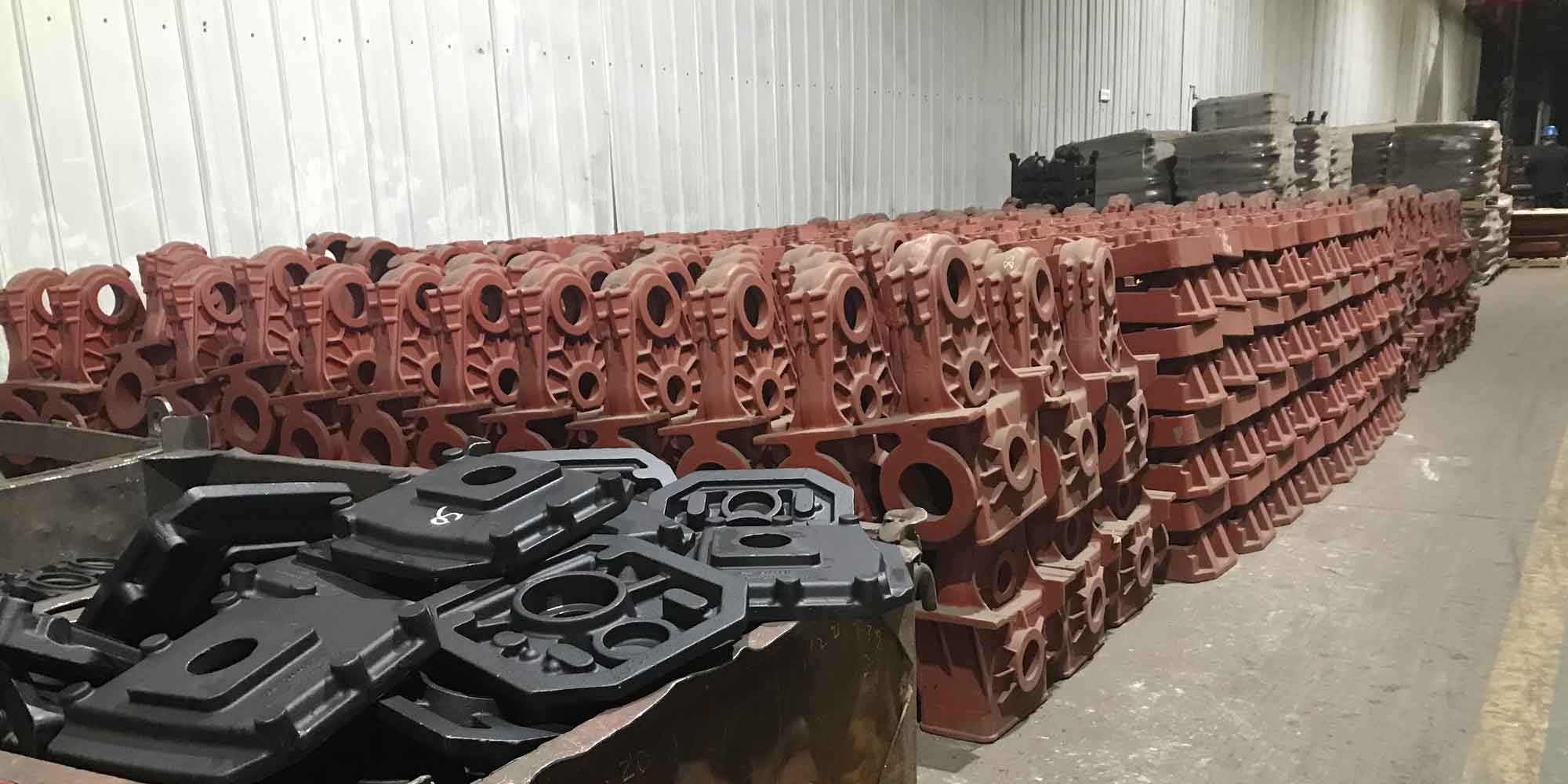
The transition from laboratory-scale experiments to the reliable production of large, complex steel castings requires meticulous scaling of these principles. Factors such as section size effects on cooling rates, the thermal mass of large furnaces during heat treatment, and the design of risers and feeders to ensure soundness in the final casting all become critical. The foundational knowledge gained from this study—strict chemistry control, the use of predictive formulas like \( C_{eq} \), and the defined “normalize-oil quench-double temper” cycle—provides the essential blueprint for industrial manufacturing.
6. Conclusion
Through a systematic experimental investigation, a robust methodology for producing high-performance ZG13Cr11MoVNbN martensitic heat-resistant steel castings has been established. The key conclusions are:
- The mechanical and microstructural properties of ZG13Cr11MoVNbN steel castings are critically dependent on precise chemical composition control. An internal control strategy based on a chromium equivalent (\( C_{eq} \)) value of 8-10, coupled with stringent limits on tramp elements and controlled nitrogen alloying, is fundamental to success.
- The optimal heat treatment sequence identified is: Austenitization at 1050°C, followed by oil quenching, a first temper at 720°C, and a second temper at 710°C. This “normalize-oil quench-double temper” protocol produces a homogeneous tempered martensitic microstructure with minimal delta-ferrite, resulting in an optimal balance of high strength, good ductility, and excellent impact toughness.
- The material exhibits outstanding high-temperature performance, retaining a yield strength of 316 MPa at 600°C, and possesses a low ductile-to-brittle transition temperature (FATT50 ≈ 45°C), satisfying the stringent requirements for ultra-supercritical steam turbine components.
This comprehensive study thus provides a validated, production-oriented technical framework for the manufacture of advanced ZG13Cr11MoVNbN steel castings, contributing to the development of more efficient and reliable high-temperature power generation systems.