
In the realm of industrial manufacturing and component repair, grey iron castings hold a position of critical importance due to their excellent castability, good machinability, and superior damping capacity. Components such as automotive brake discs, engine blocks, and various machinery bases are predominantly fabricated from grey iron castings. However, their service life is often compromised by surface degradation mechanisms including wear, corrosion, and thermal fatigue. Traditional repair methods, like electroplating, are frequently inadequate, offering poor bonding, environmental concerns, and subpar restored performance. Laser cladding emerges as a transformative solution, enabling the deposition of superior, corrosion-resistant alloys onto worn surfaces. This study investigates the application of laser cladding to deposit 316L stainless steel powder onto HT250 grey iron substrates. The core challenge lies in identifying the optimal set of process parameters—laser power, scanning speed, and powder feed rate—that yield a clad layer with excellent metallurgical bonding, minimal defects, superior hardness, and optimal geometry. To navigate this multi-objective optimization problem efficiently, a Genetic Algorithm (GA) is employed. This article details the methodology, presents a comprehensive analysis of the results, and derives the optimal process window for enhancing the surface properties of grey iron castings.
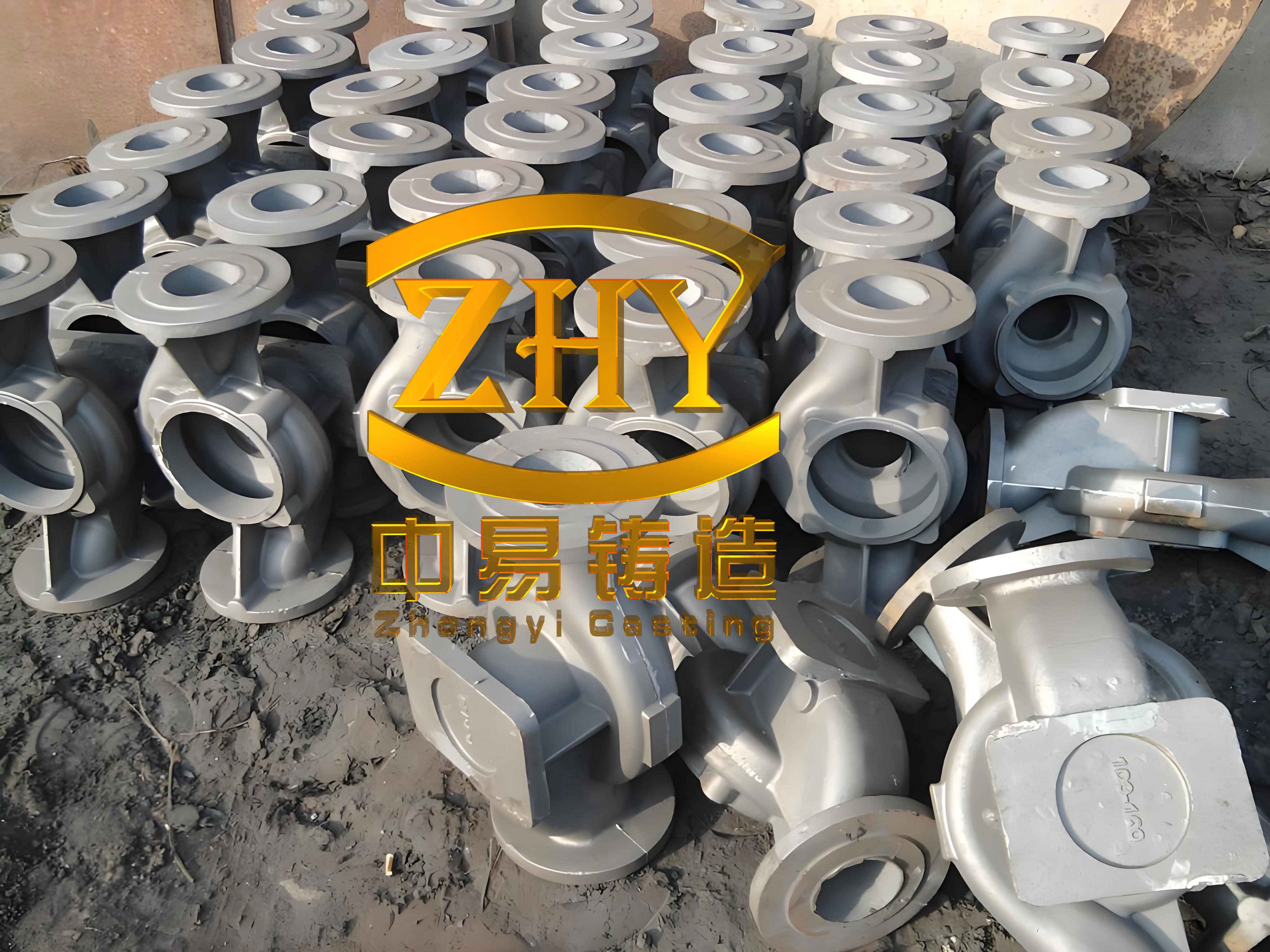
The substrate material used in this investigation was HT250 grey iron, a common grade for demanding applications. Its typical composition and that of the 316L alloy powder are summarized in Table 1. The primary aim of using 316L is to impart enhanced corrosion resistance and improve surface hardness to the grey iron castings.
| Material | C | Si | Mn | Cr | Ni | Mo | P | S | Fe |
|---|---|---|---|---|---|---|---|---|---|
| HT250 Grey Iron | 3.15 | 1.78 | 0.78 | – | – | – | 0.08 | 0.12 | Bal. |
| 316L Powder | 0.018 | 0.92 | – | 15.0 | 11.3 | 2.5 | – | – | Bal. |
The experimental setup consisted of a 3 kW fiber laser system integrated with a coaxial powder feeding nozzle and a robotic arm for precise trajectory control. Prior to cladding, the grey iron castings surfaces were meticulously cleaned to remove oxides and contaminants. The key variable process parameters identified for optimization were Laser Power (P), Scanning Speed (V), and Powder Feed Rate (F). Other parameters were kept constant: spot size (6mm x 3mm), shielding gas (N₂) flow rate, and stand-off distance.
The optimization problem is inherently multi-objective. For effective repair and surface enhancement of grey iron castings, the ideal clad layer should possess the following attributes:
1. High Cladding Efficiency: Maximize the deposition rate to make the process economically viable.
2. Minimal Heat-Affected Zone (HAZ): Minimize the thermal damage to the base grey iron castings to prevent cracking or undesirable phase transformations.
3. Good Surface Finish: Minimize the surface roughness (Rz) to reduce post-cladding machining requirements.
4. Controlled Dilution: Maintain dilution within an optimal range (typically 5-25%). Too little dilution may result in poor bonding, while excessive dilution washes away the alloying elements and reduces corrosion performance.
These objectives can be mathematically formulated. Let \( S_i \) be the cladding cross-sectional area, \( v_i \) the scanning speed, \( A_i \) the area of the heat-affected zone, and \( R_{z,i} \) the surface roughness. For a given parameter set \( X_i = (P_i, V_i, F_i, D_i, L_i, J_i) \), where D is spot diameter, L is defocus, and J is carrier gas flow, the multi-objective function \( F(X) \) is:
$$
F(X) = \left\{
\begin{aligned}
&\max \left[ v_i \cdot S_i(P_i, v_i, f_i, D_i, L_i, J_i) \right], \\
&\min \left[ A_i(P_i, V_i, f_i, D_i, L_i, J_i) \right], \\
&\min \left[ R_z(P_i, V_i, f_i, D_i, L_i, J_i) \right]
\end{aligned}
\right.
$$
Subject to the constraint: \( 5\% \leq \eta_i \leq 25\% \), where \( \eta_i \) is the dilution rate.
Manually exploring the vast parameter space to satisfy this function is impractical. This is where the Genetic Algorithm proves invaluable. The GA is a search heuristic inspired by natural evolution. It operates on a population of candidate solutions (parameter sets). Each solution’s “fitness” is evaluated against the multi-objective function. Fitter solutions are selected for “reproduction” through crossover and mutation operations to create a new generation of solutions. This process iterates, evolving the population toward optimal regions of the parameter space. The algorithm parameters were set as follows: population size = 20, maximum generations = 100, crossover probability = 0.55, mutation probability = 0.15. The parameter bounds were: P = [2000, 2800] W, V = [8, 10] mm/s, F = [0.2, 0.75] g/s.
The convergence of the GA is depicted in the figure below, showing the average and best fitness values over generations. The fitness function here is a weighted composite of the objectives in \( F(X) \). Stability is achieved around the 50th generation, indicating that the algorithm has successfully identified a robust Pareto-optimal front.
The GA produced a set of promising parameter combinations. A core set of nine experiments, centered around the optimal region identified by the GA, was executed to validate and analyze the effects in detail. These parameters are listed in Table 2.
| Group | Laser Power (W) | Scanning Speed (mm/s) | Powder Feed Rate (g/s) |
|---|---|---|---|
| 1 | 2000 | 8 | 0.25 |
| 2 | 2000 | 9 | 0.50 |
| 3 | 2000 | 10 | 0.75 |
| 4 | 2400 | 10 | 0.50 |
| 5 | 2400 | 9 | 0.25 |
| 6 | 2400 | 8 | 0.75 |
| 7 | 2800 | 10 | 0.25 |
| 8 | 2800 | 8 | 0.50 |
| 9 | 2800 | 9 | 0.75 |
Post-cladding, the samples were evaluated for macro-morphology, geometric dimensions (clad width W and height H), and Rockwell hardness (HRC). The comprehensive results are consolidated in Table 3.
| Group | Macro-morphology | Clad Width (mm) | Clad Height (mm) | Hardness (HRC) | Porosity |
|---|---|---|---|---|---|
| 1 | Fair, thin | 3.7 ±0.1 | 0.26 ±0.02 | 32.5 ±0.5 | Low |
| 2 | Fair, irregular | 3.1 ±0.2 | 0.28 ±0.03 | 31.8 ±0.7 | Medium |
| 3 | Poor, porous | 2.5 ±0.15 | 0.18 ±0.02 | 29.5 ±1.0 | High |
| 4 | Good | 4.1 ±0.1 | 0.35 ±0.02 | 34.2 ±0.4 | Very Low |
| 5 | Good | 4.5 ±0.15 | 0.48 ±0.03 | 35.1 ±0.6 | Low |
| 6 | Good, thick | 4.9 ±0.2 | 0.61 ±0.04 | 33.0 ±0.8 | Low |
| 7 | Excellent, uniform | 4.8 ±0.1 | 0.42 ±0.02 | 37.6 ±0.3 | Negligible |
| 8 | Excellent, very thick | 5.3 ±0.25 | 0.60 ±0.05 | 35.4 ±0.7 | Low |
| 9 | Very Good | 5.1 ±0.2 | 0.58 ±0.04 | 34.0 ±0.6 | Low |
Analysis of Hardness (HRC): The surface hardness of the grey iron castings was significantly enhanced by the 316L clad layer. The highest hardness of 37.6 HRC was achieved with Group 7 parameters (P=2800W, V=10 mm/s, F=0.25 g/s). This represents a substantial increase from the base grey iron hardness of approximately 30 HRC. The relationship between parameters and hardness is complex but reveals clear trends. For a constant powder feed rate, hardness generally increases with laser power, as higher energy input promotes better fusion and formation of harder microconstituents. Conversely, for a given high laser power, hardness tends to decrease with increasing powder feed rate. This is attributed to a reduction in specific energy input per unit mass of powder, potentially leading to insufficient melting and less optimal microstructure development. The interaction with scanning speed is also critical; an optimal speed (10 mm/s in this case) allows sufficient time for heat conduction and metallurgical reaction without causing excessive dilution or thermal stress cracking common in grey iron castings.
Analysis of Geometric Dimensions: The geometry of the clad bead is crucial for dimensional restoration of worn grey iron castings. The clad width (W) and height (H) are predominantly governed by the energy balance. The linear energy input \( E_l \) can be approximated as \( E_l = P / V \). A higher \( E_l \) (high P, low V) typically results in a wider and taller bead due to greater melt pool size. This is evident from Table 3: Group 8 (P=2800W, V=8 mm/s) has the maximum width (5.3 mm) and a large height (0.60 mm). Conversely, Group 3 (P=2000W, V=10 mm/s) has the minimum dimensions. Powder feed rate also plays a role; for a given \( E_l \), a higher feed rate (F) increases clad height but can sometimes reduce width if it significantly affects the melt pool’s energy absorption characteristics. The optimal geometry for repair applications often seeks a moderate width-to-height (aspect) ratio to ensure stability and minimize stress concentration. Group 7 offers an excellent balance with a width of 4.8 mm and a height of 0.42 mm.
Analysis of Macro-morphology and Defects: The visual quality of the clad layer is a direct indicator of process stability. Groups 1-3, with the lowest laser power (2000W), showed unsatisfactory morphology—thin, irregular, and prone to porosity, especially at high powder feed rates. This is due to incomplete melting of the powder and potentially insufficient wetting on the grey iron castings substrate. Groups 4-6 exhibited good, consistent beads. However, the optimal macro-morphology—characterized by a smooth, flat, and uniform surface with excellent adherence and no visible cracks or pores—was achieved in Groups 7-9, which utilized the highest laser power (2800W). This high power ensures complete powder fusion and creates a stable, fluid melt pool that solidifies uniformly. The synergy of high power (2800W), moderate-to-high scanning speed (10 mm/s), and a relatively low powder feed rate (0.25 g/s) in Group 7 produced the most defect-free and aesthetically superior clad layer. Minimizing defects like porosity is absolutely critical for the corrosion resistance performance of the repaired grey iron castings, as pores can act as initiation sites for corrosive attack.
The experimental data allows for a deeper synthesis. The primary challenge when laser cladding onto grey iron castings is managing the high carbon content and graphitic structure, which can lead to cracking (cooling cracks or hard, brittle phases like cementite in the fusion zone) and variability in dilution. The optimal parameters from Group 7 successfully mitigate these risks. The 2800W power provides ample energy to melt the 316L powder completely and create a shallow, controlled melt pool in the substrate. The 10 mm/s scanning speed is fast enough to limit total heat input, minimizing the width of the carbon-rich heat-affected zone where cracking is most probable. The low powder feed rate of 0.25 g/s ensures that the specific energy per powder particle is high, guaranteeing full densification and low porosity. Furthermore, this combination results in a dilution rate estimated to be within the ideal 10-20% range, ensuring strong metallurgical bond without excessive pickup of carbon from the grey iron castings into the clad metal, which could degrade its corrosion properties.
The success of the GA in this application cannot be overstated. The search space defined by three key parameters, even with bounded ranges, contains countless combinations. A full factorial experimental approach would be prohibitively time-consuming and resource-intensive. The GA, by evolving solutions towards the multi-objective optimum, rapidly honed in on the most promising region (high power, high scan speed, low feed rate). The validation experiments confirm that this region does indeed satisfy the competing goals: high deposition efficiency (good clad geometry), low thermal impact (controlled HAZ inferred from good morphology and no cracking), excellent surface quality, and superior mechanical property (hardness). This data-driven, intelligent optimization approach is far more efficient than traditional trial-and-error methods for process development on challenging substrates like grey iron castings.
In conclusion, this study demonstrates a highly effective methodology for enhancing the surface properties of grey iron castings through laser cladding with 316L alloy. The integration of a Genetic Algorithm for multi-objective parameter optimization proved to be a powerful tool for navigating the complex interplay between process inputs and clad layer quality. The analysis conclusively identifies the optimal process window. For the specific system and materials used, the parameter set of Laser Power = 2800 W, Scanning Speed = 10 mm/s, and Powder Feed Rate = 0.25 g/s yields the best overall results. This combination produces a clad layer on the grey iron castings with exceptional macro-morphology (smooth, uniform, defect-free), an optimal geometric profile for dimensional restoration, and a peak Rockwell hardness of 37.6 HRC. This represents a significant hardening effect, greatly improving the wear resistance of the surface while the 316L composition provides a robust barrier against corrosion. The findings offer a practical and repeatable framework for the repair and re-manufacturing of high-value components made from grey iron castings, extending service life and improving performance in demanding applications such as automotive braking systems. Future work could involve further microstructural characterization (SEM, EDS), detailed wear and corrosion testing of the optimal clad layer, and expanding the GA optimization to include additional parameters like pre-heating temperature to further suppress cracking tendencies in thick-section grey iron castings.