
In this study, we focus on the optimization of the lost wax investment casting process for TC4 alloy variable cross-section components, which are critical in aerospace and marine engineering due to their high strength-to-weight ratio and excellent corrosion resistance. The complexity of these components, with significant variations in cross-sectional area, poses challenges in mold preparation, wax pattern quality, and defect formation, such as shrinkage porosity and stress concentration. Through numerical simulation using ProCAST software and orthogonal experimental design, we aim to optimize key process parameters to minimize defects and ensure the mechanical integrity of the castings. The lost wax investment casting method is particularly suitable for such intricate geometries, as it allows for high precision and surface finish. This research delves into the filling and solidification behaviors, defect mechanisms, and microstructural evolution, providing a comprehensive framework for producing high-quality TC4 alloy components.
The TC4 alloy, primarily composed of titanium, aluminum, and vanadium, exhibits a narrow crystallization temperature range, which influences its solidification characteristics. In lost wax investment casting, the process involves creating a wax pattern, coating it with a ceramic shell, melting out the wax, and pouring molten metal into the cavity. We employed centrifugal casting to enhance mold filling and reduce defects. The orthogonal experimental design included four factors at three levels: pouring temperature, mold preheat temperature, pouring rate, and centrifugal speed. The response variable was the volume of shrinkage porosity, analyzed using the Niyama criterion, which is expressed as:
$$ M = \frac{G}{\sqrt{C}} $$
where \( M \) is the mapping parameter, \( G \) is the temperature gradient (K), and \( C \) is the cooling rate (K/s). This criterion helps predict the formation of shrinkage defects in casting processes. Additionally, the centrifugal speed was determined using the formula:
$$ n = 29.9 \sqrt{\frac{G}{r_0}} $$
where \( n \) is the centrifugal speed (r/min), \( G \) is the gravity coefficient (ranging from 40 to 100), and \( r_0 \) is the inner radius of the casting (m). This relationship ensures adequate centrifugal force to improve metal fluidity and feeding during solidification.
We conducted a series of simulations to evaluate the effects of process parameters on shrinkage porosity. The orthogonal array L9(34) was used, with factors and levels summarized in Table 1. Each combination was simulated, and the volume of shrinkage porosity was quantified. The results indicated that the optimal parameters significantly reduced defects, particularly in regions with large cross-sectional variations. The lost wax investment casting process under centrifugal force demonstrated improved filling stability and reduced isolated liquid zones, which are primary causes of shrinkage porosity.
| Run | Pouring Temperature (°C) | Mold Preheat Temperature (°C) | Pouring Rate (kg/s) | Centrifugal Speed (r/min) | Shrinkage Porosity Volume (cm³) |
|---|---|---|---|---|---|
| 1 | 1680 | 300 | 3 | 350 | 5.108 |
| 2 | 1680 | 350 | 5 | 450 | 5.141 |
| 3 | 1680 | 400 | 7 | 550 | 5.285 |
| 4 | 1700 | 300 | 5 | 550 | 5.501 |
| 5 | 1700 | 350 | 7 | 350 | 5.411 |
| 6 | 1700 | 400 | 3 | 450 | 5.167 |
| 7 | 1750 | 300 | 7 | 450 | 6.146 |
| 8 | 1750 | 350 | 3 | 550 | 5.323 |
| 9 | 1750 | 400 | 5 | 350 | 5.404 |
Based on the orthogonal analysis, we calculated the K values (sum of shrinkage porosity volumes for each factor level) and R values (range of K values) to determine the optimal conditions. The results, summarized in Table 2, showed that pouring temperature had the most significant influence on shrinkage porosity, followed by pouring rate, mold preheat temperature, and centrifugal speed. The optimized lost wax investment casting parameters were: pouring temperature of 1680°C, mold preheat temperature of 400°C, pouring rate of 3 kg/s, and centrifugal speed of 350 r/min. This combination minimized shrinkage porosity to 4.9326 cm³, as verified through additional simulations.
| Factor | Level 1 Sum (K1) | Level 2 Sum (K2) | Level 3 Sum (K3) | Range (R) |
|---|---|---|---|---|
| Pouring Temperature (°C) | 15.534 | 16.080 | 16.874 | 1.340 |
| Mold Preheat Temperature (°C) | 16.755 | 15.875 | 15.857 | 0.899 |
| Pouring Rate (kg/s) | 15.599 | 16.047 | 16.842 | 1.244 |
| Centrifugal Speed (r/min) | 15.924 | 16.454 | 16.110 | 0.530 |
The filling and solidification processes were numerically analyzed to understand the behavior of molten metal in the lost wax investment casting system. The simulation revealed that the metal flow reached the casting at 2.37 seconds, with the maximum flow velocity of 19.09 m/s occurring in the top region, where cross-sectional changes are most pronounced. This area exhibited lower filling stability, leading to potential defect formation. The solidification sequence followed a pattern: casting bottom → top → middle → gating system. This order is beneficial for feeding, as the gating system provides thermal compensation to the casting, reducing shrinkage defects. The complete solidification time was 49.74 seconds, with isolated liquid zones forming primarily in the top region due to larger effective cross-sectional areas and poor feeding.
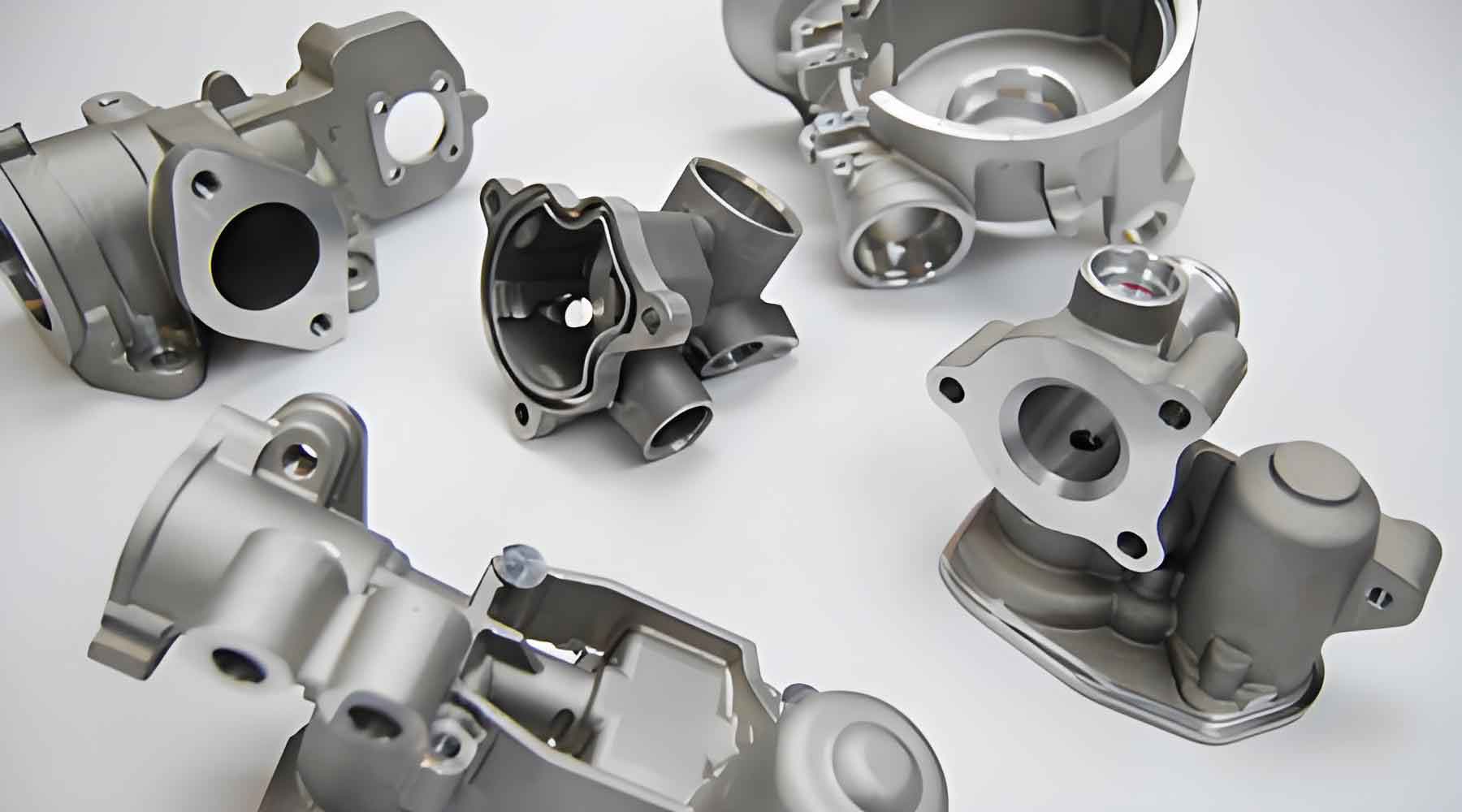
Shrinkage porosity was predominantly concentrated in the top of the casting, with minor dispersions in the middle and bottom. The formation mechanism is attributed to isolated liquid zones, where the liquid metal is trapped between growing dendrites, preventing adequate feeding. The macrostructural simulation showed that the casting microstructure consisted of columnar grains and a small fraction of equiaxed grains. The cessation of melt flow in the lost wax investment casting process exhibited characteristics of narrow crystallization temperature range alloys, as described by the following mechanism: during filling, the metal remains in a purely liquid state until superheat is dissipated, and the “mushy zone” forms only at the end of solidification. This behavior is captured by the equation for fluidity termination in such alloys:
$$ v = 0 \quad \text{when} \quad T < T_{\text{solidus}} $$
where \( v \) is the flow velocity and \( T_{\text{solidus}} \) is the solidus temperature. The presence of columnar grains and equiaxed crystals forms a grain framework that isolates liquid pockets, exacerbating shrinkage porosity.
Stress concentration was another critical defect analyzed in this study. The simulation indicated that stress hotspots occurred at the connections between the inner gating and the casting, with a maximum effective stress of 414.0 MPa. This is primarily due to significant structural changes at these junctions, which impose constraints during solidification contraction. The deformation analysis showed a maximum contraction of 0.4734 cm, with no substantial distortion in the casting body. The stress distribution can be modeled using Hooke’s law for elastic deformation:
$$ \sigma = E \cdot \epsilon $$
where \( \sigma \) is the stress (MPa), \( E \) is the Young’s modulus, and \( \epsilon \) is the strain. In lost wax investment casting, minimizing stress concentrations involves optimizing gating design to reduce abrupt geometrical changes.
To validate the numerical results, we produced actual castings using the optimized lost wax investment casting parameters. The ceramic mold was fabricated from ZrO2, and the castings were inspected for internal quality using X-ray radiography. The results confirmed the absence of shrinkage porosity, aligning with the simulation predictions. Dimensional analysis using a 3D laser scanner showed that the castings met design specifications with minimal deviation, indicating no significant deformation. The microstructural examination of hot isostatically pressed (HIPed) samples revealed a typical Widmanstätten structure, comprising grain boundary α phase (αG) and α/β colonies. Quantitative analysis provided the following data: prior β grain size of 1.12 mm, α/β colony width of 121.89 μm, αG width of 3.14 μm, and α lamellae width of 0.76 μm. This microstructure contributes to the mechanical properties of the castings.
The room-temperature tensile properties of the HIPed castings were evaluated, with average values of ultimate tensile strength (UTS) at 953.5 MPa, yield strength (YS) at 835.0 MPa, and elongation (EL) at 10.0%. These results meet the stringent requirements for aerospace applications. Fracture surface analysis indicated a mixed-mode failure, with numerous dimples and cleaved facets. The cleavage facets were associated with the size of β grains and α/β colonies, as larger grains increase the effective slip length, promoting cleavage. The relationship between microstructure and fracture toughness can be expressed as:
$$ K_{IC} \propto \sqrt{d} $$
where \( K_{IC} \) is the fracture toughness and \( d \) is the grain size. In lost wax investment casting, controlling grain size through process optimization is crucial for enhancing mechanical performance.
In conclusion, the optimized lost wax investment casting process for TC4 alloy variable cross-section components effectively minimizes defects and ensures high mechanical properties. The key parameters—pouring temperature of 1680°C, mold preheat temperature of 400°C, pouring rate of 3 kg/s, and centrifugal speed of 350 r/min—result in reduced shrinkage porosity and stress concentration. The filling and solidification behaviors, characterized by isolated liquid zones and narrow crystallization range, were thoroughly analyzed. The castings produced under these conditions exhibited excellent internal quality, dimensional accuracy, and microstructural integrity. The tensile properties confirm the suitability of these components for demanding applications. Future work could explore the effects of alloy modifications or alternative gating designs in the lost wax investment casting process to further enhance performance.
This research underscores the importance of integrated numerical simulation and experimental validation in advancing lost wax investment casting technologies. By leveraging tools like ProCAST and orthogonal experiments, we can achieve precise control over process variables, leading to superior castings. The repeated emphasis on lost wax investment casting throughout this study highlights its versatility and effectiveness for complex geometries, making it a cornerstone in modern manufacturing of high-performance titanium alloys.