
As an engineer specializing in advanced manufacturing and casting simulation, I have consistently observed the critical role that process reliability plays in producing high-integrity components. Low-Pressure Die Casting (LPDC) stands out as a pivotal process, particularly for complex, thin-walled, and high-quality shell castings. These shell castings, often forming structural enclosures or fluid-carrying housings in automotive, aerospace, and industrial machinery, demand exceptional mechanical properties and pressure tightness. The fundamental principle of LPDC—filling a permanent mold from below with pressurized molten metal—promotes a laminar flow front and directional solidification. However, the transition from a sound principle to a defect-free shell casting is fraught with challenges related to thermal management, feeding, and microstructural integrity. This is where Computer-Aided Engineering (CAE), specifically casting process simulation, transforms from a supportive tool into an indispensable pillar of modern foundry practice. This article delves into the comprehensive application of numerical simulation for the design, analysis, and optimization of LPDC processes for shell castings, detailing methodologies, analytical insights, and practical strategies.
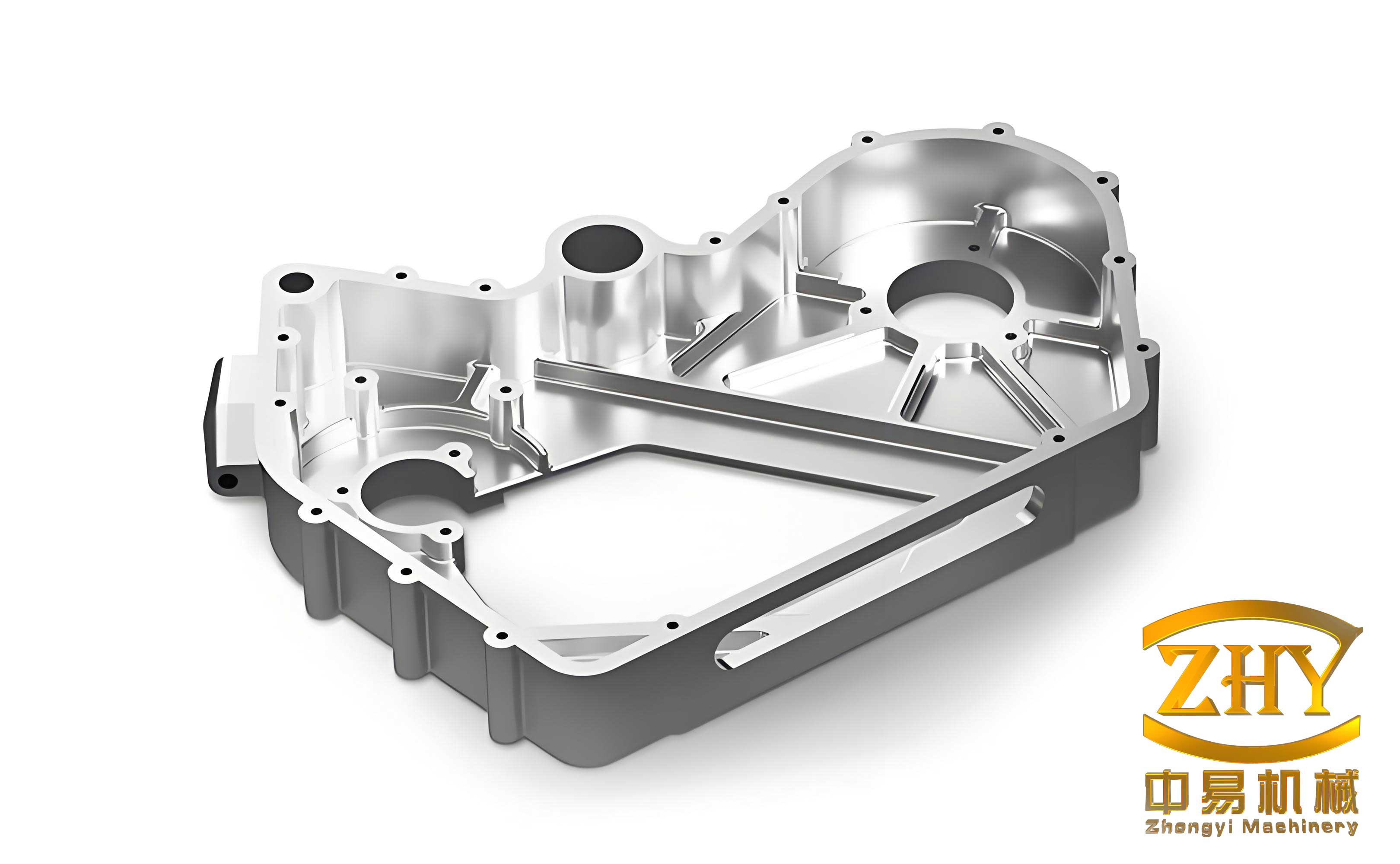
The geometry of shell castings inherently creates thermal and feeding challenges. Their often-complex internal cavities, thin walls transitioning to thicker mounting bosses or flanges, and extended surface areas make them susceptible to specific defects. Shrinkage porosity and micro-shrinkage (often termed dispersed shrinkage) are primary concerns in isolated hot spots. Gas porosity can arise from entrapment during turbulent filling or from outgassing of cores. Cold shuts and misruns may occur in intricate, thin sections if the thermal and flow parameters are not optimally tuned. Traditional trial-and-error methods for rectifying these issues in shell castings are prohibitively expensive and time-consuming, involving multiple iterations of tooling modification and physical prototyping.
Foundations of Numerical Simulation for LPDC
The simulation of low-pressure die casting for shell castings rests on solving the governing equations of fluid flow, heat transfer, and solidification physics within a discretized computational domain representing the entire casting system. The core mathematical framework involves:
1. Fluid Flow during Filling: The flow of molten metal is typically modeled as a viscous, incompressible flow with a free surface. The Volume of Fluid (VOF) method is commonly employed to track the metal-air interface. The governing Navier-Stokes equations are:
$$ \nabla \cdot \vec{u} = 0 $$
$$ \frac{\partial \vec{u}}{\partial t} + (\vec{u} \cdot \nabla) \vec{u} = -\frac{1}{\rho} \nabla p + \nu \nabla^2 \vec{u} + \vec{g} $$
where $\vec{u}$ is the velocity vector, $p$ is pressure, $\rho$ is density, $\nu$ is kinematic viscosity, and $\vec{g}$ is gravitational acceleration. The applied pressure at the base of the stalk tube or riser tube is a critical time-dependent boundary condition, $P_{applied}(t)$, driving the flow.
2. Heat Transfer and Solidification: This is coupled with the energy equation:
$$ \rho c_p \frac{\partial T}{\partial t} + \rho c_p (\vec{u} \cdot \nabla T) = \nabla \cdot (k \nabla T) + \rho L \frac{\partial f_s}{\partial t} $$
where $T$ is temperature, $c_p$ is specific heat, $k$ is thermal conductivity, $L$ is latent heat, and $f_s$ is the solid fraction. The last term represents the latent heat release during phase change. For shell castings, accurately modeling the heat extraction through metal dies and any sand cores is paramount.
3. Defect Prediction Models: Porosity prediction often uses a combination of thermal and pressure-based criteria. The Niyama criterion, a local thermal parameter, is widely used for predicting shrinkage porosity in areas where feeding is inadequate:
$$ Ny = \frac{G}{\sqrt{\dot{T}}} $$
where $G$ is the temperature gradient and $\dot{T}$ is the cooling rate. Regions with a Niyama value below a critical threshold are flagged as potential shrinkage sites. For shell castings, this helps identify isolated thermal centers in ribs, bosses, or junction areas.
The CAE Workflow for LPDC Optimization of Shell Castings
The optimization process is iterative and systematic, involving several key stages, each critical for achieving a robust process for producing shell castings.
Stage 1: Virtual Model Creation and Meshing
The process begins with an accurate 3D CAD model assembly. This assembly must include not only the final shell casting geometry but all system components: the metal die (split into cope, drag, and side cores), any sand or soluble cores defining internal passages of the shell casting, the shot sleeve or stalk tube, the biscuit, and the gating system (runners and ingates). The model must respect Boolean union rules to ensure a watertight computational domain. This virtual model is then discretized into millions of finite elements or control volumes (meshing). The mesh quality is paramount, especially for the thin walls characteristic of shell castings. A fine mesh is required in these regions and at the metal-die interface to resolve steep thermal gradients.
| Mesh Parameter | Typical Value/Strategy for Shell Castings | Purpose/Rationale |
|---|---|---|
| Element Size in Casting | 0.5 mm – 2.0 mm (minimum wall thickness dependent) | Resolve geometry and thermal profiles |
| Boundary Layer Mesh at Interface | 3-5 layers, graded growth factor ~1.2 | Accurately capture interfacial heat flux |
| Total Element Count | 5 million – 20+ million | Balance accuracy and computational cost |
Stage 2: Physics Setup and Boundary Conditions
This stage involves assigning material properties and defining the process dynamics. Material databases within CAE software provide temperature-dependent properties for common alloys (like A356/AlSi7Mg) and die materials (like H13 steel). The most crucial LPDC-specific setting is the pressure-time curve, $P(t)$. This curve is the “recipe” for the process and typically has three phases:
- Fill Phase: Pressure is ramped up to overcome hydrostatic head and fill the cavity at a controlled velocity (e.g., 0.1-0.5 m/s for aluminum shell castings).
- Intensification Phase: Once the cavity is full, pressure is rapidly increased to a higher holding level. This pressure acts on the solidifying mush to suppress gas precipitation and enhance interdendritic feeding in the shell castings.
- Solidification Phase: The high pressure is maintained until the casting, especially the gate area, is completely solidified to ensure soundness.
Boundary conditions for heat transfer (HTC values at metal-die and metal-core interfaces) and initial temperatures (melt, die, core) complete the setup.
| Process Parameter | Typical Range for Al Shell Castings | Influence on Outcome |
|---|---|---|
| Melt Pouring Temperature | 700°C – 730°C | Fluidity, tendency for shrinkage |
| Die Initial Temperature | 200°C – 350°C | Solidification rate, surface quality |
| Fill Pressure Rate | 1 – 5 kPa/s | Filling velocity, turbulence |
| Intensification Pressure | 50 – 100 kPa | Feeding efficiency, porosity reduction |
Stage 3: Simulation Execution and Defect Analysis
The solver computes the coupled transient solutions for flow and temperature fields. Post-processing allows for visualizing the filling sequence to check for jetting, air entrapment, or cold shuts. The temperature field at various times reveals the solidification pattern. The most critical output is the defect prediction map, highlighting areas prone to shrinkage porosity, isolated liquid pockets, and potential gas entrapment zones in the shell castings. Analysis of these results requires correlating the defect locations with the thermal history (cooling curves) and pressure history at those nodes.
Strategies for Optimizing Shell Castings via Simulation
Simulation is not merely a diagnostic tool but a powerful platform for virtual experimentation. Optimization strategies for shell castings typically focus on:
A. Gating and Feeding System Design: The primary goal is to establish a favorable temperature gradient, directing solidification from the extremities of the shell casting back toward the feeder (the stalk tube/biscuit). Simulation allows rapid testing of:
- Ingate Location and Size: Positioning ingates to promote sequential filling and to place thermal centers within feeding range. Increasing ingate cross-section can reduce flow velocity and improve feeding but may create a larger thermal mass to solidify last.
- Use of Chills and Insulation: Strategic placement of copper chills (high HTC) can accelerate solidification in thick sections of the shell casting, shifting the thermal center. Insulation can be applied to the feeder to keep it liquid longer.
- Implementation of Local Feeders (Overflows): For isolated hot spots in shell castings that cannot be fed from the main gate, small overflows or side risers can be added. Their efficacy in drawing porosity away from the functional area of the shell casting can be quantitatively assessed in simulation.
B. Pressure Curve Optimization: The $P(t)$ profile can be fine-tuned. For instance, a slower initial ramp may be tested to reduce turbulence for a delicate shell casting geometry. The timing and magnitude of the intensification pressure jump are critical. Simulation can predict the pressure transmission to different parts of the shell casting during solidification, ensuring that vulnerable areas are under sufficient pressure when they are in the mushy state. This can be expressed as ensuring:
$$ P_{local}(t) > P_{crit}(f_s, T) $$
where $P_{local}$ is the simulated pressure at a point in the mush, and $P_{crit}$ is a critical pressure needed to prevent pore formation, a function of solid fraction and local gas content.
C. Cooling Line Layout: For dies producing shell castings, the placement and flow rate of cooling channels significantly affect the thermal field. Simulation can model die temperature evolution over multiple cycles. An optimized cooling layout aims for uniform die temperatures and actively extracts heat from thick sections of the shell casting, thereby reducing cycle time and minimizing distortion.
A Detailed Case Study in Iterative Optimization
To concretize the methodology, consider the development of a complex aluminum alloy structural housing—a classic shell casting. The initial process, based on conventional design rules, yielded shell castings with a persistent shrinkage cavity in a thick mounting boss located far from the central sprue.
Iteration 1 (Baseline): Simulation of the initial design confirmed the defect. The solidification iso-surfaces showed that this boss became an isolated liquid pool, cut off from feeding by a solidifying skin in the connecting wall. The Niyama criterion clearly flagged this area. The feeding distance from the main gate was simply too great for the given geometry and thermal conditions of this shell casting.
Iteration 2 (Increased Feeding Channel): The first logical change was to increase the cross-sectional area of the connecting channel (runner) between the sprue and the problematic boss on the shell casting, attempting to extend its feeding range. Re-simulation showed marginal improvement; the shrinkage volume decreased but was not eliminated. The thermal analysis revealed that while the channel stayed open longer, it still solidified before the boss itself, leaving the final liquid pool isolated. This highlighted that merely enlarging a path is insufficient if the path itself creates a thermal mass that solidifies late.
Iteration 3 (Active Local Feed Aid): A more radical redesign was implemented. A small, thermally efficient “feed sleeve” or side gate was added, directly connecting the thick boss of the shell casting to a secondary thermal mass (a small overflow) located outside the final part contour. This overflow acted as a sacrificial thermal sink. The simulation of this new design showed a dramatic shift in the solidification pattern. The boss and the feed sleeve now solidified directionally toward the overflow. The defect predictor showed no shrinkage in the critical boss region of the shell casting; any porosity was successfully drawn into the overflow, which would be machined off. The governing thermal relationship changed to favor feeding:
$$ \left( \frac{G}{\dot{T}} \right)_{boss} \propto \frac{1}{d_{sleeve}^2} \cdot \Delta T_{overflow} $$
where a smaller, dedicated feed sleeve diameter ($d_{sleeve}$) and a cooler overflow temperature ($\Delta T_{overflow}$) create a steeper gradient toward the overflow.
The final optimized design was then released for tooling modification. Physical trials confirmed the simulation predictions, producing sound shell castings, thereby validating the virtual optimization process and eliminating costly multiple tooling try-outs.
| Optimization Iteration | Key Design Change | Simulation-Predicted Result | Verification Outcome |
|---|---|---|---|
| Baseline | Conventional gating | Major shrinkage in isolated boss | Defect confirmed in casting |
| Iteration 2 | Enlarged main feed channel | Reduced shrinkage volume, defect persists | Minor improvement, not acceptable |
| Iteration 3 (Optimal) | Added local feed sleeve + overflow | No shrinkage in critical boss area | Sound shell castings produced |
Conclusion and Future Perspectives
The integration of numerical simulation into the development lifecycle of low-pressure die casting processes for shell castings represents a paradigm shift. It moves the industry from reactive, defect-correction modes to proactive, science-based design. By enabling engineers to visualize filling patterns, predict solidification sequences, and quantitatively assess defect formation mechanisms in a virtual environment, CAE dramatically reduces the time, cost, and material waste associated with new product introduction. The successful production of high-integrity shell castings—be they for automotive transmissions, pump housings, or structural aerospace components—increasingly hinges on this capability.
The future of optimizing shell castings via simulation lies in several advanced directions: coupling macro-scale shrinkage models with micro-scale microstructure prediction (e.g., dendrite arm spacing, eutectic modification) to directly link process parameters to mechanical properties; integrating thermal stress analysis to predict distortion and residual stresses in the final shell castings; and employing artificial intelligence/machine learning algorithms to automatically explore vast design spaces of gating and cooling parameters, suggesting optimal configurations that human designers might not immediately conceive. Ultimately, the journey toward perfecting the manufacture of shell castings is a continuous loop of virtual design, simulation, insight, and refinement, with numerical simulation serving as the core engine of innovation and quality assurance.