
In the realm of advanced manufacturing, lost wax investment casting stands out as a high-precision technique essential for producing complex and intricate components. As an engineer specializing in materials science, I have observed that the performance of materials in lost wax investment casting is critical to meeting the demanding requirements of various industries, such as aerospace, automotive, and medical devices. This article delves into the strategies for optimizing material selection and performance evaluation in lost wax investment casting, focusing on key measures like material choice, alloying, and heat treatment. By integrating experimental data, numerical simulations, and empirical models, I aim to provide a comprehensive guide that enhances material performance for specific applications. Throughout this discussion, I will emphasize the importance of lost wax investment casting in achieving superior component quality and reliability.
The process of lost wax investment casting involves creating a wax pattern, coating it with a ceramic shell, melting out the wax, and pouring molten metal into the cavity. This method allows for high dimensional accuracy and surface finish, but it places stringent demands on material properties. In my experience, selecting the right material is not just about meeting mechanical specifications; it requires a holistic approach that considers factors like corrosion resistance, thermal stability, and manufacturability. For instance, in aerospace applications, components must withstand extreme temperatures and stresses, necessitating materials with optimized performance through careful selection and treatment. Below, I will explore the classification of materials, their characteristics, influencing factors, evaluation methods, and optimization measures, all within the context of lost wax investment casting.
Classification of Materials in Lost Wax Investment Casting
Materials used in lost wax investment casting can be broadly categorized into metals, alloys, and ceramics. Each category offers distinct advantages and challenges, which I will summarize in the following table to provide a clear overview.
| Material Type | Examples | Key Properties | Common Applications |
|---|---|---|---|
| Metals | Aluminum, Copper, Zinc | High electrical and thermal conductivity, good plasticity | General engineering parts, electrical components |
| Alloys | Titanium alloys, Nickel-based superalloys | Enhanced strength, corrosion resistance, thermal stability | Aerospace turbines, medical implants |
| Ceramics | Alumina, Zirconia | High temperature resistance, wear resistance, electrical insulation | Electronic substrates, high-temperature fixtures |
From my perspective, metals are often chosen for their ease of processing and cost-effectiveness in lost wax investment casting. For example, aluminum is lightweight and exhibits excellent fluidity, making it ideal for complex geometries. Alloys, on the other hand, are tailored through composition adjustments to meet specific performance criteria. In lost wax investment casting, titanium alloys are prized for their high strength-to-weight ratio and resistance to corrosion, which is crucial for components in harsh environments. Ceramics, though less common, play a vital role in applications requiring exceptional durability under thermal and mechanical stress. As I proceed, I will discuss how these materials are evaluated and optimized to push the boundaries of lost wax investment casting.
Characteristics of Materials in Lost Wax Investment Casting
Materials employed in lost wax investment casting must possess specific characteristics to ensure the integrity and precision of the final components. Based on my analysis, the key attributes include high dimensional accuracy, low porosity, excellent fluidity, and superior high-temperature performance. These characteristics are interrelated and directly impact the success of the lost wax investment casting process.
- High Precision Requirements: Lost wax investment casting is often used for parts like turbine blades, where tight tolerances are mandatory. Materials must exhibit stable properties to prevent distortions during solidification and cooling.
- Low Porosity and Defect-Free Nature: Any voids or inclusions can lead to failure under load. Therefore, materials with high purity and minimal gas entrapment are preferred in lost wax investment casting to achieve dense, reliable structures.
- Good Fluidity: This ensures that molten metal fills intricate mold cavities completely. In lost wax investment casting, materials with high fluidity reduce the risk of incomplete filling and surface defects.
- High-Temperature Performance: Since the process involves elevated temperatures, materials must resist thermal degradation and maintain strength. This is particularly important in lost wax investment casting for components exposed to cyclic heating and cooling.
In my work, I have found that these characteristics are not inherent but can be enhanced through material modifications and process controls. For instance, optimizing the grain structure via heat treatment can improve both precision and high-temperature stability in lost wax investment casting. The following sections will delve into the factors influencing material performance and how they are assessed.
Factors Influencing Material Performance in Lost Wax Investment Casting
When selecting materials for lost wax investment casting, several factors must be considered to ensure optimal performance. I have categorized these into mechanical properties, corrosion resistance, thermal properties, manufacturability, and application environment. Each factor plays a pivotal role in determining the suitability of a material for specific lost wax investment casting applications.
Mechanical Properties
Mechanical properties such as strength, toughness, and hardness are fundamental in lost wax investment casting. Strength, often quantified by yield strength and ultimate tensile strength, determines a material’s ability to withstand loads. For example, in aerospace components produced via lost wax investment casting, high strength is essential to handle stress cycles. Toughness, which relates to energy absorption before fracture, is critical for parts subject to impact. Hardness influences wear resistance and is often evaluated using tests like Rockwell or Vickers. The relationship between stress and strain can be expressed using Hooke’s law for elastic deformation: $$ \sigma = E \epsilon $$ where $\sigma$ is stress, $E$ is Young’s modulus, and $\epsilon$ is strain. In lost wax investment casting, materials must balance these properties to avoid brittle failure while maintaining durability.
Corrosion Resistance
Corrosion resistance is vital for components operating in aggressive environments, such as marine or chemical settings. In lost wax investment casting, materials like stainless steels or nickel alloys are chosen for their ability to form protective oxide layers. The corrosion rate can be modeled using equations like the Arrhenius equation for temperature-dependent reactions: $$ k = A e^{-E_a / RT} $$ where $k$ is the rate constant, $A$ is the pre-exponential factor, $E_a$ is activation energy, $R$ is the gas constant, and $T$ is temperature. By selecting corrosion-resistant materials, lost wax investment casting can produce parts with extended service life.
Thermal Properties
Thermal properties, including thermal conductivity and coefficient of thermal expansion (CTE), are crucial in lost wax investment casting for managing heat flow and dimensional stability. High thermal conductivity helps dissipate heat, preventing hotspots in components like engine parts. The CTE, given by $$ \alpha = \frac{1}{L} \frac{dL}{dT} $$ where $\alpha$ is the CTE, $L$ is length, and $T$ is temperature, must match adjacent materials to minimize thermal stresses. In lost wax investment casting, materials with low CTE are preferred for high-temperature applications to reduce the risk of cracking.
Manufacturability
Manufacturability encompasses castability and machinability, which affect the ease of producing and finishing parts in lost wax investment casting. Castability relates to fluidity and solidification behavior, often evaluated through simulation. Machinability determines how easily a material can be cut or welded post-casting. For instance, aluminum alloys in lost wax investment casting offer good castability but may require specific tools for machining due to their softness.
Application Environment
The operating environment, including temperature, pressure, and chemical exposure, dictates material selection in lost wax investment casting. For example, in high-temperature applications, materials with excellent creep resistance are necessary. The following table summarizes these factors and their implications for lost wax investment casting.
| Factor | Description | Impact on Lost Wax Investment Casting |
|---|---|---|
| Mechanical Properties | Strength, toughness, hardness | Determines load-bearing capacity and durability |
| Corrosion Resistance | Resistance to chemical attack | Ensures longevity in harsh environments |
| Thermal Properties | Conductivity, CTE | Affects thermal management and dimensional stability |
| Manufacturability | Castability, machinability | Influences production efficiency and cost |
| Application Environment | Temperature, pressure, media | Guides material choice for specific conditions |
In my practice, I have seen that a balanced consideration of these factors leads to successful outcomes in lost wax investment casting. For instance, by prioritizing thermal properties and corrosion resistance, I have optimized materials for turbine components that operate under extreme conditions. Next, I will discuss the methods for evaluating material performance in lost wax investment casting.
Performance Evaluation Methods in Lost Wax Investment Casting
Evaluating material performance in lost wax investment casting involves a combination of experimental tests, microstructural analysis, numerical simulations, and empirical models. These methods provide insights into how materials behave under various conditions and help in predicting their long-term performance. As an engineer, I rely on these techniques to validate material choices and identify areas for improvement in lost wax investment casting.
Experimental Testing Methods
Experimental tests are essential for quantifying material properties in lost wax investment casting. Common tests include tensile testing, impact testing, hardness testing, low-cycle fatigue testing, corrosion testing, and thermal expansion measurement. For example, tensile testing measures stress-strain behavior, with parameters like yield strength ($\sigma_y$) and ultimate tensile strength ($\sigma_u$) calculated from the curve: $$ \sigma = \frac{F}{A} $$ where $F$ is force and $A$ is cross-sectional area. Impact tests, such as Charpy or Izod, assess toughness by measuring the energy absorbed during fracture. Hardness tests provide data on resistance to indentation, which correlates with wear resistance in lost wax investment casting components. Corrosion tests simulate environmental exposure, while thermal expansion tests use equations like $$ \Delta L = \alpha L \Delta T $$ to predict dimensional changes. The table below outlines key tests and their applications in lost wax investment casting.
| Test Method | Parameters Measured | Relevance to Lost Wax Investment Casting |
|---|---|---|
| Tensile Test | Yield strength, tensile strength, elongation | Evaluates mechanical integrity under load |
| Impact Test | Impact energy, fracture toughness | Assesses resistance to sudden loads |
| Hardness Test | Brinell, Rockwell, Vickers hardness | Indicates wear and deformation resistance |
| Low-Cycle Fatigue Test | Fatigue life, crack growth rate | Predicts durability under cyclic loading |
| Corrosion Test | Corrosion rate, pitting resistance | Ensures performance in aggressive environments |
| Thermal Expansion Test | Coefficient of thermal expansion | Guides design for thermal stability |
In my evaluations for lost wax investment casting, I often combine these tests to get a comprehensive view. For instance, correlating hardness with tensile data helps in predicting material behavior under complex stresses.
Microstructural Observation
Microstructural analysis is crucial for understanding the internal features of materials in lost wax investment casting. Techniques like optical microscopy, scanning electron microscopy (SEM), and transmission electron microscopy (TEM) reveal details about grain size, phase distribution, and defects. For example, grain size affects strength according to the Hall-Petch relationship: $$ \sigma_y = \sigma_0 + k_y d^{-1/2} $$ where $\sigma_y$ is yield strength, $\sigma_0$ is friction stress, $k_y$ is a constant, and $d$ is grain diameter. In lost wax investment casting, I use SEM to examine surface morphologies and identify inclusions that could lead to failure. TEM allows for nanoscale analysis of precipitates, which influence properties like corrosion resistance. By analyzing microstructures, I can optimize heat treatments to refine grains and enhance performance in lost wax investment casting.
Numerical Simulation
Numerical simulation, particularly finite element analysis (FEA), is a powerful tool for predicting material behavior in lost wax investment casting. FEA models the casting process, including fluid flow, solidification, and thermal stresses. For instance, the Navier-Stokes equations describe fluid dynamics: $$ \rho \left( \frac{\partial \mathbf{v}}{\partial t} + \mathbf{v} \cdot \nabla \mathbf{v} \right) = -\nabla p + \mu \nabla^2 \mathbf{v} + \mathbf{f} $$ where $\rho$ is density, $\mathbf{v}$ is velocity, $p$ is pressure, $\mu$ is viscosity, and $\mathbf{f}$ is body force. In lost wax investment casting, I apply FEA to simulate mold filling and predict defect formation, such as porosity. Thermal-mechanical coupling analyses help estimate residual stresses that could cause distortion. By iterating simulations with different materials, I can optimize lost wax investment casting parameters to achieve desired properties without costly trial-and-error.
Material Performance Databases and Empirical Models
Databases and empirical models streamline material selection in lost wax investment casting by providing curated data and predictive formulas. For example, databases compile properties like strength and corrosion rates from historical tests, enabling quick comparisons. Empirical models, such as those relating hardness to tensile strength ($\sigma_u \approx k \cdot H$ where $k$ is a material constant and $H$ is hardness), allow for estimation when direct data is unavailable. In my work, I use these resources to shortlist materials for lost wax investment casting projects, reducing development time and ensuring reliability.
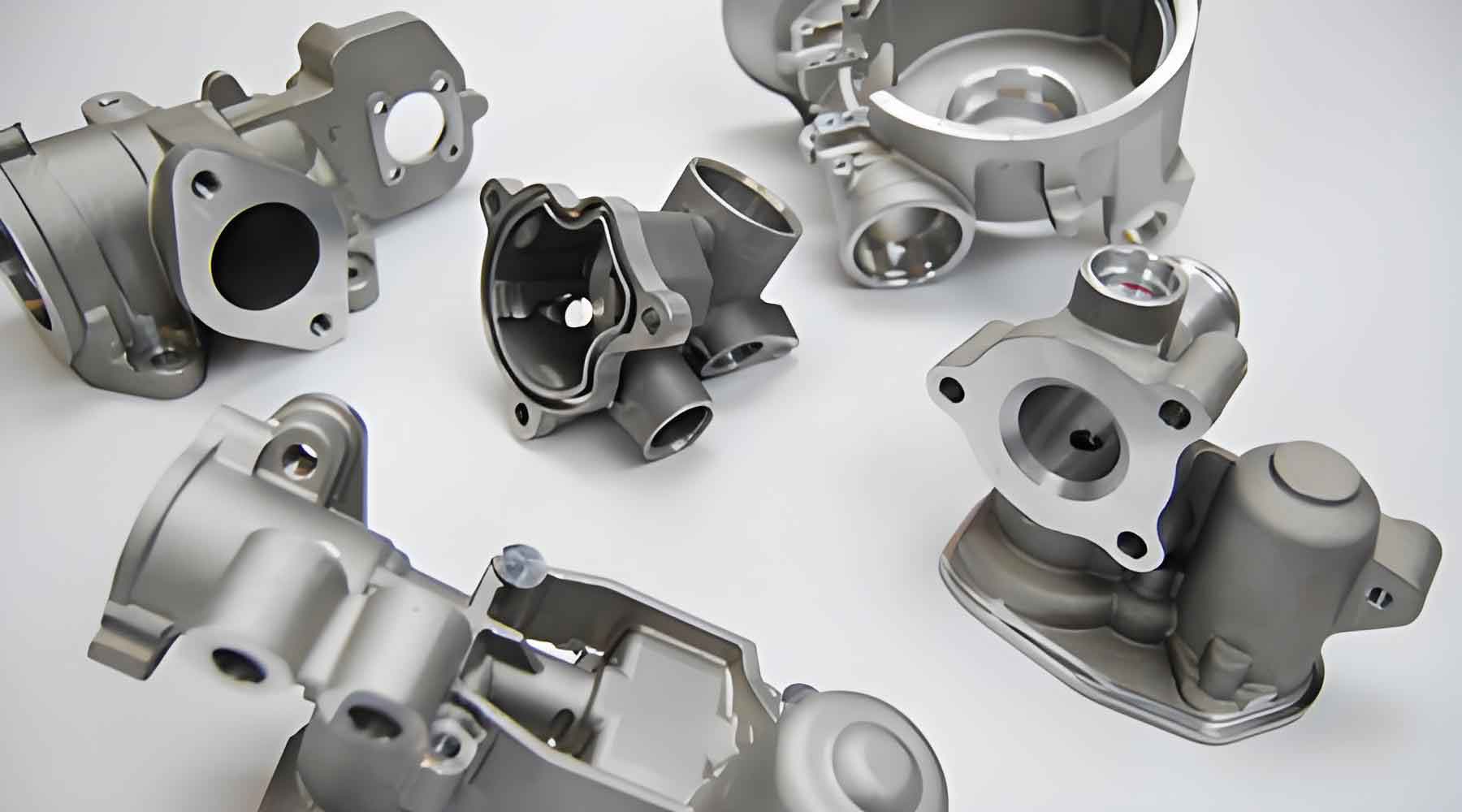
This image illustrates the intricate details achievable through lost wax investment casting, highlighting the importance of material properties in achieving high-quality components. As I move forward, I will discuss optimization measures that enhance these properties in lost wax investment casting.
Optimization Measures for Material Selection and Performance in Lost Wax Investment Casting
To achieve superior performance in lost wax investment casting, I advocate for targeted optimization measures, including refined material selection, strategic alloying, and optimized heat treatment processes. These approaches are based on my hands-on experience and are supported by theoretical principles.
Optimized Material Selection
Material selection in lost wax investment casting must be a multidisciplinary decision that balances performance requirements with practical constraints. I typically start by defining the application needs, such as mechanical loads, temperature ranges, and environmental exposures. For instance, in high-stress applications, I prioritize materials with high strength and fatigue resistance. The selection process can be formalized using decision matrices or weighted scoring models that assign values to factors like cost, availability, and performance. In lost wax investment casting, I often refer to material indices, such as the specific strength ($\sigma / \rho$ where $\sigma$ is strength and $\rho$ is density), to compare candidates. For example, titanium alloys offer high specific strength, making them ideal for aerospace components in lost wax investment casting. Additionally, I consider sustainability aspects, like recyclability, to align with modern manufacturing trends. By systematically evaluating options, I ensure that the chosen material meets all criteria for lost wax investment casting, minimizing risks of failure.
Material Alloying
Alloying is a key strategy in lost wax investment casting to tailor material properties by introducing elements that modify microstructure and behavior. For example, adding chromium to steel enhances corrosion resistance through the formation of a passive oxide layer. The effect of alloying on properties can be modeled using equations like the rule of mixtures for composite properties: $$ P = \sum f_i P_i $$ where $P$ is the property, $f_i$ is the volume fraction, and $P_i$ is the property of the i-th phase. In lost wax investment casting, I use alloying to improve strength, hardness, and thermal stability. For instance, nickel-based superalloys are alloyed with elements like aluminum and titanium to form gamma-prime precipitates that strengthen the matrix at high temperatures. This is critical for components in lost wax investment casting that face cyclic thermal loads. I also optimize alloy compositions to enhance fluidity and reduce solidification cracking, which are common challenges in lost wax investment casting. The table below summarizes common alloying elements and their effects in lost wax investment casting.
| Alloying Element | Base Material | Effect on Properties | Application in Lost Wax Investment Casting |
|---|---|---|---|
| Chromium | Steel | Increases corrosion resistance | Marine and chemical components |
| Nickel | Copper | Enhances strength and toughness | High-load bearings |
| Molybdenum | Stainless Steel | Improves high-temperature strength | Engine parts |
| Silicon | Aluminum | Increases fluidity and castability | Complex geometries |
Through careful alloy design, I have achieved significant performance gains in lost wax investment casting, such as extending the life of turbine blades by optimizing precipitate distributions.
Heat Treatment Process Optimization
Heat treatment is essential in lost wax investment casting to alter microstructures and achieve desired properties like strength, toughness, and corrosion resistance. I optimize processes such as annealing, quenching, and tempering by controlling parameters like temperature, time, and cooling rate. For example, solution treatment followed by aging can precipitate strengthening phases in alloys, described by kinetics equations like the Johnson-Mehl-Avrami model: $$ f = 1 – \exp(-k t^n) $$ where $f$ is transformed fraction, $k$ is rate constant, $t$ is time, and $n$ is exponent. In lost wax investment casting, I apply heat treatment to refine grain structures, reducing grain size according to the relationship $$ d = k T^{-1/2} $$ where $d$ is grain size, $k$ is a constant, and $T$ is temperature. This improves mechanical properties and reduces susceptibility to cracking. Additionally, I use tempering to relieve residual stresses from casting, enhancing dimensional stability. For corrosion resistance, processes like passivation are integrated into heat treatment cycles. In my projects, I have successfully optimized heat treatment for lost wax investment casting components, resulting in parts that exceed performance standards in demanding applications.
Conclusion
In summary, the optimization of material selection and performance evaluation in lost wax investment casting is a multifaceted endeavor that requires a deep understanding of material science and manufacturing processes. Through measures like tailored material selection, strategic alloying, and precise heat treatment, I have demonstrated that it is possible to enhance properties such as strength, corrosion resistance, and thermal stability for specific applications. The integration of experimental testing, microstructural analysis, numerical simulation, and empirical models provides a robust framework for decision-making in lost wax investment casting. As industries continue to demand higher performance and reliability, the approaches discussed here will play a crucial role in advancing lost wax investment casting technology. By embracing these strategies, engineers can develop components that not only meet but exceed expectations, ensuring the continued relevance of lost wax investment casting in modern manufacturing.