
The pursuit of lightweight, high-performance materials is a constant driver in advanced manufacturing sectors such as aerospace, defense, and automotive industries. Among the contenders, magnesium alloys stand out due to their exceptional combination of properties: low density, high specific strength and stiffness, good thermal and electrical conductivity, excellent damping capacity, and effective electromagnetic shielding. These attributes make them prime candidates for replacing heavier materials, leading to significant improvements in fuel efficiency and performance. However, the widespread adoption of magnesium, particularly in high-temperature or oxygen-rich environments, is severely hampered by its pronounced susceptibility to ignition and violent oxidation during melting and processing.
To mitigate this inherent flammability, the addition of alloying elements like Calcium (Ca) has proven effective. Ca acts as a potent ignition suppressant by forming a protective, dense oxide layer (primarily CaO) on the molten metal’s surface. For reliable flame-retardant performance, Ca additions typically need to exceed 1 wt.%. While small amounts of Ca can refine the as-cast structure of Mg-Al based alloys like AZ91D and even improve tensile strength and elongation, higher Ca concentrations—necessary for practical ignition-proofing—often lead to a marked deterioration in mechanical properties. Specifically, in alloys like AZ91D-3%Ca, the tensile strength and elongation decrease significantly, while yield strength shows a gradual declining trend. This creates a critical bottleneck: achieving acceptable flammability resistance comes at the direct cost of mechanical integrity, thereby limiting the alloy’s application potential.
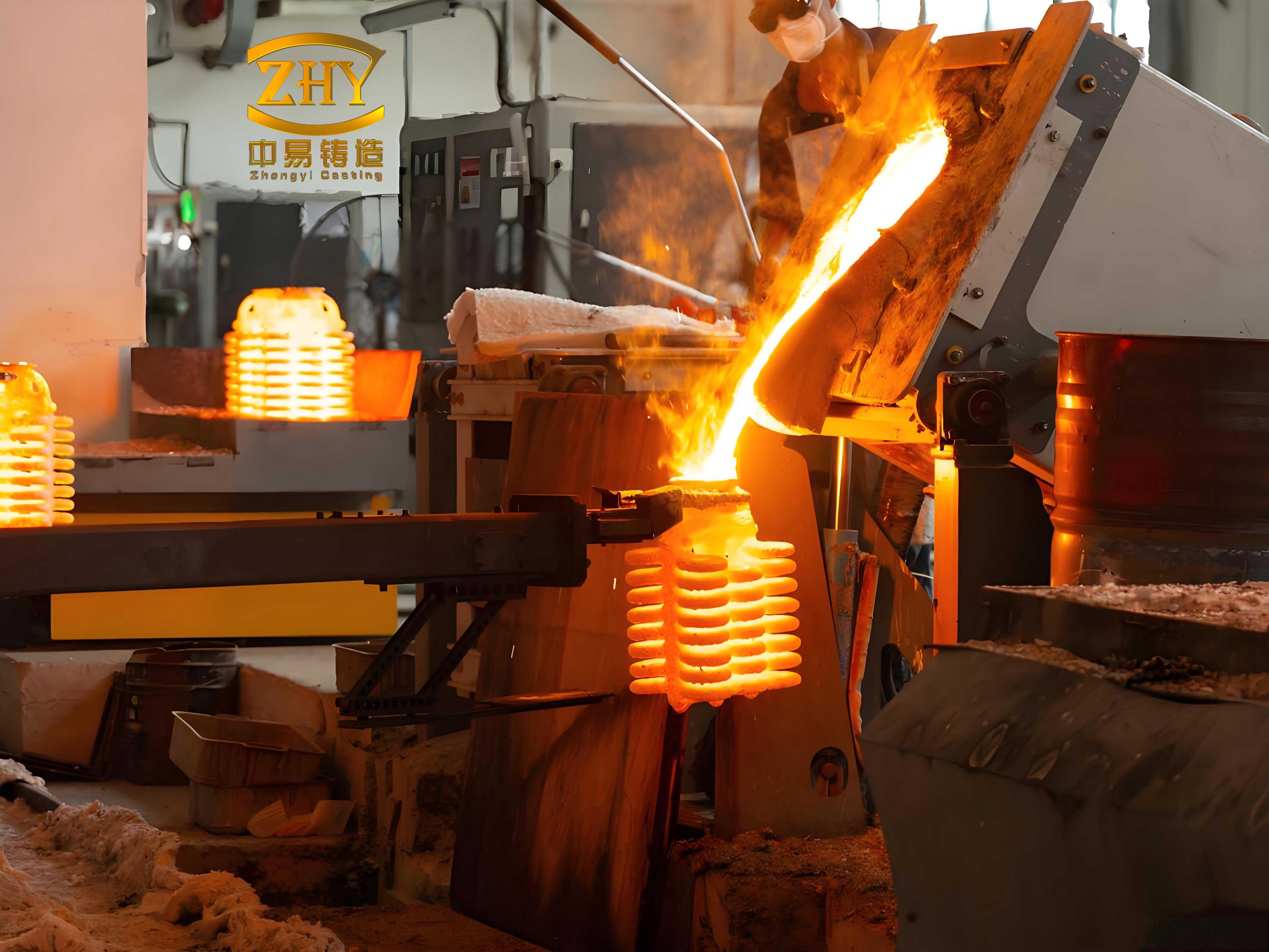
This trade-off underscores the paramount importance of microstructure control. In casting processes, the solidification structure dictates the final mechanical properties. A coarse, dendritic microstructure with interconnected brittle second phases provides easy paths for crack initiation and propagation, resulting in poor strength and ductility. Conversely, a fine, equiaxed grain structure with well-dispersed second phases can dramatically enhance both strength and toughness. Therefore, developing effective methods to refine the solidification structure of high-Ca, ignition-proof magnesium alloys is a crucial research objective to bridge the gap between flammability resistance and mechanical performance.
External field processing during solidification has emerged as a powerful, clean, and efficient approach for grain refinement. Two prominent techniques are mechanical vibration and ultrasonic melt treatment. Mechanical vibration introduces shear forces into the semi-solid slurry, fragmenting developing dendrites. These fragments then act as new nucleation sites, increasing the overall grain count and promoting a more equiaxed morphology. Ultrasonic treatment, on the other hand, utilizes two primary physical phenomena: acoustic cavitation and streaming. Intense ultrasonic waves generate countless microscopic bubbles in the melt that violently implode (cavitation), creating localized zones of extreme pressure and temperature. This can activate potential nucleating particles and promote heterogeneous nucleation. Simultaneously, the strong acoustic streaming vigorously agitates the melt, ensuring a uniform temperature and solute field, which suppresses dendritic growth and disperses nuclei.
While both methods have demonstrated individual efficacy in refining various alloys, they possess inherent limitations when applied alone. For ultrasonic processing, prolonged treatment time or excessive power can lead to undesirable melt overheating, which may cause grain coarsening. Furthermore, as the metal solidifies and its viscosity increases, the effectiveness of ultrasonic energy transmission and cavitation diminishes sharply. For mechanical vibration, excessive amplitude or force can introduce defects such as microscopic shrinkage porosity by disrupting the interdendritic feeding, ultimately degrading mechanical properties. The quest for superior and more reliable refinement has thus led to the concept of compound field processing. By synergistically combining two or more external fields, it is possible to overcome individual limitations and achieve a more significant and controllable improvement in solidification structure.
This article presents a comprehensive investigation into the application of an Ultrasonic-Mechanical Vibration Compound Treatment to the precision investment casting of AZ91D-3%Ca ignition-proof magnesium alloy. Precision investment casting, also known as the lost-wax process, is ideal for producing complex, near-net-shape components with excellent surface finish and dimensional accuracy. It is particularly suitable for reactive metals like magnesium when proper atmospheric control is employed. The study systematically examines the individual and combined effects of mechanical vibration, ultrasonic melt treatment, and their sequential compound application on the resultant solidification microstructure and room-temperature tensile properties. The objective is to elucidate the underlying mechanisms and establish a novel pathway for simultaneously achieving excellent ignition resistance and enhanced mechanical performance in cast magnesium components.
1. Experimental Methodology
1.1 Materials and Characterization of the Baseline Alloy
The material used in this study was a flame-retardant magnesium alloy with a nominal composition of AZ91D-3Ca (wt.%). The base AZ91D composition primarily consists of Magnesium (Mg) with approximately 9% Aluminum (Al) and 1% Zinc (Zn), which provides good castability and moderate strength. The deliberate addition of 3% Calcium (Ca) is the key to imparting ignition-proof characteristics. The critical thermal parameters for this alloy system, essential for designing the solidification treatment, are as follows: the liquidus temperature is approximately 595°C, the solidus temperature is around 502°C, and the eutectic reaction occurs near 439°C. The precise chemical composition of the alloy used is detailed in Table 1.
| Al | Ca | Zn | Mn | Si | Fe | Cu | Ni | Be | Mg |
|---|---|---|---|---|---|---|---|---|---|
| 9.03 | 2.87 | 0.64 | 0.33 | 0.031 | 0.0011 | 0.0049 | 0.0003 | 0.0014 | Bal. |
1.2 The Compound Treatment Setup and Precision Investment Casting Mold Fabrication
The core of this research is a custom-built apparatus capable of applying ultrasonic and mechanical vibration treatments sequentially. The setup, illustrated schematically in Figure 1, integrates two main subsystems:
- Ultrasonic Melt Treatment System: This consists of a high-power ultrasonic generator (max. 1 kW), a piezoelectric transducer, a stepped horn (sonotrode), and a water-cooling system for the transducer. The titanium-made sonotrode is immersed directly into the molten metal held in a resistance furnace.
- Mechanical Vibration System: This is an electromagnetic-driven platform where the precision investment casting mold is securely mounted. It can generate controlled vibrations with adjustable frequency and amplitude (max. force 0.1 kN).
The molds for precision investment casting were fabricated using a multi-layer dipping and stuccoing process. A wax pattern assembly was repeatedly dipped into ceramic slurries and coated with refractory sands to build up a robust shell. The specific parameters for each layer—including binder type, refractory flour, slurry viscosity, stucco sand size, and drying time—are critical for achieving a mold with adequate strength, permeability, and thermal stability. The detailed build-up parameters are summarized in Table 2. The final mold had internal and external diameters of 40 mm and 55 mm, respectively, and a height of 80 mm.
| Layer | Sequence | Binder | Refractory Flour | Slurry Viscosity (s) | Stucco Sand | Drying Time (h) |
|---|---|---|---|---|---|---|
| Primary | 1 | Silica Sol | 320# Fused Alumina | 35-45 | 100# Fused Alumina | ≥6 |
| 2 | 320# Fused Alumina | 18-20 | 100# Fused Alumina | ≥6 | ||
| Transition | 3 | 320# Mullite | 18-20 | 30-60# Mullite | ≥6 | |
| 4 | 320# Mullite | 18-20 | 30-60# Mullite | ≥6 | ||
| Reinforcement | 5 | 320# Mullite | 22-28 | 10-20# Mullite | ≥6 | |
| 6 | 320# Mullite | 22-28 | 10-20# Mullite | ≥6 | ||
| Sealing | 7 | 320# Mullite | 22-26 | None | ≥24 |
1.3 Experimental Procedure and Processing Parameters
The experimental sequence was meticulously designed to isolate and compare the effects of different external fields:
- Melting and Alloying: The AZ91D base alloy was melted in a mild steel crucible inside an electric resistance furnace under a protective atmosphere (SF₆/CO₂ mix). Once fully molten at 720°C, pure Ca chips (approximately 3 wt.%) were added and stirred to achieve a homogeneous composition for ignition-proofing.
- Ultrasonic Treatment (when applied): The melt was held at 720°C. The ultrasonic sonotrode was preheated and immersed into the melt. Ultrasonic energy was then applied for a specified duration. Key parameters were: Ultrasonic Power Density = 7 W/cm², Treatment Time = 15 s.
- Casting and Mechanical Vibration (when applied): The melt was poured at a temperature of 700°C into the preheated (400°C) precision investment casting mold, which was mounted on the vibration platform. Immediately after pouring, the mechanical vibration was initiated and maintained until complete solidification was assured. Key parameters were: Vibration Frequency = 50 Hz, Amplitude = 1.7 mm.
- Specimen Preparation: Four distinct conditions were produced:
- Condition A (As-Cast): No external treatment applied.
- Condition B (Mechanical Vibration Only): Only step 3 was applied.
- Condition C (Ultrasonic Only): Only step 2 was applied, followed by pouring into a static mold.
- Condition D (Compound Treatment): Both steps 2 and 3 were applied sequentially.
The central parameters for the external field treatments are consolidated in Table 3.
| Treatment Type | Power Density / Amplitude | Frequency | Duration / Time of Application |
|---|---|---|---|
| Ultrasonic Melt Treatment | 7 W/cm² | 20 kHz (implied) | 15 s (during holding at 720°C) |
| Mechanical Vibration | 1.7 mm | 50 Hz | From pour until solidification |
1.4 Microstructural and Mechanical Analysis
Samples for analysis were sectioned from the central portion of the cast cylinders. For microstructural examination, specimens were ground, polished, and etched using a 5% citric acid solution. The solidified microstructure was observed using optical microscopy (OM) and scanning electron microscopy (SEM). The morphology of the primary α-Mg phase and the distribution of the second phases (predominantly the intermetallic Mg₁₇Al₁₂ and Al₂Ca phases) were analyzed.
Tensile test specimens were machined according to standard dimensions (GB/T 228.1 equivalent). Room temperature tensile tests were conducted using a WDW-200D electronic universal testing machine to determine ultimate tensile strength (UTS), yield strength (YS), and elongation to failure (EL%). The fracture surfaces of the broken tensile specimens were examined using SEM to identify the failure mechanisms.
2. Results and Analysis
2.1 Evolution of Solidification Microstructure
The microstructures under the four different processing conditions reveal a dramatic transformation, particularly in the morphology of the primary α-Mg phase.
Condition A (As-Cast): The microstructure exhibits a classic coarse dendritic solidification pattern. The primary α-Mg phase forms large, well-developed dendrites with long primary arms and pronounced secondary arms. The intermetallic second phases (mainly the β-Mg₁₇Al₁₂ and the thermally stable Al₂Ca phase) are predominantly segregated to the interdendritic regions, forming a continuous or semi-continuous network along the grain boundaries. This network is detrimental as it provides easy pathways for crack propagation.
Condition B (Mechanical Vibration Only): The application of mechanical vibration significantly disrupts the dendritic growth. The primary dendrites are fragmented, resulting in a mixture of incomplete, broken dendritic arms and some smaller, rosette-like or equiaxed grains. The mechanical shearing forces break off the dendrite tips during solidification, which then act as new nucleation sites. The distribution of the second phase becomes more uniform compared to the as-cast condition, though it still retains some segregation.
Condition C (Ultrasonic Only): Ultrasonic melt treatment leads to a noticeable refinement of the dendritic structure. While the primary phase remains dendritic, the scale is reduced. The secondary dendrite arm spacing (SDAS) is decreased considerably. This refinement is attributed to the enhanced nucleation from cavitation-induced activation of substrates and the homogenization of the melt from acoustic streaming, which minimizes constitutional undercooling zones favorable for dendritic growth. The second phases appear finer and slightly more dispersed.
Condition D (Compound Treatment): The sequential application of ultrasonic treatment followed by mechanical vibration produces the most remarkable microstructural improvement. The primary α-Mg phase is completely transformed from a dendritic morphology into fine, equiaxed grains. The grain size is substantially reduced. Furthermore, the morphology and distribution of the second phases are optimized: they appear as discrete, short rods or granular particles, uniformly dispersed within the grains and, more predominantly, at the grain boundaries without forming a brittle network. This represents an ideal cast microstructure for achieving a good balance of strength and ductility.
The synergistic effect can be understood as follows: The ultrasonic pretreatment populates the melt with a high density of active nucleation sites (refined dendrite origins and activated particles). When this “prepared” melt begins to solidify in the mold under mechanical vibration, the already numerous and finer initial solid particles (dendrites) are much more susceptible to fragmentation by the shear forces. The fragmentation efficiency is higher because the dendrite arms are thinner (smaller radius, R). The shear stress (τ) required to break a dendrite arm is related to its strength, which is a function of its size. For a given vibration-induced shear force, the stress on a smaller arm is larger, making breakage easier. This creates a cascading effect of continual dendrite multiplication, leading to an extremely high final grain count and a fully equiaxed structure. The refined and equiaxed primary grains naturally force the remaining liquid (rich in Al and Ca) to solidify in the gaps between them, resulting in the discretized and granular second phase morphology.
A qualitative summary of the microstructural features is presented in Table 4.
| Condition | Primary α-Mg Morphology | Grain Size / Scale | Second Phase Morphology & Distribution |
|---|---|---|---|
| A: As-Cast | Coarse, well-developed dendrites | Large | Continuous network in interdendritic regions |
| B: Mechanical Vibration | Fragmented dendrites + some equiaxed grains | Medium, irregular | More uniform but still segregated |
| C: Ultrasonic Only | Refined dendrites, smaller SDAS | Medium, dendritic | Finer, somewhat dispersed |
| D: Compound Treatment | Fine, fully equiaxed grains | Very Small, equiaxed | Discrete particles/short rods, well-dispersed at grain boundaries |
2.2 Enhancement of Mechanical Properties
The microstructural refinements directly translated into significant improvements in mechanical performance, as quantified by tensile testing at room temperature. The results are graphically compared in Figure 2 and tabulated in Table 5.
The as-cast alloy (Condition A) shows the lowest mechanical properties, which is characteristic of a coarse dendritic structure with a brittle second-phase network. The ultimate tensile strength (UTS) and elongation (EL%) are particularly poor.
Both individual external field treatments (Conditions B and C) provide measurable improvements. Mechanical vibration (B) increases UTS and EL% by breaking the dendritic network and slightly homogenizing the structure. Ultrasonic treatment (C) also enhances properties, primarily through dendritic refinement (reduced SDAS), which strengthens the dendrite arms themselves and makes crack propagation more difficult.
The compound-treated alloy (Condition D) exhibits a dramatic leap in performance. It achieves the highest values for both strength and ductility. Compared to the untreated as-cast baseline:
- Ultimate Tensile Strength (UTS) increased by 109.6%.
- Elongation to Failure (EL%) increased by 52.2%.
The yield strength (YS) also showed a substantial improvement, following a similar trend. This simultaneous enhancement of strength and ductility is a hallmark of effective microstructure refinement.
| Processing Condition | Ultimate Tensile Strength (MPa) | Yield Strength (MPa) | Elongation (%) | % Improvement in UTS (vs. As-Cast) | % Improvement in EL (vs. As-Cast) |
|---|---|---|---|---|---|
| A: As-Cast (Baseline) | 72.5 | 58.1 | 1.9 | 0% | 0% |
| B: Mechanical Vibration | 98.4 | 78.3 | 2.5 | 35.7% | 31.6% |
| C: Ultrasonic Only | 113.7 | 85.6 | 2.8 | 56.8% | 47.4% |
| D: Compound Treatment | 152.0 | 112.4 | 2.9 | 109.6% | 52.6% |
The strengthening mechanisms can be effectively described by the Hall-Petch relationship, which relates yield strength (σ_y) to the average grain diameter (d):
$$ \sigma_y = \sigma_0 + k_y \cdot d^{-1/2} $$
where \(\sigma_0\) is the friction stress resisting dislocation motion in a single crystal, and \(k_y\) is the strengthening coefficient (a material constant). The compound treatment achieved the smallest grain size (d), leading directly to the highest \(\sigma_y\) according to this equation. Furthermore, the refined, equiaxed grains provide more grain boundary area, which not only strengthens the material but also allows for more grain boundary sliding and rotation during deformation, contributing to improved ductility.
The transformation of the second phase from a continuous brittle skeleton into isolated particles plays an equally critical role. Particle strengthening (Orowan looping mechanism) contributes to increased strength. More importantly, discrete particles are less effective as crack initiators and barriers to plastic flow than a continuous network. During tensile deformation, micro-voids form at the particle/matrix interface. With well-dispersed particles, these voids grow independently and coalesce slowly, requiring more energy and leading to higher ductility. A connected network, however, allows a crack to propagate easily along this weak interface, resulting in brittle, low-energy failure.
2.3 Fractography and Failure Mechanisms
Scanning electron microscopy of the fracture surfaces provides direct visual evidence of the microstructural influence on the failure mode.
Condition A (As-Cast): The fracture surface is characterized by large, flat facets representing cleaved primary α-Mg dendrites and smooth areas corresponding to the fractured interdendritic second phase network. The presence of sharp cleavage steps and rivers patterns confirms a predominantly brittle cleavage fracture mode. This is consistent with the poor elongation observed.
Condition B (Mechanical Vibration): The cleavage facets become smaller and less numerous. Some areas show evidence of localized plastic deformation with the appearance of shallow dimples, particularly around fragmented second phases. The fracture mode transitions towards a mixed mode of cleavage and ductile dimple rupture.
Condition C (Ultrasonic Only): The fracture surface shows more prominent tearing ridges surrounding refined dendritic cells. The cleavage facets are further reduced in size. The failure involves more energy absorption through the plastic deformation associated with tearing, indicating an improvement in toughness.
Condition D (Compound Treatment): The fracture surface exhibits the clearest signs of improved ductility. It is populated with numerous, fine equiaxed dimples, forming a so-called “dimple rupture” morphology. These dimples are often associated with the granular second-phase particles visible at their bases. The presence of short, curved tear ridges between dimples is indicative of a quasi-cleavage mode that involves significant local plastic deformation before final separation. This fractographic observation correlates perfectly with the highest measured elongation and confirms that the compound treatment successfully altered the failure mechanism from brittle to a more ductile one.
3. Discussion: Synergistic Mechanisms and Process Implications for Precision Investment Casting
The superior results from the compound treatment stem from the complementary and sequential action of the two physical fields, each addressing different stages of the solidification process within the precision investment casting mold.
Stage 1: Ultrasonic Melt Treatment (Nucleation Enhancement). Before pouring into the complex ceramic mold typical of precision investment casting, the melt is treated with ultrasound. The key effects are:
- Cavitation-Enhanced Nucleation: The violent collapse of cavitation bubbles generates extreme local undercooling (\(\Delta T_{local}\)) and pressure shocks. The critical radius (\(r^*\)) for a stable nucleus is given by: $$ r^* = \frac{2 \gamma_{SL}}{\Delta G_v} $$ where \(\gamma_{SL}\) is the solid-liquid interfacial energy and \(\Delta G_v\) is the volume free energy change. The transient undercooling from cavitation significantly increases \(\Delta G_v\), drastically reducing \(r^*\). This allows sub-critical clusters and impurities to become effective nucleation sites, exponentially increasing the nucleation rate (\(I\)).
- Acoustic Streaming and Homogenization: The strong forced convection breaks down thermal and solute gradients, preventing the formation of a stable, constitutionally undercooled zone favorable for dendritic growth at the mold wall. This promotes a more uniform initial solidification front.
Thus, the melt entering the precision investment casting mold is already seeded with a much higher density of fine, solid nuclei than in any other condition.
Stage 2: Mechanical Vibration During Solidification (Growth Control and Dendrite Multiplication). As this pre-nucleated melt begins to solidify in the mold, mechanical vibration is applied. Its effectiveness is now amplified:
- Efficient Dendrite Fragmentation: The initial solid particles are finer due to ultrasonic refinement. The shear stress (\(\tau\)) induced by vibration acting on a dendrite stem of radius \(R\) is proportional to \(1/R^2\) for a given force. Therefore, the thinner dendrites generated from ultrasonic treatment experience much higher stress, making them far more prone to breakage. This fragmentation process continuously generates new crystals throughout the solidification interval.
- Prevention of Dendritic Network Formation: The constant agitation prevents the developing equiaxed grains from settling and locking into a rigid network too early, allowing them to rotate and settle into a dense, random packing. This also disrupts the normal segregation pattern, leading to the discrete second phase morphology.
The combination is particularly advantageous for the precision investment casting of complex shapes. The fine, equiaxed microstructure is isotropic, meaning mechanical properties are uniform in all directions, unlike in a coarse dendritic structure which has directionally weak paths along the interdendritic regions. This is critical for the reliability of thin-walled and intricate cast components. Furthermore, a fine-grained structure can improve the alloy’s response to subsequent heat treatments, if required.
This compound approach also circumvents the individual limitations: the ultrasonic treatment time is kept short to avoid overheating, as the subsequent mechanical vibration provides the major solidification structure control. The mechanical vibration amplitude can be kept at a moderate level to avoid defect formation because the primary refinement work is already initiated by ultrasound; the vibration’s role is to multiply and distribute these nuclei effectively.
4. Conclusions and Future Perspectives
This investigation successfully demonstrates that an Ultrasonic-Mechanical Vibration Compound Treatment is a highly effective strategy for overcoming the mechanical property limitations of high-calcium, ignition-proof magnesium alloys processed via precision investment casting. The principal findings are:
- The sequential application of ultrasonic melt treatment followed by in-mold mechanical vibration during solidification produces a superior synergistic effect, surpassing the individual benefits of either treatment alone.
- The compound treatment fundamentally transforms the solidification microstructure of AZ91D-3Ca alloy. The primary α-Mg phase evolves from coarse dendrites into fine, equiaxed grains. Concurrently, the brittle, interconnected second-phase network is broken down into discrete, granular or short rod-like particles uniformly dispersed at the grain boundaries.
- This optimized microstructure leads to a dramatic enhancement in mechanical properties. Compared to the untreated as-cast condition, the compound-treated alloy exhibited a 109.6% increase in ultimate tensile strength and a 52.2% increase in elongation. The fracture mode shifted from brittle cleavage to a more ductile quasi-cleavage/dimple rupture mode.
- The enhancement is attributed to the synergistic mechanisms: ultrasonic pretreatment greatly increases nucleation site density, while subsequent mechanical vibration efficiently fragments the finer initial solid particles and prevents dendritic growth, leading to grain multiplication and a homogeneous final structure.
This work opens a new, viable pathway for manufacturing high-performance, complex-shaped magnesium components that require both reliable ignition resistance and good mechanical integrity. The compound field technique is environmentally clean, does not introduce chemical grain refiners (which can have fading effects or form undesirable compounds), and is adaptable to industrial-scale precision investment casting processes.
Future research should focus on:
- Optimizing the process parameters (ultrasonic power/time, vibration frequency/amplitude, pouring temperature) for different alloy compositions and casting geometries.
- Investigating the effect of the compound treatment on other important properties such as fatigue strength, creep resistance, and corrosion behavior.
- Exploring the integration of this compound treatment method with advanced precision investment casting techniques, such as vacuum-assisted casting, to further improve metal quality and reproducibility.
- Developing numerical models to simulate the coupled effects of ultrasonic cavitation, acoustic streaming, and vibration-induced fluid flow on nucleation and grain growth within a precision investment casting mold.
By addressing these aspects, the compound field processing technique can mature into a standard practice for elevating the quality and expanding the application horizon of lightweight magnesium alloy castings.