
In the rapidly evolving automotive industry, the shift towards new energy vehicles has necessitated advancements in component design and manufacturing processes. As a part of our foundry’s commitment to innovation, we embarked on a project to optimize the casting process for shell castings used in differential housings for electric vehicles. These shell castings are critical structural components, and their quality directly impacts vehicle performance and durability. The primary challenge lay in achieving high-integrity shell castings with minimal internal defects while maintaining cost-effectiveness and production efficiency. Traditional casting methods often led to issues like shrinkage porosity, micro-slag holes, and subcutaneous blowholes, which are unacceptable for the stringent requirements of new energy vehicle applications.
To address these challenges, we leveraged MAGMA simulation software, a powerful tool for virtual prototyping and process optimization in foundries. This article details our first-person experience in using simulation-driven approaches to enhance the casting quality of differential housing shell castings. We will explore the technical specifications, the iterative optimization of gating and risering systems, the resolution of defect-related issues, and the final validation through production trials. Throughout this journey, the focus remained on improving the manufacturability of shell castings, ensuring they meet the rigorous standards of the automotive sector. The insights gained have not only elevated our foundry’s capabilities in producing high-quality shell castings but also provided a framework for future projects involving complex thin-walled components.
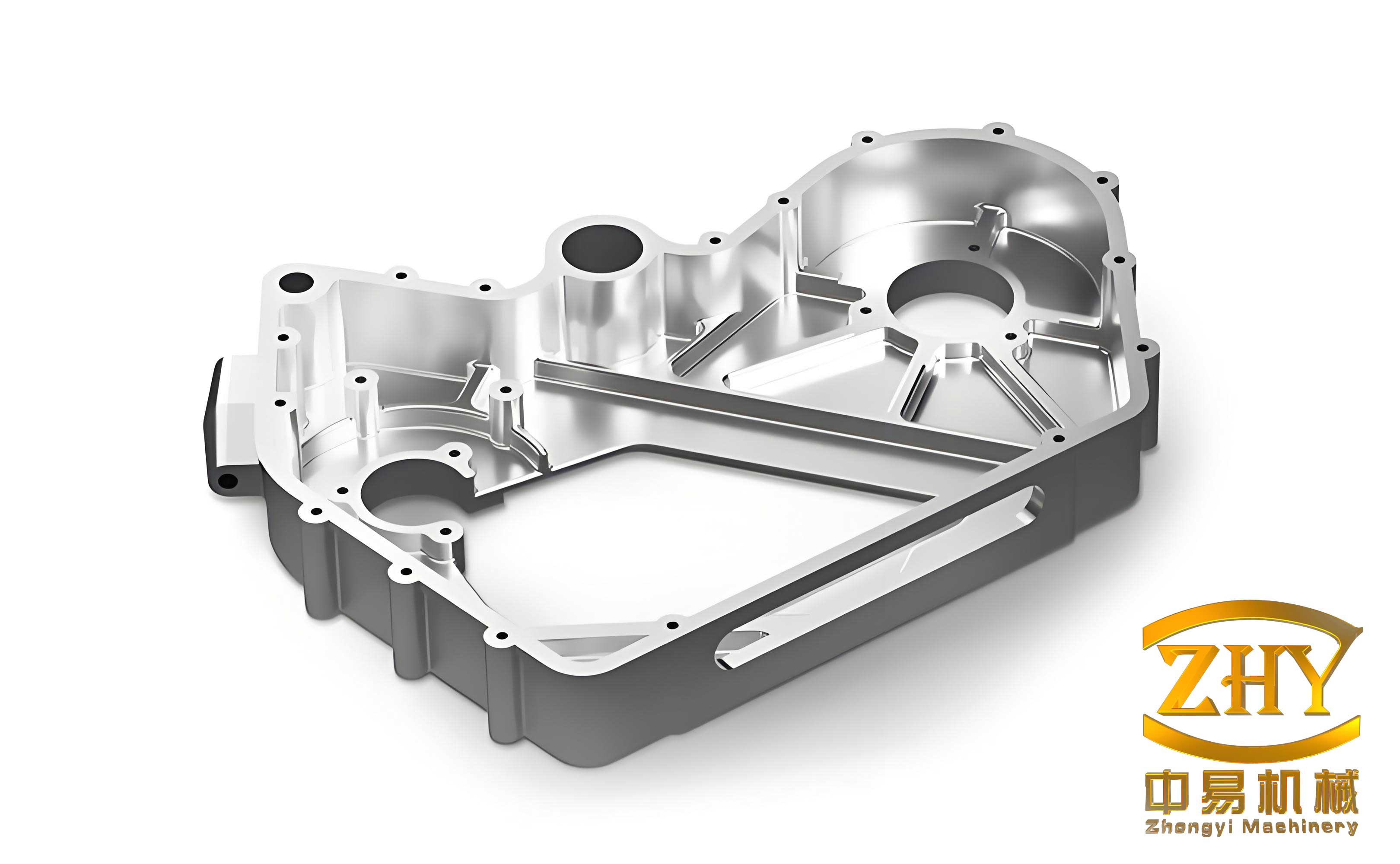
The differential housing shell casting for this new energy vehicle application presented unique design constraints. Compared to conventional internal combustion engine counterparts, it was more compact, with reduced overall dimensions and weight. The single casting weight was designed at 2.42 kg, and the casting modulus, a key parameter in solidification analysis, was calculated as 5.1 mm. The modulus (M) is defined as the ratio of volume (V) to surface area (A), expressed mathematically as:
$$ M = \frac{V}{A} $$
This modulus value indicated areas prone to shrinkage defects due to varying section thicknesses inherent in shell castings. Dimensional tolerances required a contour accuracy of 1.5 mm, with strict limits on residual flash (≤0.5 mm) and mismatch (≤0.5 mm). Internal defect criteria were particularly demanding: no肉眼可见的缩孔 (macroscopic shrinkage cavities) were permitted after dissection, and micro-shrinkage porosity observed at 25x magnification was allowed only within a maximum area of 10 mm × 5 mm. Furthermore, magnetic particle inspection imposed limits on defect depth relative to machining allowances. Material specifications called for ductile iron GJS 600-10, with tensile strength ≥590 MPa, yield strength ≥450 MPa, elongation ≥10%, and hardness between 190-230 HBW. Microstructural requirements included graphite size above grade 6, with >90% type VI graphite, pearlite content >90%, and only trace carbides permissible. These stringent requirements underscored the need for a robust and optimized casting process for these high-performance shell castings.
| Parameter | Requirement |
|---|---|
| Casting Weight | 2.42 kg |
| Casting Modulus | 5.1 mm |
| Dimensional Contour | 1.5 mm |
| Internal Macroscopic Defects | None allowed |
| Micro-shrinkage Area (25x) | ≤ 10 mm × 5 mm |
| Material Grade | GJS 600-10 |
| Tensile Strength | ≥ 590 MPa |
| Yield Strength | ≥ 450 MPa |
| Elongation | ≥ 10% |
| Hardness | 190-230 HBW |
The initial phase of process development occurred during the trial mold stage. We employed MAGMA simulation to model the solidification and feeding behavior of these shell castings. The default process layout arranged 16 castings per mold with a conventional gating system and dual hot risers. However, simulation predicted shrinkage defect volumes exceeding the acceptable limit. The defect volume (Vdefect) is a critical output from simulation, and we aimed to keep it below 10 mm³. The initial simulation showed a maximum defect volume of 14.6 mm³, primarily at thermal junctions in the shell castings. Simply increasing riser height from 105 mm to 125 mm only reduced the defect volume to 14.1 mm³, indicating that traditional empirical approaches were insufficient for these complex shell castings. The governing equation for solidification time (t) based on Chvorinov’s rule highlights the importance of modulus:
$$ t = C \cdot \left( \frac{V}{A} \right)^2 = C \cdot M^2 $$
where C is a constant dependent on mold material and casting conditions. Areas with higher modulus solidify slower and are prone to shrinkage. To mitigate this, we introduced external chills at critical hot spots. Chills act as heat sinks, locally increasing the cooling rate and promoting directional solidification. The modified simulation with chills predicted a maximum defect volume of only 1.5 mm³, well within specification. This validated the use of chills for trial molds but highlighted a production challenge: chills add cost, complexity, and potential for operational errors in high-volume manufacturing of shell castings.
| Process Configuration | Number of Shell Castings per Mold | Maximum Predicted Shrinkage Defect Volume (mm³) | Compliance with Spec (≤10 mm³) |
|---|---|---|---|
| Initial Layout (16 cavities, dual risers) | 16 | 14.6 | No |
| Increased Riser Height (125 mm) | 16 | 14.1 | No |
| With External Chills | 16 | 1.5 | Yes |
For the production mold stage, the client increased the outer contour diameter of the differential housing shell castings from 110 mm to 114 mm. This change meant that the previous 16-cavity layout was no longer feasible; it could only accommodate 12 shell castings per mold while still requiring external chills. This reduction in yield and the continued reliance on chills were economically unfavorable. Our goal was to increase mold yield, eliminate chills, and maintain defect standards. Through iterative MAGMA simulations, we redesigned the entire gating and feeding system. A key innovation was implementing a single riser shared by four adjacent shell castings, an approach viable due to the smaller size of these new energy vehicle shell castings. We optimized riser neck dimensions—both cross-sectional area (Aneck) and distance from the casting (dneck)—to enhance feeding efficiency. The feeding capability of a riser can be approximated by the feeding modulus concept, where effective feeding requires:
$$ M_{\text{riser}} > M_{\text{casting hot spot}} $$
and the riser neck must solidify after the hot spot but before the riser itself. We systematically varied Aneck and dneck in simulations, also incorporating chill risers strategically. After multiple iterations, we arrived at an 18-cavity layout without any external chills. The final simulation predicted a maximum shrinkage defect volume of 3.6 mm³. Production validation confirmed these results: penetrant testing (PT) and X-ray inspection revealed no detectable shrinkage defects in the shell castings, aligning perfectly with simulation forecasts. This achievement significantly boosted the productivity and cost-efficiency of manufacturing these shell castings.
| Stage | Cavities per Mold | Use of External Chills | Simulated Max Defect Volume (mm³) | Production Outcome |
|---|---|---|---|---|
| Trial Mold (Original Design) | 16 | Required | 1.5 | Accepted |
| Production Mold (Initial Constraint) | 12 | Required | ~1.5 (estimated) | Uneconomical |
| Production Mold (Optimized) | 18 | Eliminated | 3.6 | Accepted, No Defects |
During the production of third-batch samples, a new defect emerged: subcutaneous blowholes appeared after machining on the thin-wall sections of the flange, primarily on the cope side of the shell castings. The defect rate was initially 30% after rough machining, dropping to 10% after finish machining, but the remaining blowholes required additional machining depth beyond the allowed allowance. These blowholes were spherical and smooth, characteristic of gas entrapment near the casting surface. Initial hypotheses pointed to chill risers or insufficient machining allowance. However, statistical analysis showed uniform distribution around the casting, not localized near chill risers. Measurement of machining allowance confirmed it was within design (2.2-2.6 mm against 2.5 mm nominal). A critical change-point analysis revealed that the first two batches were poured at 1370-1420°C, while the third batch used a lower temperature range of 1360-1400°C, intended to improve tensile strength and graphite morphology. We suspected that the lower pouring temperature reduced the ability of gas to escape from the mold, leading to subsurface entrapment in thin sections of the shell castings. The relationship between gas solubility (S) in molten iron and temperature (T) can be described by an Arrhenius-type equation:
$$ S = S_0 \exp\left(-\frac{\Delta H}{RT}\right) $$
where ΔH is the heat of solution, R is the gas constant, and S0 is a pre-exponential factor. Lower temperatures increase gas solubility in the melt, potentially leading to precipitation during solidification. Restoring the pouring temperature to the original range eliminated the blowholes in subsequent batches without any mold modifications. This incident highlighted the sensitivity of thin-wall shell castings to pouring parameters and the importance of systematic change-point analysis in defect resolution.
Another quality issue arose during client-side metallographic inspection of OTS samples. Micro-slag holes were detected on multiple polished sections, with the largest being approximately 3 mm in cumulative length and 0.015 mm wide. Although within the allowable area limit, the client requested improvement. Concurrently, internal machining scrap due to sand inclusions and slag holes was 3-5%. We initiated a two-pronged optimization for these shell castings. First, we modified the gating system (Scheme 1): we added a choke in the runner, reducing its cross-sectional area from 1250 mm² to 800 mm², and repositioned the ingates from the cope to the drag side with a lap joint. This aimed to improve flow stability and slag trapping. Second, we tested a double-filtration system (Scheme 2): besides the existing runner filter, we added a second foam filter (10 PPI) at the ingate. Both schemes were implemented on opposite halves of the same production mold for direct comparison. We sampled shell castings from each scheme and performed metallographic examination on three sections per casting. The results, summarized below, showed that Scheme 1 (gating modification) outperformed Scheme 2 (double filtration) in reducing both the number and size of micro-slag holes. Most defects in Scheme 1 were near the surface and removable by machining, whereas Scheme 2 still had a sub-surface defect. Furthermore, we identified that in-mold inoculation using fine-grade inoculant (0.2-0.7 mm) contributed to slag-type defects due to incomplete dissolution. Discontinuing this practice reduced machining scrap for sand/slag holes to below 3%. The effectiveness of gating design over additional filtration for thin-wall shell castings was a key learning.
| Scheme | Description | Number of Shell Castings Sampled (×3 sections each) | Micro-slag Hole Occurrence | Defect Location and Size | Remarks |
|---|---|---|---|---|---|
| Original | Standard gating, in-mold inoculation | 2 × 3 | 5 sections with defects | Core areas, max length 3 mm | Unacceptable to client |
| Scheme 1 | Runner choke + drag-side lap ingates | 4 × 3 | 1 section with defect | Near edge (0.3 mm long), machinable | Significant improvement |
| Scheme 2 | Double filtration (runner + ingate filters) | 4 × 3 | 3 sections with defects | 2 near edge (machinable), 1 in core (0.23 mm) | Improvement but less effective than Scheme 1 |
The cumulative optimizations culminated in successful Production Part Approval Process (PPAP) validation by the client. The shell castings met all dimensional, mechanical, and internal quality standards. The project underscored several key principles for manufacturing high-integrity shell castings. Firstly, riser design must be optimized based on modulus calculations and simulation feedback; merely increasing riser height is often ineffective for complex shell castings. The optimal riser neck area and distance are critical parameters that can be fine-tuned using tools like MAGMA to eliminate shrinkage without chills. Secondly, process parameters such as pouring temperature have a profound impact on defect formation in thin-wall shell castings; lower temperatures can induce subcutaneous blowholes. Thirdly, gating system design—particularly incorporating chokes and proper ingate placement—is more effective than additional filtration for controlling micro-slag inclusions in shell castings. Finally, ancillary practices like in-mold inoculation need careful evaluation to avoid introducing defects. The experience has elevated our foundry’s expertise in producing premium shell castings for new energy vehicles, providing a replicable model for simulating and optimizing casting processes. As the demand for lightweight, high-strength shell castings grows, such simulation-driven approaches will be indispensable for achieving quality, efficiency, and sustainability in foundry operations.
In conclusion, the integration of MAGMA simulation software into the development cycle of differential housing shell castings enabled a transformative optimization. We progressed from a 12-cavity mold requiring external chills to an 18-cavity chill-free process, simultaneously resolving subsurface blowholes and micro-slag defects. The journey reinforced that a scientific approach, combining virtual prototyping with empirical validation, is essential for advancing the art and science of shell castings manufacture. The lessons learned are now being applied to other challenging casting projects, ensuring our continued leadership in producing high-performance components for the automotive industry.