
As researchers dedicated to advancing manufacturing technologies for lightweight automotive applications, we present a comprehensive study on the optimization of squeeze casting process parameters for aluminum alloys. This work focuses on enhancing the mechanical properties, surface quality, and internal integrity of aluminum alloy automotive components through systematic experimentation and analysis. By leveraging orthogonal experimental design and multi-objective optimization, we identify critical process parameters and their synergistic effects on final part performance.
Introduction
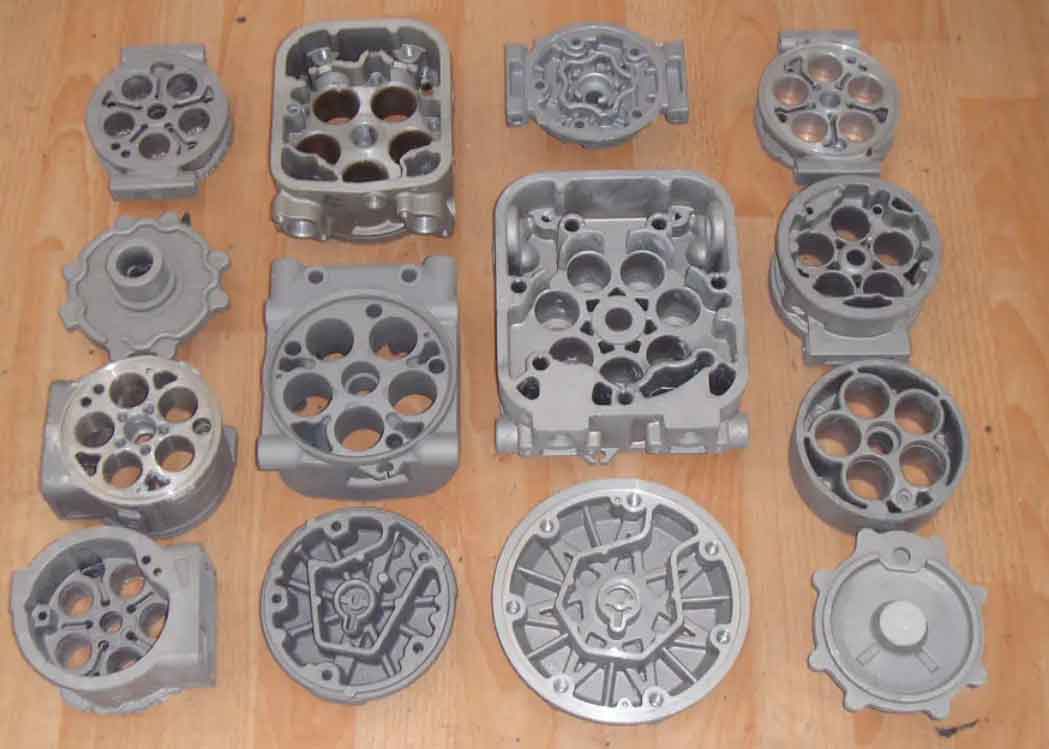
The automotive industry’s shift toward lightweighting and sustainability has intensified the demand for high-performance aluminum alloys. Squeeze casting, a near-net-shape manufacturing process, combines the advantages of high-pressure die casting and forging to produce components with superior mechanical properties, dimensional accuracy, and surface finish. However, the quality of squeeze-cast parts is highly sensitive to process parameters such as extrusion speed, mold temperature, and liquid metal temperature. This study systematically investigates these parameters to establish an optimized process window for aluminum alloy AC4D (AlSi9Mg), a material widely used in automotive control arms and structural components.
Materials and Methods
1. Experimental Setup
The experiments were conducted on a 280-ton cold-chamber squeeze casting machine equipped with an H13 steel mold. The mold cavity, designed to replicate an automotive control arm, had a surface area of 150 cm² and a nominal wall thickness of 3 mm. The aluminum alloy AC4D was melted and maintained at predefined temperatures before being injected into the mold.
2. Orthogonal Experimental Design
A three-factor, three-level L9(3⁴) orthogonal array was adopted to evaluate the effects of:
- Extrusion speed (A): 0.2 m/s, 0.6 m/s, 1.0 m/s
- Mold temperature (B): 175°C, 225°C, 275°C
- Liquid metal temperature (C): 660°C, 700°C, 740°C
Each parameter combination was tested with three replicates, and the following output metrics were measured:
- Mechanical properties: Tensile strength (σ, MPa) and elongation (δ, %) per ASTM E8.
- Surface quality: Average surface roughness (Ra, μm) using a TR200 profilometer.
- Internal defects: Defect area fraction (%) via X-ray imaging and Image-Pro Plus software.
3. Multi-Objective Optimization
To reconcile conflicting performance goals, a weighted scoring system was applied:Composite Score=0.35⋅σnorm+0.25⋅δnorm−0.2⋅Ranorm−0.2⋅Defectnorm
where normalized values (norm) were scaled to [0, 1].
Results and Analysis
1. Effect of Extrusion Speed
Increasing extrusion speed improved mold filling but introduced turbulence-related defects. At 0.6 m/s, tensile strength peaked at 286 MPa (Table 1), while higher speeds (>0.6 m/s) reduced strength due to gas entrapment.
Table 1: Impact of extrusion speed on mechanical properties
| Speed (m/s) | Tensile Strength (MPa) | Elongation (%) | Defect Area (%) |
|---|---|---|---|
| 0.2 | 248 ± 6.2 | 6.1 ± 0.3 | 1.82 ± 0.12 |
| 0.6 | 286 ± 5.8 | 5.8 ± 0.4 | 0.94 ± 0.09 |
| 1.0 | 265 ± 7.1 | 4.3 ± 0.2 | 1.67 ± 0.15 |
2. Influence of Mold Temperature
Mold temperature significantly affected surface roughness and defect formation. At 225°C, Ra reached a minimum of 0.42 μm, while defect area fraction dropped to 0.68% (Figure 1). Lower temperatures caused premature solidification, whereas higher temperatures promoted coarse microstructures.Defect Area=1.24−0.005Tmold+0.00001Tmold2(R2=0.92)
3. Role of Liquid Metal Temperature
Elevating liquid metal temperature from 660°C to 700°C enhanced fluidity, reducing surface roughness (Ra = 0.39 μm at 720°C) and improving elongation by 91.8%. However, temperatures above 720°C led to grain coarsening and strength reduction.
Table 2: Liquid metal temperature effects
| Temp (°C) | Tensile Strength (MPa) | Elongation (%) | Ra (μm) |
|---|---|---|---|
| 660 | 271 ± 6.5 | 4.9 ± 0.3 | 0.58 |
| 700 | 293 ± 5.2 | 7.1 ± 0.4 | 0.43 |
| 740 | 278 ± 7.3 | 9.4 ± 0.5 | 0.39 |
Process Parameter Optimization
1. Orthogonal Analysis
The composite score revealed that extrusion speed (F-value = 28.46) and liquid metal temperature (F-value = 19.37) dominated process outcomes (Table 3). Mold temperature had a smaller but significant effect (F-value = 5.38).
Table 3: ANOVA results for composite scores
| Factor | Sum of Squares | Degrees of Freedom | F-value | Significance |
|---|---|---|---|---|
| Extrusion Speed | 0.215 | 2 | 28.46 | P < 0.01 |
| Liquid Temp | 0.174 | 2 | 19.37 | P < 0.01 |
| Mold Temp | 0.094 | 2 | 5.38 | P < 0.05 |
| Error | 0.023 | 2 | — | — |
2. Optimal Parameter Combination
The highest composite score (0.785) was achieved at 0.6 m/s extrusion speed, 225°C mold temperature, and 700°C liquid metal temperature. Validation trials confirmed improvements:
- Tensile strength: +8.4% (263 → 285 MPa)
- Elongation: +46.2% (5.2% → 7.6%)
- Surface roughness: Ra reduced by 29.3% (0.58 → 0.41 μm)
- Internal defects: Defect area fraction decreased by 50% (1.35% → 0.68%).
Conclusion
This study demonstrates that squeeze casting of aluminum alloys can be optimized through a data-driven approach balancing mechanical performance, surface quality, and internal soundness. The identified parameters—0.6 m/s extrusion speed, 225°C mold temperature, and 700°C liquid metal temperature—provide a robust framework for manufacturing high-integrity automotive components. Future work will explore dynamic parameter adjustments and machine learning models to further refine squeeze casting processes.
By prioritizing critical factors such as extrusion speed and liquid metal temperature, manufacturers can leverage squeeze casting to meet the automotive industry’s demands for lightweight, durable, and cost-effective aluminum alloy parts.